
WarBrief Live | November 1, 2026 | Shipping and Geopolitics
Moved under the 2022-2023 Black Sea Grain Initiative, according to UN-linked reporting
Odesa, Chornomorsk and Pivdennyi were covered by the original initiative
Erdogan and Zelenskyy met in Istanbul and agreed to work on a grain corridor
The next Russia-Ukraine-US round is planned for the United Arab Emirates
On October 31, 2026, Turkish President Recep Tayyip Erdogan and Ukrainian President Volodymyr Zelenskyy agreed in Istanbul to work on a new Black Sea grain corridor, after Erdogan called attacks on civilian vessels unacceptable whoever carries them out. The answer to the question at the heart of this story is narrower than the headline: the two leaders agreed to work on a corridor, and Ankara says it has sent both Moscow and Kyiv a proposal to end strikes on civilian ships, but no route, timetable, inspection regime or Russian acceptance was announced. What changed on October 31 was the diplomatic pressure around shipping, not the safety of the sea itself.
Key Takeaways
- Erdogan, standing with Zelenskyy in Istanbul, said attacks on civilian vessels serve no one’s interests and called on all parties to act responsibly.
- Ankara says it has already sent Russia and Ukraine a proposal to end strikes on civilian ships, but neither side has acted on it.
- In Atlanta, US Secretary of State Marco Rubio said Washington was reviewing proposals from Turkey and India for moving grain through the Black Sea.
- India’s foreign minister, S. Jaishankar, set out a three-point approach: protect civilian shipping, restore grain flows, and seek a non-attack arrangement on energy.
- No new corridor is yet in force. Until a mechanism is agreed and insurers, shipowners and ports can price the risk, the diplomatic push alone does not make a voyage safe.
What happened in Istanbul on October 31?
Erdogan hosted Zelenskyy in Istanbul on October 31 for talks that, according to both leaders, devoted a significant part of their time to Black Sea security. At a joint news conference, Erdogan said, in words reported by Al Jazeera and by AFP: “It is clear that attacks against civilian vessels and actions that further escalate tensions in the Black Sea serve no one’s interests.” He added: “We cannot accept these attacks under any circumstances, regardless of who carries them out or what justification is offered. We call on all parties to act responsibly on this matter.”
Zelenskyy accused Russia of making the situation in the Black Sea difficult and said he had reached an agreement with Erdogan to work on a grain corridor. His formulation, reported by Al Jazeera, was: “Today, I reached an agreement with President Erdogan to work on the Black Sea grain corridor.” He said the aim was for the corridor to exist and to function effectively, and thanked Erdogan for the dialogue. Erdogan said talks aimed at restoring the safety of navigation would continue, and that an agreement on shipping could give fresh impetus to efforts to secure a lasting peace in Ukraine.
The Istanbul meeting did not, on the reporting available, produce a signed shipping agreement. That distinction matters. An agreement to work on a corridor is a political commitment to keep negotiating. A corridor itself needs operational answers: which ships are protected, on which routes, under what inspection or notification system, and what happens if a vessel is attacked. None of those answers was published after the Istanbul meeting.
Ankara’s position is also shaped by its relationships with both sides. Turkey maintains working ties with Moscow and Kyiv, has hosted several rounds of Russia-Ukraine talks, and controls the straits through which Black Sea shipping must pass to reach the Mediterranean. That geography gives Turkey a practical stake in any arrangement, and also a reason to frame its warning in even-handed language: the condemnation was directed at attacks on civilian vessels, not attributed by Erdogan in the reported remarks to one side alone.
What is India’s three-point plan for Black Sea shipping?
India’s contribution was set out separately in Atlanta, on the sidelines of the G20 foreign ministers’ meeting, by External Affairs Minister S. Jaishankar. Speaking to Indian reporters after the meeting, Jaishankar said India had discussed three aspects of the conflict with Russia, Ukraine and European countries, and was coordinating with the United States. The three points, as he described them to DD India, were: first, not to attack civilian shipping and seafarers; second, to find a way to restore grain exports from both Russia and Ukraine; and third, a “non-attack on energy”.
Jaishankar said Black Sea grain flows had fallen sharply, and that the grain issue was a major concern for the Global South because many purchasers of that grain are in Global South countries. He said Prime Minister Narendra Modi had discussed the Ukraine conflict with Russian President Vladimir Putin in New Delhi and earlier in Bishkek, and that he himself had spoken to Russian Foreign Minister Sergey Lavrov, visited Moscow and Kyiv, and remained in touch with the Ukrainian side. He also said India was coordinating with the Americans, because Washington has its own peace mediation initiative, and that Secretary Rubio knew roughly what was going on.
The energy point, Jaishankar said, was the most complicated. “Non-attack on energy is probably the most complicated piece because it means different things to the different players,” he said, explaining that infrastructure could mean a refinery to one side, a grid to another, and that there were also issues relating to ships carrying fuel. He declined to share details of the state of play publicly. That caution is itself informative: India is describing a diplomatic process, not announcing a deal.
Rubio’s account from Atlanta fits the same picture. According to Al Jazeera’s report of his news conference, Rubio said there was growing international interest in a limited Black Sea ceasefire to secure grain and energy shipments, and that the United States was reviewing proposals by Turkey and India to get grain shipments moving. He said: “This is threatening the world for food security and some energy security as well. We’d like to achieve it. It doesn’t solve the war, but at least it solves a unique aspect of it.” Rubio did not assign odds to a limited ceasefire, and he did not announce an agreement.
Why did the 2022 grain corridor work, and why did it end?
Any new proposal will be judged against the Black Sea Grain Initiative of 2022-2023, brokered by Turkey and the United Nations. That initiative, signed on July 22, 2022, allowed Ukrainian grain and other food products to leave the ports of Odesa, Chornomorsk and Pivdennyi, with vessel movements and cargo inspections coordinated by a Joint Coordination Centre in Istanbul staffed by the UN, Russia, Ukraine and Turkey. Reporting on the initiative’s record, including Safety4Sea’s summary of its history, puts the total moved at nearly 33 million tonnes of grain and other food products to 45 countries.
The mechanism worked, in part, because it answered a specific mistrust: inspections were meant to show that participating ships were carrying food, not weapons. It ended because it needed periodic renewal, and Russia withdrew in July 2023, arguing that obstacles to its own food and fertiliser exports had not been resolved. Ukraine subsequently established its own maritime export corridor, without Russian participation in inspections, but that corridor has operated under continuing security risk rather than under an agreed ceasefire at sea.
The lesson for the current push is therefore not simply that a corridor can be declared. A durable arrangement must solve three problems at once: the military problem of who promises not to shoot and how violations are verified; the commercial problem of insurance and charterer confidence; and the political problem of what Russia, Ukraine and their partners each gain. The 2022 initiative solved the first two for a year, with limits. Its collapse shows how quickly the third problem can undo the other two.
That history also explains why recent reporting has focused on flags and intermediaries. In October 2026, reporting based on a Bloomberg interview said Ukraine was discussing a plan with Turkey, Egypt and India under which ships sailing under those countries’ flags could carry food from Ukrainian and Russian ports. That reporting, summarised by Safety4Sea and Turkish Minute, also said Russia was opposed to that proposal at the time. WarBrief has not treated that October proposal and the October 31 Ankara proposal as the same document: the Istanbul reporting does not publish Ankara’s text, and no Russian response to the October 31 proposal was reported by Al Jazeera or AFP on November 1. Readers should therefore keep the two proposals distinct until a text or an official response is published.
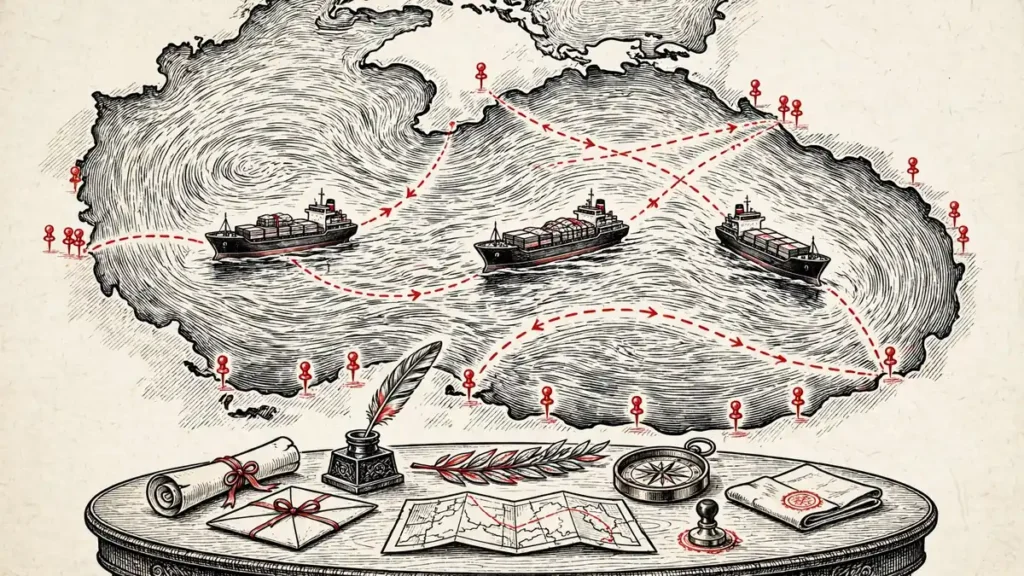
By the numbers: what is confirmed and what is only reported
The table below separates what multiple reputable reports confirm from what is reported by a single source or is still only a proposal. That separation is deliberate: in a fast-moving shipping dispute, the most misleading sentence is often one that turns a proposal into a fact.
| Metric | Figure | Source |
|---|---|---|
| 2022-2023 grain initiative exports | Nearly 33 million tonnes to 45 countries (REPORTED total) | Safety4Sea summary of the initiative’s record |
| Ports covered by the 2022 initiative | 3: Odesa, Chornomorsk, Pivdennyi (CONFIRMED) | UN-Turkey brokered initiative, July 22, 2022 |
| Ankara proposal to Russia and Ukraine | Sent; neither side has acted on it (CONFIRMED by AFP/Al Jazeera reporting) | AFP via Malay Mail; Al Jazeera, October 31, 2026 |
| Contship Jet incident | Liberian-flagged container ship struck by drones in Bulgaria’s exclusive economic zone on October 28 (REPORTED, AFP handout caption) | Al Jazeera, October 31, 2026 |
| Next Russia-Ukraine-US round | Planned for November in the United Arab Emirates (CONFIRMED as planned, not held) | Kremlin statement reported by Al Jazeera and AFP |
Caveat: figures marked REPORTED rest on a single secondary summary or a photo caption, not on a primary document published with the story; treat them as reported, not as independently verified totals.
What the Black Sea shipping push means for US, UK and EU readers
For readers in the United States, the United Kingdom and the European Union, the immediate effect of a Black Sea shipping dispute is usually felt through prices and supply chains rather than through a single headline. When grain cannot move reliably, importers compete for alternative cargoes, freight and insurance costs rise, and those costs can feed into food and animal-feed prices. When energy shipments or port infrastructure are also at risk, the effect can broaden to fuel and fertiliser markets, which in turn affect farming costs.
That transmission runs through insurance. WarBrief’s earlier explainer on how war risk insurance works sets out how a conflict surcharge is priced: when the risk of attack rises, premiums rise, and a shipowner or charterer may simply decline a voyage unless the cargo owner pays more or a credible safety arrangement is in place. A diplomatic statement does not, by itself, lower a premium. An agreed, verifiable corridor with a track record of safe passages is what insurers price. That is why the gap between “agreed to work on” and “in force” matters for household budgets as much as for diplomacy.
For European readers, the Black Sea is also a neighbourhood question. Bulgaria, Romania and Turkey are Black Sea littoral states, and the Contship Jet incident reported in Bulgaria’s exclusive economic zone shows how a dispute can touch NATO-adjacent waters even when the vessel itself is a commercial ship. WarBrief’s earlier profile of Black Sea shipping drone attacks and the NATO response and its report on why NATO is rushing aircraft, drones and radars to the Black Sea provide the military background to that risk. The diplomatic push is, in part, an attempt to keep a commercial dispute from becoming a wider maritime security crisis.
For US readers, the Atlanta dimension matters because the Black Sea discussion is now running alongside a broader negotiation calendar. The next Russia-Ukraine-US round is planned for November in the United Arab Emirates, and Zelenskyy said he discussed with Erdogan the possibility of involving Turkey, Europe and other partners, including a meeting in Turkey. A limited maritime arrangement would not end the war, as Rubio himself said, but it could reduce one of its most visible spillovers: food insecurity in countries that depend on Black Sea grain.
Different perspectives: Ankara, Kyiv, Moscow and Washington
Ankara’s perspective is that of a mediator with leverage and exposure. Turkey has hosted Russia-Ukraine talks, brokered the original grain initiative with the UN, and is now pressing both sides to stop attacks on civilian vessels while keeping its own channels open. Erdogan’s statement that an agreement on shipping could give fresh impetus to lasting peace reflects that mediator’s logic: a narrow, achievable deal can build trust for a wider one. It can also fail if either side treats a maritime pause as a tactical concession rather than a shared interest.
Kyiv’s perspective is that secure shipping is both an economic lifeline and a test of whether Russia will accept limits on its campaign. Zelenskyy accused Russia of making the Black Sea situation difficult, and his emphasis on a corridor that “exists and is effective” suggests Kyiv will judge any proposal by whether ships actually sail, not by whether a meeting took place. Ukraine’s own maritime corridor, established after 2023, shows Kyiv is prepared to export without an agreed ceasefire, but at higher risk and cost.
Moscow’s perspective on the October 31 proposal was not reported in the Al Jazeera or AFP accounts on November 1, and WarBrief does not fill that gap with speculation. What is on the record from before October 31 is more limited: in 2023, Russia said obstacles to its own food and fertiliser exports had not been resolved when it withdrew from the grain initiative, and on October 26, 2026, Russian Deputy Foreign Minister Aleksandr Alimov was reported as saying he did not see a perspective for revitalising that initiative at that stage, while discussions on grain transport security continued within a UN framework. Those statements describe Moscow’s starting position for any new negotiation, not its response to Ankara’s latest text.
Washington’s perspective, as expressed by Rubio in Atlanta, is pragmatic: a limited Black Sea arrangement is worth pursuing because it would diminish the war’s spillover on food and energy security, even though it would not solve the war itself. That framing also explains why the United States is reviewing, rather than announcing, the Turkish and Indian proposals. Reviewing leaves room to test whether a proposal is verifiable and whether both belligerents will accept it, before Washington lends its name to a mechanism that might fail on its first voyage.
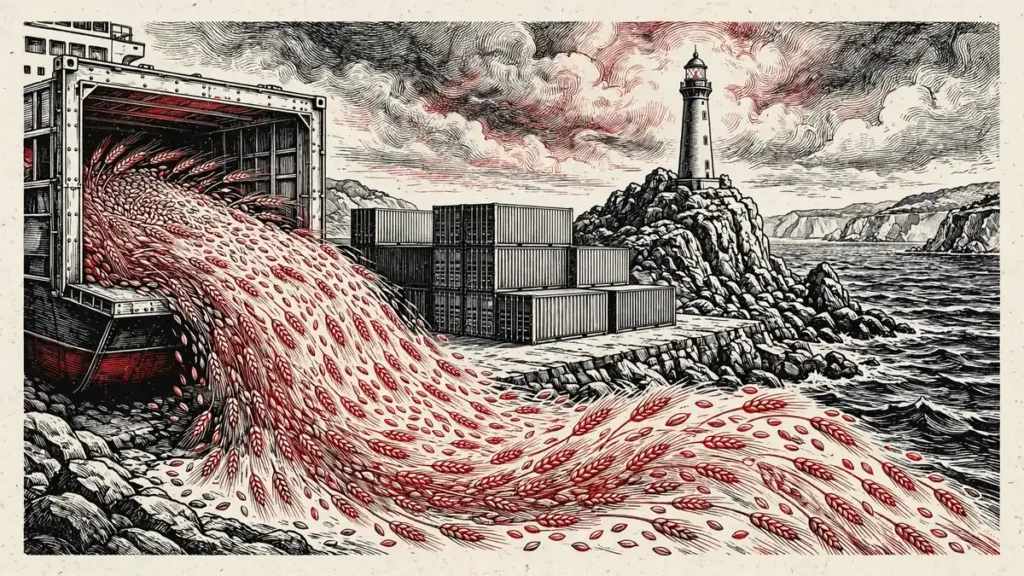
What to watch next in the Black Sea talks
Four markers will show whether the October 31 push becomes a corridor or remains a statement. First, whether Russia responds publicly to Ankara’s proposal, and whether that response accepts, rejects or seeks to amend it. Second, whether Turkey, India or the United States publishes any operational detail: routes, ports, inspection or notification arrangements, or a start date. Third, whether the planned November round in the United Arab Emirates takes up shipping as a separate item, and whether Turkey or European partners are formally involved. Fourth, whether commercial shipping actually resumes at scale: insurers quoting lower war-risk premiums, charterers accepting Black Sea voyages, and grain loadings rising from Ukrainian and Russian ports would be the market’s verdict, independent of any press conference.
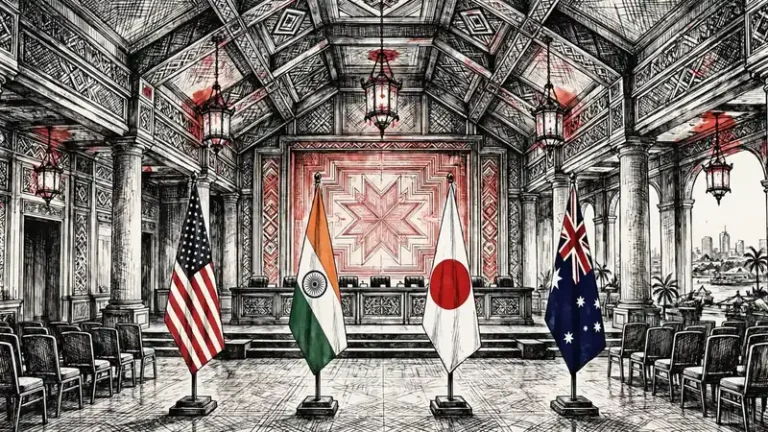
The Quad foreign ministers’ meeting in Atlanta, held on the sidelines of the G20 gathering, adds a wider maritime signal. According to Reuters reporting of the joint statement, the ministers from the United States, Australia, India and Japan reiterated the absolute necessity to protect and preserve navigational rights and freedoms in the Strait of Hormuz, the Red Sea and the Bab el-Mandeb Strait, in accordance with international law. That statement was not about the Black Sea, but it shows that the same governments are treating freedom of navigation as a connected concern across chokepoints, not as a single-sea issue.
Until one of those markers moves, the honest summary is this: Turkey and Ukraine have agreed to work on a grain corridor, India has set out a three-point approach and is coordinating with Washington, and the United States is reviewing Turkish and Indian ideas. None of that yet guarantees a safe passage for the next grain ship. The next ship to sail safely, and the next premium to fall, will tell readers more than the next statement.
Frequently asked questions
What did Erdogan say about Black Sea civilian shipping?
Erdogan said attacks on civilian vessels in the Black Sea were unacceptable under any circumstances, regardless of who carries them out or what justification is offered, and called on all parties to act responsibly. He made the remarks at a joint news conference with Zelenskyy in Istanbul on October 31, 2026.
Is there a new Black Sea grain corridor yet?
No. Erdogan and Zelenskyy agreed to work on a grain corridor, and Ankara says it has sent a proposal to Russia and Ukraine, but no route, timetable or inspection regime was announced, and neither side was reported to have acted on the proposal.
What is India’s three-point plan?
Jaishankar described three areas: not attacking civilian shipping and seafarers, restoring grain exports from Russia and Ukraine, and a non-attack arrangement on energy. He called the energy element the most complicated, because different sides define energy infrastructure differently.
How is this different from the 2022 grain deal?
The 2022 Black Sea Grain Initiative, brokered by Turkey and the UN, covered three Ukrainian ports and used a Joint Coordination Centre in Istanbul to inspect participating ships. It ended when Russia withdrew in July 2023. The current push has no published mechanism yet, so it cannot yet be compared as an operating corridor.
What does this mean for food prices?
If Black Sea grain flows stay disrupted, importers face higher freight and insurance costs and must compete for alternative supplies, which can feed into food and feed prices. A credible, operating corridor would lower that risk premium; a statement alone does not.
Sources
- Al Jazeera: Turkiye’s Erdogan urges Russia and Ukraine to stop Black Sea attacks
- Malay Mail (AFP): Keep civilian ships out of it: Erdogan warns Russia and Ukraine over Black Sea attacks
- DD India (IANS): India working with Russia, Ukraine, Europe on three-point plan on shipping, grain and energy: EAM Jaishankar
- GMA News (Reuters): Indo-Pacific Quad ministers work on supply chains, denounce arbitrary export restrictions
- Safety4Sea: Ukraine in talks with India, Turkey and Egypt to reopen Black Sea grain corridor
- WarBrief Live: Conflict Zones hub
- WarBrief Live: Black Sea Grain Corridor: Why Food Prices Are Rising (2026)
Read next: Black Sea Shipping War: Drone Attacks, NATO Response and the Civilian Toll and How War Risk Insurance Works: Shipping’s Conflict Surcharge.
Discussion 0
Share analysis, corrections, or context. Be civil — comments are moderated.