
WarBrief Live | October 31, 2026 | Event Preview
The leaders of Australia, India, Japan and the United States are expected to meet in Manila during the November 15-18 ASEAN gatherings, in what would be the Quad’s first leaders’ summit since 2024. The meeting is planned, not yet confirmed in a fixed date or a joint communique, and that distinction matters: what happened in Atlanta on October 31 was the ministers’ preparation for it, not the leaders’ meeting itself.
United States Secretary of State Marco Rubio hosted the foreign ministers of Australia, India and Japan in Atlanta on October 31, 2026, on the sidelines of the Group of 20 foreign ministers’ meeting. Reuters reported that the leaders’ summit is slated to occur during the Association of Southeast Asian Nations (ASEAN) conference in Manila on November 15-18, and would be the first since 2024 and the first for United States President Donald Trump in his current term. The ministers’ meeting was their third of 2026, after gatherings in New Delhi in May and Manila in July, according to an Agence France-Presse account of the Atlanta meeting.
Key Takeaways
- The four Quad foreign ministers met in Atlanta on October 31, 2026, completing preparations for a planned leaders’ summit in Manila in November.
- The leaders’ summit would be the first since 2024 and the first for President Donald Trump in his current term, but no exact Quad date has been publicly fixed.
- Reported agenda items include critical minerals and supply chains, maritime security, critical technology and disaster management.
- The Quad meeting would sit inside the 49th ASEAN Summit and Related Summits, where digital trade, a South China Sea code of conduct and Myanmar are also on the agenda.
What happened in Atlanta on October 31?
Rubio met his counterparts from Australia, India and Japan as the two-day G20 foreign ministers’ meeting in Atlanta drew to a close. The Quad ministers’ discussion was, in substance, a preparation session: the four governments are still settling the agenda, the messages they will coordinate, and which initiatives can be presented as collective achievements rather than as separate national policies. Reporting of the meeting is careful on this point. One account notes that the joint statement from the ministers did not specify the exact date of the leaders’ summit, and that Rubio said only that he hoped leaders would announce “more concrete steps” in November.
That caution is consistent with the rest of the Atlanta week. The G20 ministers ended their meeting without a joint communique, relying instead on a chairman’s statement, after divisions over Russia’s war in Ukraine, the war in Iran, tariffs and the South China Sea. The Quad meeting therefore did not produce a breakthrough document of its own. Its significance is narrower and more practical: the four ministers have now met three times this year, the groundwork for a leaders’ meeting in Manila is in place, and the remaining decisions are about timing, agenda and deliverables.
Who are the four Quad leaders expected in Manila?
The four leaders are United States President Donald Trump, Indian Prime Minister Narendra Modi, Japanese Prime Minister Sanae Takaichi and Australia’s prime minister. Trump is the most firmly confirmed of the four for Manila: Malacanang confirmed on October 14 that he will attend the ASEAN Summit and Related Summits, and White House reporting cited by Philippine outlets puts him in Manila on November 16, before he travels to Shenzhen for Asia-Pacific Economic Cooperation meetings. The White House has said Trump will take part in the summit on November 16, according to reporting of the confirmation.
The wider guest list is larger and less settled. Organisers expect around 20 heads of state and government in Manila, including the 11 ASEAN leaders and partner-country leaders, according to the Philippine Star and BusinessMirror. That figure is an organisers’ expectation, not a confirmed attendance list, and it should be read that way. United Nations Secretary-General Antonio Guterres is expected to attend the ASEAN-United Nations summit, and the Philippines’ Department of Foreign Affairs has said leaders from the ASEAN Plus Three and East Asia Summit formats are expected, while formal confirmations from several capitals were still awaited in mid-October.

One absence from the confirmed list is as telling as any presence. China has not, as of October 25, named its representative to the Manila meetings, according to reporting on the Department of Foreign Affairs’ position. Beijing traditionally sends its premier, rather than its president, to ASEAN meetings, and no Chinese statement had named President Xi Jinping, Premier Li Qiang or anyone else for Manila by that date. Until a Chinese announcement names a head of delegation, the question of who represents China in Manila remains open, and it shapes which conversations the chair can credibly stage.
What is the Quad, and what is it not?
The Quad is a diplomatic partnership of Australia, India, Japan and the United States, built around overlapping strategic interests in the Indo-Pacific. It is not a treaty alliance with collective-defence obligations, and it is not a NATO-style organisation. Its members maintain different economic and security relationships across the region, including with China, and the partnership’s public output has typically been coordination on maritime security, technology, supply chains, health and disaster response, rather than a single binding defence commitment.
The leaders’ format itself is relatively new. The first formal leaders’ summits began after President Joe Biden took office in 2021, and the previous leaders’ summit took place in September 2024 in Wilmington, Delaware. Trump was scheduled to attend a Quad summit in India in late 2025 but cancelled that visit amid trade frictions and tariff disputes with New Delhi, according to Reuters. A Manila leaders’ meeting would therefore be a resumption after a gap of more than two years, and the first of the format in Trump’s current presidency, rather than a continuation of an unbroken annual rhythm.
| Metric | Figure | Source |
|---|---|---|
| Quad members | 4: Australia, India, Japan, United States | Reuters (CONFIRMED) |
| Planned leaders’ summit window | November 15-18, 2026, during the ASEAN gatherings in Manila | Reuters (CONFIRMED as slated/expected, not fixed) |
| Last Quad leaders’ summit | September 2024, Wilmington, Delaware | Reuters (CONFIRMED) |
| Quad ministerial meetings in 2026 | 3, including Atlanta on October 31 | Agence France-Presse account (CONFIRMED) |
| Heads of state expected at the ASEAN gatherings | Around 20 | Summit organisers via Philippine Star (REPORTED) |
| Special non-working days in Metro Manila | November 16-18, 2026 | Malacanang via Philippine Star (CONFIRMED) |
Caveat: figures marked CONFIRMED are reported by two or more outlets or stated by an official source; the figure marked REPORTED rests on organisers’ expectations, and final attendance confirmations were still pending in mid-October.
What would be on the Manila agenda?
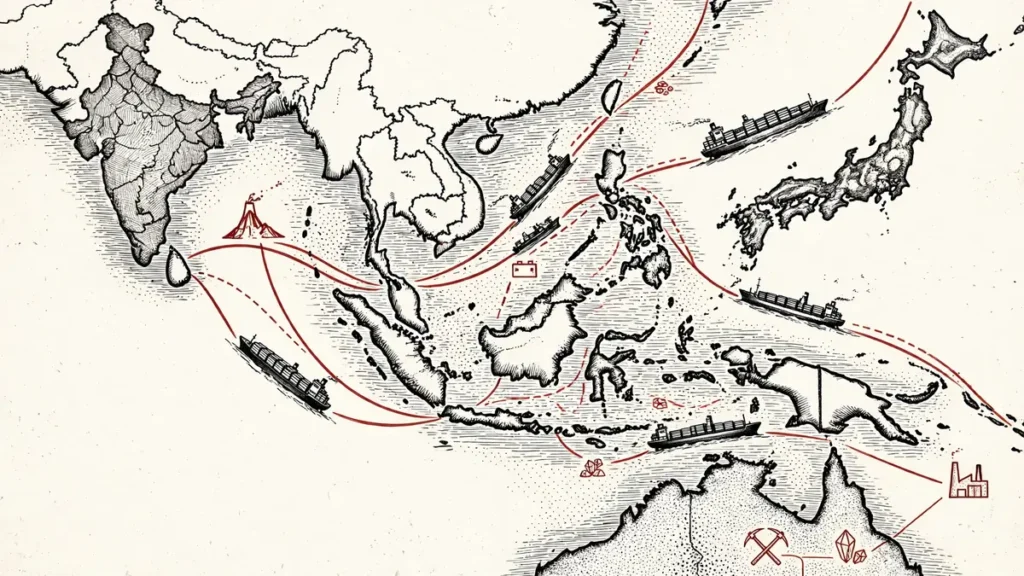
According to reporting citing people familiar with Quad dynamics, the proposed leaders’ meeting would focus on critical technology, minerals and associated supply chains, maritime security and disaster management. Those four items fit the pattern of recent Quad work: they are areas where the four governments can coordinate standards, investment and practical cooperation without resolving their deeper differences on trade or on China. Critical minerals matter because supply chains for batteries, semiconductors and defence manufacturing run through the Indo-Pacific, and Manila is a convenient place to discuss them alongside ASEAN’s own digital and economic agenda.
The ASEAN agenda running alongside the Quad meeting is at least as consequential for the region. The 49th ASEAN Summit and Related Summits, hosted by the Philippines as this year’s ASEAN chair under the theme “Navigating Our Future, Together”, are expected to see the signing of the ASEAN Digital Economy Framework Agreement, a region-wide set of rules for digital trade, cross-border data flows, cybersecurity and data protection. Leaders are also expected to move toward the substantial conclusion of negotiations for an ASEAN-Canada Free Trade Agreement, and the Philippines’ foreign secretary has said ASEAN is endeavouring to finish the ASEAN-China Code of Conduct in the South China Sea. None of those outcomes is done yet; each is an expected deliverable, and the code of conduct in particular still faces unresolved questions about scope, legal force and self-restraint.
Myanmar is the summit’s most politically open decision. Leaders are expected to decide on the implementation of the Five-Point Consensus, the peace plan ASEAN adopted after the February 2021 coup, including whether Myanmar’s representation at leaders’ meetings changes from the current non-political formula. Energy security will also feature: with prices for energy, fertilisers and industrial products staying higher for longer, organisers say securing regional energy supplies will be among the big issues tackled. Our earlier ASEAN Summit Manila 2026 preview sets out those items in full, and this Quad preview should be read alongside it, not as a replacement for it.
One item that should not be overstated is the Pax Silica framework agreement between the Philippines and the United States, which seeks to strengthen supply chains for artificial intelligence, semiconductors and critical minerals. Malacanang has confirmed Trump’s attendance in Manila but has not confirmed that a Pax Silica signing will take place during his visit, and the Palace has declined to link the two developments. Reporting that treats a signing as settled would go beyond what officials have said.
What the Manila Quad meeting means for US, UK and EU readers
For readers in the United States, Britain and Europe, the Manila meeting matters less as a photo opportunity than as a test of whether four democracies can agree on practical supply-chain and maritime measures that affect prices, delivery times and security. If the leaders agree on critical-minerals cooperation, that feeds into the cost and availability of batteries, electronics and defence components in Western markets. If they agree on maritime security coordination, that affects the sea lanes through which a large share of global trade passes, including the South China Sea, where ASEAN and China are still negotiating a code of conduct. If they agree on little beyond a communique, that too is a signal: it would suggest the partnership’s centre of gravity remains ministerial coordination, not leaders’ decisions.
The digital agenda matters for the same reason. The ASEAN Digital Economy Framework Agreement, expected to be signed in Manila, would set common rules for digital trade across Southeast Asia, affecting any Western firm that sells, sources or outsources in the region. The Quad’s own technology discussions sit on top of that: common approaches to critical technology and data security among the four Quad members would shape how Western and Indo-Pacific supply chains connect. For background on the maritime tensions that frame these discussions, see WarBrief’s South China Sea profile after the Cebu defence ministers’ meeting and our ADMM-Plus preview. For the wider picture, see WarBrief’s conflict zones hub and intelligence hub.
What to watch next before the leaders land in Manila
Four things will settle the shape of the Manila meeting. First, a formal announcement naming the Quad leaders’ meeting date and agenda: until that appears, the meeting remains planned and expected, not confirmed in its final form. Second, China’s delegation announcement, which will show whether Beijing sends its president, its premier or another senior official, and therefore how the South China Sea discussions are framed. Third, the ASEAN deliverables themselves: whether the digital economy agreement is signed as expected, whether the Canada trade negotiations reach substantial conclusion, and whether the code of conduct moves from endeavour to text. Fourth, the practical disruption in Manila itself, which is already measurable.
On that last point, travellers and residents should plan around the summit’s footprint now, not in mid-November. Malacanang has declared November 16 to 18 special non-working days throughout Metro Manila. The Philippine Star reported partial road closures around the Philippine International Convention Center from October 24 to November 9, followed by total closures from November 9 to 18, with rerouting around the convention centre and World Trade Center area, and ASEAN lanes for delegation vehicles. The Civil Aeronautics Board has directed airlines to inform affected passengers as early as possible of changes, and Cebu Pacific has announced cancellations on selected domestic and international routes from November 14 to 18. Passengers should monitor flight status before travelling, expect possible delays in check-in and security screening, and allow extra time for airport journeys during the summit period.
The Quad meeting, if it happens as planned, will be judged by what follows it. A leaders’ summit that produces a dated, funded and verifiable set of supply-chain and maritime measures would be a substantive step. A summit that produces only a restatement of shared interests would confirm that the Quad’s real work still happens at ministerial level, with leaders lending weight rather than making decisions. Either outcome will be visible in the weeks after Manila, in the announcements that follow the leaders home, and in whether the next Quad ministerial meeting has something concrete to implement.
Frequently asked questions
When and where is the planned Quad leaders’ summit?
It is expected during the ASEAN gatherings in Manila on November 15-18, 2026, with United States President Donald Trump reported to be in Manila on November 16. No exact Quad date has been publicly fixed, and the main venue for the ASEAN meetings is the Philippine International Convention Center in Pasay City.
Who are the Quad members?
Australia, India, Japan and the United States. The partnership is a diplomatic grouping focused on the Indo-Pacific, not a treaty alliance with collective-defence obligations.
Why is the Manila meeting described as the first since 2024?
The previous Quad leaders’ summit took place in September 2024 in Wilmington, Delaware. A planned Quad summit in India in late 2025 did not take place after the United States cancelled the visit amid trade frictions with New Delhi, according to Reuters.
What is expected on the agenda?
Reported items include critical technology, critical minerals and supply chains, maritime security and disaster management. Alongside the Quad meeting, the ASEAN summit is expected to address the digital economy agreement, an ASEAN-Canada trade agreement, a South China Sea code of conduct and Myanmar’s Five-Point Consensus.
Will China attend the Manila summit?
China’s representative had not been announced as of October 25, 2026. Beijing traditionally sends its premier, rather than its president, to ASEAN meetings, and the Department of Foreign Affairs said it had no official confirmation of President Xi Jinping’s attendance as of October 15.
Sources
- Reuters: Rubio to host meeting of Indo-Pacific Quad, wrap up G20 gathering
- Philippine Star: ASEAN Summit in Metro Manila: Road closures, flight changes
- Manila Times: Trump, Guterres to attend ASEAN Summit in Manila
- BusinessMirror: Trump, 17 world leaders attending November ASEAN summit
- Manila Times: Philippines to take center stage in ASEAN Summit
- Economic Times: First top-level Quad summit under Trump administration likely in Manila
- Astig: The Quad’s four foreign ministers met in Atlanta. Their leaders are expected in Manila on Nov. 15-18


Discussion 0
Share analysis, corrections, or context. Be civil — comments are moderated.