
WarBrief Live | October 31, 2026 | Breaking Analysis
| 500 PAC-3 MSE interceptors approved | 2.1 billion dollars estimated value, allies pay | 0 US dollars involved, per State Dept | 100 per month Kyiv’s winter ask from stocks |
On October 30, 2026, the United States approved a possible sale of 500 Patriot PAC-3 MSE interceptor missiles to Ukraine for an estimated 2.1 billion dollars, paid for entirely by partners and allies rather than by the United States. The catch, and the reason Kyiv reacted with both gratitude and urgency, is timing: the missiles covered by this approval have not been built yet, and people briefed on the decision told Reuters they are not expected to arrive until a couple of years into the 2030s, while Ukraine says it needs interceptors this winter.
Key Takeaways
- The US State Department approved a possible sale of 500 Patriot PAC-3 MSE interceptors, valued at an estimated 2.1 billion dollars, with Lockheed Martin as principal contractor.
- Canada, Germany and Norway will contribute through the US JUMPSTART programme, with the rest financed from national funds backed by the European Union’s Ukraine Support Loan. The State Department says no US funds are involved.
- What is CONFIRMED is the approval and the funding mechanism. What is REPORTED, not confirmed by the announcement, is the delivery timetable: briefed officials cited by Reuters point to the early 2030s, and no delivery date was given.
- President Volodymyr Zelenskyy welcomed the decision but asked allies to transfer interceptors from existing stocks now, at about 100 a month for winter, and replenish those stocks later from this production.
- Approval is not a contract: the sale still faces congressional review, and quantities and prices can change before a deal is signed.
What did the US approve on October 30, 2026?
According to the State Department announcement reported by Al Jazeera and Reuters, the United States approved the possible foreign military sale of 500 Patriot Advanced Capability-3 (PAC-3) Missile Segment Enhancement (MSE) interceptors to Ukraine, along with classified and unclassified spare parts and logistical and software support. The estimated total is 2.1 billion dollars, and the State Department said the sale would strengthen Ukraine’s integrated air and missile defence and help sustain its existing Patriot operations against aerial threats.
The wording matters. This is an approval of a possible sale, notified to Congress, not a signed contract and not a shipment. As Breaking Defense notes, foreign military sales notifications are generally early steps in processes that can take years, and quantities and prices can change as contract negotiations continue. The State Department gave no delivery schedule in its announcement.
Reuters described the move as one of the most significant steps to supply defensive weapons to Kyiv since the start of the second Trump administration. That framing is about scale and intent: 500 interceptors is a large single package, and it is defensive equipment, designed to shoot down incoming missiles rather than strike targets inside Russia.
What is a PAC-3 MSE interceptor, and why does Ukraine need it?
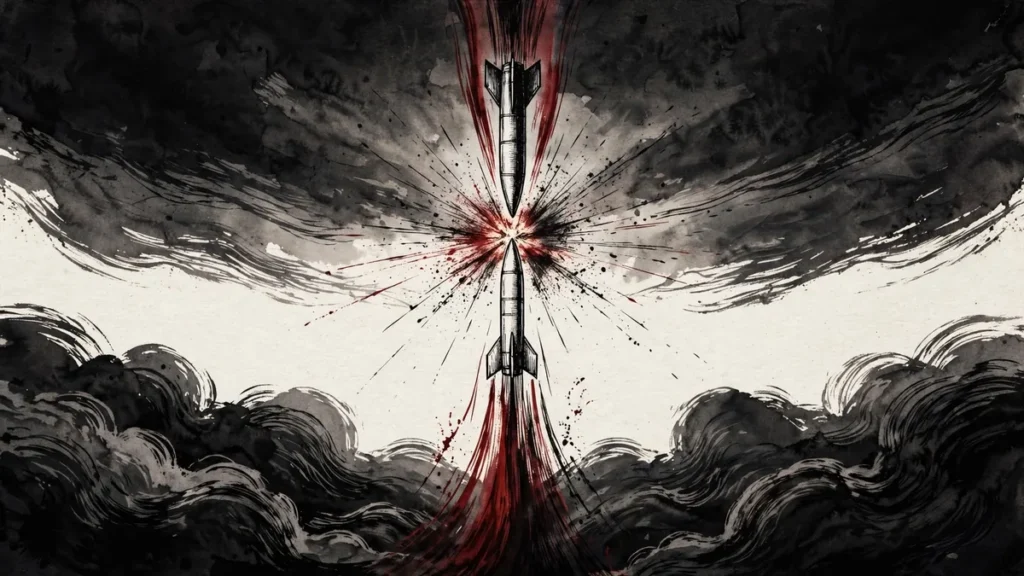
The PAC-3 MSE is the Patriot system’s main weapon against ballistic missiles. Unlike the older PAC-2 interceptors, which detonate a blast-fragmentation warhead near a target, the PAC-3 family destroys its target by direct impact, a method known as hit-to-kill. The Missile Segment Enhancement version adds a larger two-pulse solid rocket motor, with the second pulse firing late in flight to extend range and altitude against manoeuvring threats. That is what makes it Ukraine’s principal defence against Russian Iskander ballistic missiles and Kinzhal air-launched missiles, according to Defence Blog.
Ukraine’s need is immediate and specific. Ballistic missiles arrive fast, on steep trajectories, and give air defences little time to react. Other systems in Ukraine’s arsenal can handle drones and cruise missiles, but Patriot is the system Kyiv relies on for the ballistic threat. When interceptors run low, cities, power stations and military facilities become harder to protect, and that is exactly the pressure Russia has applied this autumn by striking energy infrastructure.
For readers new to the system, our earlier explainer covers how a Patriot battery works, from radar to launcher: How Patriot Air Defense Works in Ukraine (2026). This article is different: it is about the sale itself, its funding, and its timeline, not about how the system operates.
By the numbers: the Patriot sale in figures
| Metric | Figure | Source |
|---|---|---|
| Interceptors in the approved package | 500 PAC-3 MSE | US State Department, via Reuters / Al Jazeera (CONFIRMED) |
| Estimated value | 2.1 billion dollars | US State Department, via Reuters / Al Jazeera (CONFIRMED) |
| US government funding | None | US State Department (CONFIRMED) |
| Delivery timetable in the announcement | None given | State Department announcement (CONFIRMED) |
| Expected delivery, per briefed officials | A couple of years into the 2030s | Two people briefed on the decision, via Reuters (REPORTED) |
| Kyiv’s winter request from stocks | About 100 interceptors per month | President Zelenskyy, October 30 (CONFIRMED statement) |
| Average Patriot interceptors received in 2026, per Kyiv | About 12 per month | President Zelenskyy, via The Statesman (Kyiv’s assessment) |
| Incoming ballistic missiles per month, per Kyiv | About 150 | President Zelenskyy, via The Statesman (Kyiv’s assessment) |
| PAC-3 MSE delivered by Lockheed in 2025 | 620, a company record | Defence Blog (REPORTED) |
| Planned annual PAC-3 MSE production | 2,000 per year | Lockheed Martin, via Reuters (company plan) |
Figures marked CONFIRMED appear in the State Department announcement or in two or more reputable reports of it. Figures marked REPORTED come from a single source or from briefed officials, and Kyiv’s monthly figures are Ukraine’s own assessment of its needs, not independently verified consumption data.
Who pays for the Patriot missiles, and how does JUMPSTART work?
Nobody in Washington is paying for this package, and that is a deliberate feature of the announcement. Ukrinform, citing the State Department’s Bureau of Political-Military Affairs, reports that the purchase will be financed through contributions from Canada, Germany and Norway under the JUMPSTART programme, plus national funds raised through the European Union’s Ukraine Support Loan. The State Department’s own wording, quoted across the reporting, is blunt: “No U.S. funds are involved in this sale.”
JUMPSTART stands for the Joint Ukraine Multinational Program – Services, Training and Articles Rapid Timeline. Established in 2022, it is the mechanism through which third-party countries contribute funds so Ukraine can buy American equipment. Reuters notes that the programme was used in August to buy 3,350 air-launched cruise missiles worth 825 million dollars made by Zone 5 Technologies and CoAspire. In other words, this Patriot package is not a new invention: it runs through a donor-funded channel that allies have already used.
What the announcement does not say is how the 2.1 billion dollars is split between the three donor countries and the EU-financed share. That breakdown, if it is published at all, is likely to emerge during congressional review and contract negotiations. Until then, any per-country figure would be speculation, and this article does not offer one.
Why is Zelenskyy asking for missiles this winter, not in the 2030s?
President Zelenskyy welcomed the approval on October 30, calling it a strong decision, but his message was dominated by a single objection: the timing. In a statement quoted by The Statesman, he said the 500 interceptors could make for a highly effective defence package this winter, but that deliveries had been stipulated to begin only in a few years. He asked American partners to find a solution for the moment when there is a real danger, not the day after tomorrow.
His proposed solution is a swap: transfer interceptors from existing American and allied stocks now, and replenish those stocks later from the production this sale will fund. He said Ukraine had asked for a winter support package at a rate of 100 Patriot interceptors per month, arguing that the United States, European partners and other partners hold sufficient stocks in warehouses and that replenishing them later, through production already contracted and paid for, would be entirely feasible.
The urgency is grounded in the last few weeks. Zelenskyy said Russian forces had carried out more than 30 strikes against critical parts of Ukraine’s electricity network in the preceding two weeks of October, targeting electricity, heating, water supplies and bridges. On October 30 itself, Reuters reported that a Russian drone strike killed at least 14 people on a crowded rail platform in the city of Dnipro. He also said Ukraine had been waiting for almost a month for the United States to sign off on critical missile supplies, and that Kyiv received an average of just 12 Patriot interceptors per month during 2026 against a requirement to counter about 150 incoming Russian ballistic missiles a month. Those monthly figures are Kyiv’s assessment, and they are presented here as such, but they explain why a delivery date in the 2030s feels, from Kyiv’s side, like an answer to a different question.
What the Patriot sale means for US/UK/EU readers
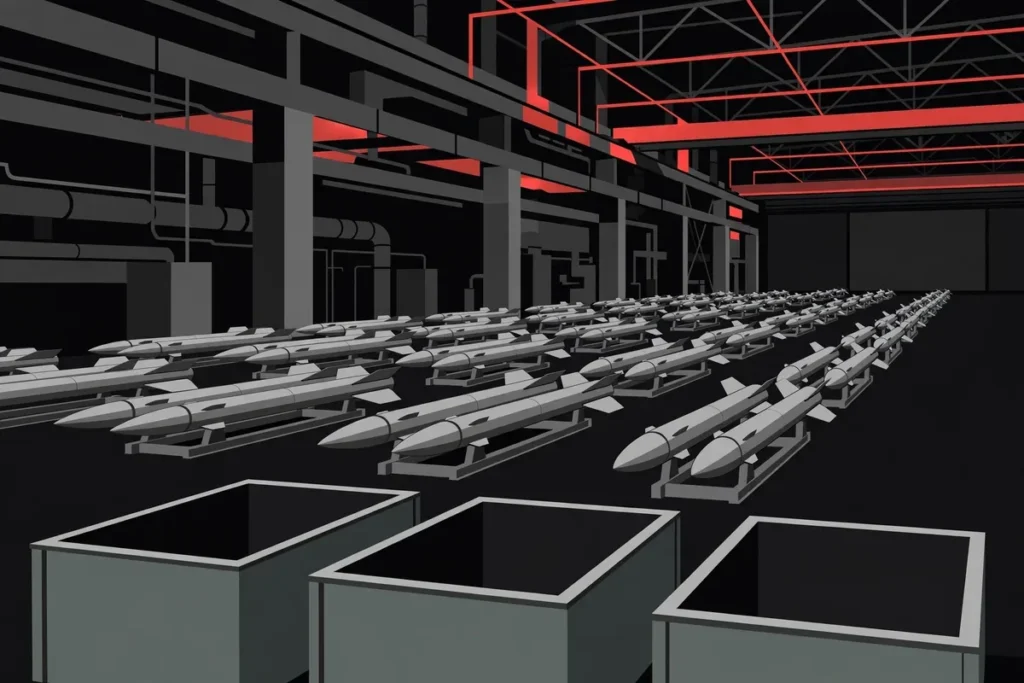
For American readers, the most direct point is fiscal: this package is structured so that no US funds are involved, with allies footing the bill through JUMPSTART and EU-backed national funds. The industrial point cuts the other way: Lockheed Martin is the principal contractor, and Reuters reports that a July contract worth up to 58.6 billion dollars for Patriot interceptor production is meant to let Lockheed triple PAC-3 MSE production capacity by the end of 2030, raising jobs at its Camden, Arkansas, plant by about half, from around 1,200 to about 1,850. American production capacity, in other words, is the bottleneck that decides when Ukraine actually receives these missiles, and that capacity is being expanded for US and allied orders alike.
For UK and European readers, the sale is a test of the donor-funded model that Europe has increasingly relied on: allies pay, America builds, Ukraine defends. The three named donors are Canada, Germany and Norway, and the EU Ukraine Support Loan supplies the remaining national-funds share. Ukraine’s defence minister has separately called on the E5 countries – Germany, the United Kingdom, France, Poland and Italy – to consider transferring 10 percent of their interceptor stocks for Patriot and IRIS-T systems in exchange for future deliveries, according to Ukrainska Pravda. That proposal is not part of this sale, but it shows where the winter debate is heading: from new production, which is slow, to existing stocks, which are fast but politically harder to release.
For energy and household budgets, the link is indirect but real. Russia’s strikes on Ukraine’s power grid, and Ukraine’s strikes on Russian refineries, both feed into European energy and diesel markets, and air defence is what keeps Ukraine’s grid standing through winter. A Patriot package that arrives in the 2030s does nothing for this winter’s grid; a stockpile transfer this winter could. That is the practical reason the delivery argument matters beyond the diplomacy.
What happens next: Congress, contracts, and production
The next formal step is congressional review. The proposed sale must still undergo that review, and the US announcement did not provide a delivery timetable. After review, Ukraine and the US government can sign a letter of offer and acceptance, and the US Army can place the order with Lockheed Martin. None of that has happened yet, and that is why every careful report calls this a possible or potential sale rather than a done deal.
Production is the second clock. Lockheed delivered 620 PAC-3 MSE interceptors in 2025, a company record, and has said production would rise to 2,000 units a year. Even at that higher rate, 500 interceptors for Ukraine compete with orders from the United States and other allies, and with demand created by US military operations involving Iran, which Reuters notes have raised concerns about inventories of key air-defence weapons. The July contract is designed to expand capacity, but new lines, workers and components do not appear overnight.
The third clock is political. The sale was approved against a backdrop of tension between Kyiv and Washington over delayed deliveries, a diesel deal with Russia announced by President Donald Trump, and criticism of Ukraine’s strikes on Russian refineries. Reuters reports that delayed deliveries have added to those tensions, and Breaking Defense notes that Washington appeared to delay Patriot transfers in October amid a falling-out between Trump and Zelenskyy. Whether the stockpile-transfer idea Zelenskyy proposed gains traction will be a signal of whether that tension is easing or hardening.
Diplomatically, the sale lands just ahead of expected trilateral talks. Zelenskyy has said he hopes a meeting involving Russia, Ukraine and the United States will take place in Abu Dhabi between November 6 and 10, and our preview of those talks is here: Abu Dhabi Ukraine-Russia Talks November 2026: What to Expect. The next Ukraine Defense Contact Group meeting follows on November 17, covered here: Ramstein November 17: What the Ukraine Defense Group Could Decide. Both are venues where the winter interceptor question could move from statement to decision.
Different perspectives
From Kyiv’s perspective, the approval is welcome but mistimed: a large package, years away, does not solve a winter problem. From Washington’s perspective, as expressed in the State Department notification, the sale supports US foreign policy and national security objectives by improving the security of a partner country that is a force for political and economic stability in Europe, and it does so without US funds. From the donor capitals’ perspective, JUMPSTART lets allies convert money into American hardware without each country negotiating its own purchase.
There is also a counterpoint worth recording. NATO’s top commander in Europe, General Alexus Grynkewich, said in Riga on October 30 that not a single item included in the PURL package paid for by European allies had been delayed, according to Crisis Zone’s summary of the reporting. PURL, the Prioritized Ukraine Requirements List, is a separate allied-buying channel from this JUMPSTART sale, so his statement does not answer Zelenskyy’s complaint about this package’s timeline. But it does show that Washington and Kyiv are, at times, describing different pipelines, and that confusion over which missiles are delayed, and through which channel, is part of the dispute itself.
Moscow has not, in the reporting reviewed for this article, issued a detailed response to this specific sale. Russian officials have consistently opposed Western arms supplies to Ukraine, and Russian forces have continued striking Ukrainian energy infrastructure. This article does not attribute a specific reaction to Moscow that has not been verified.
What to watch next in Ukraine’s air-defence fight
Watch first for any response to Zelenskyy’s stockpile proposal: a transfer of interceptors from existing stocks, even a partial one, would be the clearest sign that the winter gap is being treated as urgent. Watch second for the congressional review outcome and any published delivery schedule, which would replace the reported early-2030s estimate with something firmer. Watch third for production announcements from Lockheed Martin, and for whether the 2,000-a-year target holds.
Watch also the battlefield context that drives demand: Russian strikes on Ukraine’s grid through November, Ukraine’s refinery campaign, and the Oleshky evacuation truce, which is due to end on the evening of November 1. All of these shape how many interceptors Ukraine burns through, and therefore how long 500 missiles, whenever they arrive, would actually last. For the broader conflict picture, see our Conflict Zones hub.
Frequently asked questions
What did the US approve for Ukraine on October 30, 2026?
The US State Department approved a possible sale of 500 Patriot PAC-3 MSE interceptor missiles, plus spare parts and support, for an estimated 2.1 billion dollars. It is an approval notified to Congress, not yet a signed contract or a shipment.
Who is paying for the Patriot missiles?
Canada, Germany and Norway are contributing through the US JUMPSTART programme, and the rest comes from national funds financed by the European Union’s Ukraine Support Loan. The State Department says no US funds are involved.
When will Ukraine receive the 500 Patriot interceptors?
No delivery date was given in the announcement. Two people briefed on the decision told Reuters the missiles, which have yet to be manufactured, are not expected until a couple of years into the 2030s. That timing is reported, not confirmed, and Zelenskyy is pressing for stockpile transfers this winter instead.
Why does Ukraine need PAC-3 MSE interceptors specifically?
PAC-3 MSE interceptors use hit-to-kill direct impact to destroy ballistic missiles, rather than exploding nearby like older PAC-2 missiles. They are Ukraine’s principal defence against Russian Iskander and Kinzhal ballistic missiles, which other systems in its arsenal cannot reliably stop.
Does approval mean the sale is final?
No. The sale must still undergo congressional review, and quantities and prices can change during contract negotiations. Until a letter of offer and acceptance is signed and an order placed, the package remains a possible sale.
Sources
- Reuters via The Jerusalem Post: US approves 2.1 billion dollar Patriot missile sale to Ukraine
- Al Jazeera: US greenlights 2.1bn Patriot missile sale to Ukraine
- Breaking Defense: US greenlights 500 Patriot missiles for Ukraine, with 2.1 billion dollars to be paid by allies
- Ukrinform: US approves potential 2.1B sale of 500 Patriot missiles to Ukraine
- The Statesman: Ukraine seeks urgent Patriot deliveries after US approves 2.1 billion dollar missile sale
- Defence Blog: U.S. clears sale of 500 Patriot PAC-3 missiles to Ukraine



Discussion 0
Share analysis, corrections, or context. Be civil — comments are moderated.