
WarBrief Live | October 21, 2026 | Breaking Analysis
Israel carried out an airstrike on Beirut’s southern suburbs on October 21, 2026, killing a senior commander of Hezbollah’s elite Radwan Force — the first Israeli strike on the Lebanese capital in weeks, since the Israel-Lebanon ceasefire took effect. What follows separates what officials and news agencies have confirmed from what remains unverified, and explains why a single strike on Beirut threatens the fragile truce that underpins the broader US-Iran standoff.
Key Takeaways
- Israeli jets struck the Dahieh district of Beirut on Wednesday evening, October 21, targeting a commander of Hezbollah’s Radwan Force.
- The IDF confirmed the commander killed was Ahmed Ghaleb Balout, described as the Radwan Force’s chief of operations; a source close to Hezbollah told AFP a senior commander was killed.
- The strike is the first on Beirut since the ceasefire took effect — a truce Reuters describes as the underpinning of the broader US-Iran truce.
- Israel said the United States was informed ahead of the operation; the strike lands six days before Israel’s October 27 general election.
What happened in Beirut on October 21?
Prime Minister Benjamin Netanyahu and Defense Minister Israel Katz announced the operation in a joint statement on Wednesday evening, saying it was aimed at “eliminating” a commander of Hezbollah’s Radwan unit, dpa reported. The Israeli Air Force received specific intelligence and struck at around 8 p.m. local time (1700 GMT), hitting an apartment in the Haret Hreik area of the densely populated Dahieh suburb, where the commander was believed to be hiding.
The strike was the first on Beirut’s southern suburbs in weeks, since the ceasefire took effect — a point confirmed across multiple outlets. Residents described scenes of panic as loud explosions shook the area. “When we heard the explosions, we ran down the stairs and fled,” one resident told dpa. Many residents had only recently returned to their homes in Dahieh following the ceasefire.
According to Israeli officials cited by dpa, the United States was informed ahead of the strike and approved the operation. Northern Israel was placed on heightened alert in anticipation of possible escalation. The claim of prior US approval is single-sourced to Israeli officials and has not been independently confirmed by Washington.
The strike did not happen in isolation. On the same Wednesday, the Israeli military said Hezbollah had launched explosive drones and rockets toward Israeli soldiers in southern Lebanon, injuring two soldiers, and that the Israeli Air Force intercepted a hostile aircraft before it crossed into Israel. Israel also announced strikes on Hezbollah infrastructure in several areas of Lebanon, Reuters reported via RTHK. Separately, Lebanon’s Health Ministry said an Israeli airstrike killed four people, including two women and an elderly man, in the town of Zelaya in southern Lebanon.
Who was the commander Israel killed?
The Israeli military confirmed that the commander killed was Ahmed Ghaleb Balout. According to the IDF, Balout had served as the Radwan Force’s chief of operations and directed dozens of attacks against Israeli forces in southern Lebanon, including anti-tank missile strikes and explosive attacks during the current conflict. The IDF also said he played a central role in planning attacks against Israeli troops and advancing Hezbollah’s long-standing “Conquer the Galilee” invasion plan targeting northern Israel.
A source close to Hezbollah told AFP that a senior commander had been killed in the Israeli attacks, naming him as Malek Ballout, the operations commander of the Radwan force. Israeli Channel 13, citing Israeli sources, reported that the commander — identified as Malek Balut — along with his deputy and several other fighters, was killed in the strike. Those additional casualties are reported by a single outlet and have not been confirmed by either side.
The Radwan Force is Hezbollah’s elite cross-border unit — the formation Israeli officials hold responsible for fire directed at Israeli communities and attacks on IDF soldiers. The Netanyahu-Katz joint statement put it bluntly:
“The Radwan terrorists led by him are responsible for fire directed at Israeli communities and attacks against Israel Defense Forces soldiers. No terrorist has immunity; the long arm of Israel will reach every enemy and murderer.”
The strike was, the statement added, intended to ensure the security of residents in northern Israel. Hezbollah’s broader network of Iran-backed forces has been a central thread of the regional war — see our earlier analysis of what the Iran war has in common with Israel’s conflicts with Hezbollah.
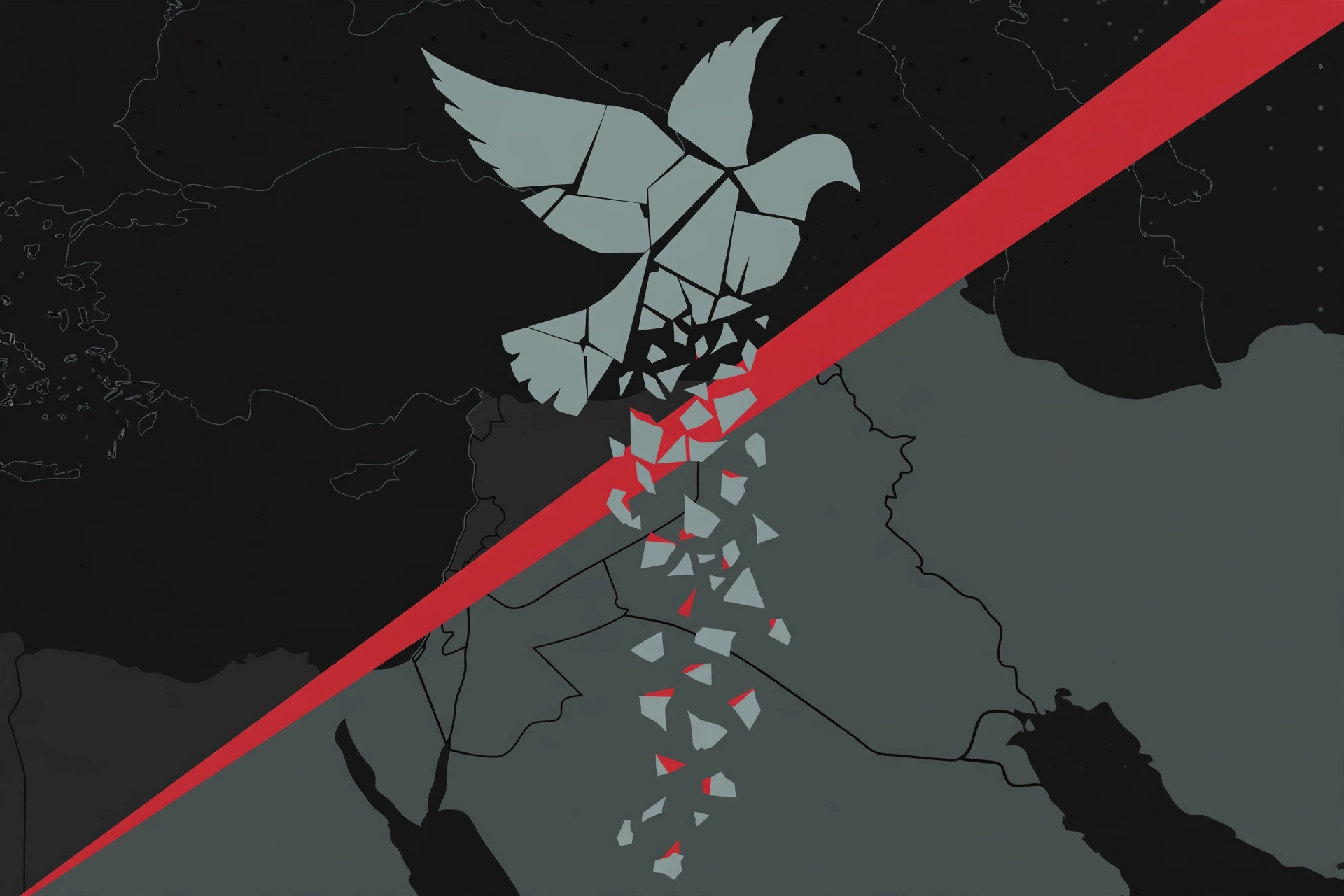
By the numbers: the October 21 Beirut strike
| Metric | Figure | Source |
|---|---|---|
| First Israeli strike on Beirut since ceasefire | October 21, 2026 (first in weeks) | CONFIRMED — Reuters/RTHK, dpa |
| Target | Radwan Force commander, Dahieh suburb | CONFIRMED — Netanyahu/Katz joint statement |
| Commander killed | Ahmed Ghaleb Balout (IDF); “Malek Ballout” per AFP Hezbollah source | CONFIRMED — IDF; AFP |
| Reported munitions | Around 10 heavy bombs on Haret Hreik apartment | REPORTED — dpa, single source |
| Strike time | Around 8 p.m. local (1700 GMT) | REPORTED — dpa, citing Israeli sources |
| Killed in Lebanon since March 2 | More than 2,700 | Lebanon Health Ministry |
| Israeli soldiers injured Wednesday | 2, in Hezbollah drone and rocket fire | Israeli military |
| Israeli soldiers killed since March 2 | 17, plus 2 civilians in northern Israel | IDF |
Figures marked REPORTED come from a single or secondary source and have not been independently confirmed. Death tolls are the parties’ own figures; the Beirut strike’s full casualty list beyond the commander has not been independently verified.
Why did Israel break the Beirut ceasefire now?
Israel’s stated reason is straightforward: the joint statement framed the strike as a response to Radwan attacks on Israeli communities and soldiers. The timing, though, sits inside a crowded political calendar. Israel votes in a general election on October 27 — six days away, and the Financial Times reported this week that US President Donald Trump blocked a planned new Israeli offensive against Iran until after the US midterms, a story WarBrief covered in this morning’s breaking analysis. A precision strike on a named commander in Beirut, rather than a broad offensive, fits inside both constraints: demonstrative action without the regional escalation Washington vetoed.
There is also a tactical dimension. Israel earlier on Wednesday called for residents to evacuate several villages north of the Litani River, which Reuters noted could represent an expansion of Israel’s zone of action. Israel has carved out a self-declared security zone extending as deep as 10 kilometers into southern Lebanon, saying it aims to protect northern Israel from Hezbollah fighters embedded in civilian areas.
The US role is murkier. Israeli officials told dpa that Washington was informed ahead of the strike and approved it. But Israel’s Channel 12 has separately reported that the US demanded advance notice on targeted eliminations in Lebanon and opposed collapsing buildings during Israeli operations. Both claims come from Israeli media or officials; Washington has not publicly confirmed either.
What the Beirut strike means for US, UK and EU readers
For Western readers, the strike matters less as a single tactical event and more as a stress test of the ceasefire architecture holding the region together. Reuters reports that the Lebanon ceasefire has underpinned a broader US-Iran truce, and that a halt to Israeli strikes in Lebanon is a key Iranian demand. As Iran and the US say they are drawing closer to a deal to halt their wider conflict, strikes on Beirut directly threaten the truce those talks rest on.
Energy markets are the first transmission channel. The Middle East war has kept a risk premium in crude prices for months, and any sign the Lebanon front is unraveling pushes that premium higher — feeding straight into petrol, diesel and heating costs across the US, UK and EU. Travel is the second: airlines already route around Lebanese airspace, and renewed strikes on Beirut could extend disruption and travel advisories for the eastern Mediterranean.
Security policy is the third. Israel’s October 27 election and the US midterms on November 3 both fall within the next fortnight, and both campaigns are now being fought against a backdrop of live escalation. For European readers in particular, a collapsing Lebanon truce raises the prospect of renewed displacement and another test of EU migration and humanitarian responses.

What happens to the Lebanon ceasefire now?
Neither side has declared the ceasefire over, but it is under severe strain. Despite the official truce, cross-border violence has continued on a near-daily basis, dpa noted. Hezbollah has responded to Israeli strikes by firing and launching armed drones toward Israeli soldiers — and Iran, Hezbollah’s ally, looms over every escalation decision.
The diplomatic track is thin but alive. Talks between Israel and Lebanon have continued, but largely at the ambassador level: Washington hosted two meetings between the Israeli and Lebanese ambassadors to the United States last month, and Hezbollah strongly objects to the contacts. Lebanese Prime Minister Nawaf Salam said on Wednesday that it was premature to talk of any high-level meeting between Lebanon and Israel, telling the National News Agency that shoring up the ceasefire would be the basis for any new negotiations between envoys in Washington.
Salam also drew Lebanon’s red lines: the country is not seeking “normalisation with Israel, but rather achieving peace,” with a minimum demand of a timetable for Israel’s withdrawal. His government is developing a plan to restrict weapons to state control — an effort aimed at securing Hezbollah’s disarmament. President Joseph Aoun said this week that the timing was not right for a meeting with Netanyahu, insisting Lebanon “must first reach a security agreement and a halt to the Israeli attacks” before any summit.
What to watch next: whether Hezbollah retaliates beyond the drone and rocket fire already reported; whether Israeli strikes on Beirut resume or remain a one-off; how the October 27 Israeli election reshapes Netanyahu’s calculus; and whether the US-Iran diplomatic track — reportedly advancing even as bombs fall on Beirut — survives the escalation.
Frequently asked questions
Did Israel strike Beirut in October 2026?
Yes. On the evening of October 21, 2026, Israeli jets struck Beirut’s Dahieh southern suburbs, targeting a commander of Hezbollah’s Radwan Force. It was the first Israeli strike on Beirut in weeks, since the Israel-Lebanon ceasefire took effect, and was announced by Prime Minister Netanyahu and Defense Minister Katz in a joint statement.
Who was the Hezbollah commander killed in the Beirut strike?
The IDF confirmed the commander killed was Ahmed Ghaleb Balout, described as the Radwan Force’s chief of operations. An AFP source close to Hezbollah confirmed a senior Radwan operations commander was killed, naming him Malek Ballout. The IDF said he directed dozens of attacks on Israeli forces and played a central role in Hezbollah’s “Conquer the Galilee” invasion plan.
Is the Israel-Lebanon ceasefire over?
No formal collapse has been declared, but the truce is under severe strain. Cross-border violence has continued near-daily despite the official ceasefire, and the October 21 Beirut strike is the most serious breach yet. Ambassador-level Israel-Lebanon talks continue, but Lebanon’s prime minister says shoring up the ceasefire must come before any higher-level negotiations.
Why does the Beirut strike matter for the US-Iran talks?
Reuters reports that the Lebanon ceasefire has underpinned a broader US-Iran truce, and that a halt to Israeli strikes in Lebanon is a key Iranian demand. With Iran and the US saying they are drawing closer to a deal to halt their wider conflict, strikes on Beirut directly threaten the ceasefire architecture those negotiations rest on.
What is Hezbollah’s Radwan Force?
The Radwan Force is Hezbollah’s elite cross-border unit, which Israeli officials hold responsible for attacks on Israeli communities and soldiers. The IDF says its former chief of operations, Ahmed Ghaleb Balout, advanced Hezbollah’s “Conquer the Galilee” plan — a long-standing Hezbollah concept for a cross-border invasion of northern Israel.
Sources
- RTHK (Reuters): Israel ‘kills Hezbollah commander’ in Beirut strikes
- dpa via Newswav: Israel hits Hezbollah commander in first Beirut attack since ceasefire
- Worthy News: Israel Strikes Hezbollah Commander in Beirut
- Israel National News: IDF confirms Radwan Force commander eliminated
- The Times of Israel: October 21, 2026 liveblog
- Al Arabiya (Reuters): Projectile strikes tanker near Strait of Hormuz, UKMTO says


Discussion 0
Share analysis, corrections, or context. Be civil — comments are moderated.