WarBrief Live | October 19, 2026 | Intelligence Report
On October 17, 2026, The Wall Street Journal reported that Iran is giving Yemen’s Houthis targeting intelligence, training, and tactical guidance for attacks on Saudi Arabia — support that, according to people briefed on Saudi and alliance intelligence, has enabled the Houthis’ “most potent and sophisticated attacks yet.” If accurate, the allegation marks a qualitative shift in the proxy relationship: from weapons supply to operational-level integration. What follows separates what is confirmed from what remains reported, and assesses what an intelligence pipeline would change.
Key Takeaways
- Reported, not confirmed: The Journal cites people briefed on Saudi and anti-Houthi alliance intelligence saying Tehran provides the Houthis with targeting help for drone and missile strikes, plus intelligence, training, and tactical guidance. Iran denies it.
- Confirmed: On October 18, Yemen’s Foreign Minister Afrah Al-Zouba rejected Iran’s mediation offer, stating that “those who arm one side in a war cannot be mediators in that same war.”
- The assessment challenge: Former Israeli defense-intelligence Iran chief Danny Citrinowicz told the Journal the Iran–Houthi connection is “very, very strong on the operational level” — “strategic cooperation” rather than a client-patron arrangement.
- The stakes: The Houthis hold Yemen’s Red Sea coast along the Bab al-Mandeb Strait, a chokepoint for Saudi oil exports, while strikes on Saudi energy and airport targets have pushed oil prices higher.
What did the Wall Street Journal’s reporting actually claim?
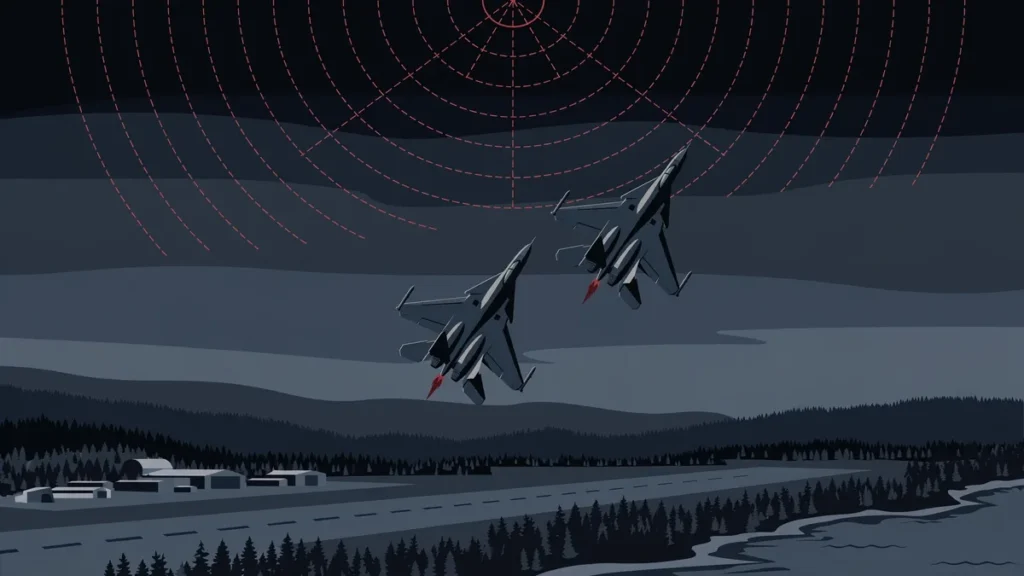
The Journal’s October 17 report, sourced to people briefed on intelligence from Saudi Arabia and Yemen’s anti-Houthi alliance, describes Iranian help that goes beyond the long-standing weapons-smuggling channel: Tehran is allegedly helping the Houthis identify targets for missile and drone strikes, providing intelligence, training fighters on advanced weapons, and offering tactical guidance — support the report credits with enabling the most potent Houthi attacks of the entire conflict.
The report ties this assistance to a rapid Houthi offensive that has produced significant territorial gains, including control of the coastline on Yemen’s side of the Bab al-Mandeb Strait, plus strikes on Saudi oil tankers, energy facilities, and airports — including an attack on Riyadh last weekend that killed at least 13 people. Casualty figures vary across accounts and should be treated as reported, not confirmed. Iran denies the allegation, saying it does not interfere in Yemeni affairs — though the Journal’s sources say the reporting is based on recently obtained Saudi and alliance intelligence materials.
How does an “intelligence pipeline” change the proxy-war calculus?
Weapons can be smuggled or reverse-engineered; targeting intelligence and tactical guidance are harder to indigenize. Per the Journal, Iranian support now includes help developing locally manufactured drones and missiles — reducing the Houthis’ dependence on direct weapons shipments from Iran, which are increasingly interdicted.
Citrinowicz’s framing — “strategic cooperation” rather than a client-patron arrangement — and the Soufan Center’s assessment that the strikes are “helping Iran project power” suggest the campaign serves Tehran’s broader interest: raising oil prices and economic pressure on Washington.
The geography reinforces the assessment. Houthi control of Yemen’s Red Sea coastline puts the Bab al-Mandeb Strait — a chokepoint for Saudi oil exports — within reach of the group’s strike assets, while a third tanker was struck in three days in the Strait of Hormuz last week. Oil prices have climbed sharply, with crude above $106. None of this is yet publicly confirmed by Western intelligence agencies, but the direction of travel matches the Journal’s broader October reporting: Iran is trying to regain the upper hand through escalation that raises the economic cost of the conflict.

Why is Yemen’s government rejecting Iranian mediation?
Hours after the Journal’s report appeared, Yemen’s Foreign Minister Afrah Al-Zouba published a statement on X rejecting Iran’s offer to mediate the Yemen crisis: “Those who arm one side in a war cannot be mediators in that same war.” She asserted that the Iranian regime has “made itself a party to the war against the Yemeni people” by providing the Houthis with funding, training, weapons, missiles, and drones.
Al-Zouba accused Tehran of prolonging the conflict at the very moment its talk of mediation coincides with escalation on the ground: attacks on presidential and government headquarters in Aden, the siege of Taiz, strikes on civilian targets inside Yemen, assaults on Saudi Arabia, and threats to maritime navigation. She demanded that the Houthis be designated as a terrorist organization, their funding cut off, and the U.N. arms embargo tightened: “Whoever desires peace in Yemen should begin by stopping the weapons with which Yemenis are being killed.”
She also rejected what she described as Iranian attempts to grant the Houthis legitimacy to represent Yemen or to reframe the conflict as a Yemen–Saudi Arabia dispute. The statement closes off — at least publicly — the mediation track Tehran has floated, even as Washington and Gulf allies seek to end the Iran war on favorable terms. For the wider dossier, see WarBrief’s Intelligence Reports archive.
Assessment: what the pipeline allegation changes — and what to watch
Assessment: The intelligence-pipeline allegation, even while anonymously sourced, is analytically significant because it explains the qualitative jump in Houthi strike sophistication better than weapons volume alone. Three indicators would support it: continued accurate strikes on hardened Saudi targets; visible Houthi use of locally manufactured drones with Iranian technical signatures; and further Saudi public attribution backed by intelligence shared with Western partners. Three indicators would argue against it: a sharp drop-off in strike precision; evidence the recent gains owe more to degraded Saudi and alliance readiness; or U.S. or allied officials publicly distancing themselves from the account.
Outlook: For US/UK/EU readers, the pipeline story is a price story: every escalation that threatens Saudi oil exports or Red Sea shipping feeds into fuel costs and inflation — which is precisely why Tehran, per Citrinowicz, has an interest in Houthi success. Watch for Saudi release of declassified evidence of Iranian targeting support, which would convert “reported” to “confirmed”; any U.S. response targeting the pipeline’s enablers; and the October 30 Manama Dialogue, where Gulf security officials will almost certainly press the question in public.
Frequently asked questions
Is Iran really giving the Houthis intelligence for attacks on Saudi Arabia?
The Wall Street Journal reports that it is, citing people briefed on Saudi and anti-Houthi alliance intelligence. Iran denies it, and Western intelligence agencies have not publicly confirmed the allegation — so it should be treated as reported, not established fact.
How is this different from Iran’s earlier support for the Houthis?
The new reporting alleges an operational-level pipeline — targeting intelligence, training, tactical guidance, and help developing locally manufactured drones — a shift from arms supply to combined planning.
What does the Bab al-Mandeb Strait have to do with it?
The Houthis control Yemen’s Red Sea coastline along the strait, a chokepoint for Saudi oil exports. That position, combined with targeting support, lets the group threaten the maritime and energy routes Saudi Arabia depends on.
Why did Yemen’s foreign minister reject Iranian mediation?
Afrah Al-Zouba argued that a country she says arms one side of a war cannot mediate that same war, accused Iran of prolonging the conflict, and called for halting weapons flows and designating the Houthis as a terrorist organization.
Sources
- The Wall Street Journal: Iran Is Giving Houthis Targeting and Intelligence for Attacks on Saudi Arabia
- The Times of Israel: Iranian military support said to fuel Houthi territorial gains, attacks on Saudi Arabia
- The Jerusalem Post: Houthi attacks on Saudi Arabia reportedly based on intelligence provided by Iran
- The Times of India: Iran helping Houthis — how Tehran is hitting Saudi Arabia without fighting directly
- Dawn: Iran is giving Houthis intelligence for attacks on Saudi Arabia, WSJ reports
- Arab News Pakistan: Yemeni foreign minister — Iran is a party to the war