
WarBrief Live | October 15, 2026 | Geopolitics
On October 14, Beijing issued its sharpest warning yet over a sea clash near the Taiwan-controlled Pratas Islands: Taiwan must “bear all consequences” for a Coast Guard water-cannon incident earlier in October, a spokesman for China’s Taiwan Affairs Office said. The warning followed the October 1 encounter near the Dongsha atoll, in which a Taiwan Coast Guard vessel fired its water cannon at a mainland Chinese fishing boat that ignored repeated orders to leave restricted waters. This explainer breaks down the Pratas Island water-cannon incident, what each side says happened, and what Beijing’s threat could mean next.
Key Takeaways
- On October 1, 2026, Taiwan’s Coast Guard vessel Yunlin used a water cannon against the mainland fishing boat Jin Sha roughly 27 nautical miles east of Pratas (Dongsha) Island, after three radio warnings went unanswered. A second boat left the area.
- Taiwan says it was “normal law enforcement” carried out in a “very careful and proportionate way.” Beijing calls it a dangerous, brutal provocation and demands Taiwan “bear all consequences.”
- Spokesman Chen Binhua repeated China’s claim of “indisputable sovereignty” over the Pratas and declined to say what the consequences would be.
- The atoll sits more than 400 km from Taiwan — a strategic weak point security experts have long flagged as vulnerable in a cross-strait crisis.
- Taipei separately reported a rise in Chinese military activities around Taiwan at the same time as Beijing’s warning.
What happened near Pratas (Dongsha) Island?
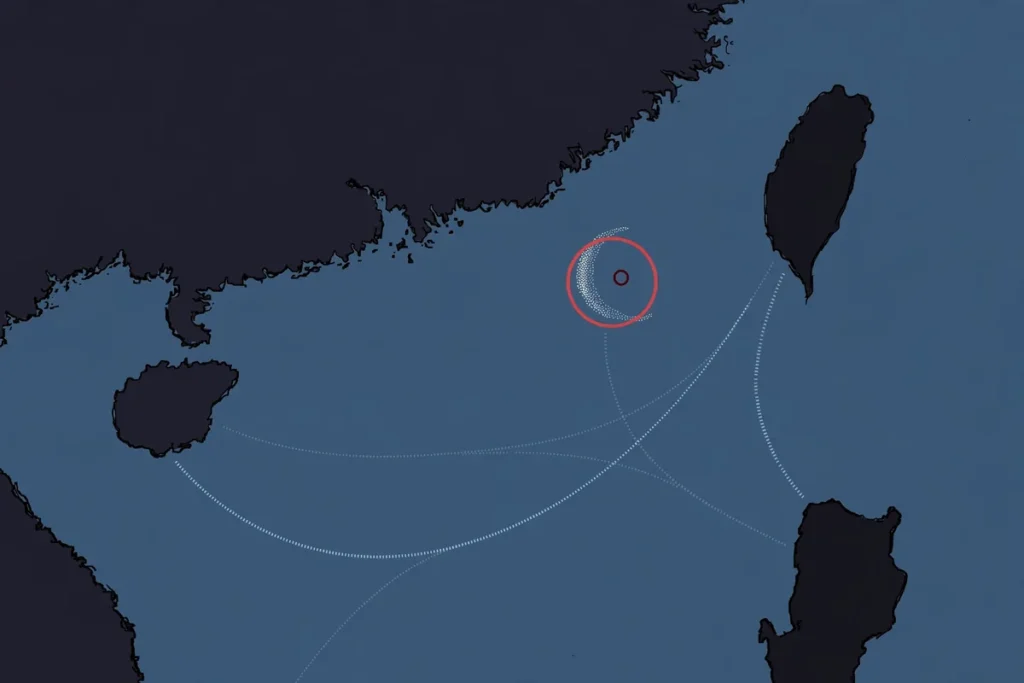
On October 1, 2026, the Taiwan Coast Guard patrol vessel Yunlin encountered two mainland Chinese fishing boats — the Yue Hui Dong Yu 75066 and the Jin Sha — anchored about 27 nautical miles (50 km) east of Pratas Island, also known as Dongsha, in waters Taiwan designates as restricted for mainland vessels, according to the Coast Guard Administration’s own account of the incident.
Coast Guard personnel ordered both boats to leave. The Yue Hui Dong Yu 75066 complied, but the Jin Sha stayed put. After three unsuccessful radio attempts, the Yunlin fired a warning blast of water roughly 200 meters from the fishing boat for about 30 seconds. When the Jin Sha still did not move, the crew directed the water cannon at the vessel’s bridge for approximately 90 seconds until it finally withdrew from the area.
Taiwan’s Coast Guard said its operators deliberately aimed away from fishermen standing on deck, stopped spraying once the vessel began leaving, and reported no injuries. The boat later suffered engine failure and was towed away by a nearby Chinese vessel, the Coast Guard said. Video of the encounter circulated online days later, showing the water jet engulfing much of the fishing boat.
How the water-cannon clash unfolded on October 1
The October 1 sequence, as described by Taiwan’s Coast Guard Administration:
- Detection: the patrol vessel Yunlin locates two mainland fishing boats anchored about 27 nautical miles east of Dongsha/Pratas, inside Taiwan-declared restricted waters;
- Warnings: coast guard personnel issue radio orders for both boats to depart. One complies; the Jin Sha ignores three rounds of warnings;
- Warning spray: the Yunlin fires its water cannon into the air for roughly 30 seconds, about 200 meters from the Jin Sha;
- Directed spray: with no response, the crew aims the cannon at the wheelhouse for about 90 seconds. Taiwan says operators avoided hitting crew members on deck and halted the spray the moment the boat turned away;
- Aftermath: the Jin Sha later reports engine failure and is towed from the area by a nearby Chinese vessel.
The account comes from Taiwan’s Coast Guard Administration; Beijing has not disputed the physical details of the encounter, choosing instead to frame the enforcement action itself as illegitimate.
Why Beijing is warning of “consequences” now
Two weeks after the encounter, on October 14, Chen Binhua — a spokesman for China’s Taiwan Affairs Office — used a scheduled press conference to escalate the dispute from a routine maritime incident to a sovereignty confrontation.
Chen said China holds “indisputable sovereignty” over the Pratas and the surrounding waters, and that mainland vessels operating there are “entirely legal and justified.” He accused Taiwan of treating mainland vessels in a “rough, dangerous manner” that endangered the lives and property of those aboard, and of “maliciously stirring up cross-strait confrontation” — adding that Taiwan must “bear all consequences arising from this.”
“We will resolutely safeguard the lives and property of our people.” — Chen Binhua, spokesman, China’s Taiwan Affairs Office, October 14, 2026
Crucially, Chen declined to elaborate on what those consequences would be. That deliberate ambiguity is the point: by refusing to specify, Beijing keeps Taipei and regional observers guessing while raising the perceived cost of future enforcement actions around Taiwan-controlled offshore islands.
What does “bear the consequences” actually mean?
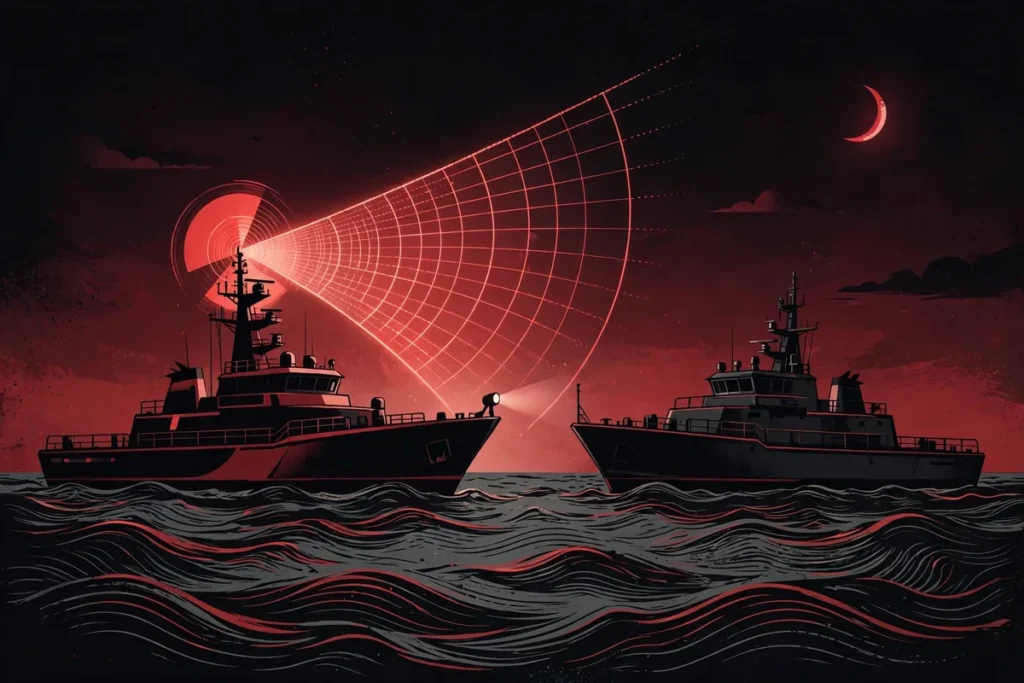
Short answer: nobody outside Beijing knows yet — and Beijing intends to keep it that way. The phrase is a well-worn formula in Chinese official rhetoric, used when Beijing wants to signal that retaliation is possible without committing to a specific action. Analysts of past gray-zone encounters typically read such warnings as opening moves, not final threats.
Possible responses, based on patterns from earlier cross-strait incidents, include:
- More coast guard and maritime militia presence around Pratas — China has already increased patrols near Taiwan’s offshore islands, and the Pratas would be the natural place to demonstrate that;
- Military signaling — drills, flyovers, or naval transits framed as “protecting citizens,” arriving alongside Taipei’s reported rise in military activities;
- Diplomatic and economic pressure — formal protests, travel advisories, or trade friction aimed at raising the political cost for Taipei;
- Direct harassment of Taiwan’s enforcement — shadowing Taiwan Coast Guard vessels to deter future water-cannon use.
What the warning does not appear to be, on current evidence, is a prelude to seizure of the atoll. That would be a major escalation with region-wide consequences, and nothing in Beijing’s statement — or in the observed military posture — points there. Taiwan should treat this as pressure, not a timetable.
Why the Pratas Islands matter strategically
The Pratas — known as Dongsha in Mandarin — is a small coral atoll in the northern South China Sea, roughly midway between southern Taiwan and Hong Kong. Taiwan has administered it for decades, maintaining a small coast guard and marine presence. China, which claims Taiwan as its own territory, recognizes none of Taipei’s sovereignty claims, including over the Pratas.
Security experts have long flagged the atoll as one of Taiwan’s most exposed positions: it sits more than 400 km (250 miles) from Taiwan’s main island, far beyond easy reinforcement, but within short reach of the Chinese mainland and its coast guard fleet. In cross-strait wargame scenarios, Pratas is routinely treated as a potential early test of resolve — a target Beijing could pressure without striking Taiwan proper.
That is why a water-cannon incident that might otherwise pass as routine fisheries enforcement has strategic weight. Every enforcement action near Pratas doubles as a sovereignty claim, and every mainland fishing or militia vessel that enters the area doubles as a probe of Taiwan’s willingness to defend it.
| Metric | Figure | Status |
|---|---|---|
| Date of the encounter | October 1, 2026 | CONFIRMED — Taiwan Coast Guard Administration |
| Location | ~27 nautical miles east of Pratas (Dongsha) Island | CONFIRMED — Taiwan Coast Guard Administration |
| Vessels involved | TCG Yunlin; fishing boats Jin Sha and Yue Hui Dong Yu 75066 | CONFIRMED — Taiwan Coast Guard Administration |
| Radio warnings issued | 3 | CONFIRMED — Taiwan Coast Guard Administration |
| Water-cannon duration | ~30 s warning spray; ~90 s directed at wheelhouse | CONFIRMED — Taiwan Coast Guard Administration |
| Distance of Pratas from Taiwan | More than 400 km (250 miles) | CONFIRMED — Reuters |
| Beijing’s warning | Taiwan must “bear all consequences” (October 14, 2026) | CONFIRMED — Taiwan Affairs Office spokesman Chen Binhua |
| Injuries | None reported | REPORTED — Taiwan Coast Guard Administration only; not independently verified |
| Engine failure of the Jin Sha | Boat towed away by nearby Chinese vessel | REPORTED — Taiwan Coast Guard Administration only |
Figures marked CONFIRMED are corroborated by at least two independent reports or by official statements on the record; REPORTED figures come from a single official account and have not been independently verified.
How Beijing and Taipei see it differently
Beijing’s view: The Taiwan Affairs Office treats the Pratas as Chinese territory under Beijing’s “indisputable sovereignty,” making Taiwan’s enforcement action an illegal attack on Chinese citizens operating legally. In this framing, the water cannon was not policing but provocation — “maliciously stirring up cross-strait confrontation” — and Taipei owes Beijing a reckoning.
Taipei’s view: The Coast Guard calls the operation “normal law enforcement,” and a Taiwan official told Reuters the crew responded in a “very careful and proportionate way” after the Jin Sha ignored three warnings to leave restricted waters. From Taipei’s perspective, the water cannon was a graduated, non-lethal response — far short of detention or force — and Beijing is using a routine incident as pretext for further pressure.
The gray-zone reality: Both sides are telling stories that are internally consistent because each starts from a different sovereignty premise. What matters for regional stability is less who is right than what happens next: incidents like this are the daily texture of what WarBrief’s earlier reporting on Taiwan’s “second navy” described as China’s gray-zone campaign — pressure that stays below the threshold of war while steadily normalizing Beijing’s presence around Taiwan’s offshore islands.
What the Pratas clash means for US/UK/EU readers
A water cannon 7,000 miles away can feel remote, but the Pratas sits on one of the world’s busiest shipping corridors. Any sustained escalation in the northern South China Sea feeds directly into the risk calculations of insurers, shippers, and supply-chain managers — costs that eventually surface in freight rates and retail prices.
For markets, Taiwan is the chokepoint of the global semiconductor supply chain. Episodes like this do not disrupt chip production by themselves, but each warning cycle nudges the “Taiwan risk premium” that investors attach to tech equities and to Taiwanese assets more broadly. Beijing’s deliberate ambiguity — refusing to specify the consequences — is itself a market signal: uncertainty is the pressure tool.
For travelers, there is no current advisory change for Taiwan or Hong Kong stemming from this incident, but the episode is a reminder that the region’s friction points multiply: check travel advisories before booking, and watch whether Chinese coast guard patrols around the Pratas intensify in the coming weeks.
For policymakers in Washington, London, and Brussels, the clash is a test of the gray-zone playbook — the same pattern of coast guard confrontation, sovereignty rhetoric, and ambiguous threats seen around the Philippines and Vietnam. How the West responds to small incidents shapes Beijing’s calculus for bigger ones.
What to watch next around Dongsha
Watch for Chinese coast guard or maritime militia vessels increasing their presence near the Pratas in the coming days — the most direct, lowest-cost way for Beijing to “impose consequences” while staying below the threshold of military force. Watch also for Taiwan’s own enforcement posture: whether Taipei doubles down with more frequent patrols or quietly dials back to avoid giving Beijing another incident to exploit.
A second indicator is rhetoric. If Beijing’s follow-on statements move from the Taiwan Affairs Office to the Defense Ministry or the Eastern Theater Command, that signals the issue is being militarized. If the rhetoric stays at the Taiwan Affairs Office level, the episode is likely to fade into the long pattern of managed friction.
Finally, watch the live-fire picture: Taiwan was already on alert this month after China’s live-fire drills in five zones, and Taipei reported rising military activity alongside this week’s warning. Stacking drills, coast guard pressure, and warnings is precisely how gray-zone campaigns compound — each incident small enough to absorb, each cycle a little harder to ignore. For the broader intelligence picture, see WarBrief’s Intel hub and Conflict Zones coverage.
Frequently asked questions
What happened in the Pratas Island water-cannon incident?
On October 1, 2026, Taiwan’s Coast Guard vessel Yunlin fired its water cannon at the mainland Chinese fishing boat Jin Sha near Pratas (Dongsha) Island after the boat ignored three radio warnings to leave waters Taiwan designates as restricted for mainland vessels. The encounter lasted minutes; Taiwan reported no injuries, and the boat later suffered engine failure and was towed away by a nearby Chinese vessel.
What did China say Taiwan must “bear the consequences” for?
On October 14, 2026, Chen Binhua, spokesman for China’s Taiwan Affairs Office, said Taiwan must “bear all consequences” for what he called the rough, dangerous treatment of mainland vessels near the Pratas. He accused Taipei of maliciously stirring up cross-strait confrontation and asserted China’s “indisputable sovereignty” over the islands — without specifying what the consequences would be.
Where are the Pratas Islands?
The Pratas Islands, known as Dongsha in Mandarin, are a coral atoll in the northern South China Sea, roughly between southern Taiwan and Hong Kong. Taiwan administers them; China claims them. They lie more than 400 km (250 miles) from Taiwan’s main island, which security experts say makes them hard for Taipei to reinforce in a crisis.
Is this a sign China will invade Taiwan?
There is no evidence this incident signals an invasion. Beijing’s warning is best read as gray-zone pressure — coercion below the threshold of war — consistent with its pattern of using coast guard incidents and ambiguous threats around Taiwan’s offshore islands. The prudent reading is escalation management, not a countdown.
Could this affect shipping or travel in the South China Sea?
Not directly at this stage. The incident involved fishing and coast guard vessels near a restricted zone, not commercial shipping lanes. But sustained escalation around the Pratas could raise insurance and freight costs on northern South China Sea routes over time, and travelers to the region should monitor official advisories.
Sources
- Reuters: Taiwan must ‘bear the consequences’ of water cannon incident, China says
- The Straits Times: China warns Taiwan over Pratas Islands water cannon incident
- Arab News: Taiwan must ‘bear the consequences’ of water cannon incident, China says
- Surfer: Taiwan Coast Guard blasts Chinese boat (video of the October 1 encounter)
- Demócrata: Beijing warns Taiwan it will have to face the consequences


Discussion 0
Share analysis, corrections, or context. Be civil — comments are moderated.