
WarBrief Live | October 13, 2026 | Global Conflicts
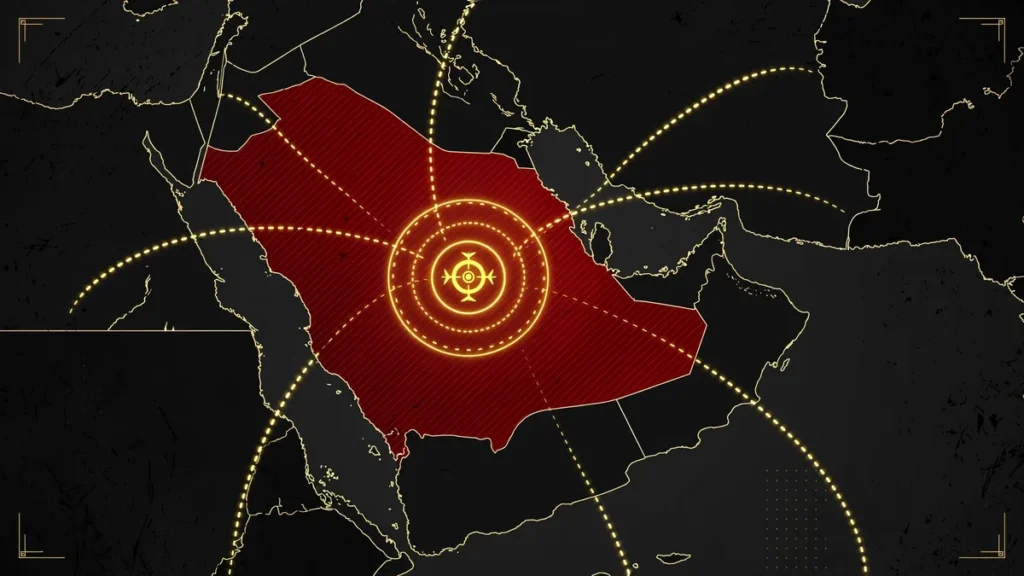
Saudi Arabia’s main gateway is shut. The Riyadh airport closed in October 2026 after Yemen’s Houthis opened a sustained missile-and-drone campaign against the kingdom’s civil aviation, and a Notice to Airmen issued on October 12 extended the shutdown of King Khalid International Airport until 2100 GMT on October 17. Three successive strike claims in three days — October 10, 11 and 12 — killed 14 people and wounded more than 300. Follow the wider escalation on our conflict zones page.
Key Takeaways
- King Khalid International Airport is closed until at least 2100 GMT on October 17, 2026, per a Notice to Airmen issued October 12.
- An October 10 strike on Terminal 3 killed 13 and wounded 300+; an October 11 projectile hit Terminal 4, killing one Pakistani resident and wounding 11. Saudi Arabia says it intercepted a Houthi missile toward Riyadh on October 12; the Houthis claim a successful strike.
- The Houthis declared Saudi airports and airspace a “theatre of operations” — except Mecca and Medina — and renewed warnings for airlines to stay away.
- 46.4% of all Saudi airport flights were cancelled on Monday; the US embassy “strongly recommends” avoiding Riyadh airport; the UK says further airport attacks are “very likely”; Trump says the Houthis are “misbehaving very badly” while weighing joining Saudi strikes.
What happened at Riyadh airport this week?
Saturday, October 10. A missile strike hit Terminal 3. Saudi aviation authorities initially reported 12 killed and 309 injured; Reuters’ updated tally puts the dead at 13 with more than 300 wounded — the deadliest attack in the kingdom in more than a decade. The Indian embassy later confirmed Indian national Mohammed Yousuf Ali among the dead. Flights were halted, as covered in our October 10 report on the first deadly strike.
Sunday, October 11. The coalition said a projectile struck Terminal 4, causing a fire; one Pakistani resident was killed and 11 wounded, GACA said. A projectile also fell near Dammam’s King Fahd airport, and the coalition intercepted a drone in the Eastern Province. Spokesman Yahya Saree claimed missiles and drones had hit the Riyadh and Dammam airports plus two energy facilities, framing it as retaliation for what he said were 124 Saudi airstrikes in Yemen in 24 hours. Houthi-run media also reported Saudi jets bombed Sanaa airport; Saudi Arabia had not commented.
Monday, October 12. The coalition said it intercepted and destroyed a ballistic missile toward Riyadh. Hours later the Houthis claimed a ballistic-missile attack on the airport and a drone attack on the Khamis Mushait airbase, with no immediate Saudi confirmation; on October 13 the coalition said it had intercepted two Houthi missiles toward Khamis Mushait, per Al Jazeera’s liveblog. Reuters reported on October 13 that Monday’s Notice to Airmen keeps the airport closed until 2100 GMT on October 17.
Why are the Houthis attacking Saudi airports?
The group is explicit. On October 11 Saree renewed the standing warning to “all airlines, experts, employees, workers and travellers against using Saudi airports and airspace,” calling them “a theatre of operations for our forces” — exempting only the airports of the holy cities of Mecca and Medina. The formula: “airport for airport, blockade for blockade, and escalation for escalation,” as Reuters reported.
The stated grievance is the coalition’s air campaign inside Yemen. Saree claimed the October 11 strikes answered 124 Saudi airstrikes in the previous 24 hours — a figure WarBrief could not independently verify. What is established: the conflict flared back into open war in July, when Saudi jets struck Sanaa airport to block an incoming aircraft from Iran; Yemen’s government has since launched a ground counteroffensive with coalition backing; and UN envoy Hans Grundberg called the airport strikes “a grave escalation.” A senior Houthi official warned the US of a “painful response” if Washington intervenes.
Background and timeline
- July 2026: The Saudi-Houthi conflict flares back into open war; Saudi jets strike Sanaa airport to stop an aircraft arriving from Iran.
- October 5–8: An earlier wave of strikes hits Saudi airports and facilities, including King Khalid and Abha airports; attacks on October 6–7 kill three people and wound 36 (see our earlier coverage).
- October 9: EASA widens its Saudi airspace warning. Pakistan’s prime minister publicly invokes the Makkah Joint Defence Agreement.
- October 10: Missile strike on Terminal 3: 13 killed, more than 300 wounded. The US embassy issues a security alert.
- October 11: Projectile strikes Terminal 4, causing a fire: one Pakistani resident killed, 11 wounded. Projectile falls near Dammam airport.
- October 12: Coalition says it intercepted a ballistic missile toward Riyadh; Houthis claim fresh strikes. NOTAM extends the closure to 2100 GMT on October 17, alongside reported Saudi strikes on 136 Houthi targets.
- October 13: Coalition says two more Houthi missiles toward Khamis Mushait were intercepted. Trump says the Houthis are “misbehaving very badly.”
By the numbers
| Metric | Figure | Source |
|---|---|---|
| Killed in the October 10 Terminal 3 attack | 13 (GACA initially reported 12) | Reuters; GACA via Xinhua — CONFIRMED |
| Wounded in the October 10 attack | More than 300 (GACA: 309) | Reuters; GACA — CONFIRMED |
| Killed in the October 11 Terminal 4 attack | 1 (Pakistani resident) | GACA via Reuters — CONFIRMED |
| Wounded in the October 11 attack | 11 | Saudi authorities — CONFIRMED |
| NOTAM closure end | 2100 GMT, October 17 | Reuters — CONFIRMED |
| Flights cancelled at Riyadh airport, Sunday | 99.7% of scheduled flights | Cirium via Reuters — CONFIRMED |
| Flights cancelled at all Saudi airports, Monday | 46.4% | Cirium via Reuters — CONFIRMED |
| Saudi departures cancelled, Monday | 486 of 1,048 | Cirium via Indian Express — CONFIRMED |
| Saudi departures cancelled, October 8–13 | 2,018 of 6,608 (30.5%) | Cirium via Travel Gossip — CONFIRMED |
| Saudi airstrikes in Yemen claimed by Houthis, 24 hours to Oct 11 | 124 | Yahya Saree statement — REPORTED |
Caveat: confirmed figures come from Saudi authorities, Reuters and aviation analytics firm Cirium. Figures marked “reported” rest on single-source claims — chiefly Houthi statements — and could not be independently verified.

What this means for US/UK/EU readers
Flights are being scrapped. Lufthansa Group has cancelled all flights to Riyadh until October 16; Air France-KLM extended its suspension to and from the Saudi capital until the end of the month. Etihad cancelled Abu Dhabi–Riyadh services until October 19 (plus Jeddah and Dammam routes); Qatar Airways suspended Riyadh and Dammam flights; Delta delayed its planned Atlanta–Riyadh service — due October 23 — until March 2027.
Governments are telling citizens to stay away. The US embassy in Riyadh “strongly recommends all US citizens avoid this airport and surrounding areas,” and US government employees need special authorisation to use the airports in Riyadh, Jeddah and Dammam. The FAA told US carriers on October 11 to exercise caution when flying to or over Saudi Arabia, in an advisory valid until December 10. The UK’s Foreign Office warns that “further attacks against airports are very likely,” advises against all but essential travel to every Saudi airport except Medina International, and suggests those who want to leave consider travelling by land to Bahrain, Kuwait, Qatar, the UAE or Jordan. Canada, Germany and Spain have issued similar warnings.
The economic fallout is widening. Saudi Arabia’s real GDP is projected to contract by 3.6% this year, Reuters reported. Several top oil executives were dropped from the program of Riyadh’s WPC Energy Congress, and Energy Minister Prince Abdulaziz bin Salman acknowledged on October 12 that “energy security cannot be taken for granted.” OPSGROUP advised airlines to avoid the southern Middle East corridor and route Europe–Asia traffic over Central Asia: “This level of sustained intense attack on civil aviation is unprecedented,” founder Mark Zee told Reuters.
Different perspectives
Saudi Arabia frames the strikes as terrorism against civilian infrastructure. Coalition spokesman Major General Turki al-Malki has repeatedly announced interceptions — a drone, a ballistic missile toward Riyadh, two toward Khamis Mushait — while GACA stresses the closure exists to guarantee safety.
The Houthis frame the campaign as legitimate retaliation — “airport for airport, blockade for blockade, and escalation for escalation” — while exempting Mecca and Medina.
The United States is leaning in rhetorically but has not acted. Trump said Washington was considering joining Saudi strikes — “We may. We’re going to look at it… We move very quickly” — while Secretary of State Marco Rubio condemned the strikes as showing a “blatant disregard for innocent civilian life.”
Pakistan activated its newest alliance. Prime Minister Shehbaz Sharif called the Riyadh attack a “red line” and pledged to cooperate with the kingdom “in every possible way” under the Makkah Joint Defence Agreement signed with Saudi Arabia and Turkey.
What to watch next
- The October 17 deadline: the NOTAM expires at 2100 GMT on October 17. Any further attack before then would likely extend the closure.
- Washington’s decision: whether Trump moves from considering strikes to ordering them — and whether the Houthis’ threatened “painful response” materialises.
- Pakistan’s role: whether Pakistani forces deploy under the Makkah pact, and whether Turkey follows.
- Retaliation cycles: whether the coalition returns to Sanaa and whether the Houthis target oil and gas facilities, as Saree claimed on October 11.
Frequently asked questions
Is Riyadh airport open right now?
No. King Khalid International Airport has been closed since the October 10 attack, with the suspension extended until 2100 GMT on October 17, 2026, pending safety checks.
Why are the Houthis attacking Riyadh airport?
The group says the strikes are retaliation for Saudi-led coalition airstrikes in Yemen and enforces a stated “airport for airport, blockade for blockade” doctrine. Saudi airports and airspace are declared a military “theatre of operations,” except Mecca and Medina.
When will Riyadh airport reopen?
The current NOTAM runs until 2100 GMT on October 17. Airlines are setting their own dates: Lufthansa until October 16, Air France-KLM until the end of the month, and Etihad’s Abu Dhabi–Riyadh services until October 19.
Are flights to Saudi Arabia cancelled?
Cirium data shows 99.7% of scheduled Riyadh flights cancelled on Sunday and 46.4% of all Saudi airport flights on Monday. Lufthansa, Air France-KLM, Etihad, Qatar Airways, Gulf Air and IndiGo have all suspended or curtailed services.
Is it safe to travel to Saudi Arabia right now?
Governments advise against airport travel: the US embassy “strongly recommends” avoiding King Khalid airport and surrounding areas, and the UK’s Foreign Office says further airport attacks are “very likely.” The US State Department’s advisory for Saudi Arabia is at Level 3 — reconsider travel.
Sources
- Reuters (via GMA News): Riyadh airport in Saudi Arabia to remain shut this week as airlines cancel services — October 13, 2026
- Reuters: Skies over Saudi capital Riyadh largely empty after deadly Houthi strikes on airport — October 12, 2026
- Al Jazeera: Iran war live — Trump says Houthis ‘misbehaving’ as Riyadh flights halted — October 13, 2026
- Reuters: Airlines cancel flights to Saudi Arabia after Riyadh airport attacks — October 12, 2026
- Reuters: Yemen’s Houthis renew warning over Saudi airports after deadly Riyadh attack — October 11, 2026
- Arab News: Pakistan PM says Riyadh attack a ‘red line,’ vows Islamabad will cooperate with Riyadh ‘in every possible way’
- The Business Standard: Riyadh airport shutdown extended through 17 October after attacks — October 13, 2026
- Travel Gossip: Foreign Office updates Saudi travel advice as further airport attacks ‘very likely’ — October 12, 2026


Discussion 0
Share analysis, corrections, or context. Be civil — comments are moderated.