
WarBrief Live | October 9, 2026 | Global Conflicts
Ukrainian President Volodymyr Zelenskyy has demanded that the United States “open Starlink for Ukraine” so Kyiv can use Elon Musk’s satellite network to guide strikes on Russian missile launchers deep inside Russia — an escalation of a months-long fight over who controls the satellites above the war. Speaking to reporters in Pryluky on October 8, 2026, after Russian strikes killed 78 people across Ukraine in two days, Zelenskyy accused Washington of “unwillingness” to help and framed satellite access as the fastest way to force Moscow to negotiate.
Key Takeaways
- On October 8, 2026, Zelenskyy said 78 people had been killed and 215 wounded by Russian strikes in two days, and urged the US to expand Ukraine’s Starlink access to target Russian ballistic missile launchers.
- Ukraine has sought since July to use Starlink-guided drones against launch sites up to 200 km inside Russia; Elon Musk has consistently refused, and President Trump has deferred the decision to him.
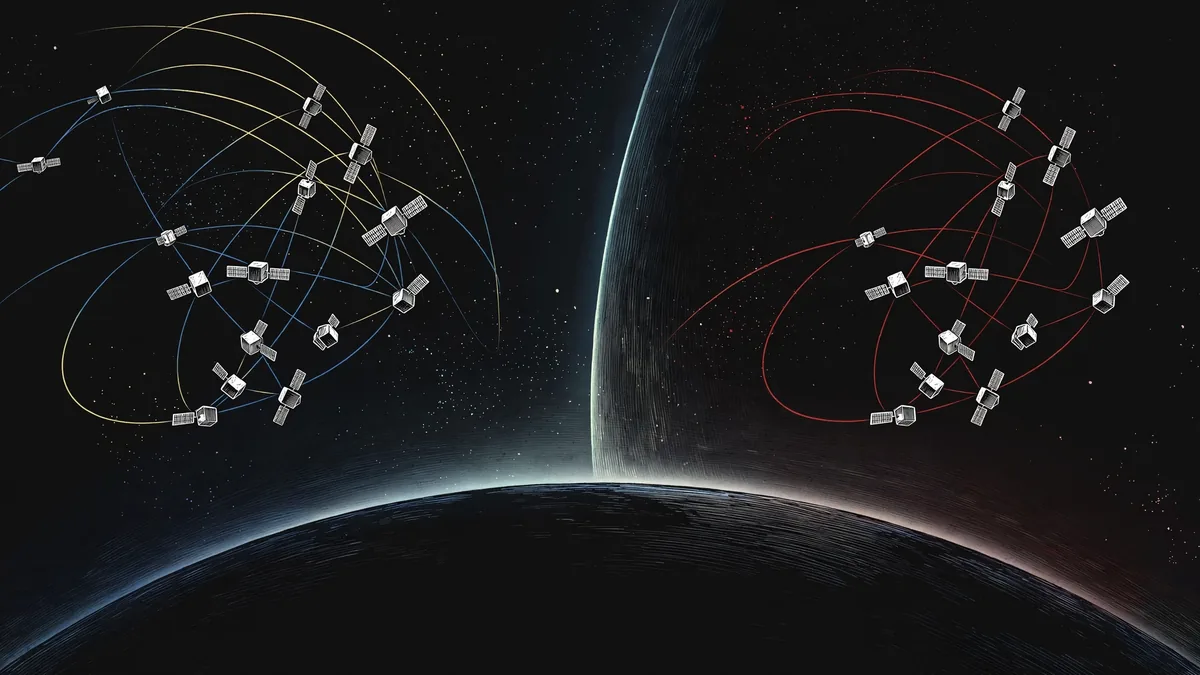
- Moscow is building its own rival network, Rassvet, with Chinese support — a development Zelenskyy cites as proof that restricting Kyiv while rivals advance is a losing strategy.
- Ukraine has begun developing its own Starlink-like satellite system, with a first phase of 120 satellites reportedly planned for 2027.
- Ukrainian negotiators are heading to the US on October 9–10 for talks where air defenses — and satellite access — will be on the agenda.
Why does Zelenskyy want Starlink for strikes inside Russia?
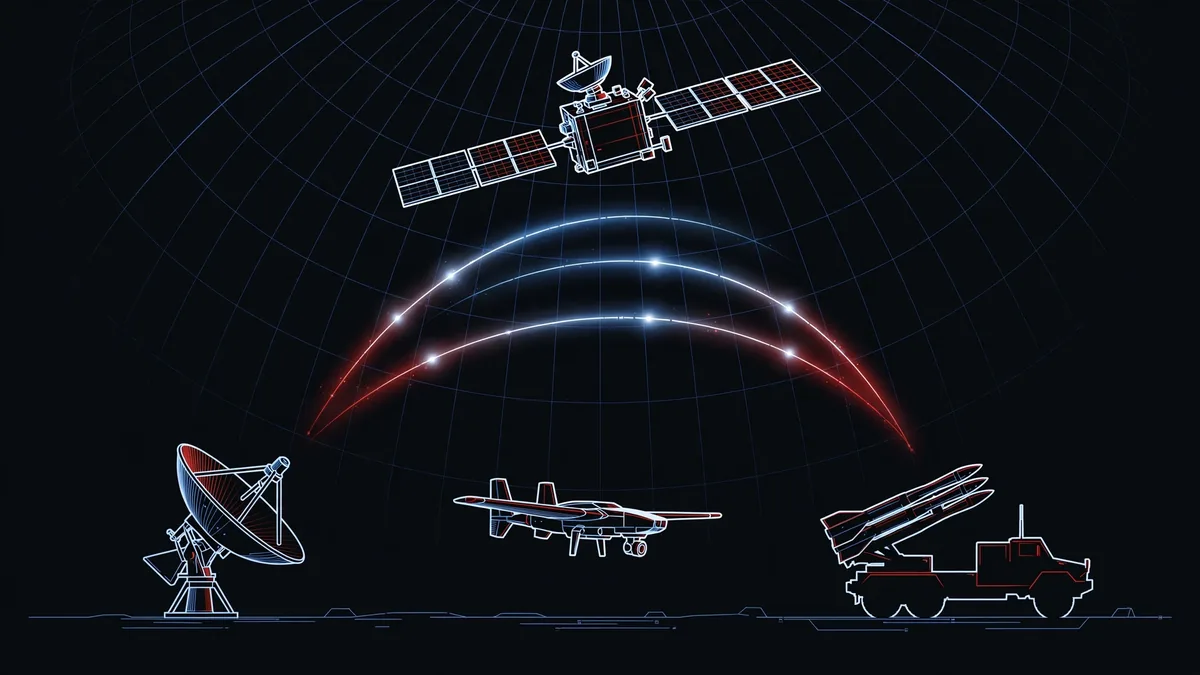
The request is brutally practical. Russia’s ballistic missile launchers are mobile: they drive to a position, fire, and relocate before Ukraine can strike back. Without real-time satellite connectivity over Russian territory — where SpaceX geofences Starlink to prevent use — Ukraine’s long-range drones must rely on less precise autonomous navigation, including AI-based guidance, according to reporting by The New Voice of Ukraine.
Kyiv proposed limiting Starlink-guided drone strikes to within 200 kilometers of the Russian border — close enough to hit the launchers firing at Ukrainian cities, far enough, in Ukraine’s framing, to stay within a defensive logic. Zelenskyy has also argued the capability would be an alternative to more Patriot interceptor missiles, whose reserves have thinned as the US fights a parallel air campaign against Iran, The Atlantic reported via Interfax-Ukraine.
“Open Starlink for Ukraine. You did open it when you were responding to Iran … I’ve said quite openly — give it to us, help us defend our skies and dominate there. And then Putin will sit down at the negotiating table.” — Volodymyr Zelenskyy, October 8, 2026, via Reuters
Zelenskyy’s argument rests on precedent. During the US-Israeli campaign against Iran, he said, satellite-enabled forces achieved “full control of the skies.” His logic: if the technology works when Washington needs it, denying it to Kyiv is a choice, not a technical limit. “So where’s the truth here, where’s the honesty? Where’s the stalemate? … That’s called unwillingness,” he said, rejecting US Secretary of State Marco Rubio’s description of the war as a stalemate, Reuters reported.
Background and timeline
The Starlink fight has been running behind closed doors for months. The public record, pieced together from US, Ukrainian, and British reporting, shows a consistent Ukrainian ask and a consistent refusal.
- July 2026: Zelenskyy asks President Trump at the White House to discuss Starlink permission with Musk; Kyiv proposes the 200 km limit; Trump does not clearly endorse the idea, according to people present. Zelenskyy also requests a separate meeting with Musk; Musk declines, citing a busy schedule (The Atlantic, via Interfax-Ukraine).
- August 8, 2026: The Atlantic reports Musk is still unwilling to let Ukraine use Starlink to guide strikes on positions launching missiles at Kyiv; then-defense minister Mykhailo Fedorov says he is continuing talks with Musk.
- August 21, 2026: The Financial Times reports Ukraine is seeking Musk’s permission for Starlink-equipped attack drones to hit Russian missile launchers up to 200 km inside Russian territory.
- August 31, 2026: The Kyiv Independent reports Musk remains opposed; talks with Fedorov are described as “extremely unsuccessful,” and Musk makes a final decision not to allow the use.
- September 22, 2026: Ukraine raises the issue again at the Trump–Zelenskyy meeting in New York; Trump responds: “You need to talk to Elon about that,” Newsmax journalist Nana Sajaia reports.
- September 25, 2026: Finnish President Alexander Stubb urges Musk to expand Starlink coverage for Ukraine, including over areas where Russian ballistic missile launchers are located (Reuters).
- September 27, 2026: Russia claims its drones struck the Cosmonova data center in Kyiv, alleging it supported Ukraine’s Starlink access; Ukrainian lawmaker Oleksandr Fedienko says Kyiv does not believe the attack significantly affected military operations (Times Now).
- October 3, 2026: In a Financial Times interview, Zelenskyy says Russia has accelerated work on its own satellite network with China’s support and urges Trump to sanction Russian and Chinese companies involved.
- October 4, 2026: Zelenskyy announces Ukraine has begun developing its own Starlink-like satellite system: “Why would that be fair? Because we know that some countries will share the relevant technologies with Russia at the end of this year or the beginning of next year.”
- October 7–8, 2026: Russian strikes kill 78 and wound 215 across Ukraine in two days; Zelenskyy renews the Starlink demand in Pryluky and accuses the US of unwillingness.
By the numbers
| Metric | Figure | Source |
|---|---|---|
| Killed across Ukraine, Oct 7–8 | 78 | Zelenskyy, via Reuters — CONFIRMED (attributed official claim) |
| Wounded across Ukraine, Oct 7–8 | 215 | Zelenskyy, via Reuters — CONFIRMED (attributed official claim) |
| Killed in Kramatorsk bus strike, Oct 7 | 35 | City authorities, via Reuters — CONFIRMED |
| Killed in Pryluky residential building, Oct 6 | 22 | Reuters — CONFIRMED |
| Killed and wounded in Kyiv morning strikes, Oct 8 | 4 killed, 19 wounded | Mayor Vitali Klitschko, via Reuters — CONFIRMED |
| Proposed range limit for Starlink-guided strikes inside Russia | 200 km | Financial Times, via NV.ua — REPORTED |
| Rassvet satellites Russia has launched (as of Sept 2026) | 32 | LIGA.net — REPORTED |
| Satellites in planned first phase of Ukraine’s own system | 120, in 2027 | Cybernews / Ukraine Business News — REPORTED |
Caveat: figures marked CONFIRMED are supported by named officials or at least two reputable outlets; REPORTED figures come from single official claims or secondary reporting and should be treated as provisional.
Different perspectives
Kyiv’s view: This is about defense, not escalation. Zelenskyy’s framing is that Starlink access would let Ukraine hunt the launchers killing its civilians — and that it is only fair, given that “some countries will share the relevant technologies with Russia at the end of this year or the beginning of next year.” His presidential chief of staff, Kyrylo Budanov, said in September that Ukraine needs expanded Starlink access to effectively counter Russian missile systems.
Musk and SpaceX’s view: Musk has held the line since the war’s early days: Starlink is available across Ukraine, including occupied territory, but its use is geofenced to prevent operations inside Russia. The consistent refusal — described by the Kyiv Independent as a “final decision” after “extremely unsuccessful” talks — reflects the billionaire’s long-standing fear of being drawn into escalation, a concern he has voiced since 2022.
Washington’s view: The Trump administration has avoided owning the decision. Trump told Zelenskyy twice to take it up with Musk directly, while pursuing a separate track with Moscow: Reuters reported that US officials, including special envoy Jared Kushner, have held talks about bringing a US investor into the Nord Stream gas pipelines. Rubio’s “stalemate” framing — which Zelenskyy angrily rejected — suggests Washington sees the war as frozen, while Kyiv sees it as intensifying.
Moscow’s view: Russia opposes any expansion and has begun treating Ukraine’s space-linked infrastructure as a target: its defense ministry claimed a September drone strike on Kyiv’s Cosmonova data center was aimed at Starlink support facilities. Meanwhile Moscow is building Rassvet, its own low-orbit network, which Zelenskyy says is receiving Chinese support — a claim he used to press for US sanctions on the Russian and Chinese firms involved.
What this means for US/UK/EU readers
Tech sovereignty is now a war issue. The Starlink fight shows what happens when a single private company controls the decisive communications layer of a war. Europe is developing its own satellite systems — Zelenskyy acknowledged that European countries “are willing to help” — but he warned they are “still far from achieving the results Ukraine needs.” For European readers, the Rassvet-China link is the warning: the satellite race is not only about Ukraine, but about who owns the orbital infrastructure of the next decade.
Escalation math matters for NATO. If Starlink-guided Ukrainian drones began striking launchers inside Russia with US-approved satellite support, Moscow has warned it would treat satellite operators as parties to the conflict. That is the escalation logic Musk cites — and the reason Washington keeps the decision at arm’s length. For American and British readers, the question is where the line sits between enabling defense and joining the war.
Sanctions are the other front. Zelenskyy is pushing Trump to sanction Russian and Chinese companies building Rassvet — a direct test of whether the West will fight the satellite war in orbit and in boardrooms, not just on the battlefield. Ukrainian negotiators traveling to the US on October 9–10 are expected to raise both air defenses and satellite access, with European partners joining the talks.
What to watch next
Four things will determine where this goes. First, the US talks on October 9–10: Ukrainian negotiators arrive in Washington with European partners, and Zelenskyy has put air defenses — and, by extension, satellite access — on the agenda. Second, whether Musk’s position shifts under pressure from both Kyiv and allies like Finland’s Stubb. Third, the pace of Russia’s Rassvet launches and whether Chinese support materializes into hardware before year’s end. And fourth, Ukraine’s own constellation: if the 120-satellite first phase stays on track for 2027, Kyiv’s dependence on Musk’s goodwill has an expiration date.
Frequently asked questions
Why won’t Elon Musk let Ukraine use Starlink inside Russia?
Musk has consistently refused, a position the Kyiv Independent described as a “final decision” after “extremely unsuccessful” talks with Ukrainian officials. The refusal rests on escalation concerns: using a US commercial satellite network to guide strikes on Russian territory would deepen SpaceX’s — and America’s — direct involvement in the war. Starlink works across Ukraine, including occupied areas, but is geofenced to block use inside Russia.
What is Russia’s Rassvet satellite network?
Rassvet is Russia’s planned low-orbit communications constellation, its answer to Starlink. LIGA.net reports Russia had launched 32 Rassvet satellites as of September 2026. Zelenskyy told the Financial Times that Russia has accelerated the program with China’s support, and he has urged the US to sanction the Russian and Chinese companies involved.
Can Ukraine build its own Starlink?
Kyiv says it has started. On October 4, 2026, Zelenskyy announced work on a Ukrainian satellite system “similar to Starlink,” with Ukrainian media reporting a first phase of 120 satellites planned for 2027, potentially launched on SpaceX rockets. The project is years from matching Starlink’s scale — but it signals that Ukraine intends to end its dependence on a single provider.
What happened in the Kramatorsk bus strike?
On October 7, 2026, a Russian aerial attack tore through two buses in Kramatorsk, in eastern Ukraine, killing 35 people — one of the deadliest single attacks of the year, according to Reuters. Regional governor Vadym Filashkin said Russia deliberately targets civilians: “For them, a bus full of passengers is an attractive target precisely because a single strike can kill as many people as possible.” The strike was the immediate trigger for Zelenskyy’s renewed Starlink demand. Read our full report on the Kramatorsk bus stop strike.
Could Starlink access actually end the war?
Zelenskyy argues it could force negotiations: “Three months, two months — he will lose everything,” he said of Putin, predicting Russian losses would compel talks if Ukraine could dominate the skies. That is a political claim, not a military certainty — destroying mobile launchers is notoriously difficult even with perfect targeting, and Moscow has its own escalatory options. But Kyiv’s logic is that the current trajectory, without it, is more of the same.
Sources
- Reuters (via Rappler): Zelenskyy accuses US of inaction as Russian strikes kill over 70 in 2 days
- The Guardian: Ukraine war briefing — Zelenskyy criticises US, calls for more Starlink access
- The New Voice of Ukraine: Zelenskyy urges US to expand Starlink access
- The New Voice of Ukraine: Ukraine begins developing Starlink-like satellite system
- RBC-Ukraine: Zelenskyy calls on US to help Ukraine protect its skies
- LIGA.net: Zelenskyy says China is helping Russia create a Starlink equivalent
- Cybernews: Ukraine satellite system could rival Starlink in war effort
- Interfax-Ukraine: Zelenskyy asks Trump to negotiate with Musk on using Starlink to destroy ballistic missile launchers in Russia
- Times Now: Russia targets Starlink support hub in Kyiv



Discussion 0
Share analysis, corrections, or context. Be civil — comments are moderated.