
WarBrief Live | October 10, 2026 | Energy & Oil
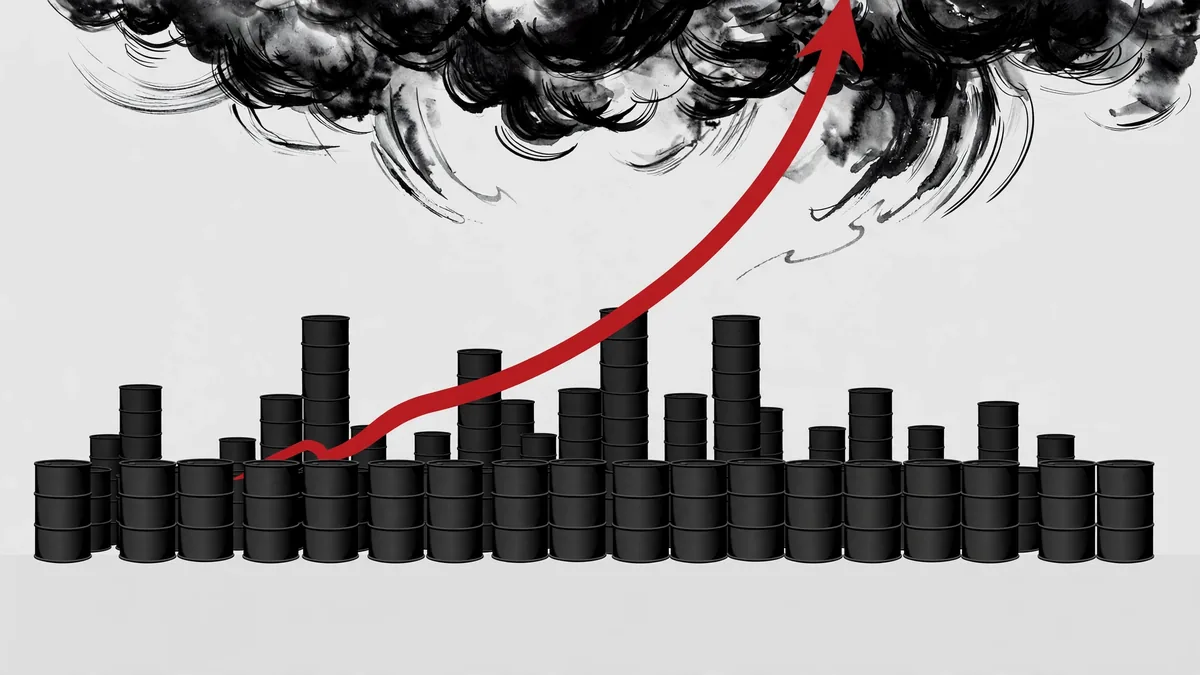
Brent crude futures settled at $104.72 a barrel on October 9, 2026, ending a week in which the global benchmark traded in the $103–$105 band — its highest since late September and well above the $65 level seen before the Iran war began in February. So why are oil prices rising in October 2026? The answer is a pile-up of shocks: tanker traffic through the Strait of Hormuz fell to a two-month low after a record week of attacks, a Gulf of Mexico hurricane shut in more than 70 percent of U.S. offshore output, the United States blacklisted 17 more tankers, and Washington announced an emergency diesel deal with Moscow — all within days.
Key Takeaways
- Brent crude settled at $104.72 on October 9 after trading between $103 and $105 all week, up more than 60 percent from pre-war levels.
- Just seven commodity vessels crossed the Strait of Hormuz on October 6 — the lowest count since July 23 — as attacks on tankers hit their highest weekly level since the war began.
- Hurricane Isaias knocked out more than 70 percent of U.S. Gulf of Mexico oil output on October 9, while the U.S. Treasury sanctioned 17 shadow-fleet tankers moving Iranian oil.
- President Trump announced an emergency deal with Vladimir Putin for Russian diesel shipments, with a temporary OFAC licence running through April 7, 2027.
Why are oil prices rising in October 2026?
The short answer is that supply fear is compounding faster than traders can price it. The war in Iran has been grinding on for seven months, and October brought the most intense week of tanker attacks since the fighting began. The United Kingdom Maritime Trade Operations (UKMTO) recorded at least nine attacks on commercial shipping in the Strait of Hormuz and the wider Persian Gulf between October 1 and 7 — half of September’s entire monthly total — and maritime security sources told Reuters the weekly pace was the worst of the war so far.
The market impact showed up immediately. On October 8, Brent crude surged 4.1 percent to settle at $104.28 a barrel, while U.S. benchmark West Texas Intermediate rose 3.6 percent to $91.49. A day later, prices briefly dipped toward $103 after President Trump said he would not order a U.S. attack on Iran before the November 3 midterm elections, but they recovered: Brent finished October 9 up 44 cents at $104.72 and WTI up 36 cents at $91.85, with the hurricane doing more to lift prices than the president’s pledge did to calm them.
What happened to shipping through the Strait of Hormuz?
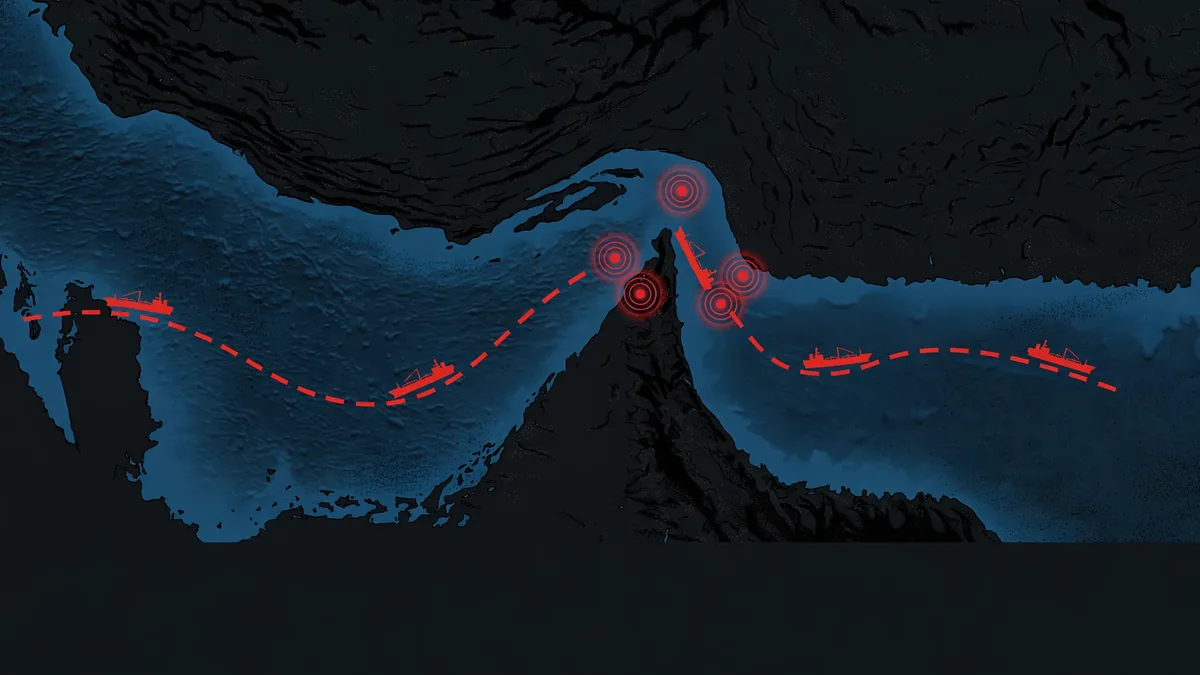
The Strait of Hormuz carries roughly a fifth of the world’s oil, and traffic through it is now at its thinnest since the summer. According to commodities data firm Kpler, cited by Reuters, only seven commodity vessels transited the strait on October 6 — the fewest since July 23 — followed by ten on October 7, down from more than 20 a day just days earlier.
Exporters have rerouted flows along the Gulf of Oman coast and through the Red Sea — those flows rose to 6.7 million barrels a day, double the pre-war rate — but the detours cost time, money, and insurance premiums that keep prices elevated. (See our comparison of Bab el-Mandeb versus the Strait of Hormuz for why both chokepoints matter.)
The attacks have also spread beyond the strait itself. On October 9, a drone struck the Panama-flagged crude tanker MT Gem No. 2 at Sharjah Anchorage in the United Arab Emirates; India’s shipping minister confirmed all 22 Indian crew members aboard were safe. The same day, Iran’s Islamic Revolutionary Guard Corps claimed it had hit the LPG carrier NV Sunshine for using what it called an illegal southern route through the strait — a claim reported by Iranian state media and carried by NDTV, but not independently verified. Analysts told security publication DeepDraft the strike at a UAE anchorage means the threat zone is no longer limited to the chokepoint itself.
Background and timeline
- February 2026: The United States and Israel attack Iran, triggering the Iran war. Brent starts near $65 a barrel.
- March–July 2026: Iran demands permission for strait transits and threatens service fees; ships that ignore the rules face strikes. Hormuz traffic grinds far below normal.
- Early September 2026: Drone attacks — blamed by Riyadh on Iraqi militias backed by Iran — hit Saudi Arabia’s East-West (Petroline) pipeline, forcing a temporary halt.
- October 6, 2026: Saudi Energy Minister Prince Abdulaziz bin Salman says the pipeline has been restored to 5.8 million barrels a day within five or six days, against a maximum capacity of 7 million.
- October 1–7, 2026: At least nine tanker attacks in the Gulf, the worst weekly pace of the war (UKMTO via Economic Times; Reuters).
- October 8, 2026: The U.S. Treasury sanctions individuals, networks, and 17 vessels moving Iranian crude, oil products, and petrochemicals. Brent settles at $104.28.
- October 9, 2026: Drone attack on MT Gem No. 2 at Sharjah Anchorage; IRGC claims the NV Sunshine strike; Trump announces the Russian diesel deal after a call with Putin; Brent settles at $104.72.
- October 10, 2026: Iran’s foreign minister says Tehran is reviewing a U.S. proposal that could reopen the strait within seven days.
How do new sanctions and the hurricane fit in?
October 8 brought a fresh squeeze on supply. The U.S. Treasury Department sanctioned 17 shadow-fleet tankers linked to Iranian crude, oil products, and petrochemical movements to markets in South and East Asia, alongside the networks and individuals behind them. Removing shadow tankers from the market does not erase the oil — it makes the remaining compliant shipping more expensive and harder to book, which feeds directly into the prices consumers pay at the pump.
The same week, nature added its own disruption. Hurricane Isaias moved into the Gulf of Mexico, and by October 9 producers had evacuated 121 of 371 manned platforms and shut in roughly 1.3 million barrels a day of output — more than 70 percent of U.S. Gulf production, according to the U.S. Marine Minerals Administration. The storm hit just as traders were weighing Trump’s diplomatic signal, and the physical loss of American barrels outweighed the rhetoric: prices ended the day higher.
What this means for US/UK/EU readers
This is an educational explainer, not financial advice.
For American readers, the pressure is landing at the diesel pump first. Diesel prices have surged to record levels through 2026, and Trump’s October 9 announcement — Russia will supply more than 300,000 tonnes of diesel immediately, another 500,000 tonnes in November, and up to 3 million tonnes within a short period, under a temporary OFAC general licence valid through April 7, 2027 — is a direct attempt to cap prices ahead of the midterms. Analysts are skeptical the volumes will move prices much, but the signal matters: the administration is treating diesel as a policy problem now, not just a market problem. It follows the G7’s 100-million-barrel emergency diesel release earlier this month.
For UK and EU readers, the concern is heating fuel and freight. Britain and Europe import a large share of their diesel, and European diesel prices have been the highest in the world this year — see our explainer on why diesel prices rise during war. Fewer tankers through Hormuz means longer voyages, pricier war-risk insurance, and higher shipping rates that show up in the cost of everything from food to building materials. If Iran’s review of the U.S. proposal genuinely reopens the strait within seven days, European motorists could feel relief first; if it fails, winter fuel bills will carry the war’s premium for months.
For markets, the structural picture is now the story. Standard Chartered, cited by OilPrice.com, argues the war has shifted the energy system from efficiency to resilience: governments and companies are stockpiling, holding spare capacity, and diversifying suppliers, which raises the long-term floor for prices. They expect elevated prices to persist into 2027 and beyond — meaning the October surge is not just a blip to trade, but a regime change to plan around.
By the numbers
| Metric | Figure | Source |
|---|---|---|
| Brent settlement, October 9, 2026 | $104.72/bbl (+44¢) | Reuters via NewsGhana — CONFIRMED |
| Brent settlement, October 8, 2026 | $104.28/bbl (+4.1%) | Economic Times / Reuters — CONFIRMED |
| Crude through Hormuz, week to Oct 7 | 10.1M bpd, down 27%, 74% of pre-war level | Kpler via Reuters — CONFIRMED |
| Commodity vessels crossing, Oct 6 | 7 (lowest since July 23) | Kpler via Reuters — CONFIRMED |
| Tanker attacks, Oct 1–7 | 9 (worst week of the war) | UKMTO via Economic Times; Reuters — CONFIRMED |
| Shadow-fleet vessels sanctioned, Oct 8 | 17 | U.S. Treasury via Reuters — CONFIRMED |
| U.S. Gulf output shut in, Oct 9 | ~1.3M bpd, over 70% of output | Reuters / Marine Minerals Administration — CONFIRMED |
| Saudi East-West pipeline throughput | 5.8M bpd claimed vs 7M capacity | Saudi energy minister — REPORTED (official claim, unverified) |
| Russian diesel deal announced, Oct 9 | 300k tonnes now; 500k in November | Trump / OFAC licence — CONFIRMED |
Figures marked CONFIRMED appear in two or more independent sources; REPORTED items rest on a single official claim and should be treated accordingly.
Why it matters
Oil at $104 is not just a trading number — it is a tax on the global economy. The pre-war price near $65 has more than doubled in market terms, and analysts who study energy security warn the market has now exhausted most of the shock absorbers that kept prices capped through the summer: emergency diesel releases, the East-West pipeline bypass, and strategic reserves. With Hormuz transits at a two-month low and the tanker attacks in the Hormuz kill box escalating, the last buffer left is diplomacy — and the Iran proposal review now underway is the market’s main hope for a turn. Our conflict zones hub tracks every theatre of the war as it develops.
The geopolitical ripple effects are just as real. Houthi ballistic missiles struck King Khalid International Airport in Riyadh this week, killing three Saudi nationals, and the Saudi-led coalition responded with strikes on 136 Houthi targets in Yemen — a second front that could widen the war-risk premium from shipping lanes to actual production. Meanwhile, Iran’s foreign minister said Tehran is reviewing a U.S. proposal that could reopen the strait within seven days — a claim that, if real, would be the first genuine de-escalation signal in months.
Different perspectives
The Trump administration argues the pressure campaign is working: the naval blockade of Iranian ports, the 17 newly sanctioned vessels, and direct talks are, in its telling, forcing Tehran toward a deal — and the Russian diesel arrangement shows it can cool prices by other means. The president publicly ruled out a strike before the midterms while claiming negotiations are productive.
Tehran’s view is the mirror image. Iran says its control of the strait is a legitimate response to the war started against it in February, and the IRGC has warned that vessels it deems non-compliant will be pursued beyond the strait itself. Saudi Arabia and the UAE frame the week differently again: they see the drone strikes, the airport attacks, and the tanker hits as proof that the war has metastasized from an Iran-U.S. confrontation into a regional security crisis requiring a collective response.
Analysts split on the outlook. Standard Chartered’s team sees a “new normal” of higher prices into 2027 driven by the resilience shift. Skeptics counter that demand destruction at $104 will bite soon — high prices are their own cure, as expensive fuel slows trucking, travel, and manufacturing, which eventually pulls demand back down.
What to watch next
First, the strait itself: does daily vessel traffic recover above 15 a day, or do attacks push the count toward single digits again? Kpler’s daily transit data is now the market’s single most-watched number. Second, Tehran’s verdict on the U.S. proposal — a genuine seven-day reopening would send Brent back toward $95 within days; a rejection would likely test $110. Third, the hurricane season: Isaias shut in American output, and the Gulf season still has weeks to run. Fourth, the Russian diesel shipments — watch whether the 300,000 tonnes actually arrive and where they land. Finally, the Saudi coalition’s “large-scale operation” in Yemen could either deter Houthi strikes or provoke retaliation against Saudi oil facilities, which the kingdom’s pipeline and refineries can ill afford. The October fuel story is really five stories in one, and they are all still live.
Frequently asked questions
Why are oil prices rising in October 2026?
Brent crude traded in the $103–$105 band in early October 2026 because of a pile-up of supply shocks: a record week of tanker attacks drove Strait of Hormuz traffic to a two-month low (crude flows down 27 percent), Hurricane Isaias shut in over 70 percent of U.S. Gulf output, the U.S. sanctioned 17 more shadow-fleet tankers, and the Saudi bypass pipeline is still rebuilding after September drone attacks.
What happened to shipping through the Strait of Hormuz?
Only seven commodity vessels crossed the strait on October 6 — the lowest count since July 23 — after at least nine attacks on tankers in the first week of October, the worst weekly pace since the Iran war began. Crude flows fell 27 percent to 10.1 million barrels a day, 74 percent of pre-war levels, according to Kpler data reported by Reuters.
What is the Trump-Putin diesel deal?
After a call on October 9, 2026, President Trump announced Russia would immediately supply more than 300,000 tonnes of diesel, followed by 500,000 tonnes in November and larger volumes after, to ease record U.S. diesel prices. The U.S. Treasury issued a temporary general licence allowing Russian-origin diesel deliveries through April 7, 2027. Analysts doubt the volumes will significantly move prices.
Will oil prices go back down?
That depends on diplomacy and weather. If Iran accepts the reported U.S. proposal and reopens the Strait of Hormuz within seven days, analysts expect Brent to fall quickly. But if attacks continue, the hurricane season causes more shut-ins, or the Saudi coalition’s Yemen operation escalates, prices could test $110 or higher. Standard Chartered expects elevated prices to persist into 2027 regardless.
How does the Iran war affect fuel prices in Europe?
Europe imports much of its diesel, and diesel prices there have hit records in 2026. Fewer tankers through Hormuz means longer voyages, higher war-risk insurance, and costlier freight — all of which land in fuel bills and consumer prices. Any reopening of the strait would be felt by European motorists faster than by Americans, since the shipments to Europe travel the shortest route.
Read next: EU-GCC Summit 2026: what to expect in Riyadh — Europe and the Gulf meet on October 24 to talk energy security, a Schengen visa waiver and the stalled free trade deal, with Hormuz and oil prices on the agenda.
Sources
- Reuters via The Hindu: Strait of Hormuz transits at lowest in over two months after attacks, data shows
- Reuters via Emirates247: Strait of Hormuz transits hit 2-month low after tanker attacks
- Economic Times: Oil price today October 9 — crude dips as Trump rules out Iran attack before midterms
- Reuters via NewsGhana: Oil ends higher as hurricane outweighs Trump’s Iran pledge
- Economic Times: 22 Indian crew safe after drone attack on Panama-flagged tanker off Sharjah
- NDTV: LPG tanker struck in Strait of Hormuz, Iran Guards say was taking illegal route
- Al Jazeera: Saudi Arabia says East-West pipeline pumping 5.8 million bpd
- The National: Trump says Russia to supply diesel under temporary US licence
- Gulf News: Middle East war live — 136 Houthi targets hit; Trump announces Russian diesel deal


Discussion 0
Share analysis, corrections, or context. Be civil — comments are moderated.