
WarBrief Live | October 19, 2026 | Conflict Briefing
Iranian-backed Houthi rebels fired ballistic missiles at the al-Alam military camp in Yemen’s southern Shabwa province on the morning of October 19, 2026, in one of the deadliest attacks of a recent surge in fighting that has shattered the country’s 2022 ceasefire. What investigators have confirmed: a missile strike hit a training centre for police and security forces in the Jardan district. What remains unverified: the death toll, with figures ranging from 18 to 53 across outlets.
Key Takeaways
- Houthi ballistic missiles struck the al-Alam military camp in Shabwa province, southern Yemen, on October 19, 2026, during a morning training session.
- Yemen’s military spokesman confirmed three ballistic missiles hit a police and security forces training centre; casualty figures are disputed — AP reports at least 20 soldiers killed, Reuters reports at least 18, and Haaretz cites local authorities reporting 53 dead.
- Rashad al-Alimi, head of Yemen’s Presidential Leadership Council, said the dead were new recruits from across the country and promised a “firm response”.
- The attack is one of the deadliest in a surge of fighting that began months ago as tensions spiked in the wider Iran–US conflict, effectively ending the 2022 ceasefire that had largely halted Yemen’s civil war.
3
ballistic missiles confirmed fired by Yemen’s military spokesman (reported)
20+
soldiers killed, per two Yemeni military officials speaking to the AP (reported)
2022
ceasefire deal now effectively dead after months of escalating Houthi–government fighting
9
killed in a Saudi-blamed airstrike on Saada a day earlier, per Houthi health ministry (single-sourced claim)
What happened at the al-Alam military camp in Shabwa?
According to the Associated Press, which spoke to two Yemeni military officials, the Houthis fired ballistic missiles at the al-Alam military camp in the southern province of Shabwa, killing at least 20 soldiers and wounding at least two dozen more troops. The officials, who serve with Yemen’s internationally recognized government, spoke on condition of anonymity because they were not authorized to brief the media. The AP’s Cairo bureau reported the strike as one of the deadliest in the recent surge of fighting.
Colonel Majed al-Nazili, a spokesman for Yemen’s military, confirmed that the Houthis fired three ballistic missiles at a training centre for police and security forces — but he would not comment on casualties. Reuters, citing four government and medical sources, put the death toll at a minimum of 18, while Haaretz cited local authorities reporting 53 killed. The Houthi-run SABA news agency claimed the rebel attack killed and wounded dozens but provided no further details. Readers should treat all casualty figures as reported, not confirmed: the counts differ sharply between outlets and are still evolving.
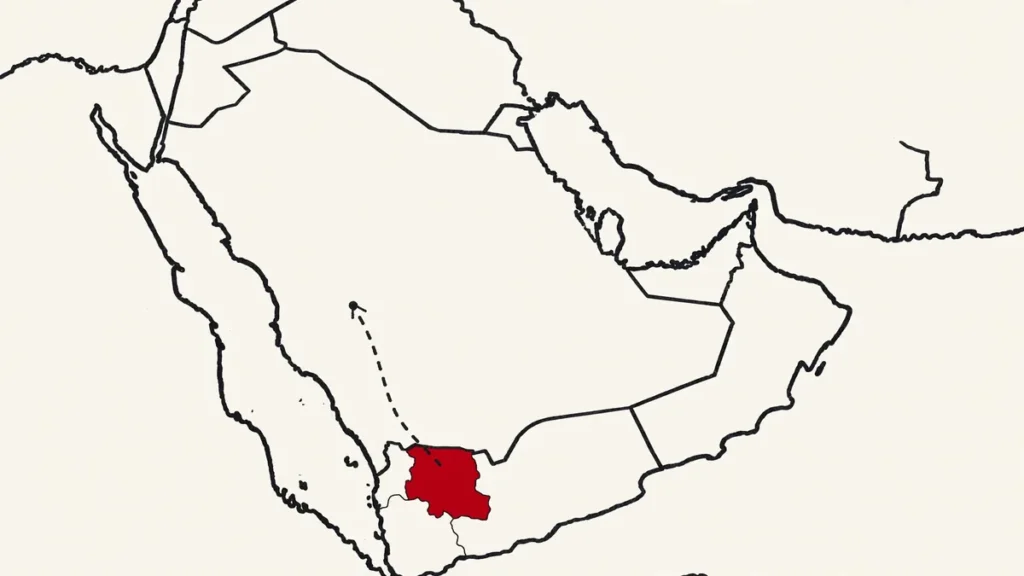
The camp itself sits in the Jardan district north of Ataq, the provincial capital of Shabwa. It was previously used by a militia backed by the United Arab Emirates, and it occupies a strategically important position on the route to the government-controlled province of Marib, astride crucial supply lines for government forces. One of the military officials said the casualties were primarily new recruits, and that those targeted were part of a newly established force called Rapid Intervention, which is tasked with defending the area.
Who are the Houthis and who are they fighting in Yemen?
The Houthis are an Iranian-backed rebel movement that seized Yemen’s capital, Sanaa, in 2014, triggering a civil war that drew in a Saudi-led coalition backing the internationally recognized government. Saudi Arabia has publicly blamed Iran for the current Houthi escalation, and the group has become a central front in the wider regional confrontation between Tehran and its rivals. For a longer view of the group’s recent targeting of government sites, see our earlier briefing on the Houthi strike on Aden Palace.
The fighting in recent months is not simply a continuation of the old civil war. It is entangled with the broader US–Israel–Iran confrontation that has reshaped the region since February: Houthi attacks have also hit Saudi airports and oil facilities — including the missile strike on Aramco’s headquarters — while Saudi-led forces have kept up airstrikes on Houthi-held territory. A day before the al-Alam attack, an airstrike blamed on Saudi-led forces killed at least nine people, including five children and two women, in the rebel-held northern province of Saada, according to the Houthi-run Health Ministry. That claim is single-sourced; Saudi Arabia offered no immediate comment.
By the numbers: what is confirmed and what is only reported
On a breaking story like this, the honest accounting is which facts are corroborated and which rest on a single source. The table below separates them — and under it, one caveat that matters most.
| Metric | Figure | Source | Status |
|---|---|---|---|
| Missiles fired at the camp | 3 ballistic missiles | Yemen military spokesman Col. Majed al-Nazili, via Haaretz and Reuters | Confirmed by an official spokesman; exact type awaits independent verification |
| Location of strike | Al-Alam camp, Jardan district, Shabwa province | AP, Reuters, Haaretz | Confirmed (multiple outlets agree) |
| Soldiers killed | At least 20 (AP); at least 18 (Reuters); 53 (Haaretz, citing local authorities) | Two Yemeni military officials / four government and medical sources / local authorities | Reported — figures conflict and are unverified |
| Wounded | At least two dozen (AP); “dozens” (Houthi SABA) | Yemeni military officials; Houthi-run media | Reported, unverified |
| Victims’ profile | Primarily new recruits; members of the “Rapid Intervention” force | Yemeni military officials, via AP/Reuters | Reported, attributed |
| Saada airstrike casualties (day before) | At least 9 dead, including 5 children and 2 women | Houthi-run Health Ministry | Single-sourced claim — unverified |
Caveat: on casualty figures, conflicting reports are normal in the first hours of a mass-casualty event. An official military spokesman would not confirm any death toll, and the three published figures (18, 20, 53) cannot all be right. WarBrief will update this page as a verified count emerges.
Why the Shabwa strike matters for the wider Iran–US conflict
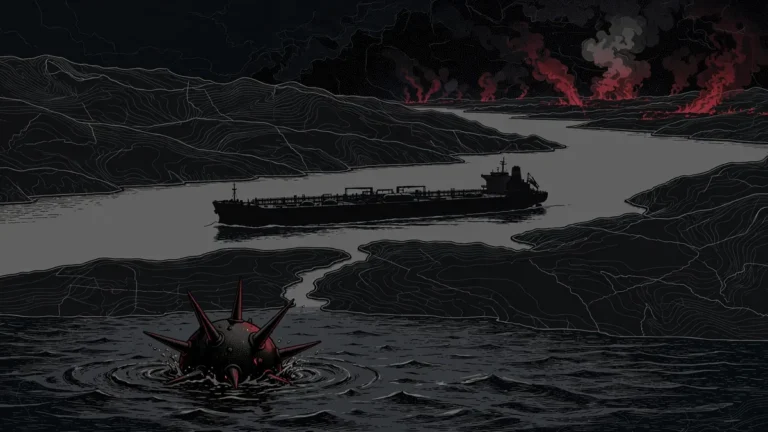
The attack cannot be read as an isolated Yemeni tragedy. It lands in the middle of a regional confrontation that has already choked the Strait of Hormuz — where a third tanker was struck by a mine just a day earlier — and turned the Red Sea and the Arabian Peninsula into interlocking fronts. The Houthis are Iran’s most active regional proxy; their missile and drone campaigns against Saudi and Emirati targets function as pressure on Washington’s regional partners while Tehran negotiates over the strait.
The timing also matters. Iran’s foreign minister has publicly outlined a seven-day plan it says could reopen the Strait of Hormuz and restart negotiations with Washington — a proposal the US has so far rejected. Every escalation by an Iranian-aligned actor raises the price of the status quo and complicates any de-escalation. Rashad al-Alimi’s promise of a “firm response” signals that Yemen’s government, backed by Saudi Arabia, is preparing to answer in kind — which is how ceasefires die twice.
For the region, the strategic geography of al-Alam is the story’s sharp edge. A camp on the Marib supply corridor, hit with three ballistic missiles, is not harassment fire — it is a strike on the government’s logistical spine in the south. If the government retaliates with a major ground or air operation, the 2022 ceasefire’s last remnants — already described by the AP as shattered — will be formally buried.
What the al-Alam attack means for US, UK and EU readers
Oil and fuel prices. Yemen itself exports little oil, so do not expect an immediate price shock from Shabwa alone. The risk premium comes from the company the attack keeps: a third tanker mined in the Strait of Hormuz within days, Iran warning ships with disabled transponders of a “firm response”, and a US naval counter-blockade on Iranian oil. That combination is what keeps Brent elevated — each Houthi escalation adds a few dollars of geopolitical risk premium that shows up at the pump weeks later.
Travel and aviation. Houthi missile attacks on Saudi airports and oil facilities have already forced reroutings and cancellations on Gulf routes this year. A major escalation in Yemen raises the odds of further airspace restrictions around the southern Red Sea and the Bab el-Mandeb strait, which can lengthen Europe–Asia flight times and freight schedules.
Security and aid. For European readers, Yemen’s war is also a migration and humanitarian driver: the UN has repeatedly warned that renewed full-scale fighting would deepen one of the world’s worst humanitarian crises, with direct consequences for aid budgets and asylum flows. The Shabwa strike is the clearest signal yet this month that the war is moving from a frozen conflict back to an active one.
What to watch next in southern Yemen
Three things will determine whether October 19 becomes a turning point or just another bloody day in a long war. First, the government’s “firm response”: whether al-Alimi’s promise materializes as airstrikes on Houthi missile sites or a ground push toward Houthi-held areas will set the tempo of the next weeks. Second, the verified casualty count — if the death toll approaches the higher reported figures, domestic pressure inside Yemen for retaliation will intensify. Third, the US–Iran track: any movement on the seven-day Hormuz proposal could either freeze the Houthi front as part of a bargain or leave it as the pressure valve both sides keep open. WarBrief will update this briefing as verified information emerges.
Frequently asked questions
Where is the al-Alam military camp?
The al-Alam camp is in the Jardan district, north of Ataq, the provincial capital of Shabwa province in southern Yemen. It previously served a UAE-backed militia and sits on the supply route to the government-controlled province of Marib.
How many people were killed in the Shabwa camp attack?
The death toll is disputed. Two Yemeni military officials told the AP at least 20 soldiers were killed; Reuters cited four government and medical sources reporting at least 18 dead; Haaretz cited local authorities reporting 53 killed. All figures should be treated as reported, not confirmed.
Who are the Houthis and why are they fighting Yemen’s government?
The Houthis are an Iranian-backed rebel movement that seized Yemen’s capital in 2014. They have fought Yemen’s internationally recognized government — backed by a Saudi-led coalition — ever since, in a war that has become entangled with the wider Iran–US regional confrontation.
What happened to the 2022 Yemen ceasefire?
A 2022 truce deal had largely halted fighting in Yemen’s civil war, but months of escalating attacks between the Houthis and Saudi-backed government forces — driven by the wider Iran–US conflict — have shattered it, according to the AP. The October 19 Shabwa strike is one of the deadliest incidents in that renewed fighting.
Why does fighting in Yemen affect oil prices in the US, UK and EU?
Yemen exports little oil itself, but the conflict sits alongside the Strait of Hormuz and Red Sea shipping lanes that carry a large share of the world’s oil and gas. Escalations add a geopolitical risk premium to crude prices, which eventually reaches fuel pumps and heating bills.
Sources
- Haaretz: Houthi Missile Attack on Saudi-Backed Yemeni Army Base Kills 53
- The Hindu (AP): Houthi Rebels Strike a Government Military Camp in Southern Yemen, Killing at Least 20 Fighters
- Times of Bahrain (Reuters): Houthis Strike Yemen Govt Camp, Killing 20 Soldiers
- The Economic Times (AP/Reuters): Houthi Rebels Strike a Government Military Camp in Southern Yemen

Discussion 0
Share analysis, corrections, or context. Be civil — comments are moderated.