
WarBrief Live | November 6, 2026 | Cybersecurity
A cyber risk assessment framework defense industrial base contractors can actually defend is the structured method they use to find, measure, and manage cybersecurity risk — and in 2026, it has become the document assessors ask for when self-reported scores stop being believable. The average self-reported SPRS score among defense contractors hit a five-year high of +51 this year, according to the 2026 State of the DIB report — while confidence in the accuracy of those scores collapsed from 89% to 65%. This guide lays out that framework for the defense industrial base in 2026, mapping the NIST publications — 800-30 and 800-39 — to DFARS and CMMC reality.
Key Takeaways
- A cyber risk assessment framework is a repeatable process — identify assets and threats, assess vulnerabilities, analyze risk, and act — not a one-time report.
- For the DIB, the governing documents are NIST SP 800-30 (how to conduct risk assessments), NIST SP 800-39 (how to manage risk organization-wide), and NIST SP 800-171 (the 110 requirements those assessments feed).
- DFARS 7012 and CMMC both demand risk assessments as evidence; assessors look for assessments tied to real assets, real threats, and the POA&M.
- The 2026 State of the DIB survey (302 contractors) shows a credibility gap: scores are up (+51 average) but only 1% of contractors say they are fully prepared for CMMC certification.
What Is a Cyber Risk Assessment Framework?
A cyber risk assessment framework is a defined, repeatable process for answering three questions: what do we need to protect, what could go wrong, and what are we doing about it. In its standard form, drawn from NIST’s guidance, the process runs in a cycle. First, identify — catalog the assets, systems, and data in scope (for a defense contractor, this centers on the systems holding Controlled Unclassified Information). Second, assess — identify threats to those assets, find vulnerabilities in the systems that hold them, and analyze the likelihood and impact of each threat-vulnerability pair. Third, respond — decide for each risk whether to remediate it, mitigate it, accept it formally, or transfer it. Fourth, monitor — track whether the decisions worked and whether the threat picture changed.
The framework matters more than any single assessment because risk is not static. A risk assessment completed in 2024 and never revisited does not describe the contractor’s 2026 posture — new systems, new contracts, new CUI flows, and new adversary techniques have all arrived since. Assessors grade the cycle, not the document: they want to see assessments that are dated, scoped, tied to evidence, and visibly connected to the remediation plan.
Building the Cyber Risk Assessment Framework Defense Industrial Base Contractors Need
Three NIST publications form the practical stack for DIB contractors. NIST SP 800-30, “Guide for Conducting Risk Assessments,” is the how-to manual: it defines the assessment process, the threat and vulnerability identification steps, and how to determine and communicate risk levels. NIST SP 800-39, “Managing Information Security Risk,” is the organizational layer: it frames risk management as an ongoing, three-tier activity spanning the organization, its mission and business processes, and its information systems. Together they describe the governance most assessors expect to see.
The third publication is the one with contractual teeth: NIST SP 800-171, the 110 security requirements that DFARS 252.204-7012 makes mandatory. Its Risk Assessment family (3.11) requires contractors to periodically assess risk to organizational operations, assets, and individuals from the processing, storage, or transmission of CUI — and to remediate or plan for what the assessment finds. In other words, 800-30 tells you how to assess, 800-39 tells you how to govern the program, and 800-171 tells you that the assessment is a contract requirement whose results must be acted on. Other frameworks — ISO 27001’s risk treatment process, the NIST Cybersecurity Framework 2.0’s Govern function — can supplement this stack, but for DoD work the NIST trio is the reference architecture.
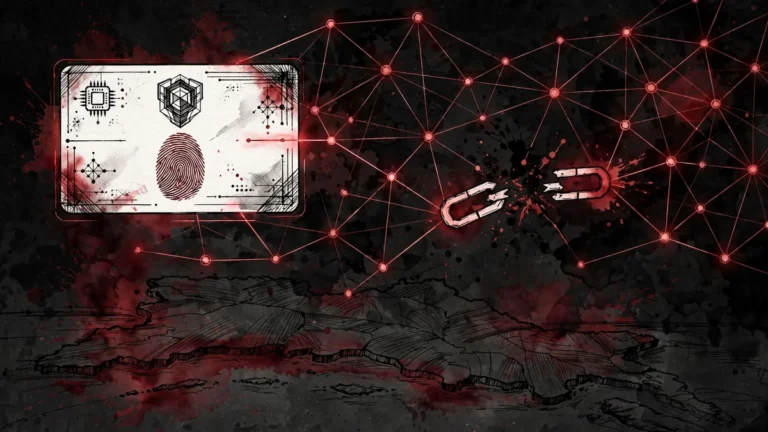
” alt=”Cyber risk assessment framework defense industrial base: editorial illustration of layered assessment phases” width=”1200″ height=”675″ loading=”lazy”>
How Does NIST 800-30 Map to DFARS Requirements?
The mapping runs through the contract clauses. DFARS 252.204-7012 requires “adequate security” on covered contractor information systems — defined as protective measures commensurate with the consequences of loss, misuse, or unauthorized access, which in practice means the NIST SP 800-171 requirements. The 800-171 Risk Assessment family then requires the periodic risk assessment itself: assess the risk to CUI, scan for vulnerabilities, and remediate what you find or carry it on the POA&M.
DFARS 7019 and 7020 add the verification machinery: the current SPRS score posted before award, and the government’s right — via DIBCAC — to conduct Medium and High assessments that examine whether the contractor’s risk assessments actually reflect operational reality. A contractor whose risk assessment identifies no significant risks while its SPRS score sits at -50 is telling two different stories, and that inconsistency is precisely what the 2026 State of the DIB data flags: average scores climbed to +51 while confidence in their accuracy fell to 65%, with only 67% of respondents saying they had even submitted a score. The risk assessment is where those stories get reconciled — or don’t.
What Do CMMC Assessors Expect From Risk Assessments?
Under CMMC, risk assessments move from contract language to assessment evidence. At CMMC Level 2 — the level most contracts handling CUI will require — the assessor verifies the 110 NIST SP 800-171 requirements, and the Risk Assessment family is among the areas where assessors look hardest for substance over paperwork. What they expect to see has four properties.
Scoping: the assessment covers the defined assessment boundary — the systems that store, process, or transmit CUI — not a generic corporate IT inventory. Threat grounding: the assessment names realistic threats to a defense contractor — ransomware operators, state-sponsored intrusions targeting the DIB, insider risk — rather than generic “cyber threats.” The FBI and CISA’s 2026 ransomware warnings and the targeting patterns documented in exposed infrastructure tied to Iran-linked activity are the kind of concrete threat intelligence assessors expect a DIB contractor to be aware of. Vulnerability linkage: the assessment connects to actual scan data — the output of the contractor’s vulnerability and exposure scanning program — not to assumptions. Action linkage: every significant risk has a disposition: remediated with evidence, mitigated with compensating controls, or carried on the POA&M with an owner and milestone date.
One further expectation is emerging from the enforcement environment: honesty. The Department of Justice’s civil cyber-fraud initiative has produced a steady stream of False Claims Act settlements — about $51 million across at least seven settlements announced in 2025, plus 2026 actions including a $507,144 settlement with LOGZONE in June and a $2,042,518 settlement with Honeywell Aerospace in September over NIST 800-171 noncompliance. A risk assessment that documents a known gap honestly and carries it on a POA&M is a compliance asset; a self-scored 110 built on assessments nobody believes is a liability.
” alt=”Cyber risk assessment framework defense industrial base: editorial illustration of a defense supply chain network with risk-highlighted nodes” width=”1200″ height=”675″ loading=”lazy”>
What Are the Common DIB Risk Assessment Gaps?
The 2026 State of the DIB findings read as a catalog of assessment gaps. Five core security technologies, including multi-factor authentication (63% adoption) and secure IT backups (48%), only just reached 40% adoption for the first time — meaning a large share of contractors are assessing environments that lack basic controls. An honest risk assessment of such an environment should show significant findings; when it doesn’t, assessors notice the disconnect.
The recurring gaps practitioners report are structural. Asset blindness: contractors cannot assess what they have not inventoried — shadow IT, unmanaged endpoints, and cloud services adopted without security review sit outside every assessment. Boundary drift: the CUI enclave expands informally as contracts and teams change, and the risk assessment still describes the 2023 boundary. Threat genericism: assessments that could describe any company in any industry, with no mention of DIB-specific threat actors or the contractor’s actual attack surface. Dead POA&Ms: findings carried forward quarter after quarter with slipping milestones and no escalation. Third-party blind spots: subcontractors and managed service providers that touch CUI but never appear in the prime’s risk assessment, despite the DFARS flowdown. And single-point authorship: one person writes the assessment, nobody challenges it, and the affirming official signs it — the exact dynamic that produced scores the industry itself no longer trusts.
How Do You Start a Risk Assessment Program?
For a contractor starting from zero — or restarting after years of paper assessments — the sequence is practical. One: inventory the CUI environment and draw the system boundary; everything else follows from this. Two: identify threats using DIB-relevant sources: CISA alerts, FBI private-industry notifications, and the contractor’s own incident and scan history. Three: run credentialed vulnerability scans across the boundary and collect the findings. Four: analyze likelihood and impact for each significant threat-vulnerability pair, using the 800-30 approach — and document the reasoning, not just the rating. Five: disposition every significant risk: fix it, mitigate it with documented compensating controls, or carry it on the POA&M with an owner and date. Six: brief leadership, get the risk acceptance decisions in writing, and set the next assessment date — annual at minimum, sooner after major changes.
The governance layer matters as much as the document. Name an assessment owner who is not also the person responsible for the systems being assessed, or at minimum build in an independent review step. Tie the assessment calendar to the SPRS and affirmation calendar so the evidence is fresh when it is needed. And keep every version: the assessment history is what proves the program is a cycle, not an event.
What Does This Mean for US and Allied Contractors?
For U.S. contractors, the message of 2026 is that the risk assessment has become the credibility document of the compliance program. Self-reported scores are at record highs and trust in them at record lows; the companies that will pass the eventual return of third-party assessment are the ones whose risk assessments describe reality — gaps included — and whose POA&Ms show those gaps closing. The enforcement trend sharpens the point: misrepresenting cybersecurity posture to the government now carries False Claims Act exposure measured in millions, as the 2026 settlements show.
For UK, EU, and other allied suppliers, the DIB risk-assessment model is arriving through subcontract flowdown and through allied governments watching the U.S. experiment. The operational logic is universal: cyber operations in the Russia-Ukraine war and breaches reaching into the Pentagon’s own systems demonstrate that adversary pressure on defense supply chains is structural, not cyclical. A risk assessment framework built to the NIST model is the minimum credible response.
What to Watch Next
The immediate variable is the CMMC reform process: the Reform Task Force’s September 2026 recommendations remain unpublished, and whatever replaces the suspended Phases 2–4 will define how risk assessments are verified in practice. The second variable is the annual affirmation cycle — assessments will lapse as affirmations are missed, and contracting officers will enforce that at award. The third is the slow-motion arrival of NIST SP 800-171 Revision 3, which would re-anchor the entire assessment baseline. Contractors should treat the risk assessment as a living program now, because every plausible future verifies it more rigorously than the present does.
| Metric | Figure | Source |
|---|---|---|
| Contractors surveyed | 302 U.S. defense contractors | 2026 State of the DIB (Merrill Research / CyberSheath) |
| Average self-reported SPRS score | +51 (five-year high; +33 in 2025) | 2026 State of the DIB (reported) |
| Confidence in score accuracy | 65% (down from 89% in 2025, 94% in 2024) | 2026 State of the DIB (reported) |
| Fully prepared for CMMC certification | 1% | 2026 State of the DIB (reported) |
| MFA adoption / secure backup adoption | 63% / 48% | 2026 State of the DIB (reported) |
| DOJ cyber-fraud settlements, 2025 | ~$51M across at least 7 settlements | Bloomberg Law (reported) |
| Honeywell FCA settlement | $2,042,518 (announced Sept 1, 2026) | DOJ via court filings (reported) |
| LOGZONE FCA settlement | $507,144 (announced June 18, 2026) | DOJ via Sidley FCA Blog (reported) |
Caveat: survey figures are REPORTED from the commissioned 2026 State of the DIB report and reflect self-reported contractor data. Settlement figures are REPORTED from DOJ announcements via legal and trade press; the $51M total is an approximation from Bloomberg Law’s reporting.
Frequently asked questions
What is the difference between NIST 800-30 and NIST 800-39?
NIST SP 800-30 is the guide for conducting risk assessments — the process of identifying threats and vulnerabilities and determining risk. NIST SP 800-39 is the guide for managing information security risk organization-wide, framing risk management as an ongoing activity across the organization, its missions, and its systems.
Does DFARS 7012 require a formal risk assessment?
DFARS 7012 requires “adequate security” defined through NIST SP 800-171, whose Risk Assessment family (3.11) requires periodic risk assessments of the systems handling CUI. In practice, yes — and the results must drive remediation or appear on the POA&M.
How often should a defense contractor conduct a risk assessment?
At minimum annually, and after any significant change — new contracts, new CUI flows, major system changes, or new threat intelligence affecting the contractor’s profile. Assessors look for a dated, recurring program, not a single document.
Can a risk assessment be done internally, or must it be third-party?
Internal assessments are acceptable, but they need independence in review — someone other than the system owner challenging the findings. Third-party assessments add credibility, particularly given the industry’s current confidence gap in self-reported scores.
What is the most common reason risk assessments fail CMMC scrutiny?
Disconnection from reality: assessments that describe generic threats, ignore actual scan findings, or identify no significant risks in environments that clearly have them. Assessors compare the assessment against scan data, the SSP, and the SPRS score — inconsistencies across those documents are what fail.
A cyber risk assessment framework is not a compliance tax — it is the map that tells a contractor where its real exposure sits. In a year when the industry’s self-reported scores say one thing and the industry’s confidence says another, the contractors who can show their work will be the ones who keep their contracts.
Related reading
- CMMC Penetration Testing Requirements: 2026 Guide
- ITAR Cybersecurity Requirements: Contractor Guide (2026)
- DFARS 252.204-7012 Checklist: Compliance Explained
Sources
- CyberSheath: Takeaways from CMMC CON 2026 — 2026 State of the DIB findings
- National Cyber Security / MeriTalk: Study — DIB Reports Higher Scores, but Confidence Falls
- Bloomberg Government: Justice Department Cyber Fraud Push Yields Wave of Settlements
- Sidley FCA Blog: DOJ Reaches $507,144 Settlement with Defense Contractor
- Agile IT: DFARS Compliance — 7012, 7019, 7020, 7021 Explained


Discussion 0
Share analysis, corrections, or context. Be civil — comments are moderated.