
WarBrief Live | November 15, 2026 | Breaking Analysis
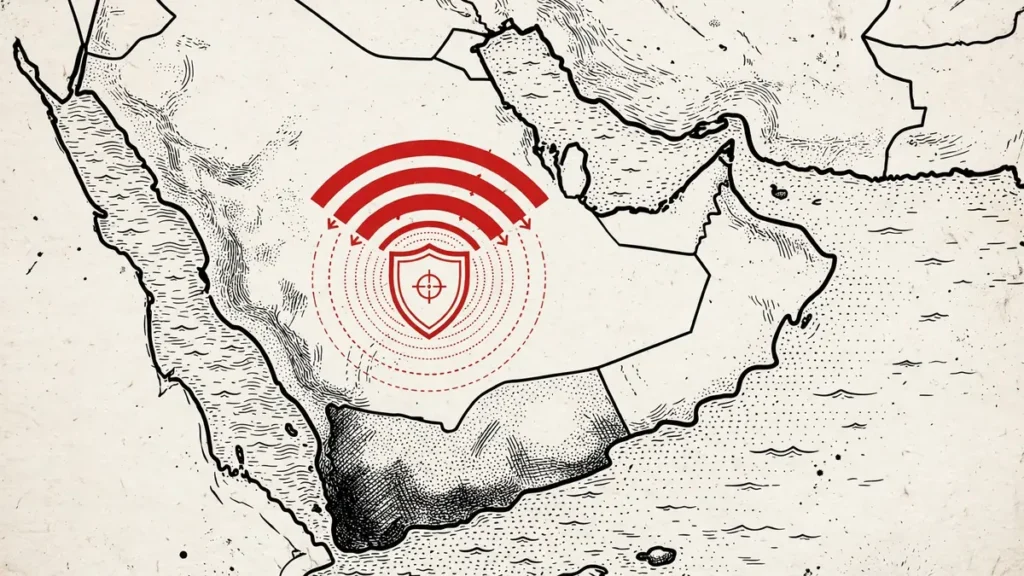
Saudi air defences intercepted two ballistic missiles aimed at Riyadh in the early hours of November 15, 2026, the Saudi-led coalition said, in the first direct ballistic-missile attack on the Saudi capital in the current escalation. Three drones were also intercepted in the Eastern Province on the same morning, and Bahrain issued a threat alert hours later.
2
ballistic missiles aimed at Riyadh, intercepted, per the coalition
3
drones intercepted in the Eastern Province on November 15
26
people killed in suspected Houthi attacks in Saudi Arabia since September 23, per Saudi authorities
04:08
time the Saudi Civil Defence alert sounded in Riyadh
Key Takeaways
- The Saudi-led coalition said its air defences intercepted and destroyed two ballistic missiles launched towards Riyadh early on November 15, 2026, and three drones in the Eastern Province. The launch attribution is the coalition’s claim; the Houthis had not claimed the attack in the sources checked.
- A Saudi Civil Defence alert sounded at 04:08 in Riyadh, three loud explosions were heard minutes later, and an all-clear followed. No casualty figure for the November 15 intercepts was reported in the sources checked.
- Bahrain issued a potential-threat alert on the same morning, its first since September, while Iran’s Revolutionary Guards claimed drone attacks on a US base in Bahrain that Washington has not confirmed.
- At least 26 people have been killed in suspected Houthi drone and missile attacks in Saudi Arabia since September 23, according to Saudi authorities, with 23 of those deaths at airports, according to the official tally reported by Arab News.
- The attack fits a pattern of intensifying strikes on Riyadh, its airport, the East-West pipeline and Eastern Province energy infrastructure, and it comes as fighting inside Yemen intensifies in Marib and al-Jawf.
What happened in Riyadh on November 15, 2026?
Early on Sunday, November 15, 2026, the Saudi-led coalition fighting Yemen’s Houthis said its air defences had intercepted two ballistic missiles aimed at the Saudi capital. Al Jazeera reported that coalition spokesperson Turki al-Maliki announced the interception in a post on X, saying: “Air defences intercepted and destroyed two ballistic missiles launched by the Houthi terrorist militia towards Riyadh.” The same account was carried by Reuters, via Free Malaysia Today, and by Arab News.
The missiles were not the only threat that morning. Arab News reported that the coalition also destroyed three drones targeting the Eastern Province early on Sunday. Al Jazeera’s updated account put the weekend total at two missiles and five drones: the three drones in the Eastern Province on Sunday, plus two suspected Houthi drones that al-Maliki said had been intercepted and destroyed in the Riyadh and southern regions on Saturday.
For residents of the capital, the attack was audible before it was explained. Arab News reported that a Saudi Civil Defence alert sounded at 04:08, warning Riyadh residents of an incoming aerial threat, and that three loud explosions were heard minutes later before authorities issued an all-clear notification. Gulf News reported that Saudi authorities later announced the danger had passed in Riyadh City and urged residents to follow safety instructions through the National Early Warning Platform.
What investigators have confirmed, and what remains unverified, matters here. The interception itself is the coalition’s account, announced by its spokesperson on X; no independent verification of the interception, the missile type beyond the coalition’s description, or the launch site was available in the sources checked. The Houthis had not claimed responsibility for the November 15 launches in the reporting reviewed. That does not mean the attack did not happen; it means the attribution rests, for now, on the coalition’s statement, and readers should treat it as such.
By the numbers: the November 15 attack and the toll since September
The figures below separate what the coalition and Saudi authorities have stated from what is still only reported. Where two outlets disagree on a detail, the table says so rather than picking a winner.
| Metric | Figure | Source |
|---|---|---|
| Ballistic missiles aimed at Riyadh, November 15 | 2, intercepted | Coalition statement via Al Jazeera, Reuters, Arab News (CONFIRMED as a coalition claim) |
| Drones intercepted in the Eastern Province, November 15 | 3 | Arab News; Al Jazeera (CONFIRMED as a coalition claim) |
| Drones intercepted on Saturday, November 14 | 2, in Riyadh and southern regions | Coalition statement via Al Jazeera (CONFIRMED as a coalition claim) |
| Civil Defence alert, Riyadh | 04:08, followed by an all-clear | Arab News (CONFIRMED) |
| Killed in suspected Houthi attacks in Saudi Arabia since September 23 | At least 26, including 23 at airports | Saudi authorities via Al Jazeera and Arab News (CONFIRMED as an official tally) |
| People displaced by fighting in Yemen since August | More than 340,000 | International Organization for Migration via Al Jazeera (CONFIRMED) |
| Iranian drones claimed launched at a US radar in Bahrain | 6, claimed by the IRGC | IRGC via The National (REPORTED only; not confirmed by Washington) |
One-line caveat: figures labelled as coalition or official claims are what those sources have stated, not independently verified counts; figures labelled REPORTED rest on a single claim and should not be treated as established fact.
Why did Bahrain issue a threat alert on the same morning?
Bahrain’s Interior Ministry issued an alert of a potential threat on Sunday morning, urging citizens and residents to remain calm, proceed to the nearest safe location and follow developments through official channels. The National reported that it was Bahrain’s first nationwide threat alert in months, and that the ministry did not specify the nature of the threat or identify any potential targets. Reuters, via The Telegraph India, reported that Bahrain issued two separate alerts on Sunday, the first such warnings by the Gulf country since September.
The alert came as Iran’s Islamic Revolutionary Guard Corps claimed it had launched six drones towards a US air defence radar installation at Bahrain’s Riffa helicopter base, describing the operation as a second phase of retaliation against the United States. Iran’s Fars news agency reported that the IRGC had carried out attacks on US bases in Bahrain, without giving details of the targets, weapons used or the extent of any damage. The National reported that Washington has not yet confirmed the latest reported attacks, and Ynet reported that neither US nor Bahraini authorities immediately confirmed the attack or reported any damage.
That caution has a recent precedent. On Friday, US Central Command said it had intercepted two Iranian one-way attack drones heading towards Bahrain, with no injuries or damage reported, disputing an earlier IRGC claim that its troops had destroyed an American early-warning radar. The National also reported that the IRGC Navy claimed two oil tankers had exploded and caught fire after striking naval mines south of the Strait of Hormuz, a claim that has not been independently verified, with no vessel identities, flags or ownership details provided and no corresponding confirmation from maritime authorities. That tanker claim is a separate story, covered in WarBrief’s Hormuz reporting, and it should not be conflated with the Riyadh intercepts.
Bahrain matters because it hosts the headquarters of the US Navy’s Fifth Fleet, making it a key centre for American military operations in the Gulf. The National reported that Gulf Arab states on Friday demanded that Iran pay full compensation for damage caused by thousands of missile and drone attacks since February, calling on the UN Security Council to hold Tehran accountable and prevent further strikes.
How the Riyadh attack fits the escalation since September
The November 15 attack did not come from nowhere. The coalition has battled a surge in attacks since hostilities reignited in July, according to Reuters, and the Houthis have repeatedly targeted Riyadh’s King Khalid International Airport, as well as the East-West pipeline and oil infrastructure in eastern and southern Saudi Arabia, according to Al Jazeera.
The recent sequence, as reported, runs like this:
- September 23 onwards: suspected Houthi drone and missile attacks in Saudi Arabia have killed at least 26 people, according to Saudi authorities, with 23 of those deaths at airports, according to the official tally reported by Arab News.
- October 2026: an earlier attack caused extensive damage to Aramco’s facilities, according to Arab News, and the Eastern Province, home to most of Saudi Arabia’s oil and gas reserves and Aramco’s headquarters, has been repeatedly targeted in recent weeks.
- November 8, 2026: a Houthi attack damaged an administrative building belonging to state oil giant Saudi Aramco in Riyadh’s financial district, as covered in WarBrief’s earlier reporting on the Houthi cruise-missile strike on Riyadh’s financial district.
- November 11, 2026: Saudi air defences intercepted Houthi missiles and drones directed towards Riyadh, Makkah and other regions, according to Arab News.
- November 12, 2026: the Houthis claimed strikes on Saudi Arabia’s East-West pipeline and Yanbu, a claim WarBrief reported as a claim, not a confirmed hit.
- November 14, 2026: two suspected Houthi drones were intercepted in the Riyadh and southern regions, according to the coalition.
- November 15, 2026: two ballistic missiles aimed at Riyadh and three drones in the Eastern Province were intercepted, according to the coalition, and Bahrain issued its threat alert.
Inside Yemen, the fighting behind the cross-border strikes is also intensifying. Al Jazeera reported that Yemeni army spokesman Colonel Majid al-Nuzaili said government forces had made gains against the Houthis during heavy fighting in the al-Hazm and Madghal districts of al-Jawf, and that fighting had intensified in Marib. Those are the Yemeni government’s claims. Houthi military spokesman Yahya Saree said the coalition had launched 72 air strikes against the Houthis in the Saada, Taiz, Lahij and al-Jawf governorates over the past 24 hours, and that the Houthis had targeted Yemen’s Saudi-backed forces in the Kharaz area of Lahij with ballistic missiles. The Houthis also claimed to have shot down an armed Saudi coalition reconnaissance aircraft over al-Jawf, which they said was the fifth aircraft shot down since the escalation began. That shoot-down claim is unverified in the sources checked.
The human cost inside Yemen is mounting alongside the cross-border exchanges. The International Organization for Migration says more than 340,000 people have been displaced by fighting in Yemen since August. Houthi-affiliated media reported that two women and two children were injured by artillery shelling by Saudi-backed forces in a residential neighbourhood of the Shuaub district in Sanaa; that report is attributed to Houthi-affiliated outlets and has not been independently verified.
For the wider picture, see WarBrief’s Yemen-Saudi escalation profile in the Conflict Zones hub, and the comparison of the two Gulf chokepoints in Bab el-Mandeb vs Strait of Hormuz.

What the Riyadh attack means for US/UK/EU readers
For readers in the United States, Britain and Europe, the direct stakes are travel, energy prices and the risk of a wider Gulf confrontation, in that order. The US Embassy in Riyadh issued a nationwide security alert on Saturday, before the November 15 intercepts, urging Americans in the kingdom to exercise “heightened vigilance”, citing an increased threat of Houthi attacks. Al Jazeera reported that the embassy said Houthi attacks on airports and other critical infrastructure in Saudi Arabia had “caused civilian casualties and severe travel disruptions”, warned that hostilities could spread “rapidly”, and advised: “Please take extreme caution if you choose to use airports in Saudi Arabia.” Travellers with flights through Riyadh, Jeddah or Dammam should check with their airline and their government’s travel advice before travelling, and should expect disruption if attacks continue.
Energy markets are the second channel. The Eastern Province holds most of Saudi Arabia’s oil and gas reserves and Aramco’s headquarters, and it has been repeatedly targeted. A strike that damages processing or export infrastructure, rather than one that is intercepted, would feed directly into the war risk premium on crude oil and, with a lag, into fuel prices in the US, the UK and the EU. The November 15 attack was intercepted, so its immediate market effect is likely to be limited to that risk premium rather than a supply shock, but the pattern of repeated targeting is what traders watch. WarBrief’s reporting on Iran’s Bahrain radar-strike claim sets out the parallel risk around US bases in the Gulf.
The third channel is escalation. The Riyadh intercepts, the Bahrain alert, the IRGC’s claimed drone attacks on a US base in Bahrain and the unverified Hormuz mine claims all landed within about 24 hours. None of them, on its own, confirms a new phase of the war, and the IRGC claims in particular remain unconfirmed. But taken together they show how quickly a Yemen-front exchange can become a Gulf-wide one, with US forces in Bahrain and shipping in the Strait of Hormuz drawn in. That is why the Gulf Arab states’ demand on Friday for compensation and UN Security Council action matters: it is the diplomatic track running alongside the military one, and it is the track most likely to determine whether the next week brings de-escalation or a further round of strikes.
What is confirmed and what is still reported?
Confirmed, on the basis of two or more reputable sources, is this: the coalition said it intercepted two ballistic missiles aimed at Riyadh and three drones in the Eastern Province on November 15; a Civil Defence alert sounded at 04:08 and was later lifted; two drones were intercepted on November 14; at least 26 people have been killed in suspected Houthi attacks in Saudi Arabia since September 23, according to Saudi authorities; the US Embassy in Riyadh issued a security alert on Saturday; Bahrain issued a potential-threat alert on Sunday; and more than 340,000 people have been displaced in Yemen since August, according to the International Organization for Migration.
Reported, but not confirmed, is this: that the missiles and drones were launched by the Houthis, which is the coalition’s attribution and has not been independently verified; the IRGC’s claim of six drones launched at a US radar in Bahrain and of attacks on US bases there, which Washington has not confirmed; the IRGC Navy’s claim that two tankers struck mines south of the Strait of Hormuz, which has not been independently verified; the Houthis’ claim to have shot down a Saudi reconnaissance aircraft over al-Jawf; and the casualty and battlefield figures cited by the Yemeni army and by Houthi spokesmen, which are each side’s claims.
One distinction is worth stating plainly. An interception claim is not the same as a confirmed launch, and a claim of an attack on a US base is not the same as a confirmed attack. WarBrief reports both, labelled as claims, because the claims themselves move markets, alerts and diplomacy, but readers should not mistake a claim for a verified event.
What to watch next in Saudi Arabia and the Gulf
First, whether the Houthis claim the November 15 launches, and with what detail. A claim naming the missile type, the launch area or the intended target would help establish what was actually fired; silence would leave the attribution resting on the coalition alone. Second, whether Bahrain’s alert is followed by a confirmed incident, or whether it is lifted without one, as the Riyadh alert was. Third, whether Washington confirms or denies the IRGC’s Bahrain claims, and whether CENTCOM reports further drone interceptions near Bahrain, as it did on Friday.
Fourth, the tempo of the Yemen front itself. If the fighting in Marib and al-Jawf continues to intensify, further cross-border launches are likely, and the coalition’s response inside Yemen is likely to intensify with them. Fifth, the oil market’s reaction when trading opens: a muted response would suggest traders see the intercepts as containment; a sharp rise in the risk premium would suggest they see a pattern that could eventually hit infrastructure. And sixth, the diplomatic track: the Gulf states’ compensation demand and their call for UN Security Council action, and whether the Council takes it up in the coming days.
Frequently asked questions
What happened in Riyadh on November 15, 2026?
The Saudi-led coalition said its air defences intercepted and destroyed two ballistic missiles aimed at Riyadh early on November 15, 2026, and three drones in the Eastern Province. A Civil Defence alert sounded at 04:08 and was later lifted. The launch attribution is the coalition’s claim.
Did anyone die in the November 15 Riyadh attack?
No casualty figure for the November 15 intercepts was reported in the sources checked. At least 26 people have been killed in suspected Houthi drone and missile attacks in Saudi Arabia since September 23, according to Saudi authorities, with 23 of those deaths at airports.
Why did Bahrain issue a threat alert on November 15, 2026?
Bahrain’s Interior Ministry issued an alert of a potential threat on Sunday morning, its first since September, urging residents to remain calm and move to the nearest safe location. It did not specify the nature of the threat. The alert came as Iran’s Revolutionary Guards claimed drone attacks on a US base in Bahrain, claims Washington has not confirmed.
Have the Houthis claimed the Riyadh missile attack?
Not in the reporting reviewed. The coalition attributed the missiles and drones to the Houthis, but the Houthis had not claimed the November 15 launches in the sources checked. The Houthis have repeatedly targeted Riyadh’s airport, the East-West pipeline and oil infrastructure in the past.
Is it safe to fly through Saudi Arabia?
The US Embassy in Riyadh issued a nationwide security alert on November 14 urging Americans to exercise heightened vigilance, saying Houthi attacks on airports had caused civilian casualties and severe travel disruptions. Travellers should check their airline and their government’s travel advice before travelling.
Sources
- Al Jazeera: Saudi-led coalition intercepts suspected Houthi missiles and drones
- Arab News: Coalition forces intercept 2 Houthi missiles targeting Riyadh, 3 drones in Eastern Province
- Free Malaysia Today (Reuters): Saudi coalition says intercepted two ballistic missiles fired towards Riyadh
- Gulf News: Saudi Arabia intercepts Houthi missiles targeting Riyadh as Bahrain issues threat alert
- The National: Bahrain issues first nationwide alert in months as Iran claims attack on base hosting US helicopters



Discussion 0
Share analysis, corrections, or context. Be civil — comments are moderated.