
WarBrief Live | November 10, 2026 | Shipping & Logistics
650 km
From Duqm, Oman, to the Strait of Hormuz — the new edge of the Cheonghae Unit’s zone
395
Total personnel after 75 are added, including a 30-strong bomb-disposal team and 45 P-8A crew
~1,200 nm
Expanded operating area — roughly double the current zone of about 600 nautical miles
Dec 31, 2027
Deployment end date if the National Assembly approves the motion
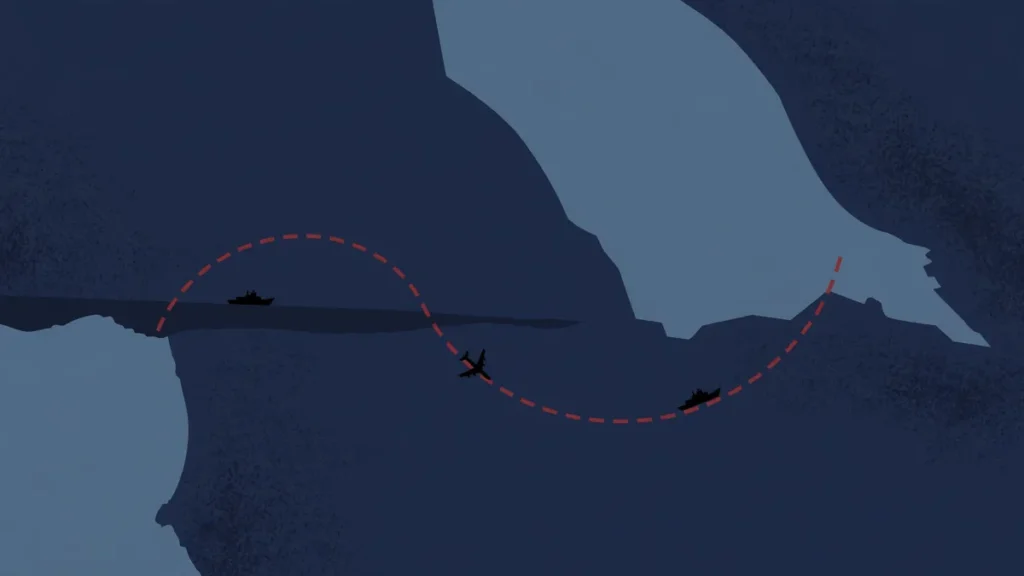
South Korea’s Cabinet approved the South Korea Cheonghae Unit Hormuz expansion November 2026 plan on November 10, widening the Cheonghae anti-piracy unit’s operating area from the Gulf of Aden to waters south of Oman’s Duqm port, roughly doubling its patrol zone and moving Seoul’s navy to within 650 kilometres of the Strait of Hormuz. The decision still needs National Assembly approval, and it adds a P-8A Poseidon patrol aircraft, a bomb-disposal team and unmanned mine-clearing equipment — while explicitly stopping short of the strait itself.
Key Takeaways
- South Korea’s Cabinet approved the Cheonghae expansion on November 10, 2026; the National Assembly must still vote, with the current mandate expiring on December 31, 2026.
- The operating area roughly doubles, from about 600 nautical miles in the Gulf of Aden to waters south of Oman’s Duqm port, about 650 kilometres from the Strait of Hormuz. The Gulf of Oman is excluded.
- The unit gains one P-8A Poseidon, a 30-member explosive ordnance disposal team and unmanned mine-clearing equipment, taking personnel from 320 to 395.
- Entering the Strait of Hormuz itself would need separate Assembly approval, and Seoul says the mission will not take part in the war against Iran.
What did South Korea’s Cabinet approve on November 10?
At a Cabinet meeting chaired by President Lee Jae Myung at Cheong Wa Dae in Seoul, the government approved a revised consent motion to extend the deployment of the Cheonghae Unit, the South Korean Navy’s anti-piracy mission off Somalia. The Korea Herald reported that the motion widens the unit’s mission area and sends additional assets, and now goes to the National Assembly after the president’s authorisation.
The motion is formally titled the revised consent motion to extend the deployment of Korean armed forces units to the waters off Somalia in the Gulf of Aden and the open sea south of Oman. It is not legislation, so it does not need review by the Legislation and Judiciary Committee, but it must pass the National Assembly’s Defense Committee and then a plenary vote. Approval requires more than half of all lawmakers to be present and a majority of those present to vote in favour. The ruling Democratic Party of Korea holds a majority in the Assembly.
Time is tight. With the current deployment mandate expiring on December 31, 2026, the Assembly must complete its committee review and plenary vote within roughly 50 days, according to the Herald Corp. The statutory deadline for passing the budget falls on December 2, which raises concerns that the dispatch bill could face rushed scrutiny. If the motion passes, the deployment period runs from the date of the Assembly’s approval through December 31, 2027.
President Lee used the Cabinet meeting to address the wider backdrop. Following the United States midterm elections, in which Democrats won control of both the Senate and the House of Representatives, he said “every effort must be made to minimize any negative impact that external uncertainties might have on the domestic economy” and ordered ministries to prepare contingency plans for various scenarios, the Korea JoongAng Daily reported.
What is the Cheonghae Unit?
The Cheonghae Unit is South Korea’s overseas naval deployment, first sent to the Gulf of Aden in March 2009 to protect Korean vessels from Somali piracy. It currently consists of a 4,400-ton destroyer, helicopters and speedboats, as well as naval infantry and other personnel, and its mandate has required annual National Assembly approval ever since. The 48th contingent, aboard the destroyer Wanggon, is the unit now on station.
The unit’s job has always been the protection of merchant shipping and South Korean nationals at sea. What changes now is the geography and the kit. The expanded zone reaches the open waters south of Oman, and the new mission mandate adds, for the first time since 2009, support for the restoration of freedom of navigation along international maritime routes. The additional assets will operate out of Djibouti in East Africa.
By the numbers: the expanded Cheonghae mission
| Metric | Figure | Source |
|---|---|---|
| Current operating area | ~600 nautical miles (Gulf of Aden) | Korea Herald / Seoul Economic Daily |
| Expanded operating area | To waters south of Duqm, Oman — roughly double | Korea Herald / Korea JoongAng Daily |
| Distance from Duqm to the Strait of Hormuz | ~650 km (350 nautical miles) | Korea JoongAng Daily / Herald Corp |
| Personnel | 320 → 395 (+75: 30 EOD, 45 P-8A crew) | Korea Herald / Aju Press |
| New assets | 1 P-8A Poseidon, EOD team, unmanned mine countermeasure (UUV, USV, ROV) | Seoul Economic Daily / Korea Herald |
| Deployment period if approved | Through December 31, 2027 | Financial News / Korea JoongAng Daily |
| Assembly deadline | ~50 days; current mandate expires December 31, 2026 | Herald Corp |
| Strait of Hormuz entry | Requires separate Assembly approval — CONFIRMED | Defence Minister Kang, November 9 |
| Mine-clearing role inside the strait after the war | REPORTED — equipment “can help prepare” Korea for a future international operation | Korea JoongAng Daily |
Figures marked CONFIRMED are corroborated by two or more sources. The mine-clearing role is REPORTED: no decision has been taken, and any such operation would need separate approval.
What the expanded mission can and cannot do
The expansion is deliberately drawn with hard limits, and Seoul has repeated them at every step. The new zone stops at the waters south of Duqm. The Gulf of Oman, which directly adjoins the Strait of Hormuz, is not included. The patrol aircraft will be prohibited from targeting or monitoring Iranian territory, territorial waters or the interior of the Strait of Hormuz during their missions, according to reporting by UCA News.
Defence Minister Kang Shin-chul told a full session of the Assembly’s Defense Committee on November 9 that the principle of non-involvement and non-interference in the war would be upheld, and that extending operations into the Strait of Hormuz would require separate Assembly approval. The Defence Ministry said in a statement that it had “developed a plan to strengthen the mission of the Cheonghae Unit, with the goal of protecting Korean citizens and safeguarding the nation’s economic interests”, and stressed that the unit will operate “under an independent command structure and adhere to the strict principle of never participating or intervening in any war”.
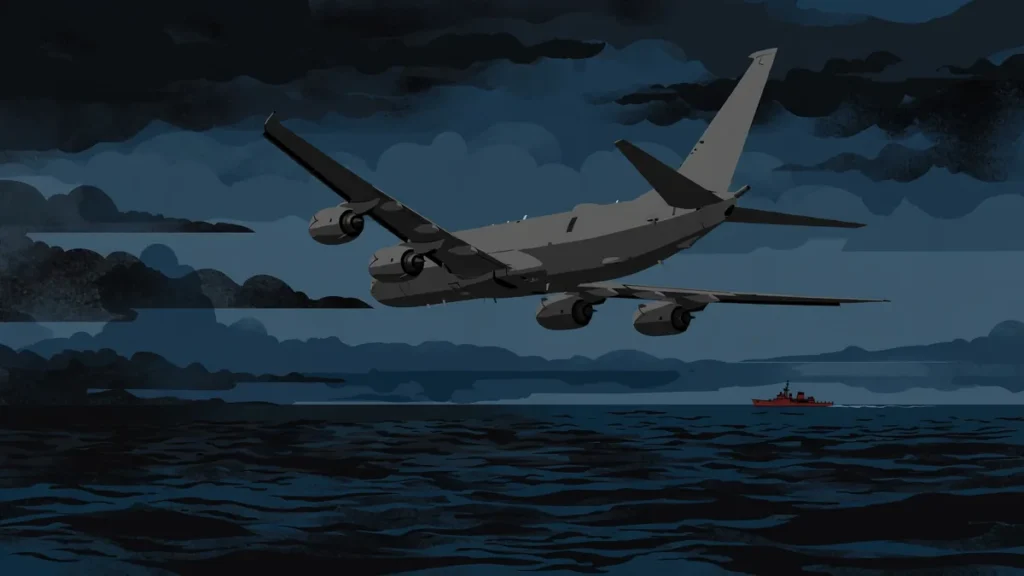
What the new kit does add is reach and preparation. The P-8A Poseidon is a long-range maritime patrol aircraft — South Korea’s Navy operates six of them — able to watch wide stretches of sea for far longer than a ship’s helicopter. The explosive ordnance disposal team and the unmanned mine-countermeasure systems, including unmanned underwater vehicles, unmanned surface vehicles and remotely operated vehicles, give the unit the ability to deal with mines and unexploded ordnance. The Korea JoongAng Daily reported that this equipment can help prepare Korea to join an international operation to clear mines from the Strait of Hormuz, which could begin after the war between the United States and Iran ends. That is a contingency, not a commitment — and it would need its own parliamentary consent.
Why Iran objected — and how Seoul answered
Tehran objected before the Cabinet had even met. On November 9, Iranian Foreign Ministry spokesman Esmaeil Baghaei said Seoul should refrain from deploying forces “under the pretext of reopening the Strait of Hormuz” and urged Korea not to get involved in the war. The objection landed in the middle of a wider standoff: the United States is maintaining a naval blockade of Iran, and Tehran has set out seven conditions for ending the war, including sanctions relief and an end to the blockade.
Seoul’s answer, delivered the same day and again on November 10, was to restate the limits. A Foreign Ministry official said on November 10 that Seoul would “proceed with a motion to strengthen the mission of the Cheonghae Unit under the principles of noninvolvement, nonintervention to protect our citizens and economic interests”, and that the ministry has been communicating with Iran and other relevant countries on the matter. The Defence Ministry’s statement used the same language, and the government has made clear that the unit will not directly participate in or intervene in the war.
The decision was not without domestic opposition. Civic groups and progressive activists held a rally near Gwanghwamun in central Seoul on November 10, calling the expansion a “disguised participation in war” and demanding the withdrawal of the motion. Progressive opposition parties have also criticised the plan, so contentious deliberations are expected in the National Assembly.
The context is pressure from Washington. The United States has urged allies and partners to do more to secure the Strait of Hormuz, which has been effectively blockaded since the war began. President Donald Trump said on November 9 that the war was “effectively over” and that new strikes were unlikely “at this point”, while insisting the naval blockade would continue — a position covered in WarBrief Live’s report on Trump’s remarks. Seoul’s expansion sits in that gap: a visible contribution to maritime security that stays outside the war itself.
Background and timeline
The Cheonghae expansion was first announced as a plan, not a decision, five days before the Cabinet vote. Reuters reported on November 5 that South Korea planned to expand the unit’s operations following pressure from President Trump to provide support for the war in Iran, with the Defence Ministry confirming a report by Yonhap News Agency. That sequence — announcement, then Cabinet approval, then a parliamentary vote — is how the deployment has been extended every year since 2009.
- March 2009: The Cheonghae Unit is first deployed to the Gulf of Aden to combat piracy off the Somali coast and protect Korean vessels.
- November 5, 2026: The Defence Ministry announces the expansion plan; a vice-ministerial meeting approves the amended motion. The plan is reported by Yonhap and confirmed by the ministry.
- November 9, 2026: Defence Minister Kang tells the Assembly’s Defense Committee that entering the Strait of Hormuz needs separate approval. Iran’s Baghaei urges Seoul to refrain from deploying. Trump calls the Iran war “effectively over” after talks with Qatar’s prime minister.
- November 10, 2026: The Cabinet, chaired by President Lee Jae Myung, approves the revised consent motion. Civic groups protest in central Seoul.
- December 2, 2026: Statutory deadline for passing the budget bill, which complicates the Assembly timetable for the dispatch motion.
- December 31, 2026: The Cheonghae Unit’s current deployment mandate expires.
- December 31, 2027: Deployment end date under the revised motion, if the National Assembly approves it.
What the Cheonghae expansion means for US/UK/EU readers
For readers in the United States, Britain and Europe, the Cheonghae expansion matters in three ways: shipping, energy prices and alliance burden-sharing. The Strait of Hormuz is the chokepoint for a large share of the world’s seaborne oil and liquefied natural gas, and traffic through it has fallen to a small fraction of normal levels since the war began. A South Korean destroyer and a P-8A operating south of Oman do not reopen the strait, but they add a capable allied presence at its approaches and signal that Washington’s partners are willing to put ships and aircraft into the region.
On energy, the direction of travel is already visible. Oil prices fell on November 9 after President Trump said the war was “effectively over” and new strikes were unlikely, easing the war premium that had built up in crude markets. If the Cheonghae deployment and other allied contributions help keep the strait’s approaches stable, the effect for US, UK and EU consumers is felt through fuel prices and shipping insurance — war-risk premiums for vessels near the Gulf have risen sharply since the war began, and those costs eventually reach petrol stations and supermarket shelves. South Korea itself imports almost all of the crude oil it consumes, so Seoul has a direct economic stake in keeping the sea lanes open.
On alliances, the move is a test case for how US partners contribute without joining a war. Britain, France and other European states face the same question as Seoul: how to support freedom of navigation and reassure shipping markets while staying out of the fighting. The Cheonghae model — a bigger zone, better sensors, explicit geographic limits, and a parliamentary vote — is one answer, and its reception in Seoul’s National Assembly will be watched in European capitals. For background on how such blockades and maritime restrictions work in law, see WarBrief Live’s explainer on naval blockades. For the wider conflict picture, see the conflict zones hub.
What to watch next in the National Assembly
The next step is the National Assembly, and the timetable is the story. The motion goes first to the Defense Committee for review, then to a plenary vote, and both must be completed before the current mandate expires on December 31, 2026. The Defence Ministry has asked the Assembly to cooperate toward a plenary submission as early as this week, but the budget bill’s December 2 deadline will compete for the same sitting days.
Three things will show whether the motion passes cleanly. First, whether the ruling Democratic Party of Korea holds its majority together — it holds a majority, so a straight party-line vote would pass. Second, whether the progressive opposition’s objections gain traction with the public after the November 10 protests. Third, whether any new development in the Iran war — a strike, a blockade incident or a breakthrough in the talks — changes the politics of a deployment that Seoul insists is not war participation. If the Assembly votes the motion down or lets the mandate lapse, the Cheonghae Unit would have to return to its previous zone or come home — an outcome that would leave South Korea with no naval presence near the strait at all.
Also watch the P-8A itself. The aircraft’s first patrols out of Djibouti will show how far Seoul is willing to go in practice: whether its surveillance stays in the open waters south of Oman, as promised, and whether Tehran treats the flights as the provocation it warned about. Our November 5 explainer on the expansion plan will be updated as the Assembly process unfolds.
Frequently asked questions
What is the Cheonghae Unit?
The Cheonghae Unit is South Korea’s naval anti-piracy deployment, first sent to the Gulf of Aden in March 2009 to protect Korean vessels from Somali piracy. It centres on a 4,400-ton destroyer with helicopters, speedboats and naval infantry, and its mandate requires annual National Assembly approval.
Is South Korea sending troops into the Strait of Hormuz?
No. The expanded zone stops at waters south of Oman’s Duqm port, about 650 kilometres from the strait, and the Gulf of Oman is excluded. Defence Minister Kang Shin-chul said on November 9 that entering the strait would require separate National Assembly approval, and Seoul says the unit will not take part in the war against Iran.
How far is Duqm from the Strait of Hormuz?
About 650 kilometres (350 nautical miles) in a straight line. The Cheonghae Unit’s current operating area spans about 600 nautical miles in the Gulf of Aden; the expansion roughly doubles it to about 1,200 nautical miles.
When will South Korea’s National Assembly vote on the Cheonghae expansion?
Within roughly 50 days of the Cabinet’s November 10 approval, because the current deployment mandate expires on December 31, 2026. The motion needs Defense Committee review and then a plenary vote, with a majority of lawmakers present and a majority of those present voting in favour.
Will South Korea join the war against Iran?
Seoul says no. The government has repeatedly stated the principle of non-involvement and non-intervention, and the Defence Ministry says the unit will operate under an independent command structure and never participate in or intervene in any war. Iran has nonetheless urged Seoul to refrain from deploying, and civic groups in Seoul have protested the expansion.
Sources
- The Korea Herald: Cabinet approves wider naval operations closer to Hormuz; Assembly vote next
- Korea JoongAng Daily: South Korea to expand Cheonghae Unit mission near Strait of Hormuz
- Seoul Economic Daily: Cabinet Approves Wider Naval Zone Near Strait of Hormuz
- Herald Corp: Government reviews Cheonghae Unit dispatch bill as year-end deadline looms
- Reuters via BusinessWorld: South Korea to expand anti-piracy unit operations closer to Strait of Hormuz

Discussion 0
Share analysis, corrections, or context. Be civil — comments are moderated.