
WarBrief Live | November 9, 2026 | Breaking Analysis
10
JEF nations signing the pact
3
Russian submarines tracked in April 2026
~500
British personnel in the April operation
22
Areas of interest monitored by Nordic Warden
Ten northern European nations will sign a pact on November 10, 2026, aboard the aircraft carrier HMS Prince of Wales, expanding the UK-led Joint Expeditionary Force’s hunt for Russian submarines across the North Atlantic, the Arctic and the Baltic Sea.
The agreement, first reported by the Financial Times on November 8, follows a US-backed operation in which American, British and Norwegian forces reportedly disrupted a suspected Russian operation against undersea cables. What investigators have confirmed, and what remains unverified, matters here: the suspected plot is reported, not confirmed, and no cable attack has been publicly confirmed. What is confirmed is the pattern that pushed ten governments to act — Russian submarines loitering over the cables and pipelines that carry Europe’s internet, energy and financial data.
Key Takeaways
- The 10 Joint Expeditionary Force (JEF) nations are expected to formalise expanded anti-submarine operations on November 10, 2026, aboard HMS Prince of Wales, ahead of the Atlantic Future Forum conference.
- The pact follows a US-backed operation that reportedly disrupted a suspected Russian operation against undersea cables. The plot itself is a reported suspicion, not a confirmed attack.
- In April 2026 the Royal Navy tracked three Russian submarines — one Akula-class attack boat and two specialist vessels from Russia’s deep-sea research directorate, GUGI — near cables and pipelines for more than a month. No damage was found.
- The JEF is not part of NATO, but all 10 of its members are NATO states. The pact moves the group from memorandums and meetings into what Britain’s defence chief calls “really practical measures”.
What the November 10 pact actually does
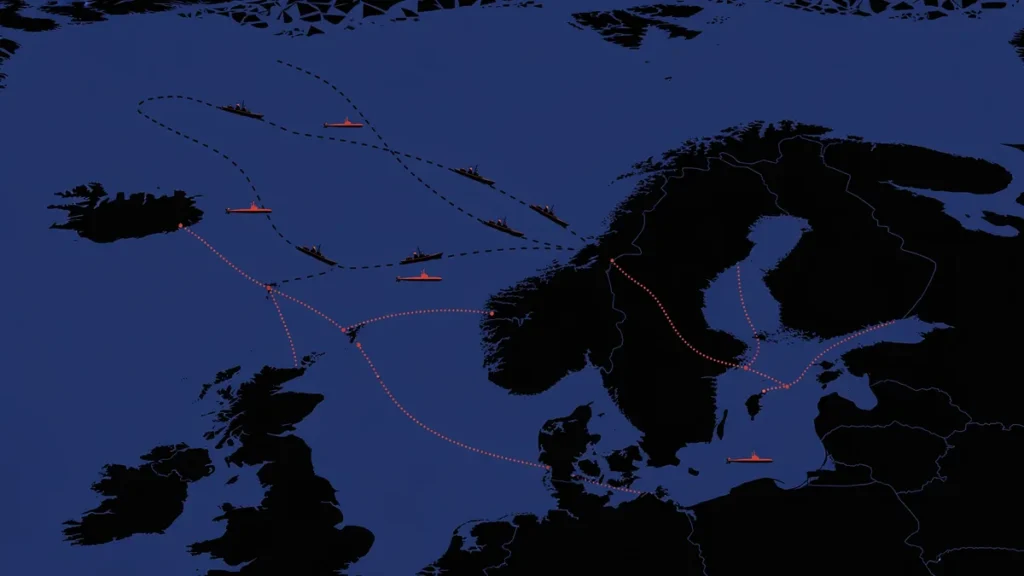
According to the Financial Times, reported on November 8, the 10 JEF nations — the United Kingdom, Denmark, Estonia, Finland, Iceland, Latvia, Lithuania, the Netherlands, Norway and Sweden — will strengthen naval, air and ground operations through the UK-led force to monitor Russian submarine movements. The arrangement is expected to be formalised on November 10 aboard HMS Prince of Wales. It expands existing military cooperation rather than creating a new alliance.
Britain’s Chief of the Defence Staff, Air Chief Marshal Sir Richard Knighton, told the Financial Times that the countries would move “beyond memorandums of understanding and exchanges and meetings into really practical measures”. He named confronting Russian submarines in the North Atlantic, Arctic and Baltic among the grouping’s key objectives, and warned that European countries face an increasingly serious threat from Russia.
The signing is timed ahead of the Atlantic Future Forum, the annual UK defence conference. The choice of venue is deliberate: HMS Prince of Wales is the Royal Navy’s flagship and the visible symbol of the carrier strike capability the JEF would rely on in a crisis. The pact builds on a declaration of intent signed in April 2026 by the UK, the Netherlands, the Nordic nations and the Baltic states to create a new multinational maritime force outside NATO to counter Russia — a plan that is now being folded into the existing JEF framework rather than built as a separate organisation.
What is the Joint Expeditionary Force?
The Joint Expeditionary Force is a UK-led multinational military partnership of 10 northern European nations: the United Kingdom, Denmark, Estonia, Finland, Iceland, Latvia, Lithuania, the Netherlands, Norway and Sweden. It was established in 2014 at the NATO summit in Wales and has been fully operational since 2018. Operational command sits with the UK’s Standing Joint Force Headquarters at Northwood, and the force is designed to act quickly — on an opt-in basis, with as few as two members — in situations where NATO’s consensus machinery would move too slowly.
The JEF is not part of NATO, but it is designed to complement it. At a summit in October 2023, JEF leaders stated that NATO is “the foundation of collective security in the Euro-Atlantic area” and that the JEF was designed from its inception to complement both NATO and its members’ own response capabilities. The grouping can operate below the threshold of NATO’s Article 5, which is precisely the space where undersea sabotage, cable interference and other grey-zone activity sits. Its geographic focus is the Arctic and High North, the North Atlantic and the Baltic Sea — the same waters the November 10 pact targets.
The partnership has grown steadily. Finland and Sweden joined in 2017 and Iceland in 2021, bringing the total to 10. Canada has applied to join, Prime Minister Mark Carney announced on September 16, 2026. The JEF’s recent work has been dominated by undersea infrastructure: leaders agreed in October 2023 to deepen cooperation on protecting critical undersea infrastructure, activated a response option for the first time in November 2023 to deploy maritime and air capabilities to protect it, and ran a second response option through June 2024 with 28 ships and six aircraft monitoring shipping and undersea routes. In January 2025 the JEF activated Nordic Warden, an AI-driven system that assesses the risk posed by vessels entering 22 areas of interest, including parts of the English Channel, and tracks threats to undersea infrastructure and the Russian shadow fleet. Readers can follow the wider regional picture through our conflict zones hub.
Background and timeline: from the April submarine tracking to the November pact
The November 10 pact is the latest step in a build-up that accelerated sharply in 2026.
- September 2014: The JEF is launched at the NATO summit in Wales by the UK and six other nations.
- June 2018: The JEF becomes fully operational after nine partner nations sign a memorandum of understanding.
- April 2021: Iceland becomes the 10th JEF member.
- September 2022: The Nord Stream pipelines are sabotaged in the Baltic Sea, exposing the vulnerability of undersea infrastructure.
- October 2023: JEF leaders agree to deepen cooperation on protecting critical undersea infrastructure.
- November 2023: JEF defence ministers activate a response option for the first time to protect undersea infrastructure.
- June 2024: A second response option runs through the month, with 28 ships and six aircraft monitoring shipping, undersea energy and communication routes.
- December 2024: The EstLink 2 undersea cable between Finland and Estonia is damaged.
- January 2025: Nordic Warden is activated to track threats to undersea infrastructure and monitor the Russian shadow fleet across 22 areas of interest.
- April 2026: The UK, the Netherlands, the Nordic nations and the Baltic states sign a declaration of intent for a new multinational maritime force outside NATO. The same month, the Royal Navy tracks three Russian submarines near cables and pipelines in the North Atlantic for more than a month.
- August–October 2026: JEF nations launch Lion Protector 26, a new annual series of multinational readiness exercises. Ukraine takes part for the first time.
- September 2026: Reuters reports that British, Norwegian and US forces intervened with Russian deep-sea vessels near Norway’s Svalbard archipelago.
- October 2026: JEF defence ministers meet at Keflavik Air Base in Iceland and state that “JEF nations do not seek confrontation and pose no threat to Russia, but Russia should be in no doubt that we will defend ourselves”.
- November 8, 2026: The Financial Times reports that the 10 JEF nations will formalise expanded anti-submarine operations on November 10.
- November 10, 2026: The pact is expected to be signed aboard HMS Prince of Wales, ahead of the Atlantic Future Forum.
Why Russian submarines near undersea cables worry the northern flank
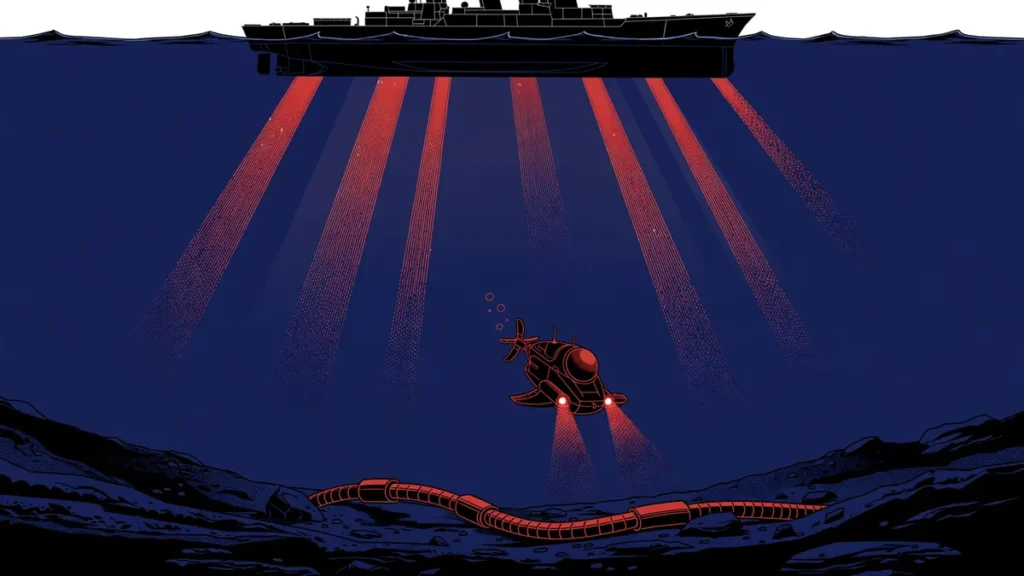
The April 2026 operation is the clearest public evidence of the threat the pact is aimed at. Defence Secretary John Healey told a Downing Street news conference on April 9, 2026, that the UK and its allies had tracked a Russian Akula-class nuclear-powered attack submarine and two specialist submarines from Russia’s Main Directorate of Deep-Sea Research, known as GUGI, in the North Atlantic for more than a month. Around 500 British personnel were involved, RAF P-8 Poseidon submarine-hunting aircraft flew more than 50 sorties — over 450 flying hours — and a Royal Navy warship shadowed the contacts on the surface. The submarines were inside the UK’s exclusive economic zone but not within its 12-nautical-mile territorial waters. Healey said no evidence was found that the vessels had damaged undersea infrastructure, and the submarines eventually left the area.
Healey’s message to Moscow was unusually direct. Addressing President Vladimir Putin, he said: “We see you, we see your activity over our cables and pipelines.” The UK Ministry of Defence said the GUGI vessels are designed to survey underwater infrastructure during peacetime but have the capability to damage or destroy it in conflict — and Healey described the Akula attack submarine as a likely decoy intended to distract from the two specialist boats. The stakes are physical as well as strategic: the cables and pipelines under the North Atlantic carry global internet traffic, financial data and energy supplies, and the sabotage of Nord Stream in 2022 and the damage to EstLink 2 in December 2024 showed how quickly a single incident can cut a link between allies. The suspected Russian plot that the Financial Times says was disrupted by a US-backed operation has not been described in public detail, and it should be treated as a reported suspicion until officials publish evidence.
The countries most exposed are the ones signing the pact. Norway’s Arctic military posture sits on the front line of the High North, where Russian deep-sea vessels operate near Svalbard, and the Baltic states depend on undersea cables and pipelines that have already been damaged more than once. The JEF’s answer has been to make the undersea domain a standing mission rather than a one-off response: response options in 2023 and 2024, Nordic Warden’s AI monitoring since January 2025, and now a formalised anti-submarine pact. For background on how the wider alliance moves forces to the region, see our explainer on how NATO would move troops across Europe.
By the numbers: the JEF submarine hunt in figures
| Metric | Figure | Source |
|---|---|---|
| JEF member nations | 10 — CONFIRMED | House of Commons Library |
| Russian submarines tracked, April 2026 | 3 (1 Akula-class attack boat, 2 GUGI specialist vessels) — CONFIRMED | UK Ministry of Defence / John Healey |
| British personnel in the April 2026 operation | ~500 — CONFIRMED | UK Ministry of Defence |
| RAF P-8 Poseidon sorties, April 2026 | 50+ sorties, 450+ flying hours — CONFIRMED | UK Ministry of Defence |
| Nordic Warden areas of interest | 22 — CONFIRMED | UK Ministry of Defence |
| Ships and aircraft, June 2024 response option | 28 ships, 6 aircraft — CONFIRMED | House of Commons Library |
| Pact signing date and venue | November 10, 2026, aboard HMS Prince of Wales — REPORTED (expected, not yet signed) | Financial Times |
| Suspected Russian cable-sabotage plot disrupted | REPORTED suspicion, not a confirmed attack | Financial Times |
| Russian fishing boats showing erratic patterns near submarine cables | 17 vessels, 500+ unusual patterns — REPORTED (October inquiry) | United24 Media |
Caveat: figures marked CONFIRMED are corroborated by official statements or two or more reputable outlets. Figures marked REPORTED rest on a single source or an unconfirmed report and should be treated as provisional until officially confirmed.
What the November 10 pact means for US/UK/EU readers
For UK readers, the pact means more visible military activity in northern waters and a clearer public commitment to defending the cables and pipelines that carry the country’s internet traffic and energy. The Royal Navy and RAF have already shown what that looks like: a month-long tracking operation, 50-plus P-8 sorties and a warship on station. The pact formalises that tempo rather than inventing it, and it puts the UK — as framework nation — at the centre of a 10-country response that shares the cost and the risk.
For US readers, the story is about burden-sharing and transatlantic cables. American forces were already involved: the operation that reportedly disrupted the suspected Russian plot was US-backed, and Reuters reported in September that British, Norwegian and US forces intervened with Russian deep-sea vessels near Svalbard. The cables under the North Atlantic carry data between the US and Europe, so a disruption there is a direct American interest as well as a European one. The pact also fits a pattern Washington has encouraged for years — capable allies taking the lead in their own region — and it does so without creating a new alliance or triggering NATO’s Article 5.
For EU readers, the effect is most concrete in the Baltic and the Nordics. Estonia, Latvia and Lithuania have already lived through cable damage, and Finland’s EstLink 2 link was cut in December 2024. A formalised JEF anti-submarine mission means more patrols, more shared surveillance data and a faster collective response when a cable is damaged or a suspicious vessel is detected. There is no direct household cost attached to the pact — no new tax, levy or energy price figure has been published — but the infrastructure it protects underpins energy supplies, internet connectivity and the shipping lanes that set prices across the continent. The United Kingdom’s military capabilities and the wider JEF structure are the backbone of that protection.
Different perspectives: deterrence, escalation and the Russian view
The JEF nations frame the pact as deterrence, not provocation. At their October 2026 meeting in Iceland, defence ministers said the group does not seek confrontation and poses no threat to Russia, but that Russia “should be in no doubt that we will defend ourselves”. The UK’s 2025 Strategic Defence Review described Russia as an “immediate and pressing threat”, and the pact’s supporters argue that a visible, coordinated anti-submarine presence raises the cost of grey-zone operations against undersea infrastructure — and gives allies a faster, collective answer when a cable is cut or a vessel behaves suspiciously.
Moscow’s public response to the April 2026 tracking operation was to reject the claims. The Russian embassy in London dismissed the British government’s assertion that its submarines posed a threat to undersea cables, according to state news agency TASS. Russian state media has framed the November pact as the creation of a “Northern Maritime Alliance” aimed at deterring Russia — a characterisation London disputes, since the pact expands cooperation inside the existing JEF rather than forming a new alliance. Analysts also note a structural limit: the JEF has no standing forces of its own. It is a framework for national units that train and deploy together on an opt-in basis, so the pact’s real weight will depend on how many ships, aircraft and surveillance assets the 10 nations actually commit — and whether the details of the suspected cable plot are ever published. Until then, the most important fact about the November 10 pact is also the most modest: it turns a pattern of ad-hoc responses into a standing, named mission.
What to watch next after the November 10 signing
First, the signing itself: whether all 10 nations sign aboard HMS Prince of Wales as reported, and what the pact actually commits them to — new patrols, shared surveillance, or simply a political framework. Second, the Atlantic Future Forum remarks from Knighton and allied defence chiefs, which may spell out the practical measures the pact promises. Third, any Russian naval response in the weeks after the signing, and whether Moscow comments publicly on the pact itself. Fourth, whether officials declassify any detail of the suspected cable-sabotage plot, which would settle the biggest open question in the story. And fifth, Canada’s application to join the JEF, announced on September 16, 2026, which would extend the grouping across the Atlantic. WarBrief will update this analysis as the signing and its aftermath are confirmed.
Read next: What Is a Shadow Fleet? The Ghost Tankers Behind Sanctioned Oil and What Is NATO’s Steadfast Noon Exercise? Explained (2026).
Frequently asked questions
What is the Joint Expeditionary Force?
The Joint Expeditionary Force (JEF) is a UK-led multinational military partnership of 10 northern European nations — the UK, Denmark, Estonia, Finland, Iceland, Latvia, Lithuania, the Netherlands, Norway and Sweden. Established in 2014 at the NATO summit in Wales and fully operational since 2018, it is a framework for rapid, opt-in military cooperation, commanded from the UK’s Standing Joint Force Headquarters at Northwood.
Is the Joint Expeditionary Force part of NATO?
No. The JEF is not part of NATO, but all 10 of its members are NATO states and the force is designed to complement the alliance. It can act below the threshold of NATO’s Article 5, on an opt-in basis, which makes it suited to grey-zone threats such as undersea sabotage that fall short of open armed attack.
Why is the November 10 pact about Russian submarines?
Because Russian submarines have repeatedly operated near the undersea cables and pipelines that carry Europe’s internet, energy and financial data. In April 2026 the Royal Navy tracked three Russian submarines — one Akula-class attack boat and two specialist GUGI vessels — near cables and pipelines in the North Atlantic for more than a month. The pact formalises expanded anti-submarine operations across the North Atlantic, Arctic and Baltic seas.
Did Russia actually attack undersea cables?
No attack has been publicly confirmed. The Financial Times reported that a US-backed operation disrupted a suspected Russian operation against undersea cables, but the plot itself is a reported suspicion, not a confirmed attack. The April 2026 tracking operation found no evidence that the Russian vessels had damaged undersea infrastructure.
What is Nordic Warden?
Nordic Warden is an AI-driven system the JEF activated in January 2025 to track threats to undersea infrastructure and monitor the Russian shadow fleet. It assesses data from a range of sources to calculate the risk posed by vessels entering 22 areas of interest, including parts of the English Channel.
Sources
- United24 Media: UK Rallies Northern Europe to Hunt Russian Submarines Across Three Strategic Seas (reporting the Financial Times, November 8, 2026)
- Azernews: UK and European countries unite to secure key maritime routes (reporting the Financial Times, November 9, 2026)
- House of Commons Library: What is the Joint Expeditionary Force?
- CSIS: The Joint Expeditionary Force: Toward a Stronger and More Capable European Defense
- The Peninsula (AFP): UK tracked 3 Russian subs in alleged N. Atlantic ‘covert’ op (April 9, 2026)
- RFE/RL via GlobalSecurity: London Says It Tracked Three Russian Submarines Near Critical Undersea Infrastructure (April 9, 2026)


Discussion 0
Share analysis, corrections, or context. Be civil — comments are moderated.