
WarBrief Live | October 30, 2026 | Shipping and Logistics
2 explosive devices attached to the Louise 1 | 25 nautical miles north-east of Khasab, Oman | 0 crew injuries reported by UKMTO | First successful limpet-mine strike in the strait since February 2026
On October 29, 2026, a small boat attached two limpet mines to the Panama-flagged tanker Louise 1 in the Strait of Hormuz, starting an engine-room fire that temporarily disabled the vessel.
What investigators and maritime agencies have confirmed, and what remains only reported, matters more than usual here, because two different stories are running at once. One is a precisely documented incident: a named tanker, a location given by the United Kingdom Maritime Trade Operations (UKMTO) agency, a crew reported safe and a fire reported extinguished. The other is a sweeping claim from Iran’s Islamic Revolutionary Guard Corps (IRGC) that three more tankers exploded after striking sea mines on a route Tehran calls unauthorised. That claim has no independent confirmation in the reporting reviewed for this article, and it should not be folded into the confirmed incident as if the two were the same event.
Key Takeaways
- UKMTO confirmed a tanker was hit by two explosive devices attached to its hull on October 29, 2026, about 25 nautical miles north-east of Khasab, Oman; the crew was safe and the vessel continued to its next port of call.
- Reuters, citing three maritime security sources, identified the tanker as the Panama-flagged Louise 1 and described the attack as the first successful limpet-mine strike in the strait since the US-Iran war began in February 2026.
- Separately, the IRGC claimed three tankers exploded after striking mines on what it calls an unauthorised southern route, and Iran’s army reported a fourth tanker fire east of the strait. Those claims are REPORTED, not independently confirmed.
- Who attached the devices to the Louise 1 is not established. Reuters reported that it was not immediately clear who was behind the attack.
- The incident raises the cost of the one risk shipowners struggle most to price: a cheap, close-range weapon used in a congested waterway that carries roughly one-fifth of the world’s oil consumption.
What happened to the Louise 1?
According to Reuters, a small boat attached two limpet mines to the hull of a tanker in the Strait of Hormuz, causing a fire in its engine room and temporarily disabling the vessel. UKMTO, the British navy agency that issues maritime security advisories, said in an advisory note that the crew was safe, there was no environmental impact and the fire had been extinguished, and that the vessel was continuing to its next port of call. UKMTO did not name the vessel.
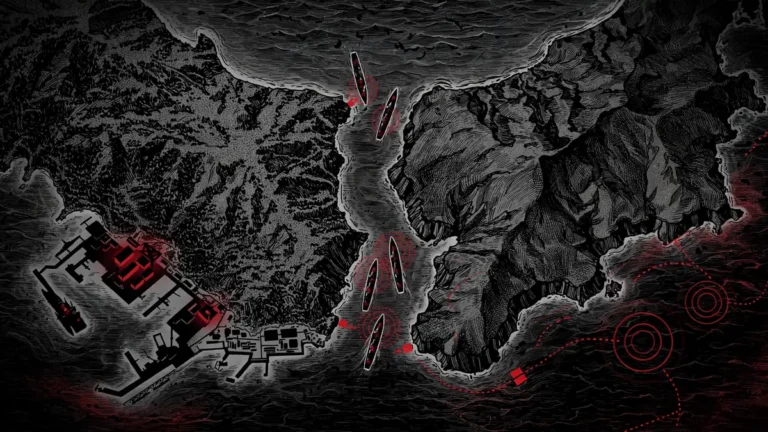
UKMTO placed the incident on Thursday, October 29, 2026, at about 22:12 UTC, approximately 25 nautical miles (46 kilometres) north-east of Khasab, Oman, and said the tanker was outbound through the strait. Its account, carried by several outlets, said the tanker was approached on its port side by a small boat which attached two explosive devices to the hull above the waterline, and that the subsequent blasts caused the engine-room fire. UKMTO advised vessels transiting the area to exercise caution and report any suspicious activity while authorities investigated.
Reuters identified the vessel as the Panama-flagged Louise 1, citing assessments from three maritime security sources. The agency also reported that this was the first known successful strike using limpet mines in the area since the beginning of the US war with Iran in February 2026, and that it followed a separate attempt in September 2026 using such devices which did not detonate, according to two of the sources. Reuters added a further detail about the vessel’s history: Ukrainian forces hit the Louise 1 in July 2026 with naval drones in the Black Sea over what Ukraine’s SBU security service said was its role in transporting Russian oil and being part of the so-called shadow fleet of tankers used to keep Russian oil exports flowing. That history does not, on its own, establish who attacked the vessel in Hormuz, and no source reviewed for this article claimed otherwise.
Greece-based maritime risk management group Marisks told Reuters that the apparent ability of a small craft to approach a transiting tanker, deploy explosive devices and withdraw presented a significant security concern, particularly in the strait’s congested shipping lanes. Marisks added that limpet mines were first deployed in the region in 2017, were used against tankers in the Strait of Hormuz in subsequent years, and were cheap and easily available. Its assessment, quoted by Reuters, was blunt: the method was cheap, low-tech and very efficient.
What is a limpet mine, and why is it different from a sea mine?
A limpet mine is a small explosive charge fixed directly to a ship’s hull, usually with magnets, and set off by a timer or remote signal. It takes its name from the limpet, a sea snail that clamps itself to rock. Unlike a sea mine, which sits on the seabed or floats moored in a channel waiting for any vessel to trigger it, a limpet mine is placed on a chosen target by a person or a small craft operating at close quarters. That distinction drives almost everything that follows in this story.
A sea mine is indiscriminate: it threatens every vessel that uses a mined stretch of water, which is why minefields can close a waterway even when no ship has been hit. A limpet mine is selective: it requires someone to get alongside a moving tanker, attach the device and withdraw. That takes planning, local knowledge and nerve, but it also means the attacker chooses the victim. For shipowners, the two threats price differently. A mined channel can be swept, declared clear and patrolled. A close-range device attack can, in principle, happen anywhere a small boat can approach a hull, including in waters that have been declared cleared of mines.
Limpet mines are also usually designed to disable rather than sink. Their charges are small enough for a person to carry and place, and they are typically aimed at machinery spaces, steering or propulsion. The Louise 1 fits that pattern: an engine-room fire, a temporary loss of propulsion, and then a vessel under way again. A disabled tanker in a narrow, congested strait is, however, a serious hazard in its own right. A ship without power cannot steer, and a drifting laden tanker in a traffic lane endangers every vessel around it, even when its own crew escapes unhurt.

What did Iran claim about three other tankers?
On October 29, 2026, Iran’s armed forces said at least four tankers had caught fire after hitting mines while attempting to navigate the Strait of Hormuz, according to The Hindu and Mathrubhumi. The IRGC said in a statement: “Over the past 24 hours, three violating oil tankers exploded and caught fire after striking mines while attempting to pass through the unauthorised southern route of the Strait of Hormuz.” The statement said the vessels had switched off all their radar and navigation systems and disregarded warnings from the IRGC navy. Later on October 29, Iran’s army reported that another tanker had caught fire east of the strait after hitting mines while operating in what it described as a restricted and dangerous area.
Three limits on those claims must be stated plainly. First, it was not immediately clear when the incidents occurred or which flags the tankers were flying. Second, no independent verification of the three-tanker claim appeared in the reporting reviewed for this article; UKMTO’s confirmed incident is the limpet-mine attack near Khasab, a different kind of incident from a sea-mine strike. Third, UKMTO reported two further incidents in the area on October 29: a dhow that caught fire and sank following a maritime security incident, and a tanker struck by an unidentified projectile while transiting the strait. It is not established whether any of those reports describe the same vessels as the IRGC’s claim, and this article does not merge them.
The IRGC’s statement also carried a warning that shipowners cannot ignore, whatever the verification status of the underlying incidents: “the unauthorised route through the Strait of Hormuz is mined, and that vessel owners and crews are responsible for transiting these routes and should not pay attention to CENTCOM’s delusions on social media”. US Central Command (CENTCOM), which runs US military operations in the region, had said that mines in the strait’s primary transit routes had been cleared, a claim the IRGC disputed. IRGC spokesman Hossein Mohebi challenged the US position on X, writing:
“Prove your Hormuz mine-clearing claim with independent evidence, not statements!”
The dispute over who has cleared what is not academic. If shipowners believe the primary routes are clear but the southern route is mined, routing decisions change. If they believe neither claim, they may avoid the strait altogether, or demand naval escort, or simply refuse the voyage. In a separate statement reported on October 29, the IRGC said its electronic warfare unit had captured a US MQM-170 drone in the western Strait of Hormuz. That claim, too, had no independent confirmation in the reporting reviewed.
By the numbers: what is confirmed and what is only reported
| Metric | Figure | Source |
|---|---|---|
| Explosive devices attached to the Louise 1 | 2 | UKMTO advisory, via Reuters (CONFIRMED) |
| Distance from Khasab, Oman | 25 nautical miles (46 km) north-east | UKMTO advisory (CONFIRMED) |
| Crew injuries in the Louise 1 incident | 0 reported; crew safe, no environmental impact | UKMTO advisory (CONFIRMED) |
| Prior successful limpet-mine strike in the strait since February 2026 | None known; September 2026 attempt did not detonate | Reuters, maritime security sources (CONFIRMED as reported) |
| Tankers the IRGC says struck mines on the southern route | 3, plus a 4th reported by Iran’s army east of the strait | IRGC / Iranian army statements (REPORTED only) |
| Share of global oil consumption normally passing through Hormuz | Roughly one-fifth | Reuters / Mathrubhumi (CONFIRMED as context) |
| Brent crude on October 30, 2026 | Above $116 a barrel | Market reporting summaries (REPORTED) |
| War-risk premiums reported for Gulf transits | Up to 10% of vessel value | Market reporting summaries (REPORTED) |
Caveat: figures marked CONFIRMED rest on UKMTO advisories or on Reuters reporting from named sourcing; figures marked REPORTED rest on a single claimant or on market summaries and should be treated as unverified until independently confirmed.
Why mines are the hardest Hormuz risk to price
The Strait of Hormuz is roughly 21 nautical miles wide at its narrowest point, connecting the Persian Gulf with the Gulf of Oman and the Arabian Sea. Before the war that began on February 28, 2026, about 21 million barrels of oil a day passed through it, along with around one-fifth of global liquefied natural gas trade, most of it bound for Asia. The US Energy Information Administration has long called it the world’s most important oil transit chokepoint. That geography is why a single disabled tanker moves markets: there is no equivalent alternative route for the full volume, and the pipelines that bypass the strait, in Saudi Arabia and the United Arab Emirates, can carry only part of the flow.
Mines attack that arithmetic in a specific way. A missile strike damages a ship; a minefield, real or merely credibly claimed, damages confidence in a whole lane. Insurers respond first, and their response is what most readers eventually feel. WarBrief’s guide to how war risk insurance works explains the mechanism: when underwriters judge a route unsafe, they raise premiums, restrict cover or withdraw it, and those costs land on freight rates and then on delivered fuel prices. Market summaries on October 30 put war-risk premiums for Gulf transits at up to 10% of vessel value, against a fraction of a percent before the war. That figure is REPORTED, not independently verified for this article, but its direction is consistent with months of reporting on rising Hormuz insurance costs.
The limpet-mine attack adds a second pricing problem. Mine clearance, however thorough, cannot fully answer a weapon that is carried to a hull by a small boat. Clearing a channel addresses mines on the seabed; it does not prevent a craft from approaching a tanker in a congested lane. That is why Marisks’ comment matters: a small craft approaching, attaching devices and withdrawing, in waters crowded with tankers, is a security problem that convoys, lookouts and hull watches can reduce but not eliminate. Shipowners must therefore price not one risk but two: the risk of a mined lane and the risk of a close-range device, with different countermeasures for each.
The context makes the pricing harder still. The Louise 1 incident came the day after the United States reportedly struck Iranian naval targets at Qeshm Island and Jask on October 29, as covered in WarBrief’s report on the October 29 strikes, and inside an ongoing US naval presence in the Gulf. It also came as European states prepared to release oil from strategic reserves, covered in WarBrief’s report on the 42.6-million-barrel release. A market already balancing strike risk, reserve releases and winter demand does not need a new category of shipping attack, and that is precisely what the limpet-mine incident supplies.

Different perspectives: whose route is it?
Iran’s position, as stated by the IRGC, is that vessels using the southern corridor near the Omani coast are using an unauthorised route, and that owners who do so bear responsibility for what follows. That framing asserts a right to approve or forbid passage through an international waterway, a claim other states do not accept. The strait is not Iranian territory, and passage through it is governed by international law rather than by permission from any single coastal state. Tehran’s language is best read as both a navigational instruction and a political claim: it tells shipowners which lanes it considers legitimate, while asserting authority over the waterway itself.
The US position, expressed through CENTCOM, is that primary transit routes have been cleared of mines and remain under US and partner control, and that vessels are being struck by guided projectiles rather than mines where incidents occur. That framing treats the IRGC’s mine claims as, at best, unproven and, at worst, a pretext for asserting control. The difficulty for shipowners is that both claims cannot be fully true at once, and neither side has produced the kind of independent evidence, such as verified clearance data or identified wreckage, that would settle the question. Until one side does, the prudent commercial assumption is that the risk is real even where the mechanism is disputed.
Oman’s position is quieter but central. Khasab sits on the Musandam peninsula, the Omani territory that overlooks the strait’s southern side, and the traffic lanes used by commercial shipping run through Omani waters. Oman has historically sought to keep the strait open while avoiding entanglement in the US-Iran confrontation. An incident 25 nautical miles north-east of Khasab puts the risk literally on Oman’s doorstep, and any escalation in those waters implicates a state that has tried, so far, to stay out of the shooting.
What the Hormuz mine threat means for US/UK/EU readers
For readers in the United States, the United Kingdom and the European Union, the direct effect of a Hormuz mine incident is rarely a stopped ship; it is a more expensive barrel. Roughly one-fifth of the world’s oil normally moves through the strait, and even though most of those barrels are bound for Asia, oil is priced globally. A risk premium added in Hormuz is paid, in diluted form, at fuel pumps in Ohio, Manchester and Munich. That is the mechanism behind the autumn’s fuel-price pressure, including the record diesel prices covered in WarBrief’s reporting on the Hormuz shipping standoff and the European reserve release. If transits fall further or premiums rise again, expect the effect to show up first in diesel and heating-oil prices, which are the most exposed to a Gulf supply shock heading into winter.
Travel is a second, smaller channel. Airspace and routing decisions around the Gulf have already been reshaped by the war, and a shipping incident does not by itself close air routes. But a serious escalation in the strait, such as a tanker sinking in a traffic lane or a spill, would force rapid reassessments by airlines, insurers and governments, and travellers with Gulf connections should watch official travel advice rather than social media claims in the first hours after any incident. The third channel is markets: energy stocks, shipping shares and inflation expectations all move on Hormuz news, and the October 30 market reporting, with Brent above $116 a barrel, shows how quickly a single incident is priced in. None of this is investment advice; it is a description of how a chokepoint shock transmits.
What to watch next in the Strait of Hormuz
Four questions will determine whether October 29-30 becomes a footnote or a turning point. First, will UKMTO or another maritime authority confirm any of the IRGC’s claimed mine strikes, or identify the vessels involved? Confirmation would convert a claim into a pattern; continued silence would leave the limpet incident as the only verified attack. Second, will CENTCOM or a partner navy publish verifiable mine-clearance evidence, as the IRGC spokesman demanded, or will the clearance claim rest on statements alone? Third, will shipowners change behaviour in observable ways: fewer transits, more naval escorts, higher declared premiums, or rerouting through pipelines and alternative ports? Shipping data, not statements, will answer that within days. Fourth, will the incident feed the wider US-Iran confrontation, including the reported post-midterm military planning covered in WarBrief’s October 29 reporting, or will it remain a maritime incident managed through advisories and escorts? The answers to the first three questions will shape the fourth.
Readers should also watch for a second limpet-mine attempt. Reuters reported a failed attempt in September 2026; a successful one in October suggests the method is now proven in these waters, and proven methods tend to be repeated. If a second vessel is hit the same way within days, the insurance and routing consequences will be larger than those of a single incident, because underwriters price patterns, not accidents.
Frequently asked questions
What happened in the Strait of Hormuz on October 29, 2026?
A tanker was attacked with two explosive devices attached to its hull by a small boat about 25 nautical miles north-east of Khasab, Oman, causing an engine-room fire that temporarily disabled the vessel. UKMTO confirmed the crew was safe, the fire was extinguished and the vessel continued to its next port of call. Reuters identified the tanker as the Panama-flagged Louise 1.
What is a limpet mine?
A limpet mine is a small explosive charge fixed directly to a ship’s hull, usually with magnets, and detonated by a timer or remote signal. Unlike a sea mine on the seabed, it is placed on a chosen target at close quarters, usually to disable rather than sink the vessel.
Did three other tankers really hit mines in Hormuz?
Iran’s Revolutionary Guard Corps claimed three tankers exploded after striking mines on a southern route it calls unauthorised, and Iran’s army reported a fourth tanker fire east of the strait. Those claims have not been independently confirmed, and UKMTO has confirmed only the limpet-mine incident near Khasab plus separate reports of a dhow sinking and a tanker struck by an unknown projectile.
Who attacked the Louise 1?
It is not established. Reuters reported that it was not immediately clear who was behind the attack. The vessel’s earlier history, including a July 2026 drone strike in the Black Sea, does not by itself identify the Hormuz attacker.
Why does the Strait of Hormuz matter for fuel prices?
Roughly one-fifth of the world’s oil consumption normally passes through the strait, and there is no alternative route for the full volume. When shipping through it becomes riskier, war-risk insurance and freight rates rise, and those costs feed into global oil prices and, eventually, pump prices.
Sources
- Reuters: Tanker in Strait of Hormuz hit by limpet mines, security sources say
- The Hindu: Iran says four tankers on fire after hitting mines in Hormuz
- Mathrubhumi: Four oil tankers catch fire after striking mines in Strait of Hormuz
- NDTV: Tanker attacked with explosive devices in Strait of Hormuz, crew safe (UKMTO)
- Malay Mail: Four tankers ablaze in Strait of Hormuz as Iran disputes US claim that sea lanes are mine-free
Read next: Conflict Zones hub | TankerTrackers: tracking sanctioned oil tankers | Seven tankers damaged in the Strait of Hormuz: what it really means

Discussion 0
Share analysis, corrections, or context. Be civil — comments are moderated.