
WarBrief Live | October 28, 2026 | Energy & Oil
At a glance
- Brent crude: $115.36 a barrel in early trading on October 28, 2026, up $1.48, according to Reuters
- US crude (WTI): $101.12 a barrel, up $1.22, according to Reuters
- US gasoline: $4.27 a gallon on October 22, 2026, according to AAA, against $2.98 before the war
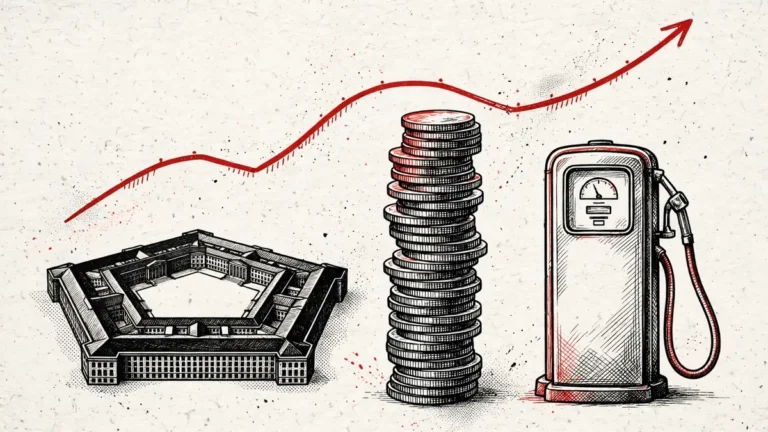
- US war cost: more than $47 billion so far, according to Pentagon data obtained by Reuters
Brent crude oil moved back above $115 a barrel on October 28, 2026, after a claimed missile strike on Saudi Arabia’s largest oil refinery revived fears about Middle East supply, even though Saudi authorities had not immediately confirmed the attack. The rebound came a day after prices had fallen by nearly $2 as regional talks eased some of those same worries, a swing that captures how quickly this market now moves on headlines rather than on barrels alone.
Reuters reported Brent crude futures at $115.36 a barrel in early trading on October 28, up $1.48 or 1.3 percent, with US West Texas Intermediate (WTI) crude at $101.12, up $1.22. Later Reuters syndication put Brent at $115.90, up $2.02, at 0735 GMT, and WTI at $101.91. Those are intraday prices, not settlements, and they can move again before the trading day ends. What matters for readers is not the second decimal place, but the pattern: crude is trading close to its six-month highs, and the market is paying a large premium for the risk of what happens next, especially after the US midterm elections on November 3.
Key Takeaways
- Brent crude rose back above $115 on October 28, 2026, after falling nearly $2 the day before, as a claimed Houthi strike on a Saudi refinery put supply risk back in focus.
- The refinery strike itself is a claim, not a confirmed event: Yemen’s Houthis said they hit Saudi Arabia’s biggest refinery, while Saudi authorities had not immediately confirmed it, according to Reuters.
- US drivers are already paying for the war at the pump: AAA put regular gasoline at $4.27 a gallon on October 22, against $2.98 before the war began on February 28, 2026.
- The market is increasingly pricing November, not October: reports of possible renewed US strikes on Iran after the midterms are keeping a risk premium in prices even when physical supply improves.
Why did Brent crude jump above $115 on October 28, 2026?
The immediate trigger, according to Reuters, was the claim by Yemen’s Iran-aligned Houthis on October 27 that they had hit Saudi Arabia’s biggest oil refinery with a missile. The facility has a processing capacity of 550,000 barrels per day, Reuters reported. That claim, even unconfirmed, was enough to reverse Tuesday’s decline, when talks in the Middle East had helped ease concerns about supply disruptions.
Behind the daily swing sits a larger tension. Diplomatic engagement has eased part of the war premium, but attacks on Saudi infrastructure and shipping around the Strait of Hormuz continue to keep supply risks embedded in prices, according to analysis by Kotak Neo’s Kaynat Chainwala published by Business Standard. Brent briefly crossed $117 last week, the same analysis noted, and has gained more than 12 percent this month, putting it on course for a fourth consecutive monthly rise. In other words, traders are no longer pricing only the oil that has already been disrupted. They are pricing the probability of future disruption, and that probability rises with every attack claim and every report of post-election military planning.
What did the Houthis claim about the Saudi refinery – and what is confirmed?
What is confirmed is narrow: the Houthis said on October 27 that they had targeted Saudi Arabia’s largest refinery, and prices rose sharply in response. What is not confirmed is the strike itself. Reuters reported that Saudi authorities did not immediately confirm the strike on the 550,000-barrel-per-day facility. WarBrief is therefore reporting the event as a claimed strike, not as a verified attack on the refinery, and readers should treat any social-media footage or damage claim that has not been independently verified with the same caution.
The distinction matters because this pattern has repeated through the war. Claims about tanker strikes, pipeline hits and refinery damage can move crude by $2 in a session, and later reporting sometimes confirms, qualifies or contradicts them. The price move is real and reportable; the underlying damage is not, until an authority or an independent monitor confirms it. That is also why the article’s figures below separate confirmed prices and costs from reported intentions and claims.

By the numbers: Brent, WTI and the pump
| Metric | Figure | Source |
|---|---|---|
| Brent crude, early October 28, 2026 | $115.36 a barrel, up $1.48 (1.3%) | Reuters |
| WTI crude, early October 28, 2026 | $101.12 a barrel, up $1.22 (1.22%) | Reuters |
| Brent crude, 0735 GMT October 28, 2026 | $115.90 a barrel, up $2.02 (1.8%) | Reuters syndication |
| US regular gasoline, October 22, 2026 | $4.27 a gallon | AAA |
| US regular gasoline, before the war | $2.98 a gallon | Associated Press |
| US diesel, late October 2026 | $6.35 a gallon, from $3.76 in February 2026 | Associated Press |
| US cost of the Iran war so far | More than $47 billion | Pentagon data obtained by Reuters |
| Claimed Saudi refinery capacity | 550,000 barrels per day (REPORTED, strike unconfirmed) | Reuters, reporting the Houthi claim |
Caveat: crude prices above are intraday readings on October 28, 2026, and will differ from the day’s final settlement. The refinery figure is the claimed target’s capacity, not confirmed damage. War-cost figures are Pentagon estimates obtained by Reuters, not a publicly released Pentagon statement.
The pump-price figures deserve the same care. AAA reported a national average of $4.27 a gallon for regular gasoline on October 22, 2026, and the Associated Press reported $4.29 on October 26, against $2.98 before the war, according to its October 26 account. Those are different dates, so they are not two readings of the same day, but they point in the same direction: American households are paying roughly $1.30 a gallon more than before the war began. Diesel tells a harsher story, at $6.35 a gallon in late October against $3.76 in February, after reaching a record in September, the Associated Press reported.
Al Jazeera reported on October 23 that the average price of a gallon of petrol had gone from less than $3 before the war to more than $4.27, citing AAA, and that the higher cost of energy and transport had fed through the whole economy at a time when affordability had become a central issue in US electoral politics. That political link is now part of the oil story itself: with the midterms on November 3, every gasoline reading is also read as a political signal.
Why the market is pricing November, not just October
The Wall Street Journal reported on October 27 that Washington had warned several Gulf governments to prepare for a possible short, intense renewed campaign against Iran after the November 3 midterms, a story WarBrief covered in full in US Warns Gulf States: Short, Intense Iran Strikes After Midterms. President Donald Trump has not decided on renewed strikes, according to that reporting, but is reported to be leaning toward them, with targets said to include Iranian infrastructure and nuclear facilities. The White House declined to comment on what it called sensitive military plans that may or may not exist.
For oil traders, the distinction between a decision and a leaning barely matters. ING commodity strategists said on October 28 that oil prices remained elevated as the market waited for greater clarity on President Trump’s next move toward Iran, and that if the elections passed without renewed strikes, that might be enough for the market’s risk premium to start eroding. That is an analyst view, not a prediction by WarBrief, but it explains the shape of the market: good news about talks pulls prices down by $2, while a single strike claim or strike report pushes them back up by $2, because the downside risk of a wider war is larger than the upside of a day of calm.
The cost side reinforces the same point. Reuters reported Pentagon data showing the US military has spent more than $47 billion so far on the Iran war, more than 25 percent higher than the Defense Department’s estimate in July. The estimate includes more than $29 billion projected to replace expended munitions and more than $6 billion to replace equipment and platform losses, including aircraft and many drones. The Pentagon did not immediately respond to a request for comment, and the estimate has not been shared publicly, Reuters said. A war that expensive, in its eighth month, does not end cheaply, and markets know it.
What the $115 oil price means for US/UK/EU readers
For US readers, the effect is direct and already visible: gasoline near $4.30 a gallon and diesel above $6, with the extra cost flowing into groceries, deliveries and airfares, because diesel powers the trucks that move goods across the country. For UK and European readers, the channel is less direct but no less real. Europe imports crude and refined products through the same stressed Gulf and Red Sea routes, and when freight and insurance costs rise, they reach European pumps, heating bills and shop prices with a lag. WarBrief has not used a single UK or EU pump price in this article because no verified figure for October 28 was available at publication time; the direction of pressure, however, is the same across all three markets.
There are also second-order effects worth watching. Higher crude raises the cost of jet fuel, which airlines pass on in fares. It raises the cost of fertiliser and plastics, which are oil-linked. And it complicates central banks’ inflation fight just as households head into winter, when heating demand rises. None of that makes $115 oil a recession forecast on its own, but it does explain why a $2 daily move in Brent is treated as front-page news in London, Brussels and Washington alike.
Shipping is the other channel. Iran’s Arabian Gulf Strait Authority said on October 27 that all vessels belonging to South Korean shipowner Sinokor would face legal action from November 1 over alleged crossing violations in the Strait of Hormuz, according to Arab News. The Korea Shipowners’ Association said the vessels in question were not owned by Sinokor but had been sub-chartered, and that Sinokor was checking the details. The dispute is a reminder that the strait is now governed as much by warnings, lists and legal threats as by navigation rules, and every new warning adds a little more insurance cost to every barrel that passes through it.

Background and timeline
The war began on February 28, 2026, when the United States and Israel launched strikes against Iran, and it has since become a war over energy as much as over nuclear facilities. Tehran has disrupted energy flows through the Strait of Hormuz, Washington has imposed a naval blockade aimed at Iranian oil revenue, and Gulf producers have had to move crude around, rather than through, the world’s most important oil chokepoint. Earlier WarBrief coverage traced the same arc: Why Oil Hit $117: What the Iran Strike Threat Means for Fuel Prices on October 24, and Oil Above $100: Why the No-Strike Sunday Didn’t Calm the Market on October 26. The diesel side of the same crisis, including the G7 release debate and a Russian diesel deal, was covered on October 27 in Diesel at Record Highs: Will G7 Release and Russian Deal Cut Prices?
- February 28, 2026: The United States and Israel launch the war against Iran; US gasoline averaged $2.98 a gallon before the war, according to the Associated Press.
- October 22, 2026: AAA reports US regular gasoline at $4.27 a gallon.
- October 23, 2026: Brent rises above $114 a barrel amid persistent concerns about energy-market disruption, according to contemporaneous reporting.
- October 26, 2026: The Associated Press puts US gasoline at $4.29 a gallon and diesel at $6.35; regional talks are reported to be easing supply worries.
- October 27, 2026: Brent falls nearly $2 as talks ease worries; the Houthis claim a missile strike on Saudi Arabia’s biggest refinery; the Wall Street Journal reports Washington’s post-midterms warning to Gulf states.
- October 28, 2026: Brent rebounds above $115 in early trading, with Reuters reporting $115.36 at 0140 GMT and $115.90 at 0735 GMT.
Different perspectives
Washington’s public position, as reported in the strike-warning coverage, is that President Trump keeps all options on the table to ensure Iran can never have a nuclear weapon, while declining to discuss sensitive military plans. Tehran’s position, reflected in its strait warnings and its disruption of Gulf shipping, is that it will use energy leverage for as long as the US naval blockade continues. Gulf producers, caught between the two, have adapted by moving oil through alternative routes and, in some cases, by switching off tankers’ tracking systems, but adaptation has a cost in insurance, freight and discounts.
Analysts are split on what breaks the pattern. Some, like the ING strategists quoted above, see a path in which passing the elections without renewed strikes lets the risk premium erode. Others note that physical stress has eased since mid-October even as prices have risen, which suggests the premium is now about future risk rather than current shortage. Both views can be true at once: the oil is flowing today, and the market is still afraid of tomorrow. Readers should be wary of any account that presents only one side of that equation as the whole story.
What to watch next in oil markets
Four dates and data points will shape the next week. First, the US Energy Information Administration’s official weekly inventory report, due later on October 28, will test two conflicting signals: a Reuters poll of analysts expected crude stocks to rise by about 15,000 barrels in the week ended October 23, while market sources citing American Petroleum Institute data said stocks fell by 2.03 million barrels. Second, OPEC+ producers meet on Sunday, November 1, and are expected to keep their December output targets steady, according to three people with knowledge of the matter cited by Reuters, even though most core members are already producing below their targets.
Third, the Sinokor legal-action deadline of November 1 will show whether Tehran’s strait warnings escalate into enforcement against specific vessels. Fourth, and largest, is November 3 itself: the midterm elections, after which Washington’s reported post-election strike planning either becomes action, is deferred by diplomacy, or fades as a market fear. Until then, expect volatility rather than a trend: $2 up days and $2 down days on headlines, with pump prices moving more slowly, and more painfully, than crude.
For the wider war context, see WarBrief’s conflict zones hub.
Educational note: this article explains oil-market developments for general readers. It is not financial advice, and it makes no recommendation to buy or sell any security or commodity.
Frequently asked questions
Why is Brent crude above $115 a barrel?
Brent rose above $115 on October 28, 2026, after Yemen’s Houthis claimed a missile strike on Saudi Arabia’s largest refinery, reviving supply fears. The strike is unconfirmed, but the claim alone reversed a nearly $2 fall the day before, and the market is also pricing the risk of renewed US strikes on Iran after the November 3 midterms.
How much is US gasoline now compared with before the Iran war?
AAA reported regular gasoline at $4.27 a gallon on October 22, 2026, and the Associated Press reported $4.29 on October 26, against $2.98 before the war began on February 28, 2026. Diesel was $6.35 a gallon in late October, against $3.76 in February, according to the Associated Press.
Did the Houthis really hit the Saudi refinery?
That has not been confirmed. The Houthis said on October 27 that they hit Saudi Arabia’s biggest refinery, a facility with 550,000 barrels per day of capacity, but Reuters reported that Saudi authorities did not immediately confirm the strike. Until independent confirmation appears, it should be described as a claimed strike.
Will oil prices fall after the US midterms?
No one can say for certain, and WarBrief makes no price prediction. ING strategists said that passing the elections without renewed strikes on Iran might be enough for the market’s risk premium to start eroding, but renewed strikes, a confirmed infrastructure attack, or a shipping disruption could push prices higher instead. The outcome depends on decisions and events that have not happened yet.
How does $115 oil affect UK and European readers?
Through fuel, heating, food transport and airfares. Europe buys crude and refined products through the same Gulf and Red Sea routes under strain, and higher freight and insurance costs feed into pump and shop prices with a lag, even though this article does not cite a single verified UK or EU pump price for October 28.
Related: WarBrief breaks down the fiscal side in The $47 Billion Iran War Bill: What It Costs American Taxpayers.
Sources
- Reuters: Oil prices rise after attack on Saudi Arabian refinery reignites supply concerns
- Reuters: US costs of Iran war rise to over $47 billion, according to Pentagon estimate
- Al Jazeera: ‘Foreign policy is the economy’: How Iran war is shaping US midterm vote
- Manila Bulletin (Associated Press): In his own words: Trump on gas prices and energy costs since launching the war with Iran
- Arab News: Iran says Sinokor vessels face legal action; South Korean shipowners deny link
- Business Standard: Brent holds atop $110 as geopolitical risk overrides easing physical stress


Discussion 0
Share analysis, corrections, or context. Be civil — comments are moderated.