
WarBrief Live | October 28, 2026 | Breaking Analysis
The United States has warned several Gulf Arab governments to prepare for a possible short, intense renewed military campaign against Iran after the November 3 midterm elections, according to a Wall Street Journal report published on October 27, 2026. The warning, conveyed through diplomatic and military channels, is the clearest public signal yet that Washington and Israel are preparing the option of a new round of heavy strikes, even as President Donald Trump has not yet made a final decision. What investigators and officials have confirmed is narrow: the warning was reported, the White House declined to comment on military plans, and US forces are visibly repositioning. What remains unverified is whether the strikes will happen at all.
Key Takeaways
- The Wall Street Journal reports that the US told several Gulf Arab states to prepare for a short, intense campaign against Iran after the November 3 midterms.
- President Trump has not decided whether to order strikes, but people familiar with his thinking say he is leaning toward a large post-election attack, according to the Journal.
- Reported preparations include a Patriot system moving from Texas, troops moved from vulnerable bases, restocked munitions, and an additional carrier strike group and Marine expeditionary unit due in November.
- The White House declined to comment on sensitive military plans, saying only that Trump keeps all options on the table to prevent Iran from obtaining a nuclear weapon.
- For Gulf residents and US, UK and EU readers, the practical risks are renewed airspace disruption, shipping pressure in the Strait of Hormuz, and fuel-price volatility if fighting resumes.
What did the US warn Gulf states about?
According to the Journal, people briefed on the conversations said the US told several Gulf Arab countries to be prepared for a short, intense military campaign after the midterm elections. The messages were delivered through both diplomatic and military channels, which matters: this was not a single leaked remark, but a coordinated heads-up to governments that would have to manage air defence, civil aviation, energy infrastructure and public safety if fighting resumed.
The Journal describes the warning as one of a growing number of indications that the US and Israel are readying a new round of heavy combat operations, with the stated aim of degrading Iranian strength and pushing Tehran toward negotiations. That framing is important, and it should not be overstated. A warning to prepare is not an order to strike, and a reported aim is not a confirmed war plan. The same report is explicit that Trump has not decided to go ahead.
Relayed coverage by ANews and Shafaq News on October 28, 2026 repeats the same core elements: the post-midterm timing, the diplomatic and military channels, the Patriot movement, the troop repositioning, the munitions restocking, and the additional naval forces expected in November. The consistency across relays strengthens confidence that the Journal report says what it is reported to say; it does not independently confirm the underlying military intentions, which remain sourced to unnamed officials and people familiar with the president’s thinking.
What military buildup has been reported?
The buildup checklist in the Journal report is specific, and each item should be read with its sourcing attached. First, the US military is sending an additional Patriot air-defence system to Israel from Texas, according to flight-tracking data and two officials cited by the Journal. Other relays describe the same system as moving to the region more broadly; the Journal’s version places it in Israel to bolster missile defences there.
Second, the US has moved troops off bases in the Middle East where they were vulnerable, in preparation for a possible escalation. Third, US forces in the region have been restocking munitions, and bomber aircraft and jet fighters are preparing for strikes, according to officials cited in the report. Fourth, an additional aircraft carrier strike group and a Marine expeditionary unit are poised to join an armada of roughly 20 other warships operating in the Middle East next month, although some ships could rotate out.
None of these moves, on its own, proves a strike decision. Moving air defences, hardening force posture and restocking munitions are also what a military does when it wants to deter an attack, protect its own personnel, and preserve options. That ambiguity is the point: the same checklist can be read as preparation for attack, preparation for defence, or both. Readers should treat the checklist as reported preparation, not as confirmation of an attack order.
By the numbers: what is confirmed and what is only reported?
The table below separates what is confirmed in public reporting from what rests on a single report or unnamed sources. That distinction is deliberate: in a fast-moving story built on anonymous sourcing, collapsing the two categories is how speculation hardens into false certainty.
| Metric | Figure | Source |
|---|---|---|
| US midterm election date | November 3, 2026 | Wall Street Journal report, relayed widely |
| US warships already operating in the Middle East | Roughly 20 (reported) | Wall Street Journal |
| Additional naval forces expected in November | 1 carrier strike group + 1 Marine expeditionary unit (reported) | Wall Street Journal |
| Additional Patriot system | 1 system from Texas (reported) | Wall Street Journal, citing flight-tracking data and two officials |
| Trump decision on strikes | Not made; leaning toward a large post-election attack (reported) | Wall Street Journal, citing people familiar with his thinking |
| White House position | Declined to comment on sensitive military plans; all options on the table on Iran nuclear weapons (confirmed statement) | Wall Street Journal / White House |
Caveat: figures marked “reported” come from the Journal report and its relays and have not been independently confirmed by an official US statement. The White House statement is the only official position quoted in the reporting.
Background and timeline: how did the warning become possible?
The warning did not arrive from nowhere. It sits at the end of a year in which the Iran war has repeatedly paused, restarted and been renegotiated, without ever being settled.
- February 28, 2026: The United States and Israel launched a war against Iran, according to regional reporting summarising the conflict. Tehran retaliated with missile and drone attacks across the region, and the Strait of Hormuz was effectively closed to shipping.
- Spring 2026: Heavy US and Israeli bombing under Operations Midnight Hammer and Operation Epic Fury formed the core of the earlier campaign, in Trump’s own later description at campaign rallies.
- June 2026: A memorandum of understanding was signed to pave the way for a final peace agreement, according to regional reporting, but the process collapsed amid disagreements, including over navigation through the Strait of Hormuz.
- October 2026: Regional mediation efforts continued but had yet to bear fruit, the Journal reports, while the US ordered non-emergency staff to leave Saudi Arabia effective October 23, according to Gulf News summarising the latest developments for UAE residents.
- October 27, 2026: Trump told a rally in Lubbock, Texas: “You’ll see Iran in a couple of weeks, if you don’t mind,” and said at an earlier rally that “we may do another little Epic Fury” or Tehran would agree to a deal.
- October 27-28, 2026: The Journal published its report of the Gulf warning, relayed across regional and international outlets on October 28.
WarBrief previously examined the post-midterm window itself in After November 3: What Trump’s Post-Midterms Iran Strike Window Means, which speculated about the timing before any warning was reported. This article is different: it covers the warning itself, the specific buildup checklist attached to it, and what Gulf governments are now being asked to prepare for. WarBrief also covered the parallel diplomatic track in Mecca Pact Meets Iran in Tehran to Avert a Renewed War (2026), which remains the alternative path the Journal says mediators are still pursuing.
What has Trump himself said, and what has he not said?
Trump’s own public words are the most quotable, and the least precise, part of the story. At the Lubbock rally on October 27, he said, “You’ll see Iran in a couple of weeks, if you don’t mind,” according to the Washington Examiner and other rally coverage. He added, in the Journal’s account of his remarks, that “we obliterated Iran’s nuclear enrichment capacity with Operation Midnight Hammer and Operation Epic Fury and defeated them militarily, financially and otherwise. And it will all end very soon,” and that “it could be over whenever I wanted it to be over.”
At an earlier rally he said, “We may do another little Epic Fury,” adding, “Or they’ll agree.” That sentence captures the two-track message Washington has been sending for weeks: a strike threat paired with a negotiation offer. Neither sentence is a strike order, and neither names a date, a target set or a decision. Trump has previously said he will not attack Iran before the midterms, which is why the post-November 3 window carries weight in the reporting — but a self-imposed political timetable is not a military timetable, and it can change.
Separately, Gulf News notes that CNN has reported US forces could launch major operations against Iran within 96 hours of an order from Trump, with no final decision made and some officials expecting any order after the midterms. That 96-hour figure is a CNN report relayed by Gulf News, not a US government statement, and it should be read as a measure of readiness, not as a countdown.
Why the Gulf warning matters beyond the Gulf
Gulf governments are not bystanders in this story. They host US forces, operate air defences that would be tested in any renewed exchange, manage civil aviation across some of the world’s busiest corridors, and sit astride the energy routes that carry Gulf oil and gas to world markets. A warning to prepare is therefore also a warning to their airlines, their energy operators and their publics, even when no evacuation order or airspace closure accompanies it.
For Iran, the warning is a pressure instrument as much as a military signal. The Journal’s account of the intended logic is explicit: degrade Iranian strength and push Tehran toward negotiations. Whether that logic works is contested. Analysts quoted in relayed coverage have questioned whether another heavy campaign would force capitulation from a government that has already withstood one, and a renewed exchange risks exactly the regional escalation — retaliatory strikes on Gulf infrastructure, shipping disruption in Hormuz, and civilian harm — that Gulf governments are being warned to prepare for.
For Israel, which the Journal says is receiving the additional Patriot system, the warning reinforces a shared US-Israeli posture: air defence strengthened first, strike options preserved second. For regional mediators, whose diplomatic efforts the Journal says have yet to bear fruit, the warning narrows the window: a deal that is not reached before the post-election period may have to compete with a military option that is already being staged.
What does the Gulf warning mean for US, UK and EU readers?
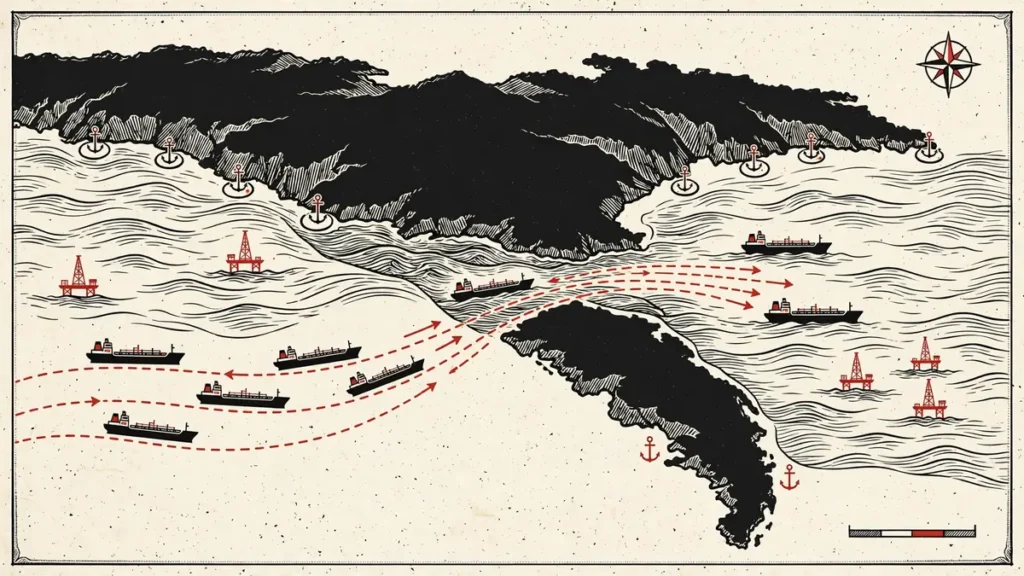
For readers in the United States, the United Kingdom and the European Union, the warning translates into four practical exposures, none of which requires a strike to have happened yet. First, fuel prices: the Iran war has already driven fuel-cost pressure through 2026, and any renewed fighting that touches Gulf energy infrastructure or Hormuz shipping would be expected to push prices up again, with the usual lag at the pump. Second, travel: Gulf hubs are major transit points for Europe-bound and US-bound travellers, and renewed hostilities have previously meant rerouted flights, cancellations and sudden airspace changes — check airline and government travel advice before booking Gulf transit in November, rather than assuming October schedules will hold.
Third, markets: defence, energy and shipping stocks tend to move first on strike headlines, before any physical disruption is confirmed, so headline volatility is likely even if the warning proves to be pressure rather than prelude. This article is educational, not financial advice, and no reader should buy or sell securities on the basis of an unconfirmed strike report. Fourth, security: US, UK and EU citizens in the Gulf should follow their own governments’ travel advice and their host governments’ guidance, which may change faster than news coverage. The warning itself is a reason to pay attention, not a reason to panic — and the most useful discipline in the days ahead is to distinguish, as this article does, between what officials have confirmed and what anonymous sources have reported.
Different perspectives
From Washington’s perspective, as presented in the Journal report, the warning is leverage: a visible buildup plus a private heads-up, designed to make Tehran calculate that a deal is cheaper than another campaign. From Gulf capitals’ perspective, the calculation is different: they bear the retaliation risk of a campaign they do not control, which is why a warning delivered through diplomatic channels is also a request for coordination — air defence, civil protection, energy continuity — rather than mere information.
From Tehran’s perspective, the warning will likely be read as coercion, and Iranian officials have previously framed US military pressure as a reason to harden rather than concede. From the perspective of mediators still working for a deal, the warning is a deadline in disguise: negotiate before the post-election window opens, or negotiate under the shadow of strikes. None of these perspectives can be confirmed from the Journal report alone, and none should be mistaken for an official position. What can be said is that all four readings point to the same near-term test: whether diplomacy produces anything tangible before November 3, or whether the post-election period becomes the moment the reported preparations are used.
What to watch next in the Gulf and Iran
Watch first for an official US statement that goes beyond “all options on the table” — a confirmation or denial of the warning itself would change the story materially. Watch second for visible naval movements: whether the additional carrier strike group and Marine expeditionary unit actually arrive in November, and whether any ships rotate out, as the Journal notes they could. Watch third for Gulf government actions: air-defence alerts, civil-aviation notices, energy-sector precautions or public guidance would show how seriously capitals are taking the warning, without any of them confirming a strike plan.
Watch fourth for the diplomatic track: any statement from mediators, or any Iranian response, that suggests talks have moved from stalled to active. And watch fifth for Trump’s own words after the midterms: the president who said “you’ll see Iran in a couple of weeks” will, after November 3, no longer have the midterm timetable as a reason to wait. That is when the distinction between a warning and a decision will finally be tested. WarBrief will update this story as official statements, naval movements and Gulf government actions confirm or contradict the reported warning. Readers can follow the broader conflict through our Conflict Zones hub.
Frequently asked questions
Has the US decided to strike Iran after the midterms?
No, according to the Wall Street Journal report. Trump has not made a final decision, though people familiar with his thinking say he is leaning toward a large post-election attack. A reported lean is not a decision, and the White House declined to comment on military plans.
What exactly did the US warn Gulf states about?
According to the Journal, the US told several Gulf Arab countries, through diplomatic and military channels, to prepare for a short, intense military campaign against Iran after the November 3 midterm elections. The report does not name every country warned, and it does not say Gulf states were asked to join any strikes.
What military moves have been reported?
A Patriot system moving from Texas, troops moved from vulnerable bases, munitions restocked, bombers and fighters preparing, and an additional carrier strike group plus a Marine expeditionary unit expected to join roughly 20 warships in the region in November. Each item is attributed to the Journal report and its cited officials, not to an official US announcement.
Could this close the Strait of Hormuz again?
It could, if renewed fighting escalates. The strait was effectively closed during the February 2026 war, and disagreements over navigation there helped collapse the June peace process. No closure has been reported as a result of this warning, and any future closure would depend on how Iran responds to strikes, if they occur.
What should travellers and Gulf residents do now?
Follow official travel advice and host-government guidance, check with airlines before Gulf transit in November, and watch for airspace or security notices. The warning is a reason to stay informed, not a reported evacuation order or airspace closure.
Sources
- Wall Street Journal: U.S. Warns Gulf of Possible Short, Intense Renewal of Iran War After Midterms
- ANews: US warns Gulf states of possible short, intense Iran war after midterms
- Shafaq News: US alerts Gulf states to possible Iran war
- Gulf News: US-Israel-Iran War: What UAE Residents Need to Know Today, October 28, 2026
- Washington Examiner: Trump hints at post-midterm strikes on Iran: ‘You’ll see Iran in a couple of weeks’
- The National: Live: Iran War — US Warns Gulf Allies


Discussion 0
Share analysis, corrections, or context. Be civil — comments are moderated.