
WarBrief Live | October 27, 2026 | Event Preview
Twenty heads of state and government are expected in Manila in three weeks for the 49th ASEAN Summit, the set-piece meeting of the Philippines’ year as chair of the Association of Southeast Asian Nations. This ASEAN Summit in Manila in November 2026 will test whether the bloc can convert a year of negotiation into signed agreements, above all a landmark digital trade pact, while managing two issues it has never resolved: the South China Sea and Myanmar. Leaders gather at the Philippine International Convention Center from November 15 to 17, 2026, with the related summits that bring in the United States, China, Japan and other partners running alongside.
Key Takeaways
- The 49th ASEAN Summit and Related Summits take place in Manila on November 15–17, 2026, with around 20 heads of state expected, according to the organisers.
- The headline deliverable is the signing of the ASEAN Digital Economy Framework Agreement (DEFA), the bloc’s first region-wide digital economy pact, after negotiations concluded in May 2026.
- United States President Donald Trump is the most prominent confirmed guest, with a bilateral meeting with Philippine President Ferdinand Marcos Jr. likely on the agenda.
- Leaders are expected to decide the future of the Five-Point Consensus on Myanmar and to push for progress on a South China Sea code of conduct.
What will happen at the ASEAN Summit in Manila?
The summit is the annual leaders’ meeting of ASEAN’s 11 member states, held this year under the Philippines’ chairmanship. The Philippines took over the chair after the 48th summit in Cebu in May 2026, and Singapore is set to take over in 2027. Alongside the ASEAN leaders’ meeting, Manila will host the ASEAN Plus Three summit with China, Japan and South Korea, the East Asia Summit, which also includes Australia, India, New Zealand, Russia and the United States, and an ASEAN–United Nations summit, which United Nations Secretary-General António Guterres is expected to attend.
Preparations are being run by the ASEAN National Organizing Council, chaired by Executive Secretary Ralph Recto. Speaking about the scale of the event, Recto said the summit involves “a million moving parts, from convoys to conferences, from agenda to attractions to be visited, from security to seat plans, so failure on our part is not an option.” The government has declared November 16 to 18 as special non-working days in the National Capital Region to ease security and traffic arrangements, and thousands of delegates and business leaders are expected alongside the leaders.
Who is attending the Manila summit, and who is not confirmed?
Attendance is the one part of the summit that remains genuinely uncertain. The Department of Foreign Affairs said in mid-October that it was still awaiting formal confirmation from most foreign leaders, with Trump so far the most prominent confirmed participant. That caution matters: in summit diplomacy, an “expected” guest and a confirmed guest are different things, and the final list will only be settled in the days before the leaders land.
What is known is the shape of the guest list. The Philippine Star reports that organisers expect 20 heads of state, including the 11 ASEAN leaders and partner-country leaders such as Trump, Japanese Prime Minister Sanae Takaichi, Indian Prime Minister Narendra Modi and, likely, Canadian Prime Minister Mark Carney. The BusinessMirror reports that the possible attendance of Chinese President Xi Jinping will be closely watched, noting that Beijing has in recent years often been represented by the premier rather than the president at ASEAN summits, and that Russian President Vladimir Putin has not been a regular attendee, with Moscow frequently sending other senior officials.
One bilateral meeting already looks likely. Philippine Ambassador to the United States Jose Manuel Romualdez has said Marcos and Trump will likely meet during the summit, with the West Philippine Sea — Manila’s name for the parts of the South China Sea it claims — and the Pax Silica framework agreement on semiconductors among the topics. The Palace has previously confirmed that Trump will visit the Philippines for the summit, after Marcos invited him during a visit to Washington in 2025.
What is the ASEAN Digital Economy Framework Agreement?
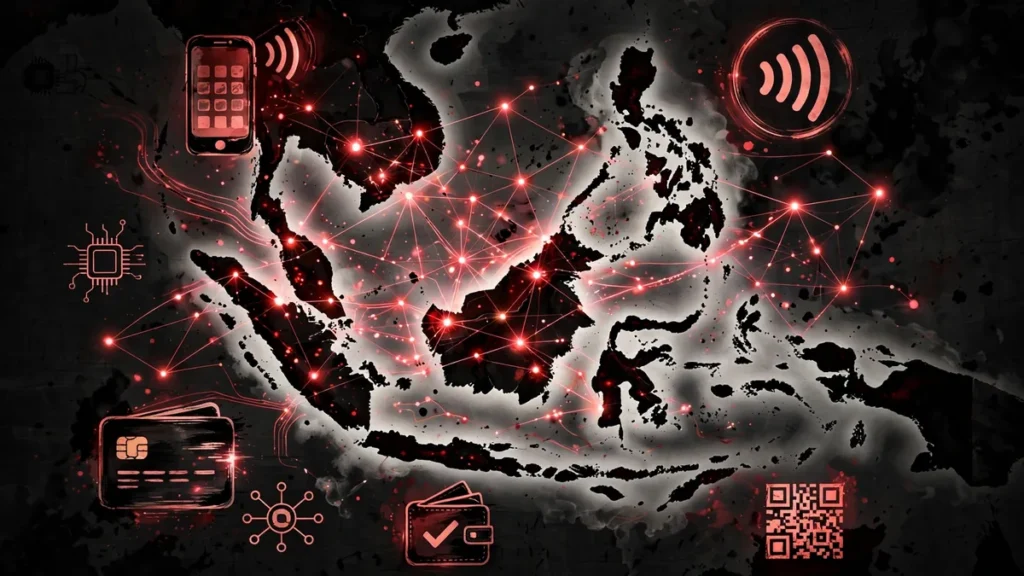
DEFA is the summit’s biggest planned deliverable and the easiest to explain: a single set of rules for digital trade across Southeast Asia, covering digital payments, cross-border data flows, e-commerce, cybersecurity, digital identity and data centres. ASEAN Secretary-General Kao Kim Hourn has described it as the world’s first legally binding region-wide agreement on the digital economy, saying: “We’re not building 10 or 11 digital economies; it’s going to be one digital economy working together among the member states.”
Negotiations began in September 2023 and concluded at a senior officials’ meeting in Manila from May 27 to 29, 2026, according to the ASEAN Senior Economic Officials Meeting, which said the pact would be signed in November 2026 alongside the 28th ASEAN Economic Community Council Meeting and the 49th summit. Member states are now conducting a legal review of the text, with an implementation plan and ratification to follow. ASEAN says the agreement covers micro, small and medium-sized enterprises — around 97 per cent of the ASEAN economy — and aims to grow the region’s digital economy to US$2 trillion by 2030, from US$300 billion in 2025, according to the Secretary-General.
Other economic items are also lined up. The Manila Times reports that leaders are expected to move forward with concluding negotiations for an ASEAN–Canada Free Trade Agreement, which would give exporters wider market access, and to unveil a new ASEAN emblem and flag under the Cebu Protocol. Energy security is high on the agenda too: with prices for energy, fertilisers and industrial products staying higher for longer, organisers say securing regional energy supplies will be among the big issues tackled, alongside progress on the ASEAN Power Grid.
By the numbers: the Manila summit at a glance
| Metric | Figure | Source |
|---|---|---|
| Summit edition | 49th ASEAN Summit and Related Summits | Philippine Star / Manila Times (CONFIRMED) |
| Dates | November 15–17, 2026 | Philippine Star / Manila Times (CONFIRMED) |
| Heads of state expected | 20 | Summit organisers via Philippine Star (REPORTED) |
| ASEAN member states | 11 | Philippine Star (CONFIRMED) |
| Digital economy target | US$2 trillion by 2030 | ASEAN Secretary-General (CONFIRMED as a stated goal) |
| DEFA negotiations concluded | May 2026 | ASEAN Senior Economic Officials Meeting (CONFIRMED) |
Caveat: figures marked CONFIRMED are reported by two or more outlets or stated by ASEAN itself; the figure marked REPORTED rests on the organisers’ expectations, and final attendance confirmations were still pending in mid-October.
Why the South China Sea and Myanmar will dominate the security agenda
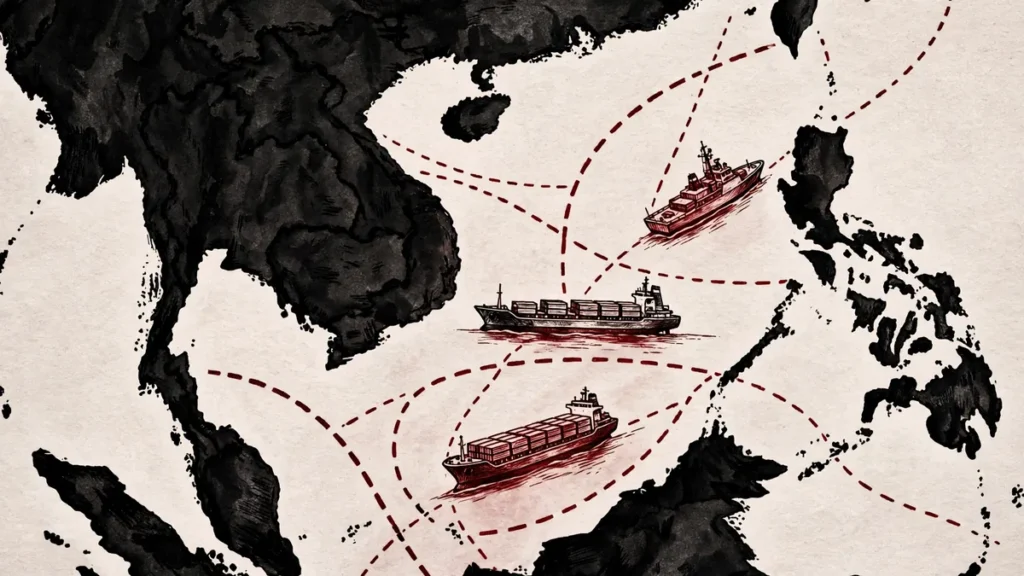
Two long-running problems will test whether the summit produces decisions or just declarations. On the South China Sea, leaders are expected to discuss efforts to conclude an effective and substantive code of conduct in line with international law and the 1982 United Nations Convention on the Law of the Sea. The issue has fresh salience for the host: the Philippines’ disputes with China in the West Philippine Sea are a standing item, and the expected Marcos–Trump bilateral is likely to touch on it directly. WarBrief’s earlier preview of the ADMM-Plus defence ministers’ meeting in Cebu set out how the region’s defence channels handle the same tensions below leaders’ level.
On Myanmar, leaders are expected to take a formal decision on the implementation of the Five-Point Consensus, the peace plan ASEAN adopted after the February 2021 coup. The policy of limiting Myanmar’s participation to non-political representatives — which bars junta chief Senior General Min Aung Hlaing from leaders’ meetings — still stands, according to the BusinessMirror. The context has shifted, however: Thailand’s foreign minister, Sihasak Phuangketkeow, told Reuters in October that Bangkok welcomed renewed United States engagement with Myanmar’s military-backed government, after Washington held talks with it in Tokyo earlier in the month, its second such meeting in a month. Whether the summit restores any of Myanmar’s representation, or holds the line, is one of the few genuinely open decisions on the agenda. The wider strategic backdrop — great-power competition across the Indo-Pacific — is covered in WarBrief’s analysis of naval dominance in the Indo-Pacific and in our explainer on the Pratas Island water-cannon clash.
What the Manila summit means for US, UK and EU readers
For readers in the United States, Britain and Europe, the Manila summit matters less as a diplomatic photo opportunity than as a decision point for three things that reach household budgets and supply chains. First, digital trade rules: DEFA will shape how e-commerce, digital payments and cross-border data flow work across Southeast Asia, affecting any Western firm that sells, sources or outsources there. Second, energy and shipping: ASEAN sits astride the sea lanes and supply chains that carry a large share of global trade, so any progress on energy security or maritime stability feeds directly into prices and delivery times. Third, the US–China balance: how Trump, Xi’s representatives and the ASEAN leaders handle the South China Sea and Myanmar in Manila will signal whether Southeast Asia can hold a middle course between Washington and Beijing, or whether it is being pulled to one side. For background on the bloc’s place in regional security, see WarBrief’s intelligence hub.
What to watch next before the leaders land in Manila
Three things to track in the three weeks before the summit. First, the final attendance list: watch for formal confirmations from Beijing and other capitals, since the difference between a premier and a president attending is itself a diplomatic signal. Second, the DEFA text: the legal review now under way will show whether the signing is ceremonial or substantive, and which chapters — data flows, payments, AI — carry binding commitments. Third, the Myanmar decision: any shift in Myanmar’s representation would be the summit’s most consequential political call, and the strongest indicator of whether ASEAN’s consensus model still functions. A side event worth noting is the 2nd ASEAN Women Economic Summit, set for November 10 in Manila, which will focus on women’s roles in digitalisation, green growth and regional integration.
Frequently asked questions
When is the ASEAN Summit in Manila in 2026?
The 49th ASEAN Summit and Related Summits take place in Manila on November 15–17, 2026, hosted by the Philippines as ASEAN chair. Related meetings, including the ASEAN Plus Three and East Asia Summits, run alongside the leaders’ meeting.
Which leaders are attending the Manila ASEAN Summit?
Organisers expect around 20 heads of state, including the 11 ASEAN leaders and partner-country leaders. United States President Donald Trump is the most prominent confirmed guest; as of mid-October, formal confirmations from most other foreign leaders were still awaited, according to the Department of Foreign Affairs.
What is the ASEAN Digital Economy Framework Agreement?
DEFA is ASEAN’s first region-wide digital economy agreement, covering digital trade, payments, data flows, e-commerce and cybersecurity. Negotiations concluded in May 2026, and the pact is expected to be signed at the Manila summit, with the goal of growing the region’s digital economy to US$2 trillion by 2030.
Will Myanmar be discussed at the ASEAN Summit?
Yes. Leaders are expected to decide on the implementation of the Five-Point Consensus on Myanmar. Myanmar’s participation remains limited to non-political representatives, which bars junta chief Senior General Min Aung Hlaing from leaders’ meetings, though renewed United States engagement with Myanmar’s military-backed government has added a new element to the debate.
Sources
- Philippine Star: ASEAN Summit and energy security
- BusinessMirror: Trump, 17 world leaders attending November ASEAN summit
- Manila Times: PH bats for tighter ASEAN coordination vs threats
- Politiko: Philippines awaits final ASEAN Summit attendance, agenda
- GMA News: Marcos likely to meet Trump during ASEAN Summit in Manila
- Cebu Daily News (Inquirer): ASEAN to sign DEFA in November after concluding negotiations
- TV BRICS: ASEAN targets US$2 trillion digital economy by 2030, says SG
- Arakan Journal: Thailand backs US engagement with Myanmar ahead of ASEAN Summit



Discussion 0
Share analysis, corrections, or context. Be civil — comments are moderated.