
WarBrief Live | October 23, 2026 | Breaking Analysis
Iran says seven oil tankers were damaged or set ablaze in the Strait of Hormuz overnight — and the claim lands just as The New York Times reports that the United States and Israel have drawn up plans for a new round of strikes on Iran after the American midterm elections. The Hornuz oil tanker attacks would mark the worst single-night toll on commercial shipping in the strait since the US-Israel war on Iran began on February 28, 2026. Here is what investigators and officials have confirmed, what remains unverified, and why Tehran picked this moment.
Key Takeaways
- Iranian state television, citing the IRGC Navy, claims four tankers were deliberately hit and three struck naval mines overnight — but the Associated Press could not independently verify the claim and the UK’s maritime monitor has not confirmed the incidents.
- Oil markets reacted immediately: Brent crude climbed above $112 a barrel on October 22, settling at $113.17, its highest close since May 4.
- The New York Times reports US and Israeli forces have completed plans for a “brief but intense” campaign against Iran’s nuclear sites, energy infrastructure, and missile and drone stockpiles after the midterms.
- The timing is political on every side: Israel votes on October 27, the US midterms follow in November, and both governments are signaling over energy prices.
What did the IRGC navy claim about the seven tankers?
Iranian state television reported overnight into Thursday, October 22, that the Islamic Revolutionary Guard Corps Navy had tracked seven oil tankers in and around the Strait of Hormuz. According to the IRGC’s account, four vessels allegedly involved in “illegal oil transfers” in the northern Persian Gulf were struck simultaneously on Wednesday and caught fire. Three more vessels, the report said, collided with naval mines west of the Strait of Hormuz. The report gave no casualty figures and did not identify the tankers or their flags.
Alongside the claim, the IRGC Navy repeated a warning it has issued before: if the United States continues to help guide commercial ships through the strait, the IRGC will broaden its response — explicitly threatening strikes on US military bases across the Middle East. The United States is already surging forces into the region, including a third aircraft carrier and thousands of additional troops, assembling what officials describe as the largest American naval and air presence in the Middle East in decades.
| Metric | Figure | Source |
|---|---|---|
| Tankers damaged (CONFIRMED as a claim, unverified as fact) | 7 (4 allegedly struck, 3 allegedly mined) | Iranian state TV / IRGC Navy, via AP |
| Independent confirmation | None — AP could not verify; UKMTO silent | AP |
| Brent crude settlement, Oct 22 | $113.17 (+4.0%, +$4.35) | Reuters |
| US carriers deployed to the region | 3 | AP |
| Hormuz crude flows, Oct 13 | 12.6M barrels/day (vs ~17M pre-war) | Kpler |
Caveat: the seven-tanker figure is a single-source Iranian claim, not an independently confirmed fact. Figures in the “CONFIRMED” rows above are confirmed as reported statements or market data, not as proof that seven tankers were actually attacked.
Background: eight months of war in the Strait of Hormuz
- February 28, 2026: The United States and Israel launch a joint war against Iran. Tehran retaliates with missile and drone strikes across the region and effectively shuts the Strait of Hormuz, through which roughly a fifth of the world’s oil historically flows. See our conflict zones hub for the full archive.
- June 2026: A memorandum of understanding between the US and Iran, mediated by Pakistan and Qatar, sketches an agreement framework. Talks stall over disagreements including navigation rights through the strait.
- October 17, 2026: Two tankers are damaged in reported mine strikes in Hormuz, one of a series of incidents maritime monitors describe as steadily escalating (our earlier report).
- October 21, 2026: The New York Times reports that the US and Israeli militaries have finalized plans for a new campaign against Iran, with intensified training flights over Iraq. US Defence Secretary Pete Hegseth meets Prime Minister Benjamin Netanyahu in Israel the same week.
- Overnight October 21–22, 2026: Iran claims seven tankers were damaged or set ablaze.
- October 22, 2026: President Donald Trump accuses Iran of manufacturing crises to drive up oil prices before the US midterms, saying the US has “knocked the hell out” of Iran. Israel’s army chief, Eyal Zamir, says Israel sees no operational need to strike Iran before the October 27 election — but that action remains an option.
Why is Iran attacking oil tankers in Hormuz now?
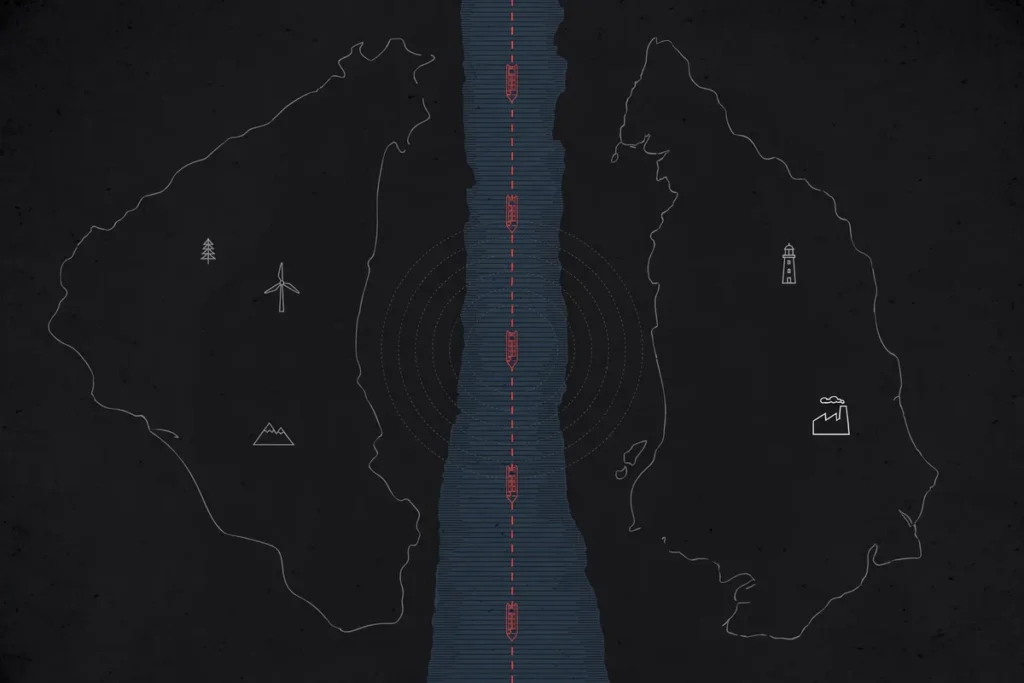
Tehran has not said it ordered the tanker strikes — the claim is framed as IRGC interdiction of “illegal” transfers and mine damage. But analysts read at least three signals in the timing. First, leverage: with the June agreement framework stalled and Trump now publicly ruling out talks, the strait is Iran’s strongest remaining card in any negotiation. Threatening shipping is how Tehran forces Washington to weigh the economic cost of escalation.
Second, deterrence against the reported US-Israel plans: by showing it can impose costs on the energy corridor immediately, Iran is telling Jerusalem and Washington that a post-midterms campaign would be paid for in oil prices and shipping chaos. Third, the elections: war-linked fuel prices are already hurting voters ahead of both the Israeli and American votes. Danny Citrinowicz, a researcher at Israel’s Institute for National Security Studies, told the AP he believes the region is heading toward “another kinetic escalation,” adding that a clear Netanyahu victory in the October 27 election would make a new attack almost certain.
For the mechanics of how shipping through the strait actually works — and how insurance and freight costs explode when attacks rise — see our explainers on how war-risk insurance works for tankers and how oil sanctions work.
What did the New York Times reveal about US-Israel strike plans?
Citing US officials and people familiar with the discussions, the Times reported on October 21 that American and Israeli militaries have drawn up plans for another round of strikes on Iran after the midterm elections. Preparations are described as advanced, with rehearsed strike flights over Iraq and a joint planning tempo that has intensified in recent weeks.
Potential targets include Iran’s nuclear facilities, energy infrastructure, and stockpiles of missiles and drones. The report says planning has covered a strike on Pickaxe Mountain, a deeply buried facility tied to the nuclear program. But the same report cautions that it remains uncertain whether Trump will authorize the operation — he has repeatedly rejected proposals to resume large-scale combat this year, and earlier this month said Washington would not attack before the midterms, citing “productive discussions.”
A White House official told the Times the administration does not comment on military plans “that may or may not exist,” adding that Trump is keeping all options open to prevent Iran from acquiring nuclear weapons. The pattern is familiar: Trump reportedly blocked an Israeli strike on Iran earlier this month, showing the gap between Jerusalem’s preferences and Washington’s calendar.
What the Hormuz tanker attacks mean for US/UK/EU readers
For most readers, the war reaches them through prices. Brent crude settled at $113.17 a barrel on October 22 — its highest close since May 4 — after rising 4 percent in a single session. That is more than 80 percent higher than at the start of the year, driven by the eight-month disruption of Gulf supplies. If a new US-Israel campaign materializes after the midterms, Goldman Sachs warned in an October 20 report that Brent could reach $140 in early 2027 and average $125 a barrel next year if Gulf output stays 5 million barrels a day below February levels.
The pipeline from crude to consumers runs through shipping: tanker charter rates have risen to roughly 12 times normal levels and war-risk insurance now runs to about 10 percent of cargo value, costs that end up in fuel prices, airfares, and freight-dependent goods. Stock markets are already reacting — the Nikkei fell 2.7 percent, the Kospi 3.5 percent, and the Hang Seng 3 percent on October 22 on escalation fears.
Travelers should watch for airspace and flight schedule changes: earlier rounds of the conflict disrupted Gulf aviation, and US authorities have already ordered some diplomatic personnel and families to leave Saudi Arabia. The difference between a naval blockade and sanctions enforcement — and what each means for shipping lanes — is explained in our naval blockade vs. sanctions guide.
This is educational context, not financial advice.
Different perspectives
From Tehran, the logic is coercion: the strait is the leverage that brought the United States to the table in June, and Iran’s foreign minister Abbas Araghchi said on October 21 that Tehran remains open to diplomacy while ready to defend itself. From Jerusalem and Washington, the rising attacks are evidence that Iran is using the strait as a blackmail instrument — which is precisely why strike plans target energy infrastructure alongside nuclear sites.
From the shipping industry, the view is narrower and bleaker. Lloyd’s List Intelligence reports that oil is still moving through the strait under US military protection, but maritime monitors note growing reluctance by shippers to report incidents — meaning the true scale of the harassment may be larger than the public record. From oil markets, the message is that the “workaround” of moving barrels around Iranian interdiction is failing, and the risk premium is being priced back in.
What to watch next in the Strait of Hormuz
Three clocks are ticking. Israel votes on October 27 — the IDF chief’s statement that no strike is needed before the election leaves the day after as the earliest plausible window. The US midterms follow in November, and Trump’s own red line against pre-election strikes expires with them. And maritime monitors will be watching whether the seven-tanker claim is followed by independent confirmation — satellite imagery, insurer reports, or UKMTO advisories would turn an Iranian claim into an established fact.
If confirmed, the incident would be the largest single-day escalation against commercial shipping since February. If it stays unverified, it remains what Trump called it — a manufactured crisis. Either way, the trajectory points one direction: Citrinowicz’s assessment that the region is headed toward another kinetic escalation now has a deadline attached to it.
Frequently asked questions
Why is Iran attacking oil tankers in the Strait of Hormuz?
Iran has not officially claimed direct responsibility for attacks on shipping, though its IRGC Navy announced it had struck or mined seven tankers on October 22. Analysts say Tehran uses pressure on the strait — the world’s most important oil chokepoint — as leverage over the US and Israel, to deter a new round of strikes, and to influence negotiations over navigation rights that stalled after the June agreement framework.
Is the Strait of Hormuz closed to shipping?
No — Lloyd’s List Intelligence reports oil is still moving through the strait under US military protection, and flows have partly recovered to about 12.6 million barrels a day. But attacks, insurance costs running near 10 percent of cargo value, and shippers switching off transponders have made transits slower, riskier, and far more expensive.
Will the US attack Iran again?
The New York Times reported on October 21 that US and Israeli militaries have drawn up plans for a “brief but intense” campaign after the US midterm elections, targeting nuclear facilities, energy infrastructure, and missile and drone stockpiles. However, it is not confirmed that President Trump will authorize the strikes — he has repeatedly rejected resuming large-scale combat this year.
How do the Hormuz tanker attacks affect oil prices?
Brent crude settled at $113.17 a barrel on October 22, up 4 percent, after the seven-tanker claim. Markets price in the risk that a wider war disrupts Gulf exports. Goldman Sachs warned prolonged disruption could push Brent to $140 in early 2027. This is market context, not financial advice.
What is the IRGC Navy?
The naval arm of Iran’s Islamic Revolutionary Guard Corps, the IRGC Navy operates fast-attack craft, naval mines, and coastal missile batteries in the Persian Gulf and Strait of Hormuz. It is distinct from Iran’s conventional navy and has primary responsibility for defending the strait, which it treats as a key point of military leverage.
Sources
- Associated Press: Iran says 7 oil tankers attacked in the Strait of Hormuz (via Military.com)
- The New York Times (via TBS News): US, Israel prepare plans for fresh strikes on Iran after midterm elections
- Al Jazeera: Trump hints new strikes, says US knocked ‘hell out’ of Iran (live blog)
- Reuters (via Nation Thailand): Brent rises 4% on October 22 as Houthi attacks fuel supply fears
- Associated Press (via New Indian Express): Iran reports seven oil tankers damaged in Strait of Hormuz


Discussion 0
Share analysis, corrections, or context. Be civil — comments are moderated.