
WarBrief Live | October 22, 2026 | Breaking
3 killed
10 injured in the October 21 attacks (GACA, Energy Ministry)
$110.11
Brent crude on Oct 22, up 1.2% after the order (Reuters)
19 dead
364 injured in airport attacks since Oct 1 (coalition briefing)
5
drones intercepted over Medina and the Eastern Province on Oct 21 (coalition)
The United States has ordered non-emergency government employees and their families to leave Saudi Arabia, announcing the US orders evacuation Saudi Arabia directive on October 21, 2026, as a wave of drone and missile attacks struck Dammam’s international airport and Aramco’s Shaybah oilfield on the same day. State Department spokesperson Tommy Pigott said the move responded to escalating attacks by “Iranian-supported Houthis” on civilian airports and critical infrastructure, hours after a strike on King Fahd International Airport killed one resident and injured eight, and falling debris from an intercepted drone killed two workers near Shaybah. It is the most serious US diplomatic drawdown in the Gulf since the February 2026 war with Iran, and a signal that Washington expects the Houthi air campaign against the kingdom to get worse, not better.
Key Takeaways
- The State Department issued an ordered departure for non-emergency US government employees and families in Saudi Arabia only — Pigott explicitly rejected reports that other Gulf missions were included.
- The order followed two deadly strikes on October 21: 1 killed and 8 injured at Dammam’s King Fahd International Airport (GACA), and 2 killed and 2 injured at Aramco’s Shaybah oilfield (Energy Ministry).
- Attribution is not settled. Saudi statements named no perpetrator for the October 21 attacks, and Houthi spokesman Yahya Sarea publicly denied launching any attacks toward Saudi Arabia — while Washington blamed “Iranian-supported Houthis.”
- Oil markets reacted immediately: Brent crude rose 1.2% to $110.11 a barrel on October 22, extending the rally from three weeks of strikes on Gulf aviation and energy targets.
- The US Embassy in Riyadh now requires Chief of Mission authorization for employees to use any Saudi airport, and Riyadh’s main airport only partially reopened with limited flights.
What happened in Saudi Arabia on October 21, 2026?
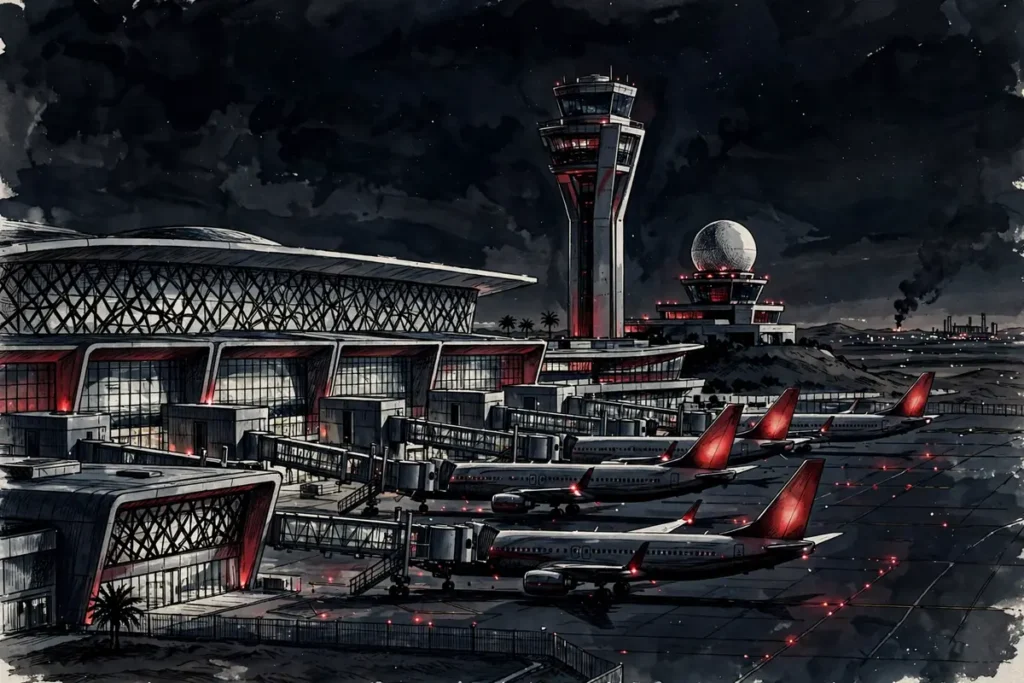
Wednesday, October 21, was the bloodiest single day in Saudi Arabia since the October 10 missile strike on Riyadh. According to Saudi Arabia’s General Authority of Civil Aviation (GACA), King Fahd International Airport in the eastern city of Dammam was hit in the evening, killing one resident and injuring eight others, with injuries ranging from minor to critical. Property damage was still being assessed. The statement did not describe the weapon used or name the attacker.
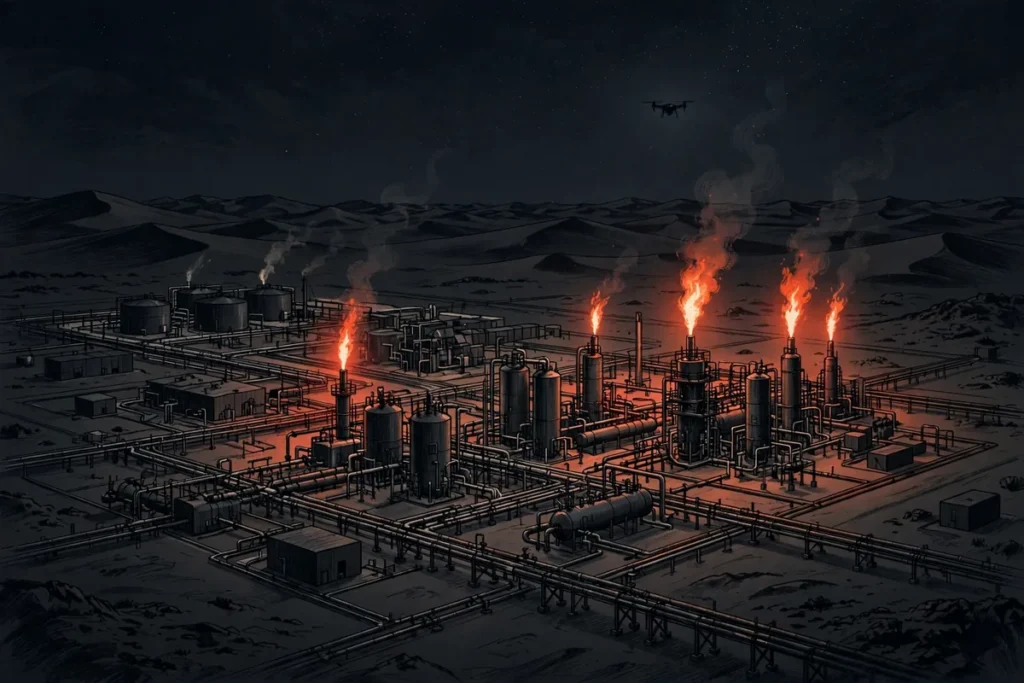
Earlier that day, Saudi air defenses intercepted a drone targeting a processing facility at Aramco’s remote Shaybah oilfield in the southeast of the country. Falling debris from the interception sparked a fire in a contractor’s vehicle outside the perimeter, killing two residents — a Filipino national and a Nepali national — and injuring two more, an Indian national and a Pakistani national. Saudi Arabia’s Ministry of Energy said operations at the field were unaffected, and, notably, did not identify who launched the drone. The Indian Embassy in Riyadh confirmed on X that one Indian national was injured and that it was in contact with Saudi authorities.
Separately, coalition spokesman Maj. Gen. Turki al-Maliki announced that Saudi-led coalition forces had intercepted and destroyed four drones over Medina and the Eastern Province, followed by a fifth over the Eastern Province — five interceptions in one day.
By the numbers: what is confirmed about the October 21 attacks
| Metric | Figure | Source |
|---|---|---|
| Killed at Dammam airport (Oct 21) | 1 (confirmed) | GACA statement, Oct 21 |
| Injured at Dammam airport | 8 (confirmed) | GACA statement, Oct 21 |
| Killed near Shaybah oilfield | 2 (confirmed: Filipino, Nepali) | Saudi Energy Ministry, Oct 21 |
| Injured near Shaybah oilfield | 2 (confirmed: Indian, Pakistani) | Saudi Energy Ministry, Oct 21 |
| Shaybah field operations | Unaffected (confirmed) | Saudi Energy Ministry, Oct 21 |
| Brent crude, Oct 22 | $110.11/bbl, +1.2% (confirmed) | Reuters, Oct 22 |
| WTI crude, Oct 22 | $98.12/bbl, +1% (confirmed) | Reuters, Oct 22 |
| Drones intercepted Oct 21 | 5 (confirmed) | Coalition spokesman al-Maliki |
| Perpetrator of the Oct 21 attacks | Unconfirmed | No Saudi statement named one; Houthi spokesman denied involvement (CGTN) |
| Family departures from other Gulf missions | Reported, not confirmed | Four US officials told Reuters (via Haaretz); Pigott called the report “inaccurate” |
One-line caveat: figures marked “confirmed” appear in two or more independent sources; single-source claims are attributed above and should be treated with caution. Note that some aggregator headlines add the Dammam and Shaybah death tolls together as “three killed” — the correct breakdown is 1 killed at Dammam plus 2 killed at Shaybah.
Why did the United States order its staff out?
The order came directly from the State Department late on October 21. Spokesperson Tommy Pigott announced in a post on X that the department had ordered the departure of “non-emergency U.S. government employees and their family members in Saudi Arabia,” citing what he described as a worsening campaign against civilian targets. In his words:
“Iranian-supported Houthis have increasingly engaged in hostilities against Saudi Arabia, including attacks on civilian airports and other critical infrastructure resulting in civilian casualties and severe travel disruptions.”
Pigott added that “the safety and security of Department personnel and their families remain our highest priority, and we will continue to take all necessary steps to protect and support them,” as reported by Al Jazeera.
The announcement landed the same day as the Dammam and Shaybah attacks, and the sequencing was not accidental: the State Department had watched the Houthi air campaign intensify for three straight weeks. The move is the second ordered departure for Saudi Arabia this year — the first came in late February, when the US-Israeli war with Iran began and Tehran retaliated against American facilities across the region. Washington only began returning personnel to Riyadh in August, and the embassy had just started rebuilding its presence when the October airport strikes began.
One point of confusion deserves care. Four US officials told Reuters that family members would also be ordered to leave other US missions in the Gulf — the UAE, Jordan, Qatar and Bahrain — and an AFP diplomatic source said some withdrawals there were already underway. Pigott rejected that framing outright: “This is inaccurate. The U.S. Department of State issued an ordered departure for non-emergency U.S. government employees and their family members in Saudi Arabia only,” as quoted by Haaretz. The formal order is Saudi-only; whether a quieter regional drawdown follows is reported but unconfirmed.
The US Embassy in Riyadh also issued a security alert warning of possible further attacks and stating that, per CNN, “U.S. government employees working in Saudi Arabia require special authorization from Chief of Mission to use any airport in Saudi Arabia following recent missile and UAV attacks on airports in the Kingdom.”
Who was behind the attacks on October 21?
This is the question the available evidence cannot yet answer cleanly — and it is the most important precision note in this story. The US government has placed blame squarely on the Houthis, describing them as “Iranian-supported.” But the Saudi statements on the October 21 incidents — from both the civil aviation authority and the energy ministry — named no perpetrator at all. And on the same day, Houthi military spokesman Yahya Sarea publicly denied that Houthi forces had launched any attacks toward Saudi Arabia, calling coalition claims of drones intercepted over Medina false.
The denial sits uneasily against the broader October record. The Houthis have claimed responsibility for earlier strikes in the month-long air campaign — including the October 10 ballistic-missile strike on Riyadh’s King Khalid International Airport — and the coalition says it has intercepted their drones and missiles dozens of times in October. A denial for October 21 does not erase that pattern, but it does mean the specific attacks that triggered the US evacuation order carry an attribution gap: one side’s government says Houthis, the other side’s military spokesman says no.
Readers should also note the layered blame game. Riyadh has spent October publicly blaming Iran for the escalation, arguing Tehran is directing the Houthi campaign — a theme WarBrief examined in our analysis of why Saudi Arabia is publicly blaming Iran. The October 21 denials give both Tehran and the Houthis a line to hold: not us, not today.
What the Saudi Arabia evacuation means for US/UK/EU readers
For American readers, this is the clearest signal yet that the administration treats the Houthi threat to the Gulf as a sustained campaign, not a passing wave. An ordered departure is rare, expensive, and politically awkward for a partner as important as Saudi Arabia — the US does not pull families out of Riyadh lightly. Expect follow-on questions in Washington about air-defense support for the kingdom and whether the February war with Iran is entering a second, wider phase.
For UK and EU readers, the immediate effects are practical. Travel: Saudi Arabia is now under a US Level 3 “Reconsider travel” posture in practice, and commercial aviation remains disrupted — our travel guidance for the kingdom tracks which airports are operating and which carriers have suspended service. Riyadh’s King Khalid airport only partially reopened on October 21 with limited Saudia and FlyNas flights requiring prior permission, while Lufthansa and Air France kept cancellations running through mid-November. Prices: Brent at $110.11 a barrel on October 22 feeds directly into petrol and diesel prices across Europe within weeks, and war risk insurance surcharges — layered onto every tanker leaving the Gulf — are already amplifying the cost of actual crude above screen prices, as our shipping economics coverage has tracked. Markets: the October rally in crude has been driven not by demand but by the systematic targeting of aviation and energy infrastructure in the world’s largest oil-exporting region, and October 21 added an oilfield to a target list that had previously been airports only.
Background: the October air campaign against Saudi airports
The October 21 attacks did not come from nowhere. Since early October, the kingdom’s airports have been under sustained assault — a campaign WarBrief has tracked in our explainer on the closure of Riyadh airport and our earlier coverage of the October 10 strike that killed 12.
- October 5, 2026: attack on King Abdullah bin Abdulaziz International Airport, Jazan — 3 injured.
- October 6: strikes on Abha International Airport — 2 killed, 28 injured.
- October 7: strike on King Khalid International Airport, Riyadh — 1 death, 8 injuries.
- October 8: missile strike on King Khalid Airport — 3 Saudi citizens killed, including a Saudia pilot; an aircraft damaged.
- October 10: major ballistic-missile strike on King Khalid Airport — 12 killed (including Saudi, Bangladeshi, US, Egyptian, Jordanian, Palestinian, Syrian and Sudanese nationals), 308–309 injured; all flights suspended, airport closed.
- October 11: follow-up strike on Terminal 4 — 1 Pakistani resident killed, 11 injured.
- October 15: coalition briefing: 19 dead, 364 injured across airport attacks since October 1; the Houthis had launched 20 attacks on Riyadh airport alone since October 1.
- October 20: Houthi attacks forced the kingdom to postpone its flagship FII investment summit to 2027 — the economic fallout reaching beyond aviation.
- October 21: drone intercepted at Aramco’s Shaybah oilfield (2 killed, 2 injured); attack on Dammam’s King Fahd airport (1 killed, 8 injured); US orders non-emergency staff out.
The strategic backdrop matters. The four-year UN-administered truce in Yemen collapsed in mid-2026, and fighting between the Houthis and the Saudi-backed coalition resumed. The October air campaign is the conflict’s spillover reaching deep into the kingdom’s economic hubs — first its airports, and now, with Shaybah, its energy infrastructure. France’s deployment of troops to Yanbu to help defend the kingdom’s oil lifeline, and the postponement of the FII summit, are the same story in different registers: the war in Yemen has become a war over Saudi Arabia’s critical infrastructure. Follow our Conflict Zones hub for continuing coverage.
What to watch next in Saudi Arabia
Three questions will define the next 48 hours. First, whether the Houthis follow their denial with a claim of responsibility for something else — or whether another actor is operating in the kingdom’s airspace, which would be a far more dangerous development. Second, whether the reported-but-denied drawdown of US families from other Gulf missions (UAE, Jordan, Qatar, Bahrain) materializes despite Pigott’s “Saudi Arabia only” line — watch for travel advisory updates. Third, whether Riyadh retaliates against targets in Yemen or escalates its public attribution to Iran, and whether Washington joins it. Oil traders will be watching the same events through the lens of supply: any disruption to actual loadings from the Gulf, not just airports, pushes Brent higher from here.
Frequently asked questions
Why did the US order its staff out of Saudi Arabia?
The State Department issued an ordered departure for non-emergency US government employees and their families in Saudi Arabia on October 21, 2026, citing intensifying attacks by “Iranian-supported Houthis” on civilian airports and critical infrastructure that caused civilian casualties and severe travel disruption. The order followed same-day strikes that killed 3 people at Dammam airport and the Shaybah oilfield.
Was the Dammam airport attack carried out by the Houthis?
This is not confirmed. Saudi Arabia’s civil aviation authority statement on the October 21 Dammam attack named no perpetrator, and Houthi military spokesman Yahya Sarea publicly denied launching any attacks toward Saudi Arabia that day. The US government attributes the broader October air campaign to the Houthis, but the specific October 21 attacks carry an attribution gap.
How many people died in the October 21 attacks in Saudi Arabia?
Three people died in total: one resident at King Fahd International Airport in Dammam (per the General Authority of Civil Aviation) and two residents — a Filipino national and a Nepali national — near Aramco’s Shaybah oilfield (per the Saudi Energy Ministry). Ten more were injured across the two incidents. Some headlines report “three killed” without the breakdown; the 1-plus-2 split is the confirmed figure.
Is it safe to travel to Saudi Arabia right now?
The US posture toward Saudi Arabia is effectively “reconsider travel,” and commercial aviation is disrupted: US government employees need special authorization to use any Saudi airport, and Riyadh’s main airport only partially reopened on October 21 with limited flights. Several European carriers, including Lufthansa and Air France, have cancelled services through mid-November. Check current advisories before booking.
Did oil prices rise after the US evacuation order?
Yes. Brent crude rose 1.2% to $110.11 a barrel and WTI gained 1% to $98.12 in early trading on October 22, according to Reuters, extending a rally driven by three weeks of strikes on Saudi aviation and energy infrastructure. The October 21 attacks were the first to hit an oilfield directly.
Sources
- Al Jazeera: US orders departure of personnel from Saudi Arabia, citing Houthi threat
- Reuters: Oil rises as U.S. orders diplomats to leave Saudi Arabia amid escalating tensions
- Haaretz (Reuters): U.S. Orders Diplomats to Depart Saudi Arabia Amid Houthi Strikes
- CNN: US orders departure of some embassy staff and families from Saudi Arabia amid Houthi threat
- AFP (via Malay Mail): US orders embassy staff, families to leave Saudi Arabia amid Houthi attacks
- The Hindu: Saudi authorities say two killed by falling debris at oil facility following drone attack in kingdom
- Saudi Gazette: One killed, eight injured in attack on Dammam airport
- Arab News: Houthis have launched 20 attacks on Riyadh airport since Oct. 1, coalition says
- The National: Timeline — Houthis escalate attacks on Saudi airports
- CGTN: Tensions persist amid US sanctions on Iran, Saudi-Houthi clashes


Discussion 0
Share analysis, corrections, or context. Be civil — comments are moderated.