
WarBrief Live | October 19, 2026 | Geopolitics
Eleven days from now, the Gulf’s most consequential security conversation of the year opens in Manama. The 22nd IISS Manama Dialogue, the Middle East’s premier security summit, runs from October 30 to November 1, 2026 at the Ritz-Carlton in Bahrain — and this year’s edition lands in extraordinary circumstances: it is the first major Gulf security forum of the Iran-war era.
The International Institute for Strategic Studies (IISS) has published its outline agenda, and the signal is unmistakable. Alongside the traditional plenaries on US-Gulf security integration and maritime security, the 2026 programme opens with a special session titled “Political and Security Lessons from the Iran War” and the launch of a new IISS dossier, “The Gulf at War.” For anyone tracking Middle East security, energy markets or shipping lanes, here is what to expect.
Key Takeaways
- The 22nd IISS Manama Dialogue takes place October 30–November 1, 2026, at the Ritz-Carlton in Bahrain, with the outline agenda now published by IISS.
- Two opening special sessions set the tone: the launch of IISS’s “The Gulf at War” dossier and a session on “Political and Security Lessons from the Iran War.”
- Six plenaries will cover US–Middle East security integration, transformational regional conflict, defence doctrine, reconstruction economics and maritime security.
- The 2026 speaker roster has not been publicly announced yet; the 2025 edition drew ministers and senior officials from more than 25 nations.
What is the IISS Manama Dialogue?
The Manama Dialogue is the IISS’s annual Middle East security summit, held in Bahrain every year since 2004. IISS describes it as the Middle East’s premier security summit — three days of in-depth debate bringing together ministers, policymakers and decision-makers on the region’s most pressing foreign-policy, defence and security challenges, along with their global implications.
Unlike larger talk-shops, Manama is deliberately compact and ministerial. The 2025 (21st) edition drew senior officials and ministers from more than 25 nations and international organisations, including the UK Foreign Secretary, the Dutch defence minister, the foreign ministers of Oman and Jordan, NATO’s Deputy Supreme Allied Commander Europe and the director-general of the International Committee of the Red Cross, according to regional press coverage. The format mixes on-record plenaries with off-record bilateral meetings between ministers — the corridor conversations in Manama have historically mattered as much as the podium speeches.
Bahrain takes the preparations seriously at the highest level. On October 12, 2026, Bahrain’s Foreign Minister Dr. Abdullatif bin Rashid Al Zayani received Air Marshal (Retd) Martin Sammy Sampson, the executive director of IISS–Middle East, to review preparations for the summit, according to the Bahrain News Agency.
What will dominate the 2026 agenda?
The outline agenda published by IISS shows a programme built around one unavoidable fact: the region has just lived through a war with Iran, and its lessons will shape everything discussed in Manama.
Friday, October 30 is given over to bilateral meetings between ministers and officials all day, followed by two special sessions in the afternoon. The first, from 15:00 to 16:00, is the launch of the IISS dossier “The Gulf at War” — a publication that will presumably set the analytical baseline for the weekend. The second, from 16:00 to 17:00, is titled “Political and Security Lessons from the Iran War.” An opening reception and a keynote address over the opening dinner close the day. The keynote speaker has not been named in the outline agenda.
Saturday, October 31 carries the weight of the plenaries. The first plenary tackles “US and Middle Eastern Security Integration,” the second “The Implications of Transformational Regional Conflict.” After a special address at midday, the afternoon brings the third plenary on “The Foundations of Regional Security” and the fourth on “Defence, Resilience and Deterrence: Pathways for Defence Doctrine.”
Sunday, November 1 turns to economics and the seas: the fifth plenary, “A New Economic Agenda: From Reconstruction and Development to Prosperity,” and the sixth, “Maritime Security at an Inflection Point,” before a concluding plenary on “Global Security Governance: Inclusion and Agency” and a farewell lunch.
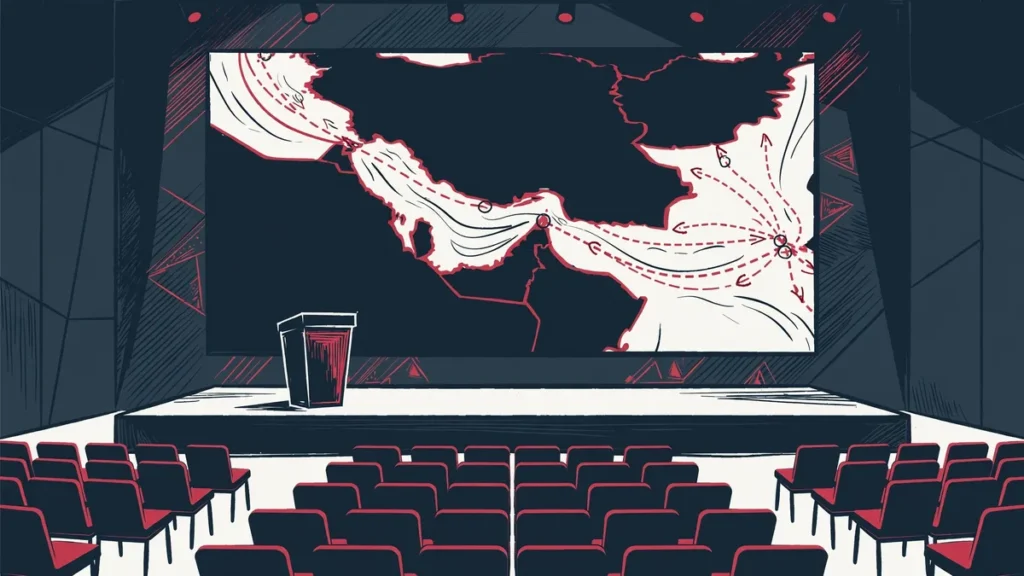
Manama Dialogue 2026: the key facts
| Metric | Figure | Source |
|---|---|---|
| Edition | 22nd | IISS |
| Dates | October 30 – November 1, 2026 | IISS outline agenda |
| Venue | The Ritz-Carlton, Kingdom of Bahrain | IISS outline agenda |
| Plenary sessions | 6, plus 2 special sessions | IISS outline agenda |
| Ministerial delegations (2025 benchmark) | 25+ nations | News of Bahrain |
| First held | 2004 | News of Bahrain |
Note: the 2026 speaker roster has not been publicly announced — IISS says speaker news will be released in the lead-up to the summit. Figures marked confirmed come from the official outline agenda; the 25+ nations figure is the confirmed 2025 benchmark, not a 2026 claim.
Why the Iran war hangs over Manama
The 2026 Dialogue is the first major Gulf security forum convened after the US-Israeli-Iranian military confrontation of 2026 — the conflict WarBrief has tracked through the Conflict Zones hub, from the tanker strikes in the Strait of Hormuz to the Houthi missile campaign against Saudi airports.
That context explains the agenda’s shape. A special session explicitly devoted to the political and security lessons of the Iran war, launching alongside a “Gulf at War” dossier, suggests the summit will function partly as a collective after-action review: what worked, what failed, and what the region’s defence doctrines must become. The fourth plenary’s framing — “Defence, Resilience and Deterrence: Pathways for Defence Doctrine” — reads as the forward-looking companion to that review.
Diplomatically, the backdrop is a region trying to lock in a post-war order. In June 2026, the Gulf Cooperation Council’s foreign ministers met jointly with US Secretary of State Marco Rubio in Manama to discuss the aftermath of the confrontation, and reporting at the time described a memorandum of understanding between Washington and Tehran reached through Pakistani-Qatari mediation. Whether that fragile arrangement holds — and what replaces it if it does not — is precisely the kind of question Manama’s bilateral sidelines exist to address.
Why does the Manama Dialogue matter for oil and shipping?
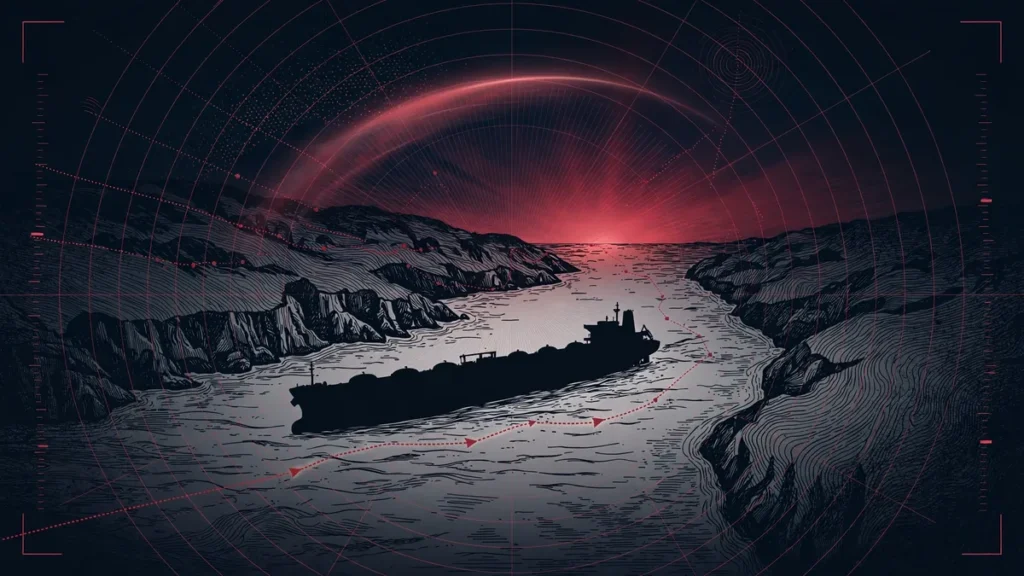
For energy and shipping watchers, the session to circle is Sunday’s sixth plenary: “Maritime Security at an Inflection Point.” The Strait of Hormuz has been the sharp end of the region’s insecurity all year — three tankers have been struck in and around the strait in recent days alone, a campaign Tehran has framed as its “firm response” doctrine. Insurers, refiners and tanker operators will be listening for any signal from Manama about naval patrol coordination, mine-clearance commitments or convoy arrangements.
The economics plenary matters too. “A New Economic Agenda: From Reconstruction and Development to Prosperity” points to the post-war rebuilding question: who pays for reconstruction, on what terms, and how Gulf capital is deployed. With physical crude markets still carrying a heavy risk premium over paper benchmarks — the dynamic WarBrief examined in its paper-vs-physical oil explainer — any Manama signal on regional stability feeds directly into the prices refiners pay for delivered barrels.
What the summit could mean for US, UK and EU readers
For US readers, the opening plenary — “US and Middle Eastern Security Integration” — is the one to watch. It will indicate how Washington intends to structure its Gulf security commitments in the post-war environment: bases, arms packages, intelligence sharing and the durability of the understandings reached with Tehran. With American forces and diplomats across the region operating under heightened threat conditions this month, the summit’s tone on force protection and deterrence will be closely read in Washington.
For UK readers, Britain remains a significant Gulf security actor — the UK Foreign Secretary attended the 2025 edition, and Britain maintains a permanent naval presence in Bahrain itself. UK travellers and businesses with Gulf exposure should watch the maritime security plenary: any coordinated naval posture emerging from Manama affects insurance costs, shipping schedules and, downstream, fuel prices at British pumps.
For EU readers, the interest is energy and migration-adjacent stability. Europe’s refineries are directly exposed to Hormuz disruptions and Red Sea insecurity, and the summit’s economic-reconstruction agenda will shape where European firms and development finance go next. The concluding plenary on “Global Security Governance: Inclusion and Agency” is also the session where European and Gulf views on multilateral institutions are most likely to collide or converge.
What to watch for during the three days
- The keynote speaker: the Friday opening dinner keynote is unnamed in the outline agenda. A Gulf head of state, a US cabinet principal or a surprise guest would each send a different signal.
- The “Gulf at War” dossier: IISS dossiers shape elite consensus. Its assessment of the Iran war — who won, what deterred whom — will be quoted for months.
- The Iran-war lessons session: watch for how candid Gulf officials are about air-defence performance and escalation control. Candour here would be newsworthy in itself.
- The bilaterals: Friday’s all-day ministerial bilaterals are where any US–Gulf or GCC–Iran signalling will happen first. Readouts, or the absence of them, are the story.
- Maritime commitments: any concrete announcement on Hormuz or Red Sea naval coordination from Sunday’s sixth plenary would move shipping and insurance markets on Monday.
Frequently asked questions
What is the IISS Manama Dialogue?
It is the International Institute for Strategic Studies’ annual Middle East security summit, held in Bahrain since 2004. Ministers, policymakers and analysts gather for three days of debate on the region’s foreign-policy, defence and security challenges. IISS calls it the Middle East’s premier security summit.
When is the Manama Dialogue 2026?
The 22nd edition runs from Friday, October 30 to Sunday, November 1, 2026, at the Ritz-Carlton Hotel in the Kingdom of Bahrain, according to the official outline agenda published by IISS.
Who attends the Manama Dialogue?
The 2026 speaker roster has not been publicly announced yet. The 2025 edition drew ministers and senior officials from more than 25 nations, including the UK Foreign Secretary, the Dutch defence minister and NATO’s Deputy Supreme Allied Commander Europe.
What is on the agenda for the 2026 Manama Dialogue?
Highlights include the launch of IISS’s “The Gulf at War” dossier, a special session on “Political and Security Lessons from the Iran War,” and six plenaries covering US–Middle East security integration, regional conflict, defence doctrine, reconstruction economics and maritime security.
Why is the 2026 Manama Dialogue important?
It is the first major Gulf security forum of the Iran-war era. Its sessions on the war’s lessons, defence doctrine and maritime security will signal how Gulf states, the US and their partners intend to manage regional security — with direct implications for oil, shipping and Western foreign policy.
Sources
- IISS: The IISS Manama Dialogue 2026 — outline agenda (PDF)
- IISS (YouTube): Coming soon: IISS Manama Dialogue, 30 October–1 November 2026
- Bahrain News Gazette: Foreign Minister discusses Manama Dialogue preparations with IISS-Middle East director
- News of Bahrain: Bahrain set to host IISS Manama Dialogue (21st edition background)
Discussion 0
Share analysis, corrections, or context. Be civil — comments are moderated.