WarBrief Live | October 19, 2026 | Intelligence Report
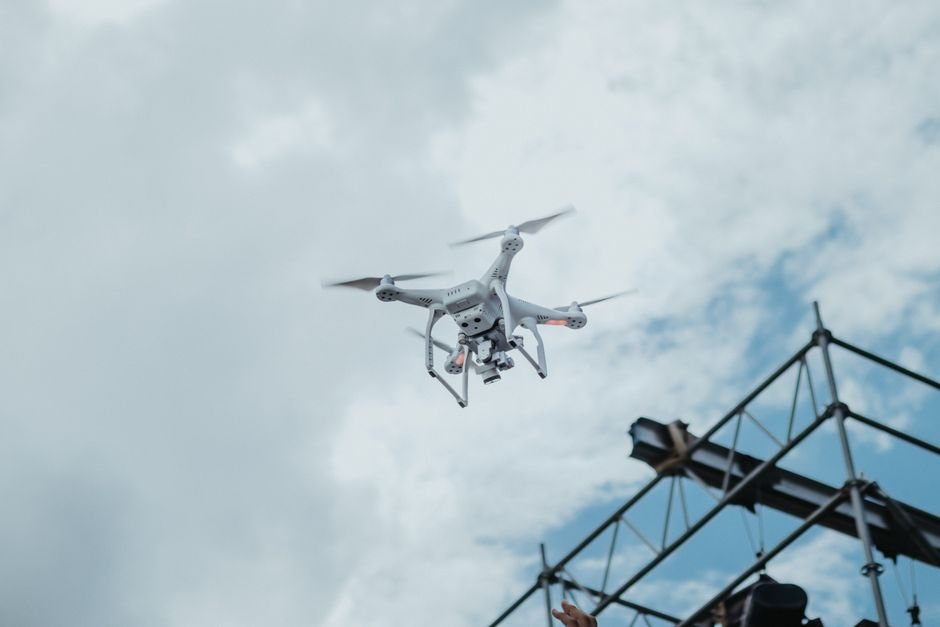
On the morning of October 18, 2026, Lithuania raised a “red” air alert and told residents in central and northern areas to shelter for about an hour after an unidentified flying object — believed to be a drone — entered its airspace, according to Reuters. Two Italian Eurofighters under NATO command scrambled to intercept it but could not visually identify the object through heavy cloud cover and did not attempt to shoot it down. Debris later struck a civilian car; no one was injured.
Confirmed vs. unverified: confirmed — the scramble, the shelter alert, the temporary closure of Kaunas airport, debris striking a vehicle, and the no-fire decision without visual identification. Unverified — the drone’s origin. Lithuania’s crisis-management chief, Vilmantas Vitkauskas, told broadcaster LRT the object was “most likely a Ukrainian drone” from Kyiv’s mass strikes on Russia’s St. Petersburg region. That is an official’s assessment, not an investigation finding; Ukraine has suggested Russian electronic warfare may have diverted the drones. This report treats the origin claim as attributed, not established.
Key Takeaways
- Two Italian Eurofighters under NATO command scrambled over Lithuania on October 18 after a suspected drone entered its airspace; pilots could not visually identify it in cloudy weather and did not fire.
- Residents in central and northern Lithuania sheltered for about an hour; Kaunas airport temporarily closed; debris struck a car between Birzai and Pasvalys. No injuries.
- Lithuania’s crisis chief calls it “most likely a Ukrainian drone” from Kyiv’s 1,000-drone St. Petersburg raid — an assessment, not a finding. Ukraine expressed regret, blaming possible Russian electronic warfare.
- Defense Minister Robertas Kaunas said the object entered from Poland and proposed a joint investigation; Poland says its radar did not confirm a border crossing — an allied air-picture gap worth watching.
What happened over Lithuanian airspace on October 18
The incident unfolded over roughly 70 minutes on Sunday morning: shelter guidance went to affected counties within minutes, Latvia briefly issued a “yellow” warning in border regions, and Kaunas airport temporarily closed. A NATO official confirmed to Italian agency ANSA: “We can confirm that this morning, two Italian Eurofighter jets were scrambled in response to the presence of a drone in Lithuanian airspace. The aircraft were operating under NATO command.”
The pilots could not visually identify the object through cloud cover and made no attempt to shoot it down. After it disappeared from radar, Lithuanian troops examined possible debris near Juodzionys village in the north, and debris struck a civilian car, Defense Minister Kaunas said. Anadolu Agency reported that Prime Minister Mindaugas Sinkevicius said the driver heard an explosion before debris hit the car traveling from Birzai toward Pasvalys, denting its door; police cordoned off the area. No one was injured.
Why a suspected Ukrainian drone inside NATO airspace changes the calculus
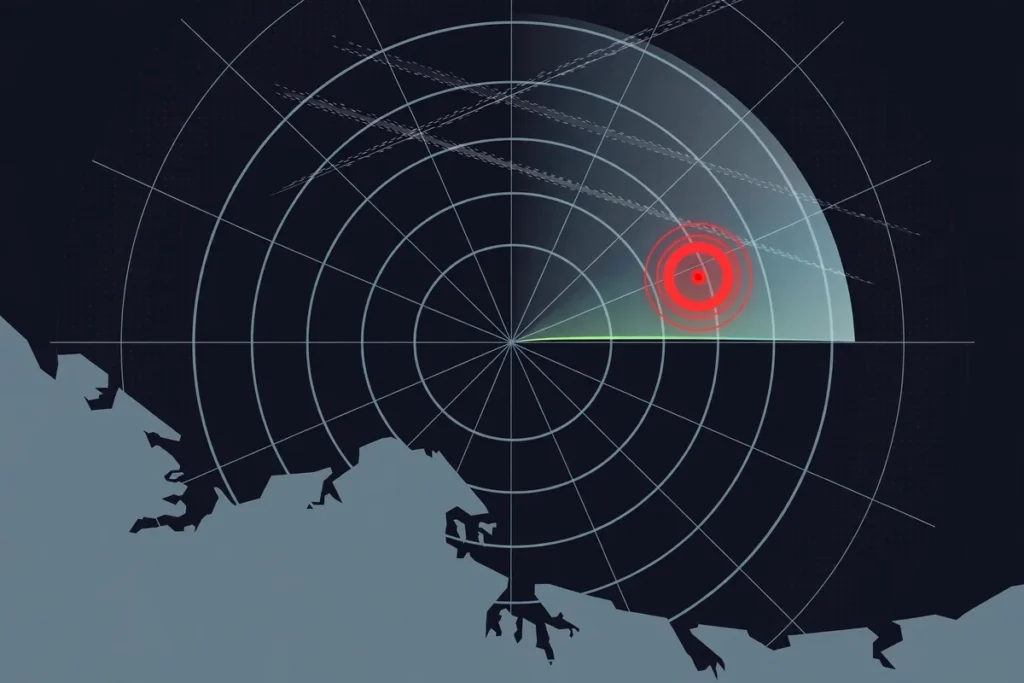
If Vitkauskas’s assessment holds, this is friendly-fire geometry, not hostile penetration — a distinction that shapes the entire response. The drone reportedly drifted into Lithuania during one of the largest Ukrainian air operations of the war: Al Jazeera reported Ukraine launched more than 1,000 drones at Russia on October 18 — killing one person, injuring five, and setting fires at the St. Petersburg oil terminal and Ruchi oil depot — while Russia claimed 1,015 drones neutralized. WarBrief’s coverage of the 1,000-drone St. Petersburg raid and the October 18 strike explainer detail that wave’s scale.
This is not the first spillover: Reuters noted Ukrainian drones have repeatedly entered NATO airspace in the Baltic region in recent months. Ukraine’s foreign ministry expressed regret and suggested Russian electronic warfare diverted the drones — plausible, but, like the origin attribution, unverified.
The Poland dimension adds a second concern. Kaunas said preliminary information indicated the object entered from Poland and proposed a joint investigation with Warsaw; Poland’s defense ministry said its radar had not confirmed a border crossing. Two allied air defenses hold different pictures of the same track — exactly the kind of seam an adversary could exploit, and the first thing the joint investigation must resolve.
How NATO’s air-policing doctrine handled the incursion
The response followed the Baltic Air Policing playbook: detect, alert civil authorities, scramble the quick-reaction pair, attempt identification, stand down when the track is lost. The no-fire decision reflects standing rules — an unidentified track in poor weather over allied territory is not engaged automatically. That restraint is a feature, not a failure: downing a friendly drone over a populated area, with debris falling on civilians, would be the worse outcome.
The weak point exposed is identification in degraded conditions: cloud cover denied the required visual confirmation, and radar alone could not establish origin or intent. As cheap long-range drones proliferate, that gap — seeing a track without knowing whose it is — becomes the central problem of Baltic air defense. For deeper context, see our intelligence reporting hub.
Assessment and outlook
Assessment: The likeliest outcome: the joint investigation confirms a Ukrainian one-way attack drone, diverted by Russian electronic warfare or navigation failure during the October 18 mass raid, with no hostile intent toward NATO. Expect a formal Ukrainian expression of regret, technical deconfliction talks between Kyiv and Vilnius, and no Article 4 consultation — a misdirected friendly drone is a safety incident, not an armed attack.
What to watch: the joint investigation’s findings, especially the radar discrepancy over the Polish border; whether NATO adjusts quick-reaction rules for unidentified drones in poor weather; and the tempo of Ukraine’s deep-strike campaign — as long-range raids scale up, more stray airframes will drift toward the Baltic states. The deeper risk is misattribution in a crowded sky: a hostile probe timed to a Ukrainian raid wave would be hard to distinguish from another stray friendly drone. NATO’s eastern flank needs a public, rehearsed doctrine for sorting friendly stray, hostile probe, and accident before a misread forces a crisis. Sunday’s scare ended with a dented car door. The next one may not be so cheap. Further background is available in our conflict zones hub.
Frequently asked questions
Was the drone over Lithuania Russian?
Not established. Lithuania’s crisis chief said it was “most likely a Ukrainian drone” from Kyiv’s St. Petersburg raid wave; Ukraine expressed regret and suggested Russian electronic warfare may have diverted the drones. Treat all origin claims as attributed until the investigation reports.
Why didn’t NATO jets shoot the drone down?
The Eurofighters could not visually identify the object through heavy cloud cover, and standing rules do not permit firing on an unidentified track over allied territory without positive identification — engaging blind risked downing a friendly aircraft and dropping debris on populated areas.
Could this trigger NATO’s Article 4 or Article 5?
No consultation has been invoked, and none appears likely. Article 4 requires an ally to judge its security threatened; a misdirected Ukrainian drone is being treated as a safety incident, not an attack.
Sources
- Reuters (via GMA News): Lithuania tells residents to go to shelters after detecting suspected drone
- Anadolu Agency: Italian NATO jets scrambled after drone enters Lithuanian airspace, damages car
- Airways Magazine: Kaunas Airport reopens after suspected drone alert
- Al Jazeera: Ukraine launches over 1,000 drones at Russia, setting oil facilities ablaze