
WarBrief Live | October 18, 2026 | Breaking Analysis
2
supertankers reported hit by mines on Oct 17 — claimed by Iran’s IRGC Navy, not independently confirmed
~4M
barrels of crude claimed aboard the two vessels combined (IRGC claim, unverified)
135
incidents logged by UKMTO in the strait since the conflict began
97%
of vessels crossed the strait safely, according to the US military’s own figures
Iran’s Revolutionary Guard Corps (IRGC) Navy announced on October 17, 2026, that two oil supertankers struck naval mines in the Strait of Hormuz and caught fire — the sharpest single-day escalation of the maritime confrontation in weeks. What is confirmed: the IRGC publicly made the claim via Iranian state media, and international wire services relayed it. What remains unverified: the existence of the mines, the fires, and the identity, flag, and cargo origin of both vessels — Reuters explicitly noted there was no independent confirmation, and Tehran released no ship names.
Each vessel was said to be carrying about two million barrels of crude oil. The IRGC said both ships had switched off their positioning and radar systems and were attempting to use routes Iran had not authorised. The announcement deepens the standoff over the world’s most important oil chokepoint, where Tehran and Washington now offer directly contradictory accounts of who controls the waterway and whether it is open at all.
Key Takeaways
- The IRGC Navy said on October 17 that two supertankers, each carrying about two million barrels of crude, hit naval mines in the Strait of Hormuz and caught fire.
- Iran claims both vessels were “running dark” — navigation and radar systems switched off — on unauthorised routes, and calls the strikes enforcement of its control regime.
- No independent confirmation exists: no ship names, flags, cargo origins, or casualty figures have been released by any party.
- The US military says the strait remains open and that about 97% of vessels have crossed safely, directly contradicting Tehran’s claim that the waterway is closed.
What happened to the two tankers in the Strait of Hormuz?
According to statements published on October 17 by the IRGC’s official news outlet Sepah News and carried by Iran’s official IRNA news agency, a first supertanker “in violation of regulations” struck a mine while attempting to transit the strait illegally, triggering an explosion and what the IRGC described as a “fierce fire.” Hours later, the Guards announced a second incident: another supertanker, also said to be carrying more than two million barrels of crude, hit a naval mine on Saturday morning, with the blast occurring in the vessel’s engine room and causing what was described as a “huge” fire that left the vessel immobilised.
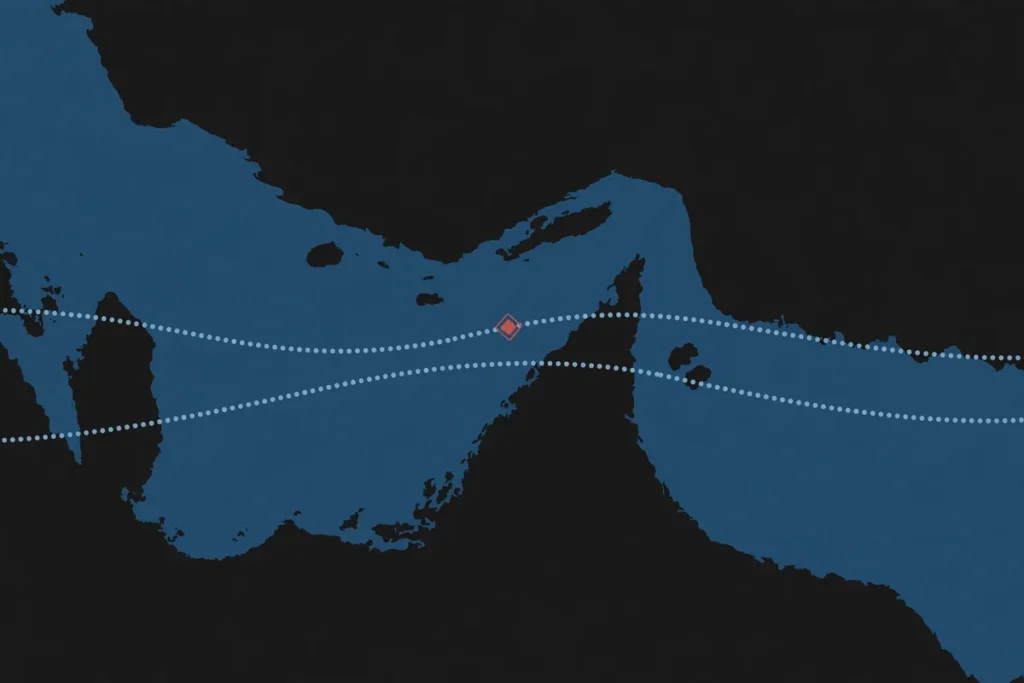
The Iranian account carries several details that no independent source has yet corroborated. The IRGC said the tankers had turned off their GPS and radar systems and were seeking to cross through an “illegal” route, and it posted video purporting to show a vessel in flames at night. It also claimed that one of the tankers had attempted to cross “with US support.” The statements gave no exact location for either incident, no vessel names, no flag states, no crew information, and no assessment of environmental damage.
Reuters, which relayed the IRGC’s claims from Dubai, stressed that “there was no independent confirmation of the reports.” Agence France-Presse reported the same claims with the same caveat, noting that “the origins of the load and the tanker’s flag were not immediately disclosed.”
The October 17 incidents follow a pattern of similar announcements. Earlier in October, the IRGC said a third vessel — described in our coverage of the GFS Pride mine sinking — struck a mine on an unauthorised route, and Iranian state media reported a shuttle tanker carrying 750,000 barrels of crude hit a mine on October 12. Independent corroboration has been thin throughout: for the October 11 incidents, the UK Maritime Trade Operations (UKMTO) agency reported a supertanker struck by an unknown projectile, a materially different description from Tehran’s mine narrative.
Why does Iran say the tankers were running dark?
Tehran’s case is that the October 17 tankers were not innocent victims of a mined waterway but rule-breakers caught inside a control regime it imposed after seizing the strait. When the US-Israeli war on Iran began in late February 2026, Iran effectively closed the Strait of Hormuz and began demanding that all vessels seek its authorisation before transiting. IRGC naval commander Rear Admiral Ali Azmaei warned earlier this week that any vessel deactivating its navigation systems would be considered “hostile” — a doctrine the IRGC invoked directly in its October 17 statements.
The accusation that the tankers were “running dark” — AIS transponders and radar switched off — carries weight in maritime security because it is exactly the profile of sanctions-evasion shipping. Vessels smuggling sanctioned crude routinely go dark to avoid tracking. The IRGC has leaned on this framing before, accusing Washington of deceiving shipping and insurance companies and pushing vessels through unauthorised routes to disrupt Iranian management of the strait.
Washington’s account is the mirror image. The US military has repeatedly rejected Iran’s authority over the waterway, and on October 16, CENTCOM commander Admiral Brad Cooper said US forces were working with regional allies and shipping partners to protect vessels, declaring: “Let me be clear, the Strait of Hormuz is controlled by the United States and our regional partners, not Iran. It remains open for business.” Iran, in turn, accused the CENTCOM chief of running oil-smuggling operations through the strait.
By the numbers: what we know about the October 17 Hormuz mine strikes
| Metric | Figure | Source |
|---|---|---|
| Tankers reported hit on October 17 | 2 | IRGC Navy claim (unverified independently) |
| Crude claimed aboard each tanker | ~2 million barrels | IRGC claim via IRNA (Reuters: no independent confirmation) |
| Combined crude claimed | ~4 million barrels | Sum of the two IRGC claims (unverified) |
| Ship names, flags or cargo origin released | None | Confirmed — withheld by all parties |
| Vessels attacked in/near the strait on Oct 11 | 6 (single-day record) | Security firm Vanguard, IMO, UKMTO |
| Tankers hit since Friday, Oct 16 | 5 | Indian Express tally of reported incidents |
| Incidents logged since conflict began | 135 | UKMTO weekly review |
| Vessels crossing safely, per US | ~97% | US military claim (own figures) |
Caveat: all figures attributed to Iranian state claims are reported claims, not independently confirmed facts. The 135-incident UKMTO figure and the October 11 six-vessel tally come from independent maritime reporting.
Who controls the Strait of Hormuz right now?
The honest answer is that control of the Strait of Hormuz is contested — and the October 17 claims sharpened the contest. Iran says it seized the strait after the war began in late February, that the waterway is “closed” except to vessels that accept its authorisation, and that violators face mines. The IRGC’s October 17 statement put it bluntly, warning that ships defying Iranian regulations would face “the consequences” of relying on what it called “the terrorist US army.”
The United States says the opposite. Alongside Admiral Cooper’s October 16 remarks, a CENTCOM spokesperson told Fox News Digital that about 97% of ships attempting to cross the strait had done so without being hit by an Iranian projectile, that traffic was still moving on October 17, and that “it is open, it is available for transit.” The US also says it has helped Gulf partners ship over 100 million barrels of crude in the same period, and more than 1.3 billion barrels in recent months. To keep vessels inside its own escort architecture, the US has promoted the US-protected Omani Corridor lane through the strait.
The real-world picture sits between the two claims, and it is deteriorating. Shipping costs through the blockade have surged as insurers price in the risk, and attacks around the waterway have spiked over the past two weeks — with Iran saying it is stepping up strikes in response to the US naval blockade of its ports and the tougher sanctions imposed last month. A container ship and a dry bulk carrier sank near the strait on October 14 after being hit by projectiles, according to maritime officials cited by Reuters, and Iran’s army said two tankers caught fire in its Gulf of Oman “prohibited zone” on October 15 and 16.
What the Hormuz mine strikes mean for US/UK/EU readers
For readers in the US, UK and Europe, the October 17 claims matter through two channels: prices and exposure. Reuters noted that disruptions to shipping in the strait have already boosted global energy prices and inflation. Each new reported strike adds to the risk premium on crude, and because the two tankers together were claimed to carry roughly four million barrels — more than a full day of UK consumption at recent levels — markets treat even unverified incidents as supply-risk signals. If the claims are accurate and the fires disable two large cargoes, that oil is effectively removed from prompt supply.
At the pump and in heating bills, the effect arrives with a lag and through the refining system, not the crude headline: diesel and gasoline respond to regional supply balances and refinery margins as well as crude. But the direction is the same — upward pressure on fuel costs while the waterway stays a shooting gallery. Households and businesses planning winter fuel purchases should watch freight and insurance signals as closely as crude benchmarks.
The second channel is security exposure. Western nationals crewing or operating commercial vessels in the Gulf face a waterway where 135 incidents have been logged since the conflict began, and where both sides’ rules of transit are now mutually exclusive: follow Tehran’s authorisation and risk violating US sanctions policy, or follow Washington’s freedom-of-navigation line and risk an Iranian mine. That legal and physical trap is the quietest, most important consequence of the October 17 claims.
This is educational context, not financial advice. Commodity markets are volatile and react to unconfirmed reports; nothing here is a recommendation to buy or sell.
Tehran vs Washington: two versions of events
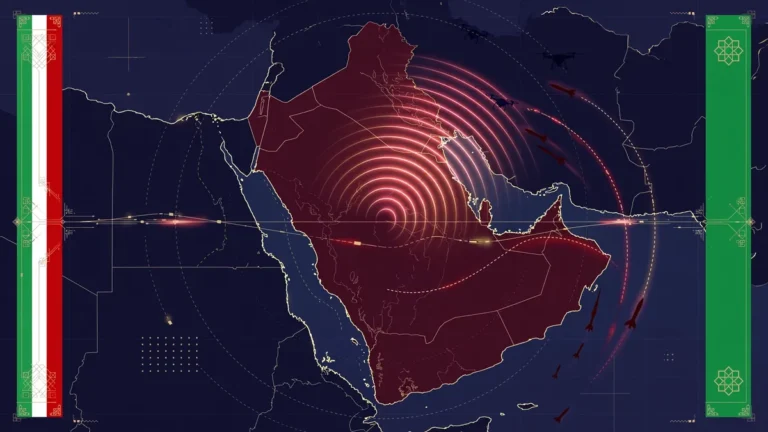
Strip the October 17 announcements to their claims and two coherent stories emerge. In Tehran’s version, Iran is a coastal state enforcing lawful control of a strait it closed after being attacked: vessels that switch off their transponders and use unauthorised routes are sanctions-smugglers or hostile actors, mines are a legitimate enforcement tool, and the US is the destabiliser — deceiving insurers, forcing ships into danger, and smuggling oil. In Washington’s version, Iran is an aggressor waging a maritime terror campaign against neutral shipping: the mines are illegal, the “authorisation” regime is extortion, and US-led escorts keep the strait open for the 97% of traffic that crosses safely.
Neither version is fully verifiable from open sources right now. Iran releases videos of burning vessels but no identities; the US releases transit statistics but no independent audits of what its escorts actually deter. What can be checked independently — UKMTO’s incident logs, insurers’ war-risk pricing, and the physical sinkings on October 11 and 14 — points to a waterway that is genuinely dangerous for commercial shipping, regardless of which capital’s narrative a reader prefers.
What to watch next in the Strait of Hormuz
Four things will determine whether the October 17 claims mark a new phase or just another weekend in a long war at sea. First, independent confirmation: if the two tankers are real, insurers, charterers, and satellite imagery will eventually produce names and flags — watch UKMTO’s daily advisories and the WarBrief conflict zones hub for updates. Second, the US response: Washington has so far answered Iranian escalation with escorts and counter-blockade enforcement rather than direct strikes on Iranian naval assets; another weekend like October 17 could force that calculation to change.
Third, oil markets on the Monday open: traders will price the ~4 million barrels of claimed cargoes against the reality that no names or confirmations exist. And fourth, the trajectory mapped in our Hormuz Kill Box analysis — from the six-vessel October 11 record to the October 14 sinkings to the claimed double mine strike — suggests Tehran is deliberately raising the tempo ahead of any renewed diplomacy. The strait’s next week, not its next month, is the window to watch.
Frequently asked questions
What happened in the Strait of Hormuz on October 17, 2026?
Iran’s IRGC Navy announced that two oil supertankers, each said to be carrying about two million barrels of crude, struck naval mines in the Strait of Hormuz and caught fire. The vessels have not been identified and no independent party has confirmed the incidents.
Have the October 17 tanker mine strikes been independently confirmed?
No. Reuters explicitly reported there was “no independent confirmation of the reports,” and neither the ship names, flags, cargo origins, crew details nor environmental impact have been disclosed by any party.
Why does Iran say the tankers were at fault?
Tehran says both vessels had switched off their positioning and radar systems and were using routes it had not authorised — conduct its naval commander had warned would be treated as “hostile.” The IRGC framed the strikes as enforcement of its control regime over the strait.
Is the Strait of Hormuz actually closed right now?
It depends on who you ask. Iran says the strait is closed to unauthorised traffic; the US military says it remains open, that traffic is still moving, and that about 97% of vessels have crossed safely. Independent maritime agencies log a rising count of incidents either way.
Could the Hormuz mine strikes raise oil and petrol prices?
They add upward pressure: Reuters has noted that disruptions in the strait have already boosted global energy prices and inflation, and markets price even unverified incidents as supply risk. How much reaches the pump depends on refining, inventories and how long the disruption lasts.
Sources
- gCaptain (Reuters): Iran’s Guards Say Two Tankers Hit Mines In Strait Of Hormuz
- IOL (AFP): Two supertankers carrying millions of barrels of crude oil catch fire, Iran says
- IRNA (official Iranian): Second supertanker explodes after hitting mine in Strait of Hormuz
- CGTN: Tanker explosion reported in Strait of Hormuz as Saudi-Houthi clashes continue
- Indian Express: US Iran War Live News Updates (Hormuz shipping)
- Economic Times: US military says Hormuz remains open, 97% of ships cross safely despite Iran attacks
Discussion 0
Share analysis, corrections, or context. Be civil — comments are moderated.