WarBrief Live | October 6, 2026 | Geopolitics Explained
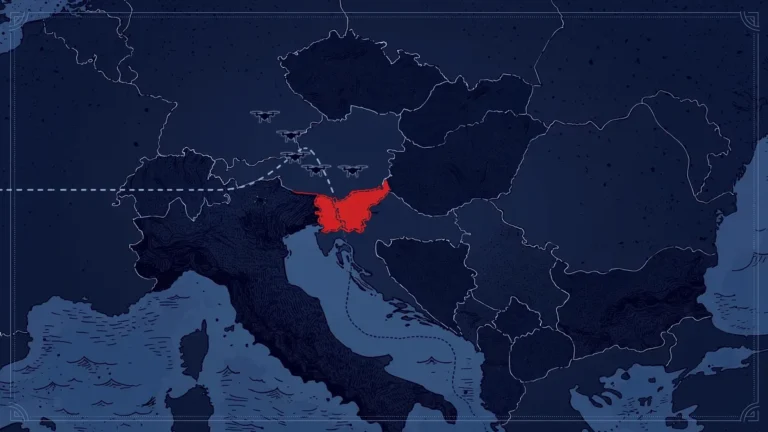
The OPEC November 2026 meeting calendar puts two consequential sessions within four weeks of each other. The seven-country OPEC+ group that sets monthly quotas meets on November 1 to fix December production levels, and the full alliance gathers on November 29 to shape its 2027 policy. With the Iran war still disrupting Gulf output, the real question is not only what ministers will decide — it is whether those decisions matter at all while tankers cannot sail freely through the Strait of Hormuz.
Key Takeaways
- Seven OPEC+ countries (Saudi Arabia, Russia, Iraq, Kuwait, Kazakhstan, Algeria, Oman) will meet on November 1 to review market conditions and set December quotas, after carrying October targets into November unchanged.
- The 69th Joint Ministerial Monitoring Committee (JMMC) meets on November 29, alongside a full OPEC+ ministerial session expected to set 2027 production policy.
- Quotas are currently largely symbolic: the seven members pumped only about 25 million barrels per day in August, roughly 5 million bpd below pre-war February levels, with Gulf exports fluctuating at 60–80% of normal.
- The war has delayed the group’s production-capacity audit, making real quota changes unlikely before 2027 — while crude pushes back toward $100 a barrel and the G7 releases emergency stocks.
What are the two November OPEC+ meetings?
The November schedule contains two distinct events, and confusing them is the easiest mistake to make. The November 1 meeting is a virtual session of the seven OPEC+ countries participating in additional voluntary production adjustments — Saudi Arabia, Russia, Iraq, Kuwait, Kazakhstan, Algeria and Oman. These are the countries that actually adjust output month to month, and they meet regularly to review market conditions and production policy. Their official statement after the October 4 session confirmed the next meeting is scheduled for November 1, with December production levels on the agenda.
The November 29 session is a bigger affair: the 69th meeting of the Joint Ministerial Monitoring Committee, held alongside a full OPEC+ ministerial meeting that, according to reporting by Bloomberg and Seeking Alpha, will establish the group’s production policy for 2027. One important caveat, flagged by Reuters: the JMMC itself “does not decide policy” — it monitors conformity with quotas and compensation commitments, and can recommend or call for a ministerial meeting, but the quotas are set by ministers.
What will the November 1 meeting decide?
The baseline expectation is a rollover: December quotas held steady at November’s levels, continuing the pause on production increases that OPEC+ has already signalled through the end of 2026. The group spent the six months through August gradually raising targets to unwind cuts agreed in 2023, but on October 4 the seven countries agreed to carry September 2026 required production into November unchanged — a combined 31.01 million barrels per day — and analysts widely expect December to follow the same script.
Why not raise output when prices are climbing? Because actual Gulf production is being set by shipping lanes, not by quotas. With exports fluctuating at 60–80% of normal levels and key producers pumping well below their formal targets, announcing a higher quota would change almost nothing on the water. The harder debate — whether to start restoring the roughly 2 million bpd layer of cuts still covering most members — depends on an audit of members’ real production capacity that the war has thrown into uncertainty, and sources told Reuters no real changes are likely before 2027.
By the numbers: quotas versus actual output
The table below separates what is CONFIRMED by at least two reputable sources from what is REPORTED by a single secondary source.
| Metric | Figure | Source |
|---|---|---|
| Seven-country required production, November 2026 | 31.01 million bpd | OPEC statement (CONFIRMED) |
| Seven-country actual output, August 2026 | ~25 million bpd (up 630,000 from July) | OPEC data via Reuters (CONFIRMED) |
| Gap versus pre-war February levels | ~5 million bpd lower | OPEC data via Reuters (CONFIRMED) |
| Gulf export flows, recent months | 60–80% of normal | Reuters (CONFIRMED) |
| Output cuts still in place (most members) | ~2 million bpd | Reuters (CONFIRMED) |
| Saudi Arabia November quota | 10.478 million bpd | VerilyNews (REPORTED) |
| Russia November quota | 9.949 million bpd | VerilyNews (REPORTED) |
| Iraq November quota | 4.431 million bpd | VerilyNews (REPORTED) |
| Kuwait November quota | 2.676 million bpd | VerilyNews (REPORTED) |
| Kazakhstan November quota | 1.628 million bpd | VerilyNews (REPORTED) |
| Algeria November quota | 1.007 million bpd | VerilyNews (REPORTED) |
| Oman November quota | 0.841 million bpd | VerilyNews (REPORTED) |
Caveat: CONFIRMED figures are supported by at least two reputable sources; REPORTED country-level quotas come from a single secondary outlet and should be treated with caution.
What could the November 29 meeting settle?
The November 29 ministerial is the genuinely consequential session. Its headline job is to settle production policy for 2027, and the key input is the group’s long-delayed review of members’ sustainable production capacities — the audit that determines the baselines against which every future quota is measured. OPEC stated in May that the capacity assessment would be used to establish 2027 baselines, but the Iran war has disrupted oil-sector expansion projects and thrown estimates of future production potential into uncertainty. Reuters sources say the review is now expected to be completed later this year.
Ministers are expected to review the latest market data and production figures before considering any changes to output arrangements. In practice, with Gulf producers still pumping far below their formal targets and the capacity audit incomplete, the most likely outcome is a framework for 2027 rather than immediate quota changes. The fight over how 2027 quotas are redistributed — which countries get higher baselines — is the real contest to watch, and it will be shaped by whatever the capacity audit eventually finds.
Why does the quota decision matter less than the war right now?
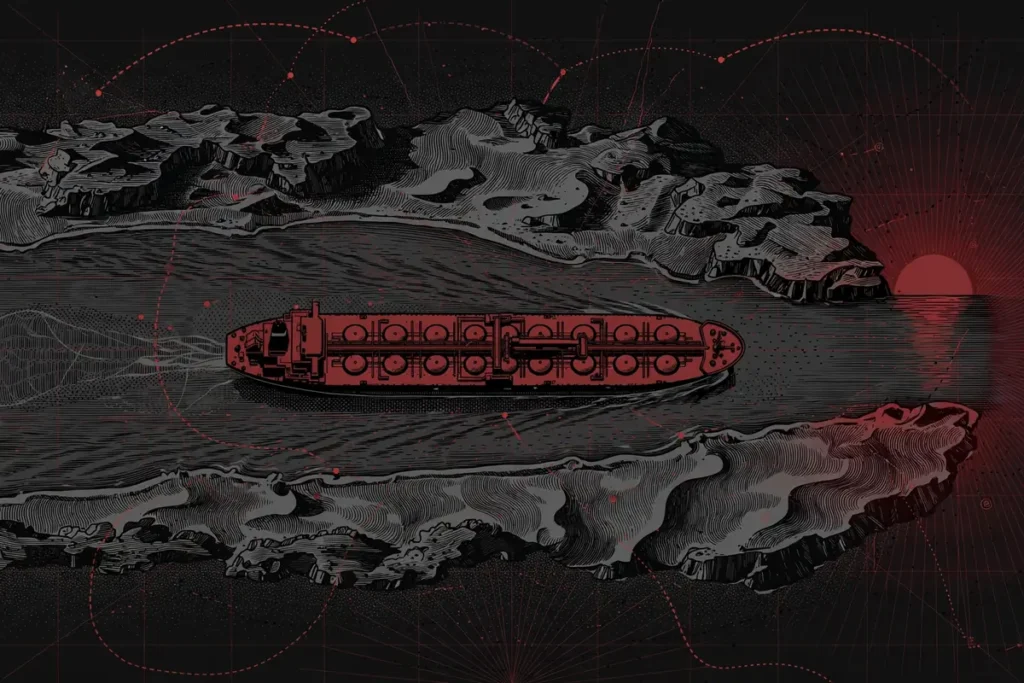
OPEC+ has been raising output targets for much of 2026 after years of production cuts, but as Reuters reported, most of those increases “stayed on paper” because of the Middle East conflict. The mechanism is straightforward: tanker attacks and shipping disruption in the Strait of Hormuz and around Bab el-Mandeb mean Gulf producers physically cannot export at their quota levels, whatever the number on the page says. August’s roughly 25 million bpd of actual output, against a formal framework several million barrels higher, tells the whole story.
This is also why the G7’s coordinated release of 100 million barrels of crude and petroleum products from emergency reserves matters more for near-term prices than anything OPEC+ announces on November 1. Emergency stocks put real barrels into the market; quota announcements, right now, mostly do not. For energy markets, the November 1 decision is a signal about the alliance’s intentions — the barrels are being decided by the war.
What this means for US/UK/EU readers
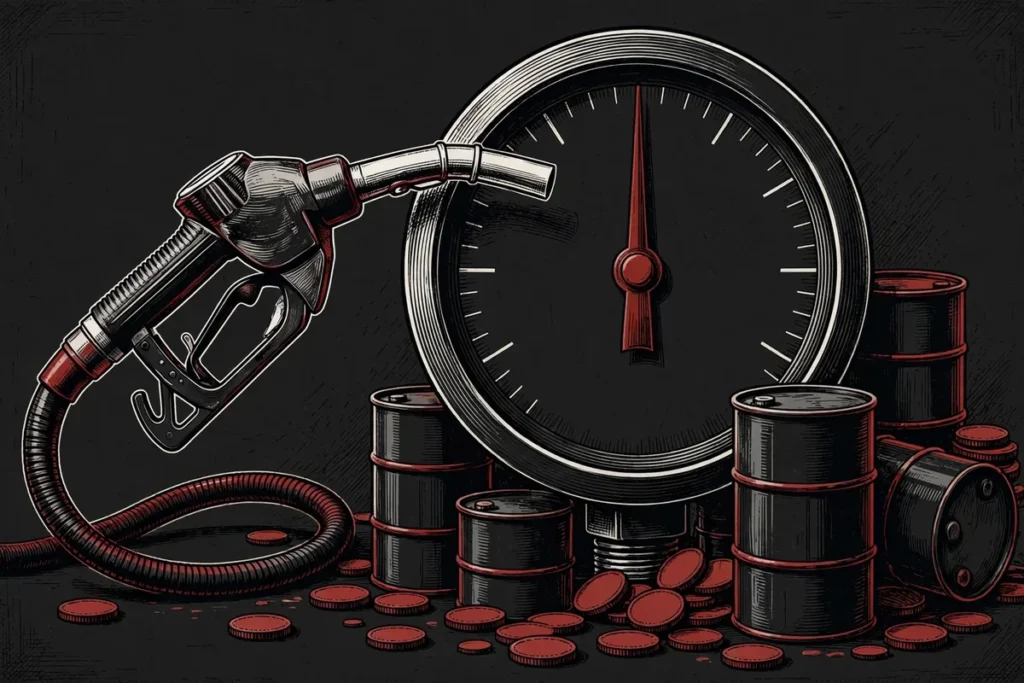
Crude prices have crept back toward $100 a barrel and diesel has hit records at the pump, according to Bloomberg reporting — and that feeds directly into what households pay. Higher crude means higher petrol and diesel prices, higher heating costs heading into winter, and higher freight costs that eventually show up in the price of imported goods. The G7’s 100-million-barrel emergency release is explicitly designed to cap those costs, but emergency stocks are finite: the seven countries’ decision in November will shape expectations for how tight the market stays into 2027.
Travel is indirectly affected: jet fuel tracks crude, and sustained $100 oil puts upward pressure on airfares, while shipping disruption through Hormuz and the Red Sea raises marine insurance and freight rates on goods moving between Asia and Europe. For investors, the key takeaway from analysts is that geopolitical disruption, not official quotas, is the dominant force on near-term supply. This is educational context, not financial advice: energy markets are volatile and this article does not recommend buying or selling any security or commodity.
What could still change the outcome?
Three variables could rewrite the November script. First, a de-escalation: if the Iran war eases, Gulf production could snap back toward quotas quickly, turning the quota debate from theatre into reality and putting downward pressure on prices — which is precisely why OPEC+ keeps the option of restoring withheld barrels on the table. Second, escalation: fresh strikes on energy infrastructure or a further squeeze on Hormuz shipping would spike prices regardless of anything decided on November 1 or 29. Third, the capacity audit: whatever it concludes about each member’s real sustainable output will drive the 2027 quota fight, and a surprising result — a major producer’s capacity downgraded, for example — could make the November 29 ministerial far more contentious than the rollover consensus currently suggests. Track all three in our Conflict Zones hub.
Frequently asked questions
When is the next OPEC+ meeting?
The seven OPEC+ countries that set monthly quotas meet next on November 1, 2026, to review market conditions and December production policy. The 69th Joint Ministerial Monitoring Committee and a full OPEC+ ministerial session follow on November 29, 2026.
What will OPEC+ decide at the November 1, 2026 meeting?
The widely expected outcome is a rollover: December quotas held at November’s levels, continuing the pause on production increases through the end of 2026. Real quota increases depend on the delayed production-capacity audit, and sources told Reuters no significant changes are likely before 2027.
What is the JMMC?
The Joint Ministerial Monitoring Committee is an OPEC+ body that reviews market conditions and monitors members’ conformity with agreed production levels and compensation commitments. It does not set policy itself, but it can recommend or call for a full OPEC and non-OPEC ministerial meeting.
How do OPEC+ quota decisions affect oil and fuel prices?
Quotas influence expectations of future supply, which moves futures prices, and eventually physical supply, which moves pump prices. Right now, though, war-related shipping disruption is a bigger driver than quotas: Gulf producers are pumping well below their formal targets, so the quota number matters less than whether tankers can sail.
What are OPEC+ “voluntary production adjustments”?
They are additional output cuts (or increases) announced by a subset of OPEC+ members — currently Saudi Arabia, Russia, Iraq, Kuwait, Kazakhstan, Algeria and Oman — on top of the group-wide agreements. The seven meet monthly to manage these adjustments, which is why the November 1 session matters for December supply.
Sources
- Reuters: OPEC+ agrees in principle to keep November oil output targets steady, sources say
- BusinessMirror (Bloomberg News): OPEC+ set to keep quotas steady in November
- AzerNews: OPEC+ keeps output quotas unchanged (official OPEC statement)
- Brussels Morning: OPEC+ warning — 69th JMMC scheduled for November 29, 2026
- Khaleej Mag: OPEC+ monitoring committee keeps November targets unchanged