WarBrief Live | October 2, 2026 | Global Conflicts
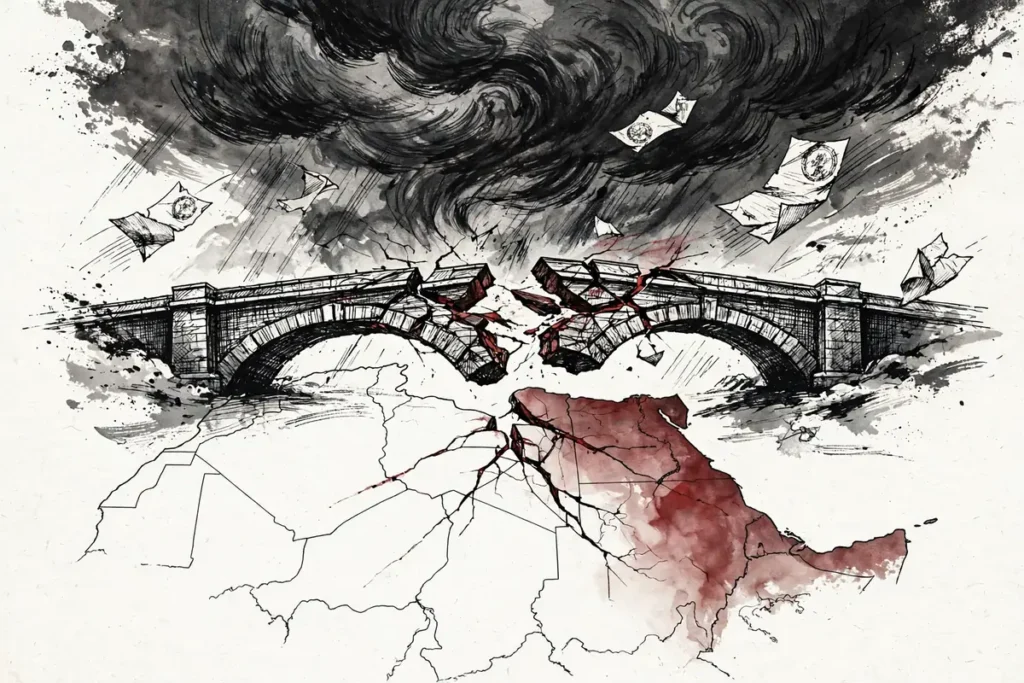
Ethiopia and Eritrea have severed diplomatic relations within a single day, closing a chapter that began with the 2018 peace deal and collapsing into the biggest escalation of fighting in Ethiopia since the end of the 2020–2022 Tigray war. On October 1, Addis Ababa closed its embassy in Asmara and expelled 10 Eritrean diplomats; hours later, Asmara announced it was cutting all ties in return. The rupture lands as overnight explosions in the Ethiopian capital and widening clashes in Tigray and Afar raise fears of a return to full-scale regional war.
Key Takeaways
- Ethiopia ordered its Asmara embassy closed and declared 10 Eritrean diplomats persona non grata on October 1; Eritrea responded by severing all diplomatic ties.
- Addis Ababa accuses Eritrea, Sudan and Egypt of backing a TPLF-led opposition alliance; all three deny it. Egypt’s expulsion of one Ethiopian diplomat triggered a reciprocal tit-for-tat.
- Overnight explosions were heard in Addis Ababa; three diplomatic sources confirmed the blasts, while an opposition-linked source claimed responsibility — a claim that remains unverified.
- The African Union urged restraint, warning that the crisis could undermine regional peace, as Reuters analysis warns the entangled alliances could spread the conflict far beyond Ethiopia’s borders.
In this briefing: What happened on October 1 | Background and timeline | Why it matters | Different perspectives | What to watch next | Frequently asked questions | Sources
How Ethiopia and Eritrea severed diplomatic ties
The diplomatic rupture unfolded in two blows. On the morning of October 1, Ethiopia’s foreign ministry announced it had “decided to close its embassy in Asmara, Eritrea, in response to Eritrea’s direct and indirect acts of hostility and belligerence against Ethiopia.” In a post on its X account, the ministry said 10 Eritrean diplomats, whom it did not name, were required to leave Ethiopia within 48 hours. The embassy being closed had only been reopened in 2018, as part of the rapprochement between Prime Minister Abiy Ahmed and Eritrean President Isaias Afwerki that won Abiy the Nobel Peace Prize.
“Eritrea has no option but to reciprocate in kind and sever all diplomatic ties with Ethiopia with all the negative corollaries that this entails.” — Eritrea’s Ministry of Foreign Affairs, statement on X, October 1, 2026
Eritrea’s information minister, Yemane Gebremeskel, told Reuters that by expelling all Eritrean diplomats from Ethiopia, the government was effectively closing its own embassy in Addis Ababa. The exchange did not stop there. Ethiopia’s government also declared an Egyptian diplomat persona non grata, ordering him out within 48 hours, the state-run Ethiopian Broadcasting Corporation and two sources with knowledge of the matter reported. Egypt’s state-affiliated Al Qahera News, citing a senior Egyptian source, said Cairo responded in kind by declaring an Ethiopian embassy counsellor in Egypt persona non grata and giving him 48 hours to leave. Egyptian foreign ministry spokesperson Nader Zaki said Cairo’s action was justified: “Reciprocity is the currency of diplomacy.”
The same night, explosions were heard across Ethiopia’s capital, Addis Ababa. Three diplomatic sources, speaking on condition of anonymity, confirmed the blasts to Reuters; witnesses said there was no damage visible near the military base. A source linked to the opposition alliance said it had carried out several drone strikes in Addis Ababa, including some targeting the military’s headquarters. If confirmed, it would be the first known drone attack by anti-government forces on Addis Ababa, which lies hundreds of kilometres from the front lines in the northern regions of Tigray, Amhara and Afar. Reuters could not independently confirm the claim, and spokespeople for Abiy’s office, the federal government, the Ethiopian National Defence Force (ENDF) and the TPLF did not respond to requests for comment. The national intelligence service has since banned drones over the capital.
Background and timeline
The 2018 peace between Abiy and Isaias ended a two-decade frozen conflict that followed the 1998–2000 border war, but the friendship collapsed quickly. Eritrea fought alongside the Ethiopian federal government against the Tigray People’s Liberation Front (TPLF) during the 2020–2022 civil war, a conflict that killed hundreds of thousands of people. Eritrea, however, was not a party to the peace deal that ended the fighting in November 2022, and relations between the two nations soured from that point.
- 2018: Ethiopia reopens its embassy in Asmara as Abiy and Isaias sign a historic peace agreement; Abiy later receives the Nobel Peace Prize.
- 2020–2022: Civil war pits the TPLF against Ethiopia’s federal government; Eritrean forces fight on the government’s side.
- November 2022: A peace deal ends the fighting without Eritrea at the table. Asmara treats the exclusion as a betrayal; Addis Ababa begins distancing itself from its wartime ally.
- 2023–2026: The two governments trade words over landlocked Ethiopia’s insistence that sea access is vital for its security and economy. Asmara says it fears Addis Ababa will try to take its Assab port by force.
- Late September 2026: Clashes resume between Ethiopian federal forces and a rebel alliance headed by Tigrayan forces — the biggest escalation since the war ended.
- October 1, 2026: Ethiopia closes its Asmara embassy and expels 10 Eritrean diplomats; Eritrea severs all diplomatic ties; Egypt trades diplomatic expulsions with Ethiopia; explosions are heard in Addis Ababa.
Read next: Conflict Zones — our rolling map of the world’s active conflicts, including the Horn of Africa.
Why it matters
This is not a border skirmish — it is the collapse of the diplomatic architecture that was supposed to keep the Horn of Africa from sliding back into war. The 2020–2022 Tigray conflict was one of the deadliest wars of the decade, and Reuters’ October 2 analysis warns that the region this time is “much more unstable,” with tangled alliances stretching from Chad in north-central Africa to the heart of the Middle East, each intervention across one border risking to adjust calculations across others.
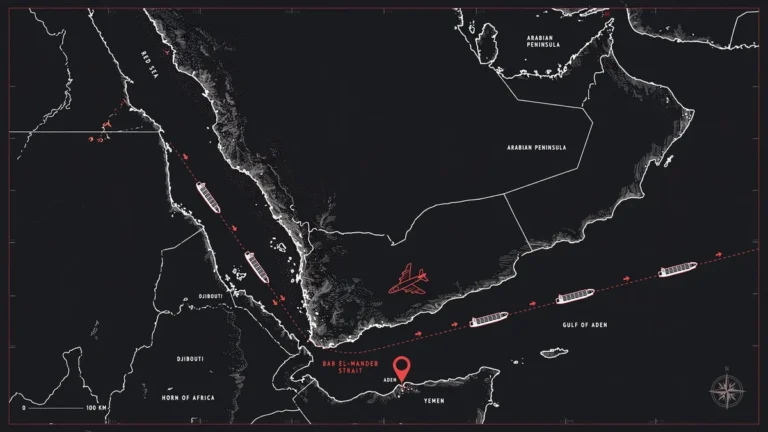
For the United States, United Kingdom and European Union, the stakes extend well beyond the Horn. Just across the Red Sea from Eritrea, Yemen’s Houthis have already complicated trade routes through the waterway — the same artery through which roughly a tenth of global trade flows and through which Europe’s energy supplies pass. Saudi officials say Emirati activities in Yemen and the Horn threaten their national security, while the UAE has become an influential player in the Horn through multi-billion-dollar investments, robust diplomacy and discreet military support, striking deals with Somalia’s breakaway region of Somaliland and semi-autonomous Puntland — both of which could help give its landlocked ally Ethiopia access to the Red Sea. Israel, also an ally of Ethiopia, is the only country to have recognised Somaliland as independent and is training local forces there. A widening Ethiopia-Eritrea confrontation could disrupt Red Sea shipping, deepen a Gulf rivalry already escalated in Yemen, and drive a new wave of displacement in a region where humanitarian systems are already stretched.
Different perspectives
Addis Ababa’s case is that Eritrea is no longer a wartime ally but a sponsor of armed opposition. Ethiopia accuses Eritrea, Sudan and Egypt of supporting the TPLF-led opposition alliance that has battled federal troops since late September. The chief administrator of the northern Afar region, Haji Awol Arba, told Al Jazeera that Eritrean soldiers had crossed into Afar to join the opposition alliance’s offensive — a claim Eritrea’s information minister did not immediately respond to. Pro-government forces have made fresh gains in Tigray and Afar, a pro-government militia said on October 1, and the federal government is advancing in southern Tigray, edging closer to the regional capital Mekelle.
Asmara, Khartoum and Cairo all deny the accusations. Eritrea frames the rupture as reciprocation forced on it by Ethiopia’s “acts of hostility and belligerence.” Sudan and Egypt deny supporting Eritrean operations inside Ethiopia, even as Ethiopia’s military chief has accused them directly. Both are also at odds with Ethiopia over its giant hydroelectric dam, which they say could threaten their access to water.
Independent observers are cautious about who is backing whom, but worried about the trajectory. Diplomats and analysts told Reuters that Eritrean President Isaias Afwerki is, for now, providing rebels with access to the coast and the rest of the world through his country — a critical lifeline, since Tigrayan forces were cut off on all sides during the last war. Edward Bach, senior Africa analyst at risk intelligence company Verisk Maplecroft, said that if the opposition can strike Addis Ababa, it would be “a political game-changer,” undermining any government narrative that the capital is unaffected by the war and narrowing a key tactical advantage for federal forces — their aerial superiority. The African Union Commission, in a statement late on October 1, urged the three countries “to address their differences through established diplomatic channels and peaceful dialogue” and exercise maximum restraint.
Read next: Country Profiles — intelligence briefs on the states and regions shaping global security.

What to watch next
Several flashpoints will determine whether the rupture hardens into a wider war. First, the 48-hour expulsion deadlines will fall this weekend — any refusal or retaliation beyond Cairo’s reciprocal move could deepen the standoff. Second, the status of Eritrean soldiers reportedly inside Afar: if Asmara acknowledges or expands a military presence, the conflict becomes interstate. Third, the drone question: the national intelligence ban over Addis Ababa and the pro-government Tigray Peace Forces’ claim to have captured drone frames and batteries from TPLF-linked forces suggest the opposition may possess an aerial capability it never previously demonstrated — analysts say confirmed strikes on the capital would rewrite the war’s political geography.
Beyond the immediate crisis, watch the Gulf dimension. Reuters reports that Saudi Arabia is broadly aligned with Sudan’s military, Egypt and Eritrea — all rivals of Ethiopia — while the UAE, a major backer of the Ethiopian government, has supported Sudan’s Rapid Support Forces, according to United Nations experts (the UAE denies the accusation). Ethiopia has also been accused of backing the RSF, including hosting a secret training camp in the west of the country, which Addis Ababa denies. With the Saudi-Emirati feud already spilling from Yemen into the Horn, every border crossed in the Horn adjusts the calculations in the Gulf. Our Intel Desk will track the situation as it develops.
Frequently asked questions
Why did Ethiopia and Eritrea sever diplomatic ties?
Ethiopia closed its embassy in Asmara and expelled 10 Eritrean diplomats on October 1, 2026, accusing Eritrea of “direct and indirect acts of hostility and belligerence,” including backing the TPLF-led rebel alliance. Eritrea said it had “no option but to reciprocate in kind and sever all diplomatic ties.” The rupture follows years of deteriorating relations since Eritrea was excluded from the November 2022 peace deal and a dispute over landlocked Ethiopia’s demand for sea access.
What is happening in Tigray right now?
Clashes that resumed in late September 2026 between Ethiopian federal forces and a rebel alliance headed by Tigrayan forces mark the biggest escalation of fighting since the 2020–2022 civil war ended. Federal forces have advanced in southern Tigray toward the regional capital Mekelle, while the opposition alliance captured towns in neighbouring Afar, forcing tens of thousands to flee, according to the Afar Pastoralist Development Association. Explosions were also heard in Addis Ababa on October 1.
Could the Ethiopia-Eritrea crisis become a regional war?
Analysts warn the risk is real. Reuters’ analysis notes that unlike the last war, Ethiopia and Eritrea now stand on opposing sides, while the conflict is entangled with Sudan’s civil war, the Saudi-UAE rivalry, and disputes over the Grand Ethiopian Renaissance Dam. The African Union has urged maximum restraint, warning the crisis could undermine regional peace and stability.
What was the 2018 peace deal between Ethiopia and Eritrea?
In 2018, Ethiopian Prime Minister Abiy Ahmed and Eritrean President Isaias Afwerki signed a peace agreement ending two decades of frozen conflict following the 1998–2000 border war. Ethiopia reopened its embassy in Asmara, and Abiy won the Nobel Peace Prize for the rapprochement. Eritrea fought alongside Ethiopia during the 2020–2022 Tigray war, but the 2022 peace deal was struck without Asmara, and relations have deteriorated ever since.
Is it safe to travel to Ethiopia, and could this affect Red Sea shipping?
The security situation is deteriorating rapidly in northern Ethiopia and explosions have been heard in the capital, so travellers should monitor official government travel advisories. As for shipping, Eritrea sits just across the Red Sea from Yemen, and analysts warn that a wider Horn of Africa conflict could further threaten trade routes already stressed by the Houthi campaign — with knock-on effects for European energy supplies and shipping costs.
Sources
- Reuters: Why renewed fighting in Ethiopia’s Tigray risks a regional war
- Business Day: Eritrea cuts ties with Ethiopia over Asmara embassy closure
- Reuters: Eritrea says it is severing all diplomatic ties with Ethiopia
- Reuters: African Union urges Ethiopia, Eritrea and Egypt to refrain from actions that could undermine stability
- Al Jazeera (via Scoop): Eritrea severs diplomatic ties with Ethiopia in tit-for-tat move