WarBrief Live | October 1, 2026 | Event Preview
On October 15 and 16, 2026, the 27 heads of state and government of the European Union will meet in Brussels for the European Council summit — with Ukraine, frozen Russian assets and European defence readiness at the very top of the agenda. The European Council summit of October 2026 lands at a moment of unusual financial pressure: Kyiv says the money Europe promised is running out, Brussels has barely half-disbursed this year’s tranche, and leaders must decide whether to finally touch the roughly €210 billion in immobilised Russian central-bank assets sitting in Europe. Below, WarBrief previews what is confirmed on the agenda, what leaders are likely to fight about, and what to watch when the summit opens in two weeks.
Key Takeaways
- The European Council meets in Brussels on October 15–16, 2026, chaired by President António Costa. Confirmed agenda items: Ukraine, the Middle East, the EU’s next long-term budget (MFF 2028–2034), enlargement, migration, competitiveness and European security and defence.
- Kyiv says it faces a roughly $78 billion funding hole in 2027 and wants Europe to revisit the frozen Russian assets; Sweden, the Netherlands, Spain and Poland, backed by the Baltic states, support the idea, while Belgium, Italy and France resist.
- Only €14.9 billion of the €45 billion earmarked for Ukraine in 2026 has been disbursed, according to draft summit conclusions — a figure leaders will press Kyiv to improve.
- Defence decisions are advancing in parallel: five joint European Defence Projects of Common Interest (drones, air and missile defence, eastern-flank watch, maritime and space) were approved on September 28, 2026, with Ukraine participating in four of the five.
- Enlargement returns with a “strategic discussion”: pre-enlargement reform reviews land on October 6 and a full Enlargement Package with accession roadmaps for Ukraine, Moldova, Albania and Montenegro is expected on October 28.
On the agenda
The meeting will be chaired by European Council President António Costa during Ireland’s presidency of the Council of the EU, which began on July 1. According to an official Irish government readout of Costa’s September 17 meeting with Taoiseach Micheál Martin in Dublin, the October 15–16 agenda covers Ukraine, the Middle East, the EU’s next Multiannual Financial Framework (the MFF, the seven-year budget for 2028–2034), EU enlargement, migration, competitiveness and European security and defence.
That list is not accidental. The June 2026 European Council conclusions explicitly committed leaders to return to defence issues in October 2026 on the basis of the European Defence Agency’s annual defence readiness report, and tasked the Irish presidency with advancing the MFF work so that it can be discussed “by the European Council meeting on 15 October 2026.” The European Parliament’s plenary session of October 5–8 will also outline priorities ahead of the summit and vote on the €115 million AGILE defence-innovation programme — a first legislative signal of where the wind is blowing. For rolling coverage of the conflicts shaping this summit’s agenda, see WarBrief’s Conflict Zones hub.

Background and timeline
The October summit is the culmination of a year of hard bargaining over how Europe pays for Ukraine — and for its own rearmament. The key milestones:
- October 2025: The European Commission presents the Defence Readiness Roadmap 2030, built around flagship projects including the European Drone Defence Initiative, Eastern Flank Watch and the European Air Shield.
- December 2025: After the “reparations loan” idea — using roughly €210 billion in immobilised Russian central-bank assets, most of them held at Euroclear in Brussels — is blocked, chiefly by Belgium, the European Council approves a €90 billion support loan for Ukraine for 2026–27 (€45 billion per year), funded by joint EU borrowing. Costa’s verdict at the time: “Decision to provide 90 billion euros of support to Ukraine for 2026-27 approved. We committed, we delivered.”
- June 2026: European Council conclusions set the October 2026 return date for defence and lock in the MFF timeline.
- September 16, 2026: Commission President Ursula von der Leyen announces in her State of the Union address that accession roadmaps are coming for the enlargement frontrunners.
- September 28, 2026: The Council approves the first five European Defence Projects of Common Interest (EDPCIs): DECODER (drones and counter-drones), IMSD (maritime and seabed security), SPACE, EU-FIAMD (air and missile defence) and Eastern Flank Watch — backed by €325 million of the €1.5 billion European Defence Industry Programme (EDIP) budget, with an average of 18 member states per project and Ukraine participating in four of the five.
- October 1, 2026: The Council mobilises €6.6 billion under the European Peace Facility for military support to Ukraine (€4.7 billion in reimbursements, €1 billion in joint procurement and €900 million for the EU Military Assistance Mission) after Hungary’s long block was lifted.
- October 6, 2026 (upcoming): The Commission is due to adopt its long-delayed pre-enlargement policy reviews.
- October 15–16, 2026 (upcoming): The European Council summit in Brussels.
- October 28, 2026 (upcoming): The 2026 Enlargement Package is expected, including targeted accession roadmaps for Albania, Moldova, Montenegro and Ukraine.
Read next: Ukraine wants frozen Russian assets for its $78B 2027 gap — the full story behind Kyiv’s funding push.
Why it matters
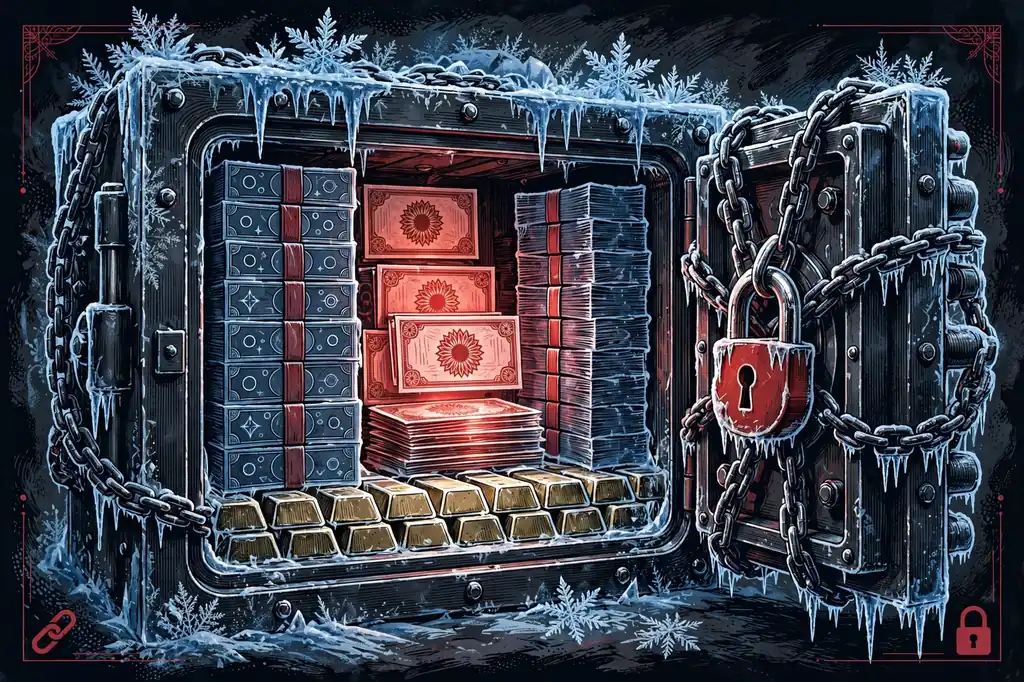
The single most explosive item on the table is money. Ukrainian Finance Minister Serhii Marchenko told European partners that the €90 billion agreed in December 2025 is not enough: 2027 leaves a roughly $78 billion hole, and he has asked partners to cover around $27 billion (about €23 billion) in the near term. His message to a think-tank audience this week was blunt: “We’re very happy with the €90 billion, but it’s not sufficient.” Kyiv has revived the call to tap the frozen Russian assets — a move that would affect euro-denominated bond markets, the credibility of the euro as a reserve currency and energy prices across the continent, since the Middle East is on the same summit agenda.
Brussels, meanwhile, has a disbursement problem. Draft conclusions for the October summit — reported by UNN — state that only €14.9 billion of the €45 billion earmarked for Ukraine in 2026 has actually been disbursed, partly because Ukraine’s parliament has not yet adopted the anti-corruption and tax reforms Brussels demands. The draft language calls on “all participants, including Ukraine, to intensify efforts” to unlock the money. Expect leaders to use the summit to pressure Kyiv on reforms while Kyiv presses them on the assets.
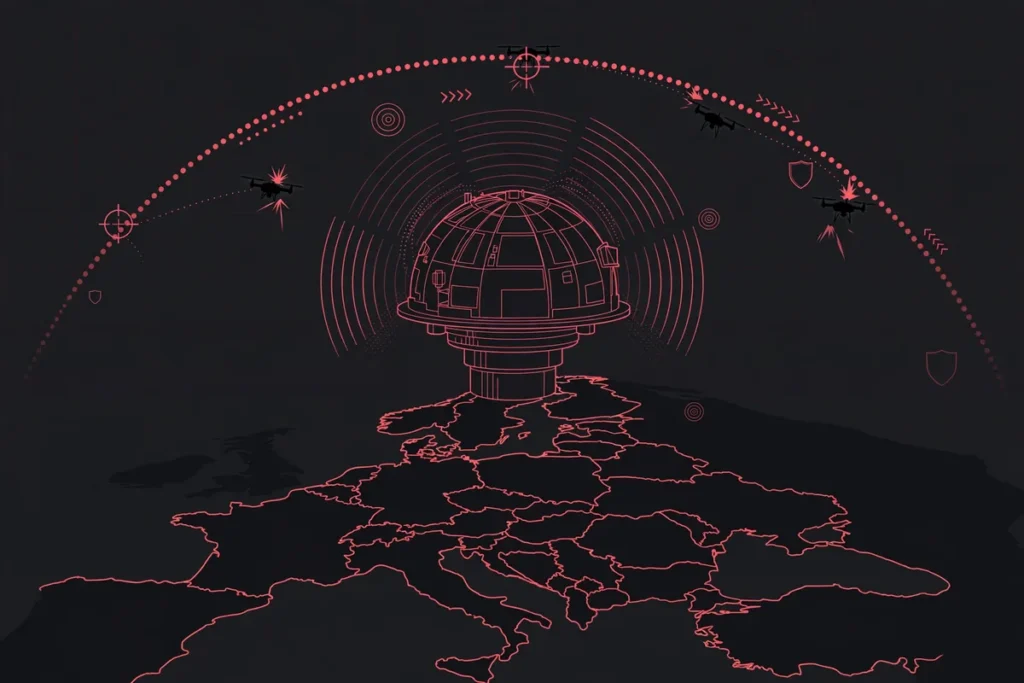
On defence, the October summit is less about launching projects than about political momentum. The five EDPCIs approved in September commit real procurement money — €325 million — to drones, counter-drones, air and missile defence and eastern-flank surveillance, with Ukraine embedded in four of the five projects. The “drone wall” concept that von der Leyen proposed in autumn 2025 now has a vehicle in DECODER, though no formal summit decision on it has been announced as of October 1, 2026. For readers in Europe, these projects translate into industrial policy and jobs: European defence procurement on this scale reshapes factory orders, supply chains and skilled-labour demand across the continent.
Different perspectives
The frozen-assets debate splits the Union along familiar lines. Sweden, the Netherlands, Spain and Poland — backed by the Baltic states — have revived calls to seize or repurpose the immobilised Russian assets, arguing that Russia, not European taxpayers, should pay for the war it started. Belgium, where most of the assets sit at Euroclear, has “immediately pushed back,” citing legal exposure and the risk to the euro’s standing; Italy and France remain sceptical; and the Commission’s stated “primary focus” is disbursing the agreed €90 billion rather than reopening the fight. A September 4 Reuters report noted “growing appetite” for the debate, but Belgium’s position has not moved. Moscow’s rhetoric has hardened in parallel — read our analysis of Russia’s warning that European arms factories supplying Ukraine are potential military targets.
Enlargement divides leaders too. The Commission’s October 6 reviews are expected to argue that targeted adaptations — including expanding qualified-majority voting through passerelle clauses and giving candidates staged access to the single market — can be done “largely within the existing Treaty framework.” European Commissioner Marta Kos has branded this the “autumn of enlargement.” But a leaked Commission document on Moldova’s gradual integration, a German–French non-paper and talk of “associate membership” or restricted voting rights for future members have drawn opposition from several states, which insist new members must not become second-class. Serbia, Bosnia-Herzegovina, North Macedonia and Kosovo are reportedly in a “wait and watch” lane, while Montenegro hopes to close its accession chapters by the end of 2026. German Foreign Minister Johann Wadephul’s attendance at the Berlin Process foreign-ministers meeting in Podgorica this week underlines how actively Berlin is courting the Western Balkans.
What to watch next
With two weeks to go, several signals will tell you how the summit will play out:
- Costa’s invitation letter: The European Council president’s annotated agenda, usually published about a week before the summit, has not yet appeared as of October 1, 2026. It will confirm which items get real negotiating time.
- The October 6 pre-enlargement reviews: These delayed Commission papers set the terms for the October 15–16 “strategic discussion on enlargement and internal reforms” — and for the October 28 Enlargement Package.
- Disbursement language: Whether the final conclusions harden the draft’s pressure on Ukraine over the €14.9 billion figure — or soften it — will show how transactional the funding relationship has become.
- The drone wall: Watch whether leaders go beyond the September 28 EDPCI approvals and announce a formal decision or timeline for the drone-defence initiative. Anything less than that is expectation, not outcome.
- Any assets move: The most market-sensitive outcome would be even a partial shift on the frozen assets — a working group, a legal mandate, or new language short of seizure. European bond traders and euro markets will read the conclusions line by line.
Read next: EU’s Emergency Security Protocol: answering hybrid attacks — how Brussels plans to respond to Russian sabotage below the threshold of war.
Related coverage
- Ukraine Wants Frozen Russian Assets for Its $78B 2027 Gap
- EU’s Emergency Security Protocol: Answering Hybrid Attacks
- Russia Declares European Arms Factories “Potential Targets”
- Conflict Zones — WarBrief’s hub for active conflicts
- Intelligence Reports — WarBrief’s OSINT and analysis hub
- Sanctions — WarBrief’s sanctions hub
Frequently asked questions
When is the next European Council summit in 2026?
The 27 EU heads of state and government meet in Brussels on October 15–16, 2026, chaired by European Council President António Costa during Ireland’s presidency of the Council of the EU.
Why doesn’t the EU just use Russia’s frozen €210 billion to fund Ukraine?
That is the central blocked debate of the summit. Belgium, where most of the immobilised Russian central-bank assets sit at Euroclear, opposes seizure over legal exposure and risks to confidence in the euro; Italy and France are sceptical; and the Commission’s stated focus is disbursing the agreed €90 billion loan. Sweden, the Netherlands, Spain and Poland, backed by the Baltic states, want the debate reopened.
What is the European drone wall?
It is a proposed layered drone-defence initiative for Europe’s eastern flank, put forward by Commission President Ursula von der Leyen in autumn 2025. The September 28, 2026 approval of the DECODER project — covering drones and counter-drones — gives it a concrete vehicle, but leaders have not yet announced a formal summit decision on it as of October 1, 2026.
Which countries could join the EU next?
The 2026 Enlargement Package, expected October 28, is to include targeted accession roadmaps for the four frontrunners: Albania, Moldova, Montenegro and Ukraine. Montenegro hopes to close its accession chapters by the end of 2026; Serbia, Bosnia-Herzegovina, North Macedonia and Kosovo are on a slower track.
Is Ukraine getting the money the EU already promised?
Slowly. Draft conclusions for the October summit report that only €14.9 billion of the €45 billion earmarked for Ukraine in 2026 has been disbursed, partly because Ukraine’s parliament has not yet adopted the anti-corruption and tax reforms Brussels requires. The draft calls on all parties to intensify efforts to unlock the funds.
Sources
- Government of Ireland: Taoiseach to meet European Council President António Costa in Dublin (Oct 15–16 agenda)
- European Council (Consilium): first five European Defence Projects of Common Interest approved, September 28, 2026
- Reuters: Ukraine sees growing appetite for talks on Russian frozen assets, September 4, 2026
- CNN: EU reaches deal to provide Ukraine with €90 billion for 2026–2027, December 2025
- New Union Post: Accession roadmaps in the 2026 Enlargement Package, September 29, 2026
- New Union Post: Pre-enlargement reforms due October 6, September 28, 2026