
WarBrief Live | November 10, 2026 | Cybersecurity
| Nov 9, 2026 | ~14,000 | 1M+ | 9 a.m. CST, Nov 10 |
|---|---|---|---|
| Incident confirmed by Vanderbilt | Students on the Nashville campus | SSNs the gang CLAIMS to hold — unconfirmed | Next university update due |
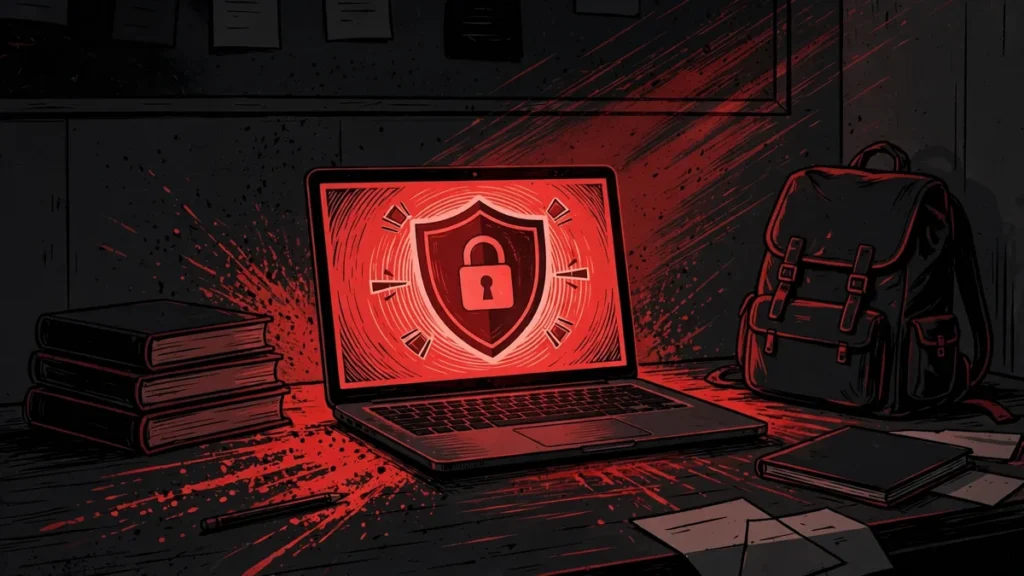
Vanderbilt University confirmed an active cybersecurity incident on November 9, 2026, and told its whole campus to shut down devices and leave campus Wi-Fi. A ransomware group calling itself BYOD claims it stole more than a million Social Security numbers — a claim Vanderbilt has not confirmed. This Vanderbilt BYOD ransomware explainer separates what the university has verified from what the gang says, and what happens next.
The contrast between the two accounts is the story. Vanderbilt’s public statements are short, careful and limited to what its IT team knows. The gang’s leak-site post is loud, specific and unverified. Until the university’s investigation produces findings, the million-SSN figure is a claim, not a fact — and the distinction matters for every student, member of staff and researcher whose records sit on the university’s systems.
Key Takeaways
- Vanderbilt confirmed an active cybersecurity incident on November 9 and told the campus to power down devices and disconnect from Wi-Fi. Campus Wi-Fi was back by 7:15 p.m., but most university systems remain restricted.
- The BYOD gang claims it encrypted Vanderbilt’s databases and stole over a million Social Security numbers plus names, emails and research data. None of that has been confirmed by the university.
- Classes are running on a normal schedule on November 10, and Vanderbilt University Medical Center is a separate entity, with patient care continuing.
- BYOD is a new gang that launched in 2026 and lists five other organisations on its leak site. It also claimed the Texas Health and Human Services Commission on the same day.
What happened at Vanderbilt University?
On the morning of Monday, November 9, 2026, Vanderbilt University told its community it was responding to an active cybersecurity incident. The university’s statement, published at 11:19 a.m. and shared on X, said the incident “may impact university devices, systems, and cloud-based services” and that its Information Technology team was “actively investigating and working to contain the situation.”
“We are currently responding to an active cybersecurity incident that may impact university devices, systems, and cloud-based services. Our Information Technology team is actively investigating and working to contain the situation.” — Vanderbilt University, November 9, 2026
The instructions that followed were unusually direct. The university asked everyone on campus to shut down university devices, disconnect from campus Wi-Fi and “remain extremely vigilant”. Its guidance listed what to watch for: unexpected pop-ups or security notifications, unusual changes to files or permissions in cloud storage, missing or modified files, unfamiliar applications, and unexpected requests for passwords or login approvals. Anyone seeing suspicious activity was told not to click links, pop-ups, attachments or unfamiliar prompts, and to contact the IT Service Desk from a separate device or by telephone.
The campus-wide AlertVU warning went out at 11:45 a.m. The student newspaper, The Vanderbilt Hustler, reported that university IT staff entered classrooms across campus to warn lecturers not to use school-issued devices. By about 3:30 p.m., university spokesperson Julia Jordan said classes were proceeding as planned and there were no further updates, The Tennessean reported.
By 7:15 p.m. on November 9, Vanderbilt said campus Wi-Fi was available again, but access to most university systems and applications remained restricted. The university said its IT team was working with government agencies and other partners to manage the situation, and that it would provide its next update by 9 a.m. CST on Tuesday, November 10, including the status of systems and applications. Classes, student services and staff attendance are running on a normal schedule on November 10. The university also told researchers with grant submissions due this week to contact Vice Provost for Research and Innovation Susan Marguiles, whose team is providing support to keep submissions on time. Core student systems Brightspace and YES were reported safe to use, according to the university’s IT updates, and course registration closes on November 13 — a deadline now hanging over a campus whose systems are still restricted.
What is the BYOD ransomware group?
BYOD is a new ransomware gang that launched in 2026. On November 9, the same day Vanderbilt confirmed its incident, the group added a listing titled “Vanderbilt EDU” to its data leak site and claimed responsibility for the attack. According to BleepingComputer, the group alleges it encrypted Vanderbilt’s databases and stole sensitive student, employee and research data — including, in the gang’s own words, “Over 1 Million SSNs, Full Names, Email addresses, Phone Numbers, Student & Employee Records, Full takeover of your DC, whatever was on your network, we possess.”
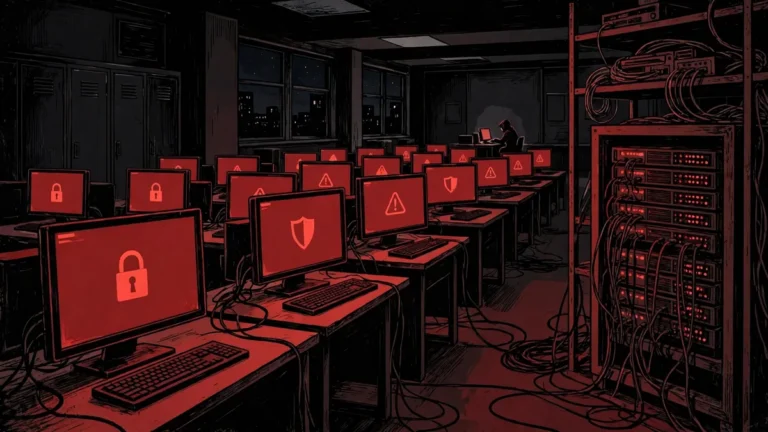
BleepingComputer reported receiving a photograph of a computer screen showing Vanderbilt-associated icons and a ransom note named “README_BYOD_31.txt”. The note opens “Oh no, you have been compromised by BYOD”, claims the attackers hold all of the university’s data including backups, says every Social Security number is archived alongside names, email addresses, phone numbers, work addresses, roles and birthdays, and threatens to release the data unless the university negotiates through the SESSION messaging platform. BleepingComputer confirmed that the link in the note leads to the site operated by BYOD. A video circulating online also shows infected devices playing an audio warning saying the network was compromised by BYOD, The Register reported, with campus computers reportedly playing the threat aloud.
The gang’s leak site currently lists five other organisations besides Vanderbilt. BYOD also claimed responsibility on November 9 for an attack on the Texas Health and Human Services Commission. Last month it claimed the University of New Mexico Health Sciences Center, an attack linked to outages and disruption to patient care. No ransom demand or amount has been publicly reported in the Vanderbilt case. The gang’s name coincides with the familiar IT phrase “bring your own device”, but nothing in the reporting connects the name to that term.

What has Vanderbilt confirmed — and what remains unverified?
What Vanderbilt has confirmed is deliberately narrow. The university has said it is dealing with an active cybersecurity incident, that devices, systems and cloud-based services may be affected, and that its IT team is investigating and containing it with help from government agencies and partners. It has confirmed the campus Wi-Fi shutdown and restoration, the continued restriction of most systems, and a normal operating schedule for November 10.
What it has not said is just as important. Vanderbilt has not used the words ransomware, breach or attack in its statements. It has not named BYOD or any other group, has not said systems were encrypted, and has not said any data was taken. The one-million-SSN figure, the claimed database encryption and the claimed takeover of the university’s domain controller — the server that controls who can log in to what on a network — all rest on the gang’s word alone. The university has not established when the intrusion began, how it got in, or how many devices are affected. Local reporting described files changing to a “.byod” extension, but that alone does not establish who caused the incident or what the gang actually holds.
The ransom-note photograph and the audio-threat video corroborate that BYOD is messaging about Vanderbilt, and BleepingComputer’s check confirms the note links to the gang’s own leak site. That is evidence about the gang’s claims, not proof of them. The gang has published no sample files, and until Vanderbilt or independent investigators confirm encryption or theft, the claims stay in the “reported” column. BleepingComputer has contacted the university with questions about whether systems were encrypted, what data may have been stolen and whether the incident is contained.
By the numbers: what is confirmed and what is only reported
| Metric | Figure | Source |
|---|---|---|
| Incident confirmed | November 9, 2026 — CONFIRMED | Vanderbilt University |
| Students on the Nashville campus | About 14,000 — reported | Washington Post |
| Faculty and staff | More than 7,000 — reported | Washington Post |
| Campus Wi-Fi restored | 7:15 p.m., November 9 — CONFIRMED | Vanderbilt University |
| Systems still restricted | Most systems and applications — CONFIRMED | Vanderbilt University |
| Social Security numbers claimed stolen | 1M+ — CLAIMED, unverified | BYOD leak-site claim, via BleepingComputer |
| Other victims on BYOD’s leak site | 5 organisations — reported | BleepingComputer |
| Next university update due | 9 a.m. CST, November 10 — CONFIRMED | Vanderbilt University |
| Course registration deadline | November 13 — CONFIRMED | Vanderbilt University, via The Tennessean |
Figures marked REPORTED or CLAIMED rest on a single source or on the gang’s own claim and should be treated as unverified until Vanderbilt or investigators confirm them.
What the Vanderbilt attack means for US/UK/EU readers
For anyone connected to Vanderbilt — student, member of staff, researcher or alumnus — the practical question is whether personal data was taken, and that question is still unanswered. Until the university says otherwise, the right posture is the one Vanderbilt itself set out: stay off university devices and Wi-Fi until told otherwise, watch for unexpected pop-ups, missing files and strange login prompts, and report anything odd to the IT Service Desk from a separate device. If the theft claim is ever confirmed, the exposure would be severe: Social Security numbers, names, email addresses and phone numbers are the raw material for identity theft, and they do not expire.
For readers beyond Nashville, the incident is a reminder that universities are now routine ransomware targets on both sides of the Atlantic. In the UK, schools have been hit by gangs using AI-assisted methods, as in the 3AM ransomware attack on UK schools. The pattern is the same everywhere: open academic networks, thousands of users, and databases holding exactly the identity records and research that extortion gangs want. Research is a second front — Vanderbilt’s grant-submission warning shows how an attack on university systems reaches into funded science, not just inboxes. And the education sector’s exposure is growing as gangs industrialise: AI agents are now running ransomware intrusions, lowering the skill bar for new groups like BYOD.
There is also a market and policy angle. Each high-profile university incident sharpens the debate over cyber insurance for higher education, over whether institutions should disclose faster, and over how much personal data universities should hold in the first place. Vanderbilt’s careful, limited statements are standard incident-response practice — say only what is verified — but they leave a vacuum that the gang’s leak-site post is designed to fill. That vacuum is itself part of the extortion model: pressure the victim in public while investigators work in private.
Why universities are such soft targets for ransomware
Universities combine three things ransomware gangs want: open networks, rich data and time pressure. A campus network serves tens of thousands of people — students, staff, researchers, visitors — across hundreds of departments that run their own systems. That decentralisation makes consistent patching and access control hard, and a single compromised account can open a path to central databases. The data is valuable twice over: identity records that can be sold or used for fraud, and research data that institutions will pay — in time, money and reputation — to protect. And the academic calendar creates deadlines gangs can exploit: Vanderbilt’s registration closes on November 13, and grant submissions are due this week.
The same weaknesses explain why the sector keeps appearing in ransomware reporting. Days before Vanderbilt, a Zyxel zero-day left 996 switches exposed despite a June patch — the kind of unpatched edge device that gives attackers their first foothold. Law enforcement is pushing back: INTERPOL’s Operation Serengeti III swept up cybercrime networks across Africa, showing the scale of the ecosystem new gangs like BYOD emerge from. But takedowns remove groups, not the business model, and a gang that launched in 2026 can list six victims within weeks.
Vanderbilt’s own history underlines the point. Its medical centre, Vanderbilt University Medical Center, is a separate entity from the university — and it faced its own incident in November 2023, when the Meow ransomware gang listed it on a leak site after compromising a database. Preliminary findings then indicated no personal or protected patient or employee data was involved. The medical centre has said it is taking precautions during the current incident and that patient care is continuing at all hospital and clinical locations.
What to watch next at Vanderbilt
The first test comes at 9 a.m. CST on Tuesday, November 10, when Vanderbilt has promised its next update, including the status of systems and applications. That update will show whether the containment is holding and how long the restrictions will last. The second test is attribution: whether the university names BYOD, confirms encryption, or confirms that data was taken — any of those would move the gang’s claims from “reported” to “confirmed”. The third is whether BYOD publishes sample files, the usual next step when a gang wants to prove a theft and increase pressure.
Watch, too, for law-enforcement signals. Vanderbilt says it is working with government agencies, and federal involvement often precedes a clearer public picture — or a longer silence while an investigation runs. The November 13 registration deadline is a hard clock on the university’s recovery, and any further BYOD listings of universities or health systems would show whether this gang is running a deliberate campaign against education and healthcare. WarBrief will update this story as Vanderbilt publishes its findings — follow our conflict zones coverage for the latest verified developments.
Frequently asked questions
What happened at Vanderbilt University?
On November 9, 2026, Vanderbilt University confirmed it was responding to an active cybersecurity incident that may affect university devices, systems and cloud-based services. The university told students, faculty and staff to shut down university devices, disconnect from campus Wi-Fi and stay vigilant. Campus Wi-Fi was restored by 7:15 p.m. that evening, but most university systems and applications remain restricted.
Who is the BYOD ransomware group?
BYOD is a ransomware gang that launched in 2026. On November 9 it claimed responsibility for the Vanderbilt incident on its data leak site, alleging it encrypted the university’s databases and stole student, employee and research data. The group lists five other organisations on its leak site and also claimed the Texas Health and Human Services Commission on the same day. Vanderbilt has not confirmed the group’s involvement.
Were more than a million Social Security numbers stolen from Vanderbilt?
That figure is the gang’s claim, not a confirmed fact. BYOD’s leak-site post says it holds “Over 1 Million SSNs” plus names, email addresses and phone numbers. Vanderbilt has not confirmed that any data was stolen, the gang has published no sample files, and the university has not confirmed the group’s involvement in the incident.
Is Vanderbilt University Medical Center affected?
No. Vanderbilt University Medical Center is a separate entity from the university. It has said it is taking precautions, monitoring the situation closely, and that patient care is continuing at all of its hospital and clinical locations. The medical centre faced a separate incident in November 2023 involving the Meow ransomware gang.
What should Vanderbilt students and staff do now?
Follow the university’s guidance: keep university devices shut down and stay off campus Wi-Fi until told otherwise, watch for unexpected pop-ups, missing or modified files, unfamiliar applications and strange login requests, and do not click links, pop-ups or attachments. Report suspicious activity to the IT Service Desk from a separate device or by telephone. Vanderbilt promised its next update by 9 a.m. CST on Tuesday, November 10.
Sources
- Vanderbilt University: Nov. 9: Active Cybersecurity Incident Updates
- BleepingComputer: Vanderbilt University hit in BYOD ransomware attack, data theft claimed
- The Register: Ransomware threat blares from Vanderbilt University computers during cyberattack
- The Tennessean: Vanderbilt cybersecurity issue sends students scrambling for WiFi
- Neowin: Vanderbilt University suffers potential ransomware attack, data breach
- DataBreaches.net: Vanderbilt Orders Campus Offline as Ransomware Gang Says It Took Over the Network
Discussion 0
Share analysis, corrections, or context. Be civil — comments are moderated.