WarBrief Live | October 7, 2026 | Sanctions & Diplomacy
The Graham Act sanctions law is now the sharpest economic weapon in Washington’s arsenal against Moscow — and a countdown is running. Signed by President Donald Trump on September 18, 2026, the Lindsey O. Graham Sanctioning Russia and Iran Act gives the administration until October 18 to put its toughest measures into effect: tariffs of up to 500% on Russian goods and secondary tariffs of up to 100% on the countries that keep buying Russian oil and gas. With 11 days left on the clock, Ukraine has handed Washington a wish list of targets, and energy markets are watching what happens next.
Key Takeaways
- The Lindsey O. Graham Sanctioning Russia and Iran Act of 2026 became law on September 18, 2026, after passing the Senate 86–11 and the House 262–159.
- Trump must impose the law’s sanctions and tariffs by October 18, 2026 — 30 days after enactment — unless he certifies a waiver to Congress as in the national interest.
- The law authorizes tariffs of up to 500% on Russian imports and up to 100% on goods from the top five buyers of Russian energy or top five facilitators of oil-sanctions evasion, stacked on existing duties.
- It also extends the Iran Sanctions Act through 2031 and mandates action against Russia’s shadow fleet of sanctions-evading tankers.
- Ukraine’s priority targets, per Kyiv’s envoy in Washington: Russian firms building components for Moscow’s satellite network and vessels in the ghost fleet.
What is the Graham Act and what does it do?
The Graham Act is the first major Russia sanctions law written directly into statute rather than executive order, which makes it harder for any future administration to unwind. It is named for the late Senator Lindsey Graham of South Carolina, the bill’s original champion, who died on July 11, 2026; his co-author was Democratic Senator Richard Blumenthal of Connecticut. After Graham’s death, the measure was renamed in his memory and pushed through with bipartisan supermajorities.
The law does three big things. First, it imposes mandatory sanctions on Russia’s political leadership, senior military officials, oligarchs, state-owned enterprises, and companies supporting Russia’s defense industrial base. Second, it hits Russia’s financial system — including the Central Bank of the Russian Federation, Sberbank and Gazprombank — and its flagship energy projects such as Yamal LNG and the Arctic LNG developments, according to the Senate sponsors’ summary. Third, and most consequentially for global trade, it creates a new tariff framework aimed at the countries whose purchases keep Russia’s war budget funded.
The framing matters: unlike earlier sanctions packages built on presidential discretion, this law codifies the restrictions in statute, limiting how much of the framework any future administration could alter through executive orders alone.
What sanctions and tariffs does the law actually impose?
The Act creates two mandatory tariff tracks. The first targets Russian-origin goods directly, with duties of up to 500% ad valorem on all imports from Russia. The second targets third countries: the president must impose duties of up to 100% on goods imported from each country that ranks among the world’s top five purchasers of Russian crude oil or natural gas, or among the top five facilitators of Russian oil-sanctions evasion. Critically, these duties stack on top of existing tariffs — so countries already subject to other US duties face potentially severe cumulative exposure.
Beyond tariffs, the law mandates sanctions on Russia’s “shadow fleet” — the network of aging tankers, estimated by industry analysts at roughly 1,200 to 1,600 vessels, that Moscow assembled to move oil outside Western insurance and price-cap regimes. It also reaches vessels and foreign persons involved in Russian energy trade, bans transactions with Russia’s MIR payment system, and blocks US persons from buying Russian sovereign debt or making new investments in Russia’s energy sector.
The legislation also extends the Iran Sanctions Act of 1996 for five more years, through 2031 — a notable expansion given that the United States has been in open conflict with Iran since February 2026. For context on how Tehran has previously tried to dodge restrictions, see our earlier reporting on how Iran tried to evade sanctions during the 2026 war.
Why does the October 18 deadline matter?
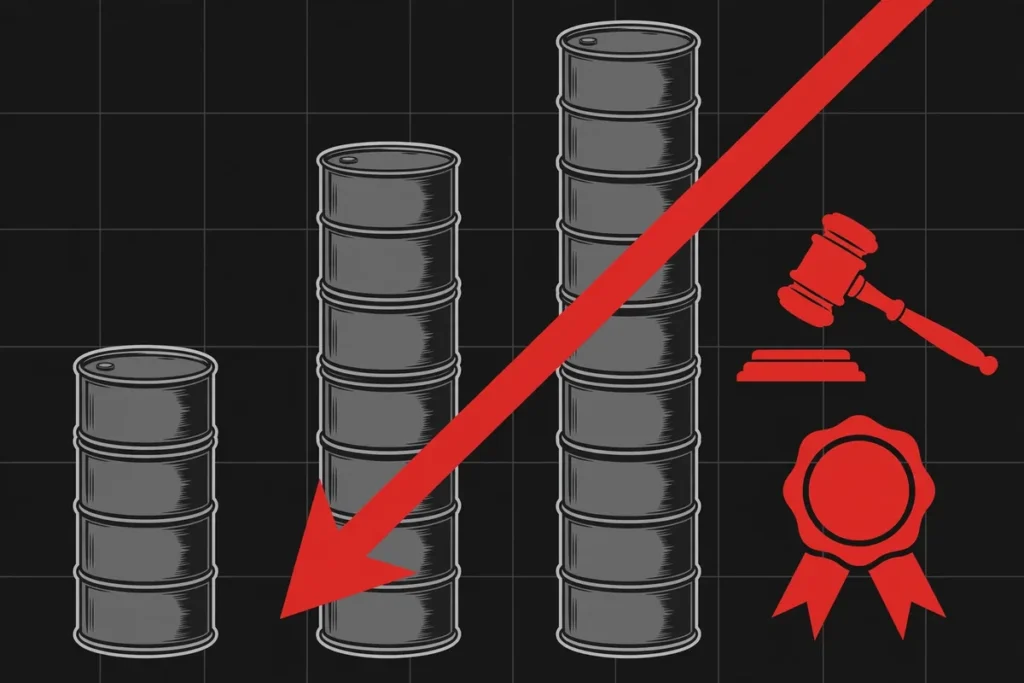
The October 18 date is not symbolic. The statute requires the president to conduct an initial review and, within 30 days of enactment, impose sanctions on persons determined to meet the law’s criteria — a deadline that lands on October 18, 2026. The law firm JD Supra’s analysis of the text notes that this 30-day clock applies to most of the Act’s mandatory provisions.
But the deadline forces a decision, not necessarily sanctions. The president makes many of the determinations that trigger the mandatory measures, and retains authority to waive sanctions, restrictions and duties by certifying to Congress that a waiver is in the US national interest, with a written explanation. There are, as one analysis put it, three separate things to follow: what the law requires, what the administration does, and what changes afterward.
That is why Ukraine moved quickly. On September 30, Kyiv’s chargé d’affaires in Washington, Denys Sienik, told the Associated Press that Ukraine would present the Trump administration and Congress with a “wish list” of Russian companies, vessels and individuals for sanctions under the new law. The top priority: Russian firms producing components for Moscow’s planned satellite-internet constellation — Russia’s rival to Starlink — which the main network operator’s suppliers have so far escaped. Ukraine also wants tougher measures against ghost-fleet tankers and access to Starlink services inside Russia for targeting purposes, AP reported.
Graham Act sanctions: by the numbers
| Metric | Figure | Source |
|---|---|---|
| Max tariff on Russian-origin goods | 500% (CONFIRMED) | JD Supra; LexBlog |
| Max secondary tariff on top energy buyers / evasion facilitators | 100% (CONFIRMED) | Mondaq; JD Supra |
| Implementation deadline | October 18, 2026 (CONFIRMED) | AP; Mondaq |
| Law signed | September 18, 2026 (CONFIRMED) | AP; New York Post |
| Senate passage | 86–11, August 7, 2026 (CONFIRMED) | New York Post |
| House passage | 262–159, September 16, 2026 (CONFIRMED) | New York Post |
| Iran Sanctions Act extended through | 2031 (CONFIRMED) | Mondaq; JD Supra |
| USTR reassessment of top-5 purchasers | Every 180 days (CONFIRMED) | Senate sponsors’ summary |
| Natural-gas exception threshold | Below 15% of Russia’s gas exports + reduction steps (CONFIRMED) | Senate sponsors’ summary; LexBlog |
| Estimated shadow-fleet size | ~1,200–1,600 tankers (REPORTED) | Industry analysts via Tech Times |
| China + India share of Russia energy export revenue | ~70% (REPORTED) | Analyst estimates via Tech Times |
Caveat: tariff figures are statutory ceilings (“up to”), not rates already imposed — as of early October no country-specific tariff schedule had been published.
Who is in the firing line?
The countries most exposed are the largest buyers of Russian energy. Legal analyses of the law name China, India and Turkey as the most likely third-country targets across the qualifying tracks, with Slovakia, Hungary, the UAE and Azerbaijan also at elevated risk. The EU is not treated as a single country — individual member states are assessed separately, which matters for the landlocked Central European buyers still importing Russian pipeline gas.
India faces particular pressure. Analysts estimate China and India together account for roughly 70% of Russia’s energy export revenue, and India’s scale of dependency means it qualifies for none of the law’s exceptions. The natural-gas exception — available to countries whose Russian gas imports are below 15% of Russia’s total gas exports and that have taken “significant steps” to reduce them — does not apply to crude oil importers at all, and the undefined phrase “significant steps” gives the administration wide discretion.
Kyiv’s wish list adds a tactical layer: beyond countries, Ukraine wants the component suppliers for Russia’s satellite constellation designated, closing a gap where the main network firm is sanctioned but its suppliers are not — suppliers Ukrainian officials say could give Moscow real-time targeting data over Ukraine through the winter.
What this means for US/UK/EU readers
For American consumers, the direct effects depend entirely on how aggressively the White House uses the tariff authority. Secondary tariffs of up to 100% on major trading partners like China and India — stacked on existing duties — would raise prices on a wide range of imported goods, from electronics to pharmaceuticals to textiles. The administration’s choice by October 18 is therefore also a domestic inflation decision.
For UK and EU readers, the energy dimension matters most. If secondary tariffs push China and India to cut Russian purchases, displaced Russian crude would seek other buyers at deeper discounts — potentially easing global oil prices — but a disorderly scramble could equally spike diesel and fuel markets that are already strained by the Hormuz conflict and the OPEC+ quota freeze. European gas buyers in Slovakia and Hungary face the most direct exposure of any EU consumers.
For businesses, compliance teams should already be mapping supply chains against the tariff provisions — the law’s mandatory secondary sanctions reach foreign financial institutions that transact significantly with designated Russian banks. This article is educational and does not constitute financial or legal advice.
What to watch next
The immediate watchpoint is the October 18 decision: which entities and countries the administration designates, at what tariff rates, and whether Trump issues any national-interest waivers. Finally, track Russia’s war funding: our analysis of Russia’s 2027 defense budget shows how much of Moscow’s military spending depends on energy revenue — the exact stream the Graham Act is designed to choke. For ongoing coverage, see WarBrief’s sanctions hub.
Second, watch Ukraine’s wish list — whether the satellite-component suppliers and ghost-fleet vessels Kyiv named actually appear in the designation packages. Third, watch the responses from Beijing and New Delhi: China has said it rejects unilateral US sanctions lacking UN authorization, per secondary reporting, and India’s posture will be tested by the deadline.
Frequently asked questions
What is the Graham Act in simple terms?
The Graham Act — formally the Lindsey O. Graham Sanctioning Russia and Iran Act of 2026 — is a US law that makes sanctions on Russia mandatory rather than optional, authorizes tariffs of up to 500% on Russian goods and up to 100% on goods from the biggest buyers of Russian energy, and extends Iran sanctions through 2031. It is named for the late Senator Lindsey Graham, who championed it.
What is the October 18 deadline for the Graham Act?
The law requires the president to impose its sanctions and tariffs within 30 days of enactment. Since President Trump signed it on September 18, 2026, the deadline falls on October 18, 2026 — unless he certifies a waiver to Congress as in the US national interest.
Which countries could face 100% tariffs under the Graham Act?
The law targets the world’s top five purchasers of Russian oil or gas and the top five facilitators of Russian oil-sanctions evasion. Legal analysts name China, India and Turkey as the most likely targets, with Slovakia, Hungary, the UAE and Azerbaijan also at elevated risk. Final designations rest with the administration.
Can President Trump waive the Graham Act sanctions?
Yes. Although many provisions are mandatory, the president retains broad discretion over the determinations that trigger them and can waive sanctions, restrictions and duties by certifying to Congress that the waiver is in the national interest, with a written explanation.
Does the Graham Act affect oil and petrol prices?
Potentially. If secondary tariffs push big buyers like China and India away from Russian crude, global oil flows would reshuffle — which could ease prices through discounted rerouted barrels or spike them if the transition is disorderly. Fuel markets are already strained by the Hormuz conflict, so the October 18 decision lands at a sensitive moment.
Sources
- Associated Press: Ukraine to present ‘wish list’ for new Russia sanctions under Graham law
- New York Post: Trump signs Lindsey Graham’s Russia sanctions bill into law
- U.S. Senate: Graham Sanctioning Russia Act — legislation overview (one-pager)
- Mondaq: President Trump Signs Graham Sanctions Act, Expanding Russia Sanctions and Tariff Authorities
- JD Supra: President Signs Lindsey O. Graham Sanctioning Russia and Iran Act of 2026
- LexBlog: The Lindsey Graham Sanctions Act — What Businesses Need to Know About the New Tariffs