WarBrief.live | July 2026
Intelligence profile of Indonesian National Armed Forces, maritime defense capabilities.
Country Overview
Indonesia Military Capabilities: Archipelagic Defense and ASEAN Leader remains a significant focus area for international security professionals. Indonesia intersects with alliance commitments, regional power balances, and domestic political constraints that shape decision-making in 2026.
This profile summarizes the current state of indonesia for quick orientation — with deeper sections below covering structure, risks, and forward-looking indicators.
- Defense Budget: $9 billion (2025)
- Patrol vessel fleet for archipelagic patrol
- Frigate and corvette fleet modernization
Military Organization and Command
Jointness between services, special operations integration, and reserve mobilization capacity are practical measures of how quickly forces can scale during contingencies.
- Active Personnel: 395,500
- Submarine acquisition program
Defense Budget and Force Structure
Procurement cycles and offset agreements with foreign suppliers shape long-term capability trajectories and create dependencies analysts should map explicitly.
Defense spending trends linked to indonesia signal political commitment more reliably than ceremonial announcements. Budget lines for maintenance, ammunition, and personnel often reveal readiness constraints before public doctrine shifts.
- Active Personnel: 395,500
Key Capabilities and Equipment
Core warfighting capabilities associated with indonesia include ISR platforms, long-range fires, air defense, maritime patrol, and cyber/electronic warfare units. Open-source order-of-battle tracking helps validate official claims.
Training quality, logistics depth, and sustainment capacity often determine whether advanced equipment translates into operational advantage during prolonged campaigns.
Regional Security Role
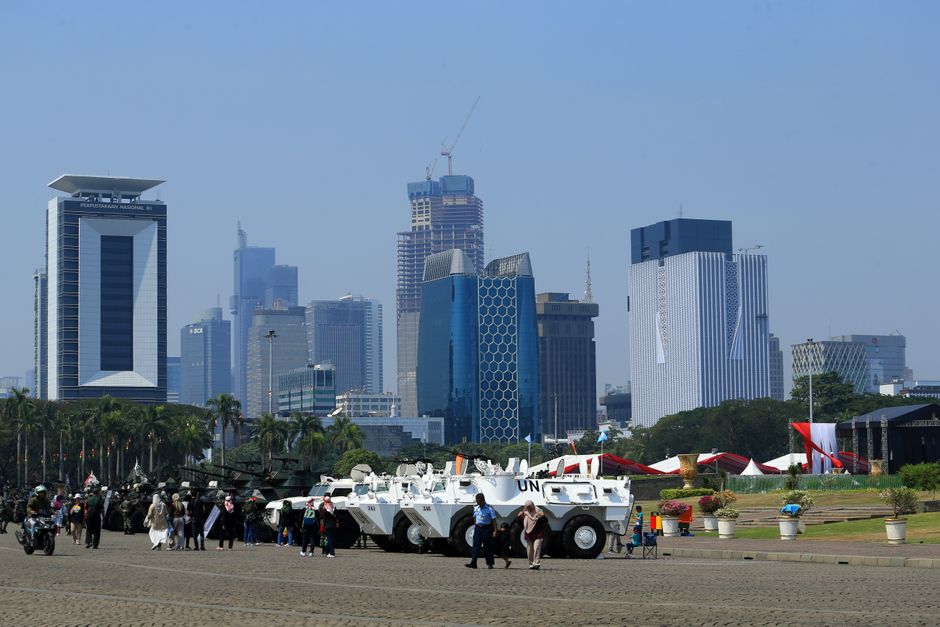
Indonesia plays a defined role in its neighborhood — contributing to maritime security, peacekeeping, counter-terrorism, or deterrence missions depending on geography and alliance obligations.
Alliances and Security Partnerships
Alliance membership and security partnerships shape indonesia through shared exercises, intelligence fusion, and interoperable equipment standards. Burden-sharing debates increasingly affect deployment decisions.
Bilateral defense agreements and base access arrangements can matter as much as formal treaty commitments during fast-moving regional incidents.
Threat Environment and Challenges
Primary threat vectors facing indonesia include transnational terrorism, maritime incursions, cyber espionage, and great-power pressure on trade routes. Domestic instability can compound external risks.
Strategic Outlook
Over the next 30–60 days, analysts should monitor leadership statements, ceasefire violations, proxy activity, and commodity market reactions tied to indonesia. Scenario planning should include both escalation and managed-de-escalation branches.
Frequently Asked Questions
What are this country’s core military strengths?
Documented strengths include professional enlisted corps, niche high-end capabilities, and geographic advantages — balanced against known constraints below.
How does it contribute to regional security?
What are primary capability gaps?
Capability gaps often appear in strategic lift, sustained high-intensity logistics, and joint interoperability under contested communications.
Which alliances shape its defense posture?
Bottom Line
For decision-makers tracking indonesia, the decisive variable is whether observable indicators translate into sustained policy shifts or remain rhetorical positioning. WarBrief.live recommends cross-checking this country assessment against primary sources and daily operational reporting.

Classification: UNCLASSIFIED // FOR OFFICIAL USE ONLY
WarBrief analysts apply a three-source rule before elevating claims about indonesia. Video authenticity checks, cross-language monitoring, and commercial satellite revisit analysis reduce false positives under compressed news cycles.
Readers should expect iterative updates as new data arrives. WarBrief.live labels confidence levels explicitly and separates confirmed facts from analytical inference.