
WarBrief Live | November 29, 2026 | Middle East
1
Reconnaissance drone Iran’s army said its air defences shot down over the Strait of Hormuz on Saturday
3m
Rials to the US dollar — Iran’s currency hit a record low near three million on Saturday
6
Ships hit at least twice in the Strait of Hormuz in the past two months, a maritime security firm found
$95.44
Brent crude’s Friday settle, up about 3% on the week, before OPEC+ meets on Sunday
The Iran shoots down drone Strait of Hormuz November 2026 confrontation escalated on Saturday, November 28, 2026, when Iran’s army said its air defences shot down an enemy reconnaissance drone over the Strait of Hormuz. The announcement came hours after Tehran said the world’s most important oil waterway will stay closed until Iran’s conditions are met, and as its currency plunged to a record low — a day in which every front of the Gulf war, at sea, in the air and in the markets, moved at once.
Key Takeaways
- Iran’s army said on Saturday that its air defences shot down an “enemy reconnaissance drone” over the Strait of Hormuz, state broadcaster IRIB reported. The statement did not identify the drone’s operator or say when it was shot down.
- Iran’s army chief, Major-General Amir Hatami, said the Strait of Hormuz will remain closed until Iran’s conditions are met, the semi-official Tasnim news agency reported on Saturday.
- Iran’s Navy commander, Rear Admiral Shahram Irani, said the US naval blockade imposed during the war showed the adversary had failed to achieve its objectives, and that Iranian forces would face no geographical limits in their operations.
- Iran’s currency plunged to a record low on Saturday, approaching three million rials to the US dollar, Reuters reported, amid rising inflation, hardening US sanctions and a widening embargo.
What happened
Iran’s army said on Saturday, November 28, 2026, that its air defences shot down an “enemy reconnaissance drone” over the Strait of Hormuz, according to a statement carried by state broadcaster IRIB. “Using domestically developed systems, the Army’s Air Defense Force detected an enemy surveillance drone flying above the Strait of Hormuz and Persian Gulf waters, and it was brought down under the direction of the nation’s unified air defense network,” the statement said. It did not identify the drone’s operator or specify when it was shot down, and no other military has confirmed losing an aircraft.
The shoot-down came on the same day Tehran hardened its position on the waterway. Iran’s army chief, Major-General Amir Hatami, said the Strait of Hormuz will remain closed until Iran’s conditions are met, Tasnim reported. And the commander of Iran’s Navy, Rear Admiral Shahram Irani, said late on Friday that the maritime blockade imposed during the war indicated a failure by the opposing side to achieve its objectives, saying Iran would face no geographical limits in operations under directives from the country’s leader.
The shipping war around the strait is also intensifying. At least six ships have been hit twice in the Strait of Hormuz over the past two months, the maritime security firm EOS Risk found, in a pattern it calls “double tapping” that raises fears shipping through the vital waterway may never fully recover. One of them, the Navig8 Messi, owned by the UAE national oil company Adnoc, is believed to have been struck three times. The Tara Gas was attacked on November 16 and again the next day, the second strike leaving it in flames.
Why it matters
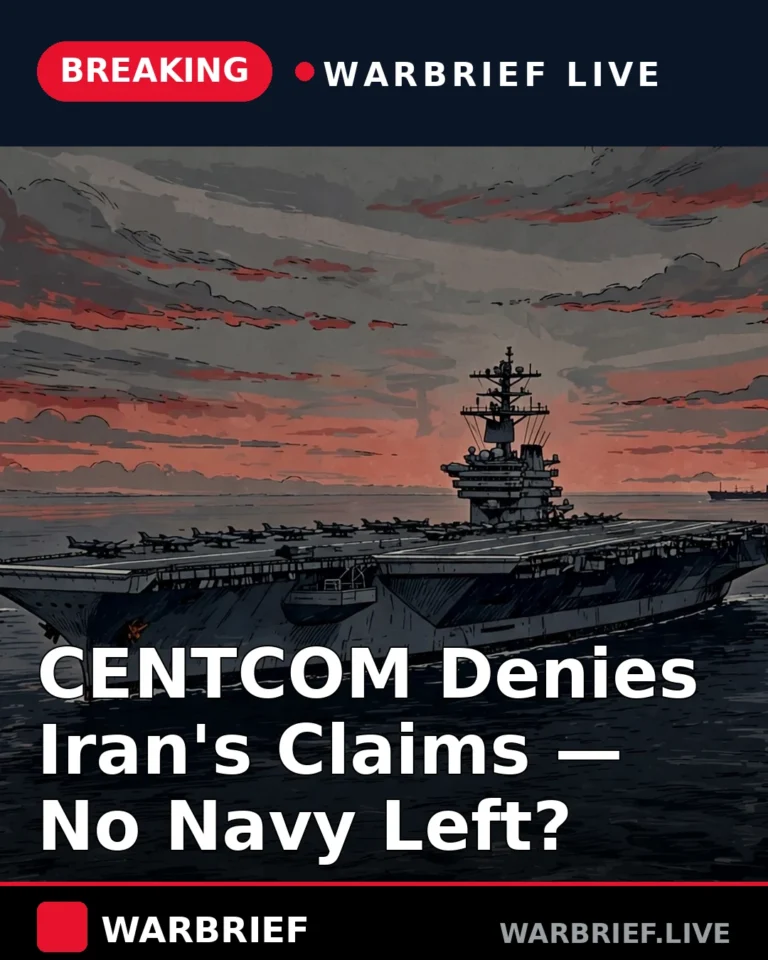
The strait is the chokepoint the whole war turns on. About a fifth of the world’s seaborne oil passes through it, and Iran has now said openly it will not reopen until its demands are met — while also shooting down aircraft above it. The United States says it controls the waterway and that thousands of ships and billions of barrels of crude have transited freely and safely under its protection — see our briefing on CENTCOM’s denial of Iran’s claims about seized tankers and the carrier strike — but the double-tapping of tankers and the minefields tell a different story on the water. Two tankers exploded and caught fire on Friday after striking naval mines near Oman’s Khasab port and east of the strait, the IRGC Navy said, and it warned the unauthorised route was heavily mined — see our explainer on how naval mines close the Strait of Hormuz.
The economic pressure is now visible inside Iran as well as outside it. The rial plunged to a record low on Saturday, approaching three million to the US dollar, Reuters reported, as inflation rises and the US embargo widens. Brent crude settled at $95.44 a barrel on Friday, its first weekly gain in November, and the OPEC+ group meets on Sunday to set output for 2027 — with the war premium, not the quotas, now driving the price.
Confirmed vs reported
Confirmed: Iran’s army said its air defences shot down a reconnaissance drone over the Strait of Hormuz on Saturday, per its statement carried by IRIB; the army chief’s statement that the strait will stay closed until Iran’s conditions are met, per Tasnim; the rial approaching three million to the dollar, per Reuters; at least six ships hit twice in the strait in two months, per EOS Risk; Brent crude settling at $95.44 a barrel on Friday, per Reuters.
Reported, not confirmed: the drone’s operator and the time of the shoot-down — Iran’s statement named neither, and no other military has confirmed losing an aircraft; the IRGC navy chief’s claim that a missile fired on the second day of the war struck the USS Abraham Lincoln, which US Central Command has denied, saying the carrier was never struck; the claim that the Navig8 Messi was hit three times, which comes from a maritime security adviser and has not been independently confirmed.
What happens next
Watch whether the United States or another military acknowledges losing a drone over the strait — silence would leave Iran’s claim unchallenged, and an acknowledgement would raise the stakes sharply. Watch the strait itself: the IRGC Navy has warned vessels to coordinate passage with Iran and says the unauthorised route is heavily mined, while Washington says ships are moving freely. Watch OPEC+ on Sunday, where the 2027 output decision lands in a market already pricing a war premium, and watch the rial: a currency at three million to the dollar is a pressure gauge, and it is pointing the wrong way for Tehran.
If the strait stays closed and the shoot-downs continue, the Gulf war’s centre of gravity stays at sea — and every tanker that turns back is another barrel the world does not get. If either side blinks, the first sign will be a ship passing through Hormuz without an escort, not a statement.
Sources
IRIB; IRNA; Iranian army; Iranian Navy commander Rear Admiral Shahram Irani; Iranian army chief Major-General Amir Hatami; Tasnim news agency; US Central Command; Reuters; Times Now; EOS Risk; Dawn.
Discussion 0
Share analysis, corrections, or context. Be civil — comments are moderated.