
WarBrief Live | November 27, 2026 | Middle East
6
Ships CENTCOM says it has disabled for refusing to comply since the blockade began
158
Compliant commercial vessels CENTCOM says it has redirected since the blockade began
1
Ship disabled in the latest strike; its civilian crew was unharmed, per CENTCOM
4
Daily average of incidents in the Strait of Hormuz in the last two weeks, per Al Jazeera
The US disables ship Iran blockade Pacific Archer November 2026 strike came on Thursday, November 26, 2026, when US military aircraft launched precision munitions that hit the stern of the Palau-flagged merchant ship M/V Pacific Archer in the Gulf of Oman, disabling its propulsion after it left the Iranian port of Bandar Abbas and tried to run the American naval blockade. The civilian crew was unharmed. On Friday, an adviser to Iran’s supreme leader vowed that Tehran would neither reopen the Strait of Hormuz nor allow the blockade to stand.
Key Takeaways
- US Central Command said military aircraft launched precision munitions that struck the stern of the Palau-flagged M/V Pacific Archer in the Gulf of Oman after it departed from the Iranian port city of Bandar Abbas, and that the ship’s propulsion was disabled while the civilian crew was unharmed, according to Reuters.
- Mohammad Mokhber, an adviser to Iran’s Supreme Leader Ayatollah Mojtaba Khamenei, said: “Neither will the Strait of Hormuz be reopened, nor will we allow the blockade to remain in place,” Iranian state media reported, without giving details of Iran’s plans to break the embargo, according to Reuters.
- CENTCOM said US forces have redirected 158 compliant commercial vessels and disabled six that refused to comply since the blockade began, according to Al Jazeera.
- The United States reimposed its naval blockade on Iranian ports in July, and earlier this month announced Task Force Iron Gate to restrict the movement of weapons and sanctioned materials across Iran’s land borders and the Caspian Sea, according to Reuters.
What happened
US military aircraft launched precision munitions that struck the stern of the Palau-flagged M/V Pacific Archer in the Gulf of Oman on Thursday, November 26, 2026, US Central Command said in a statement on Friday. The ship had departed from the Iranian port city of Bandar Abbas and was attempting to run the US blockade of Iran, according to the statement, cited by Reuters. The strike disabled the vessel’s propulsion. Its civilian crew was unharmed.
The Pacific Archer is the sixth ship CENTCOM says it has disabled for refusing to comply with the blockade, which the United States reimposed on Iranian ports in July. CENTCOM said its forces have redirected 158 compliant commercial vessels since the blockade began, according to Al Jazeera. Earlier this month, Washington announced Task Force Iron Gate, a new effort to restrict the movement of weapons and sanctioned materials across Iran’s land borders and the Caspian Sea, Reuters reported.
Iran answered within hours. Mohammad Mokhber, an adviser to Supreme Leader Ayatollah Mojtaba Khamenei, said: “Neither will the Strait of Hormuz be reopened, nor will we allow the blockade to remain in place,” Iranian state media reported. Mokhber gave no details of how Tehran plans to break the embargo. Gulf News reported that Iran has vowed to take all necessary measures to break the blockade, reportedly sending dozens of oil tankers towards it.
Why it matters
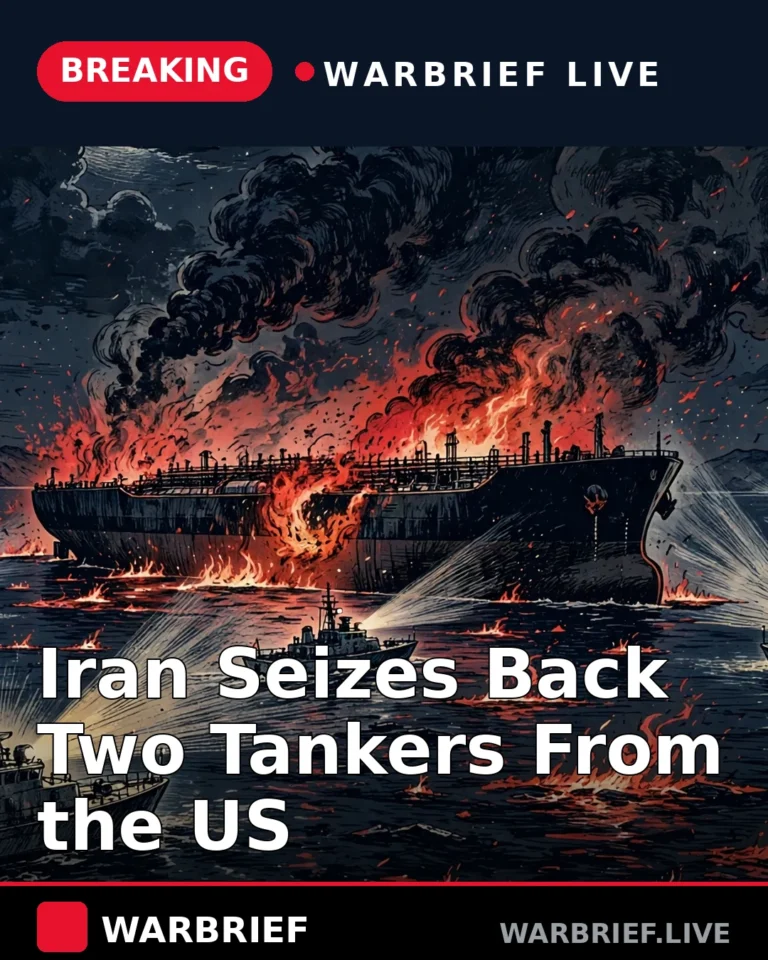
This is the sea war in miniature: Washington enforcing a blockade ship by ship, Tehran vowing to break it ship by ship. The Pacific Archer strike is the first time the United States has used force against a blockade-runner in this round of the confrontation, and it comes on the same day Iran’s navy chief claimed his forces had boarded and recovered two Iranian oil tankers seized by the US — see our briefing on Iran’s tanker recovery claim. Both sides are now telling the same story in opposite directions: each claims it controls the sea.
The stakes are the Strait of Hormuz, the world’s most important oil chokepoint, where incidents have averaged four a day in the last two weeks, according to Al Jazeera’s Tehran correspondent. A disabled ship is a warning. A tanker fire that blocks the channel would be a crisis — and crude prices have already climbed to their highest close since November 6. The confrontation also lands a day after two Italians were killed in a drone attack in Kuwait that Kuwait blamed on Iran — see our briefing on the Kuwait drone attack — so the Gulf war is now being fought on land, in the air and at sea at the same time.
Confirmed vs reported
Confirmed: that US military aircraft struck the stern of the Palau-flagged M/V Pacific Archer in the Gulf of Oman on Thursday, disabling its propulsion, and that the civilian crew was unharmed, per US Central Command via Reuters; that the ship had departed Bandar Abbas, per CENTCOM; that Mokhber said Iran would neither reopen the Strait nor allow the blockade to remain, per Iranian state media via Reuters; that the US reimposed the naval blockade in July and announced Task Force Iron Gate earlier this month, per Reuters; that CENTCOM has redirected 158 compliant vessels and disabled six, per Al Jazeera.
Reported, not confirmed: that Iran is sending dozens of oil tankers towards the blockade to break it — that is reported by Gulf News, not confirmed by Tehran or Washington. Iran’s claim, made the same day, that its forces boarded and recovered two tankers seized by the US remains Tehran’s account alone; the United States has not confirmed the claim or the seizure. Whether the Pacific Archer was carrying sanctioned cargo has not been stated by CENTCOM, and no independent verification of the vessel’s cargo or ownership has been published.
What happens next
Watch the next blockade-runner: if another ship tests the line, Washington will have to decide whether disabling it again is routine — or an escalation. Watch also for Iran’s promised move to break the embargo: dozens of tankers sailing at a blockade is a confrontation in itself, and the first collision between an Iranian tanker and a US warship would turn this into something bigger.
If Tehran’s tankers sail and Washington holds the line, the Gulf becomes a standoff. If either side blinks, the other will call it a victory — and the Strait stays the most dangerous waterway in the world.
Sources
US Central Command; Reuters; Al Jazeera; Gulf News; Mohammad Mokhber; Iranian state media.

Discussion 0
Share analysis, corrections, or context. Be civil — comments are moderated.