
WarBrief Live | November 20, 2026 | International Security
Estonia will close all five of its road border crossings with Russia from 7 a.m. on December 1, 2026, for at least six months, after the government formally approved the shutdown on November 20.
The decision turns the announcement made on November 15 into a dated, formal measure with a minimum duration, and it gives travellers, hauliers and border towns eleven days to adjust. Moscow has already answered, accusing Tallinn of erecting a new “Iron Curtain” and promising political and diplomatic measures in response.
5
road crossings closing on December 1
6
months minimum closure, then a review
7 a.m.
the hour the crossings shut on December 1
8
people detained over the Threod arson attempt
Key Takeaways
- Estonia’s government formally approved the closure on November 20: all five road crossings with Russia shut from 7 a.m. on December 1, for at least six months, with a review after six months.
- The decision follows the foiled November 14 arson attack on drone maker Threod Systems, which Tallinn blames on Russia’s GRU military intelligence service. Eight people were detained.
- Rail freight will continue under existing restrictions and strict customs controls, but passenger travel must reroute through other countries, at longer distances and higher cost.
- Moscow called the closure a new “Iron Curtain” and said it would respond with political and diplomatic measures. Finland shut its own Russia crossings in 2023 and has kept them closed.
What did Estonia decide on November 20?
At a government session on Friday, November 20, Estonia’s cabinet formally approved the suspension of movement of people and vehicles through all road border crossings with Russia, effective from 7 a.m. on December 1. Prime Minister Kristen Michal announced the decision at a government news conference, Estonian public broadcaster ERR reported.
The formal decision adds two things the November 15 announcement did not have: a duration and a review point. The crossings will stay shut for at least six months, and the government will reassess the restriction after that period to decide whether it remains necessary for national security and public order. The review is not a guaranteed reopening date.
“This decision was not made lightly, but our primary duty is to protect the residents of Estonia and the security of the state.” — Prime Minister Kristen Michal, as reported by Postimees
Foreign Minister Margus Tsahkna had announced on November 15 that the crossings would close from December 1, but at that stage the cabinet had not formally approved the measure and no end date had been given. The November 20 decision closes that gap: the closure is now a formal government act, not a ministerial announcement.
Which crossings close on December 1?
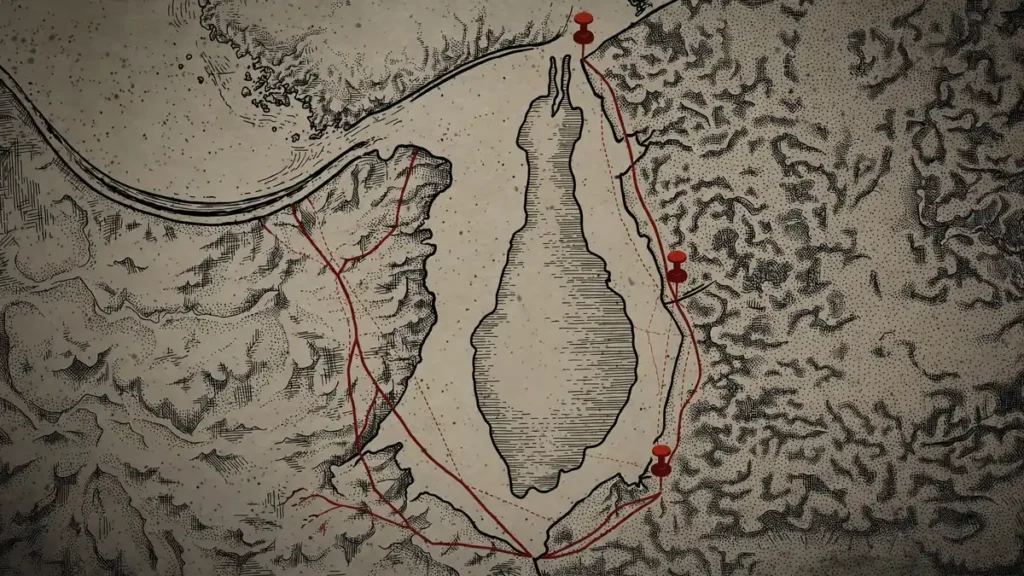
All five designated crossing points: Narva-1, Narva-2, Koidula, Luhamaa and Saatse. The government said it would close the road crossings to pedestrians and vehicles alike, and the suspension covers the full day rather than restricting movement to overnight hours.
Narva, in the north-east, is the crossing that matters most. The city is majority Russian-speaking, and its bridge over the Narva River is the main route for people travelling from further afield in Europe to St Petersburg, a few hours’ drive away. Narva-1 is pedestrian-only: Russia shut the Ivangorod side to cars in February 2024, and cars have not returned since. Koidula and Luhamaa, in the south-east, take pedestrians and vehicles under restricted hours, currently 7 a.m. to 7 p.m.
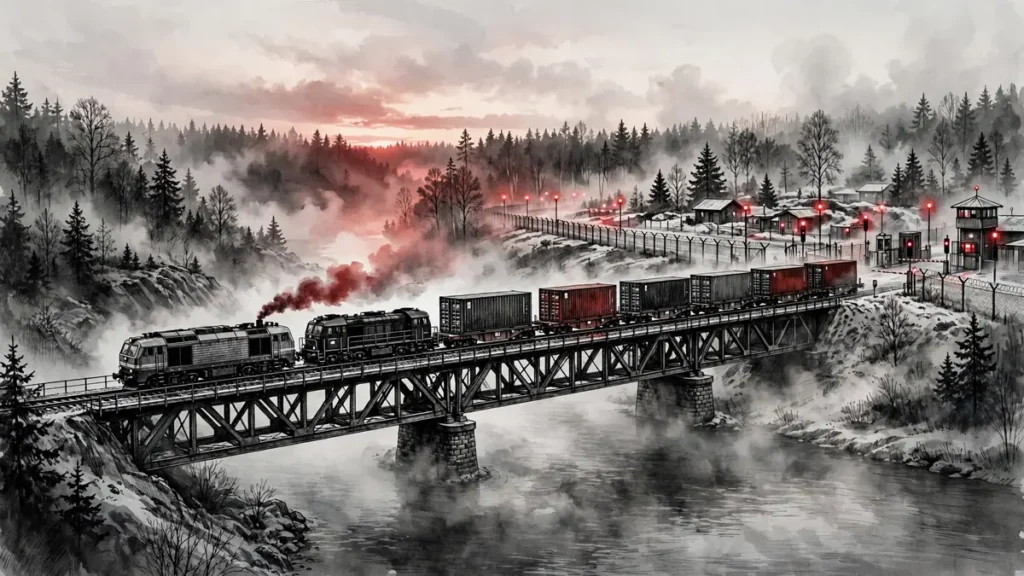
What does not close, for now, is rail freight. The government confirmed that rail cargo operations may continue under existing restrictions and strict customs controls. That distinction matters for trade: the road suspension stops people and road vehicles, while the Narva railway keeps moving goods, watched closely by customs.
Why is Estonia closing its border with Russia?
The government’s statement put it plainly: “The decision is a response to Russia’s ongoing hostile actions against Estonia and other European countries.” In Estonia, the statement added, defence industry companies have been attacked twice this year, and according to the Estonian Internal Security Service, known as Kapo, Russian special services commissioned both attacks. Moscow has regularly denied accusations by European authorities of involvement in sabotage operations, Reuters reported.
The trigger was the attempted arson attack on Threod Systems, a maker of long-range reconnaissance and attack drones, at its facility in Viimsi, just north of Tallinn, in the early hours of November 14. The company’s own security staff stopped the attack and nobody was hurt. Eight people were detained, and Prime Minister Michal said the attack had been ordered by the GRU, Russia’s military intelligence service. It was the second attack on Threod Systems this year, after an earlier attempt in August, according to reports.
The government gave two practical reasons for closing the crossings. First, it said the closure would make it harder for Russian intelligence services to recruit and influence people. Second, it said the move would help prevent sanctions evasion and other illegal cross-border activities. Estonia, a NATO and European Union member and a strong supporter of Ukraine, has framed the closure as a security measure, not a diplomatic gesture.
By the numbers: the Estonia-Russia border closure
| Metric | Figure | Source |
|---|---|---|
| Road crossings closing | 5 (Narva-1, Narva-2, Koidula, Luhamaa, Saatse) | Estonian government, via Reuters |
| Minimum closure | 6 months | Estonian government, via Reuters |
| Closure starts | 7 a.m., December 1, 2026 | ERR, via Daily Baltic |
| People detained over the Threod attack | 8 | Reuters; NRB |
| Defence-firm attacks in Estonia this year | 2 | Estonian government, via Reuters |
| People crossing Narva, Luhamaa and Koidula, January-June 2026 | About 444,000 (REPORTED) | Estonian Interior Ministry figures, reported July 2026 |
| Estonian goods exports to Russia vs 2021 | Down about threefold | Estonian government figures, via Bytes EU |
Figures marked REPORTED rest on a single source. All other figures are confirmed by at least two sources.
What the closure means for travellers at Narva
For people currently in Russia, the most immediate consequence is the deadline. Estonia’s Foreign Ministry has urged citizens in Russia to arrange their return well in advance and has repeated its advice against travelling to Russia. Once the crossings close, returning to the European Union via Estonia will not be possible, Germany’s Federal Foreign Office warned on November 18, and travellers will have to consider indirect routes through other countries where border passage remains available, at longer distances and higher cost. The Estonian government has not identified a guaranteed replacement passenger route.
The consequences will fall hardest on the border regions. Residents of Narva and the wider Ida-Viru County, and of Setomaa in the south-east, have relatives, jobs, property and other ties across the border. A member of the Narva city assembly told Russian state media Izvestia that the news landed “like a bolt from the blue” for the city’s economy, transport companies and tourism sector, and that residents may now have to fly through Turkey to reach relatives near St Petersburg. He expressed hope that Tallinn would preserve a humanitarian corridor for family trips, while acknowledging the city’s ability to influence the decision was minimal.
The government has said it plans to discuss in the coming weeks how to mitigate the effects of the closure on people in south-eastern Estonia and Ida-Viru County. The final legal decree and any humanitarian exceptions have not yet been released. Estonian authorities have also reserved the right to close the crossings at short notice before December 1, according to the German Foreign Office warning.
What the Estonia border closure means for US/UK/EU readers
For most readers in the United States and the United Kingdom, the direct impact is small: few travel overland between the EU and Russia, and Estonia’s trade with Russia has already shrunk sharply, with goods exports down about threefold since 2021. The significance is strategic rather than personal. Estonia is the first NATO state to shut its entire land border with Russia in response to a sabotage attempt, and the move hardens NATO’s north-eastern flank at a moment when European governments are reporting a pattern of Russian hybrid operations, from arson to undersea cable damage. The response also sits within NATO’s consultation framework, which allies invoke when they judge their security to be threatened — see our explainer on how NATO Article 4 works.
For readers in the EU, the practical effects are closer. Anyone planning an overland route between Europe and St Petersburg must now reroute through Latvia or Lithuania, whose crossings with Russia remain open, or fly. Border queues and full customs checks already apply to all traffic with Russia, and travellers should expect longer processing times. For businesses, the closure is another step in the decoupling of Baltic trade from Russia, and a reminder that sanctions-evasion controls are tightening at the EU’s eastern edge.
The wider question is whether the closure spreads. Finland shut its Russia border crossings in 2023 and has kept them closed since. If Latvia and Lithuania follow Estonia, the EU’s entire land border with Russia would be sealed to road traffic, leaving air routes through third countries as the only practical link. That is a decision for other capitals, but Estonia’s six-month experiment will be the test case they watch.
How Moscow answered — and what Finland did first
Moscow’s response came within hours. Russia accused Estonia of erecting a new “Iron Curtain” and said it would respond with political and diplomatic measures, Reuters reported. No specific countermeasures were named. The framing is familiar: Moscow regularly denies involvement in sabotage operations in Europe and portrays Baltic security measures as hostility toward Russian speakers and Russian interests.
Tallinn’s framing is the opposite. The government presents the closure as a defensive response to a concrete attack on its soil, ordered by a foreign intelligence service, and as a proportionate step to reduce the risk of further attacks. That argument is strengthened by the fact that the closure is time-limited and reviewable, rather than open-ended, and by the decision to keep rail freight moving.
Finland provides the precedent. Helsinki shut its border crossings with Russia in 2023, citing instrumentalised migration, and has kept them closed since. The Finnish experience suggests that a closure, once imposed, tends to stick: the security rationale does not expire quickly, and the political cost of reopening is high. Estonia’s six-month review, due around June 2027, will be the first test of whether the same logic applies in Tallinn. Until then, the Narva bridge will be quiet, and the people who used it will be finding longer ways around.
What to watch next before December 1
The final legal decree, including any humanitarian exceptions for family visits, medical travel or other cases, has not yet been released, and it will determine how absolute the closure really is. Moscow’s concrete response is also still to come: the promise of political and diplomatic measures could mean anything from a reciprocal closure to expulsions, and a Russian closure of its own side would strand travellers still in Russia. Watch too for whether the crossings are shut early, which the authorities have reserved the right to do, and for the government’s mitigation plan for Narva and the south-east, promised in the coming weeks. The six-month review, due around June 2027, is the date that will decide whether this is a temporary shock or a permanent feature of Europe’s eastern border.
Frequently asked questions
When does Estonia close its border with Russia?
Estonia will suspend movement of people and vehicles through all road border crossings with Russia from 7 a.m. on December 1, 2026. The closure will last at least six months, and the government will review it after six months to decide whether it remains necessary.
Which Estonia-Russia border crossings are closing?
All five designated crossing points: Narva-1, Narva-2, Koidula, Luhamaa and Saatse. Narva-1 is pedestrian-only, while Koidula and Luhamaa take pedestrians and vehicles. Rail freight will continue under existing restrictions and strict customs controls.
Can I still travel from Estonia to Russia after December 1?
Not through Estonia’s road crossings. After December 1, travellers must use other open routes, which may be longer and more expensive, and must meet the entry and transit requirements of the countries along the way. Estonia’s Foreign Ministry has urged citizens currently in Russia to plan their return in advance.
Why is Estonia closing its border with Russia?
Estonia says the closure is a response to Russia’s ongoing hostile actions, including a foiled arson attack on drone maker Threod Systems on November 14 that Tallinn blames on Russia’s GRU military intelligence service. Eight people were detained, and the government says defence companies have been attacked twice this year.
Will the Estonia-Russia border reopen?
There is no guaranteed reopening date. The government will review the restriction after six months, around June 2027, and decide whether to amend or extend it in light of national security risks. Finland shut its own Russia crossings in 2023 and has kept them closed since.
Sources
- Reuters: Estonia to close border with Russia for at least six months
- Reuters: Russia accuses Estonia of erecting new ‘Iron Curtain’ with border closure, says it will respond
- Arab News: Estonia to close border with Russia, Moscow decries ‘new Iron Curtain’
- Daily Baltic: Estonia to suspend road crossings with Russia from December 1 (ERR)
- Bytes EU: Estonia closes road border crossings with Russia from Dec. 1
- FTN News: Estonia Russia Border Closure Starts December 1, 2026
Discussion 0
Share analysis, corrections, or context. Be civil — comments are moderated.