
WarBrief Live | November 18, 2026 | Sanctions
| Nov 21, 2026 GL 131K expires, 12:01 a.m. EST | $20 billion Lukoil’s own figure for the assets | 11 rolling extensions so far | Apr 24, 2027 retail and Bulgaria licences run on |
At 12:01 a.m. EST on November 21, 2026, the US licence that lets buyers negotiate for Lukoil’s foreign assets expires. No deal has been signed, and the licence never authorised a sale — only talks about one.
Key Takeaways
- OFAC General License 131K, issued on October 21, 2026, authorises negotiation of contingent contracts for the sale of Lukoil International GmbH through 12:01 a.m. EST on November 21, 2026. It does not authorise the sale itself; completion needs a separate OFAC authorisation.
- It is the eleventh rolling extension of the sale-negotiation licence. As of November 18, no successor licence has been published.
- Reuters reported on November 3, 2026 that a consortium led by US investor Todd Boehly is close to a deal, structured as a swap of frozen Lukoil securities held in escrow rather than a cash payment. The deal has not been signed and OFAC has not approved it.
- The deadline does not hit all of Lukoil’s foreign business at once: petrol stations outside Russia and the Bulgarian operations are covered by separate licences running to April 24, 2027. The Romanian refinery, the Dutch refinery stake, trading and upstream assets depend on GL 131K alone.
What does General License 131K actually authorise?
General License 131K was issued by the US Treasury’s Office of Foreign Assets Control (OFAC) on October 21, 2026, under the Russian Harmful Foreign Activities Sanctions Regulations. The licence text authorises transactions that are ordinarily incident and necessary to negotiating and entering into contracts for the sale, disposition or transfer of Lukoil International GmbH (LIG) — the Austrian holding company behind almost all of Lukoil’s business outside Russia — and any entity in which LIG owns 50 percent or more. The catch is in the same paragraph: the performance of any such contract must be made expressly contingent on receiving separate authorisation from OFAC. In plain terms, the licence lets the parties agree on a deal but not close it.
The licence also authorises maintenance or wind-down of LIG entities’ operations and contracts through the same deadline, and lets their blocked accounts be used for those transactions. What it does not authorise is just as important: no sale or transfer of shares or assets, no unblocking of property beyond day-to-day operations, no dealings with other blocked persons, and no transfer of funds to any person or account in Russia. GL 131K replaced GL 131J, which was due to expire on October 22, 2026. It was the eleventh extension in a row in a series that began with GL 131A on December 10, 2025, according to OFAC’s own FAQ 1225. OFAC has also kept its warning that the licence can be revoked if the parties are not negotiating in good faith.
Background and timeline: a year of failed sales
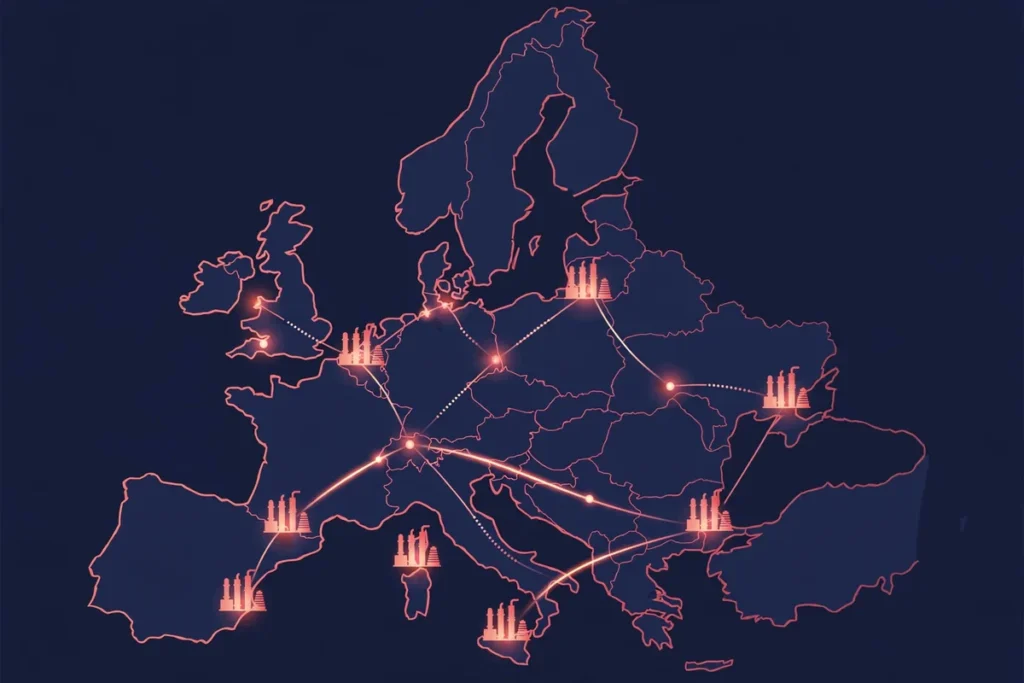
Lukoil is Russia’s second-largest oil producer. On October 22, 2025, OFAC added Lukoil and several subsidiaries to the Specially Designated Nationals and Blocked Persons list, freezing its property under US jurisdiction. The company put its foreign assets up for sale: oilfields, refineries and petrol stations across Europe, the Middle East and Africa, including refineries in Bulgaria, Romania and the Netherlands and more than 800 filling stations across seven markets. Reuters put the portfolio’s initial value at about $22 billion; Lukoil itself has put the figure at $20 billion. Our sanctions entry on the forced sale and the $20 billion question sets out the portfolio in full.
- October 22, 2025: OFAC designates Lukoil and subsidiaries under Executive Order 14024; the foreign assets go up for sale.
- November 2025: Lukoil accepts an offer from trader Gunvor. The Treasury publicly describes Gunvor as a Kremlin instrument and refuses it any licence; Gunvor withdraws.
- December 2025: OFAC issues GL 131A, the first sale-negotiation licence. A rival bid built around US bank Xtellus Partners is rejected: the Treasury insists Lukoil must not profit from a sale in cash or in shares.
- January 29, 2026: US private equity firm Carlyle agrees to buy Lukoil’s overseas assets, excluding those in Kazakhstan, subject to OFAC authorisation.
- July 2026: The Carlyle agreement lapses without OFAC approval. On October 9, Carlyle confirms it is no longer pursuing the deal.
- October 9, 2026: OFAC issues General License 135, authorising Russian diesel sales and deliveries, including imports into the United States, until April 7, 2027.
- October 15, 2026: OFAC issues GL 128D and GL 130B, covering Lukoil retail stations outside Russia and the named Bulgarian entities until April 24, 2027.
- October 16, 2026: Executive Order 14436 waives almost all of the Graham Act, the Russia sanctions law signed on September 18 — 28 days after it was signed. Our explainer on the Graham Act waiver traces that arc.
- October 21, 2026: OFAC issues GL 131K, the eleventh extension, one day before GL 131J expires.
- November 3, 2026: Reuters reports a consortium led by Todd Boehly is close to a deal, with an agreement expected within weeks.
- November 16, 2026: The EU Council lists 101 entities and 12 individuals under its Russia asset-freeze framework, including about 50 banks, as part of a 113-entry package.
What happens on November 21 if no deal is signed?
Three paths are open, and the deadline itself decides only which one the parties are on. The first is another extension. The pattern of the last year points that way: eleven rolling licences, each issued a day or so before its predecessor expired, each buying about a month. A GL 131L would keep the talks alive on the same terms. But an extension is a decision, not a default — and as of November 18, no successor licence has been published.
The second path is a lapse. If November 21 passes with no new licence, the authorisation to negotiate sale contracts ends, and the maintenance and wind-down authorisation for LIG entities not covered by the separate licences ends with it. The assets would stay blocked — expiry is not seizure — but counterparties, lenders, suppliers and offtakers would face sanctions exposure for dealings the licence had covered, and parts of the business would have to wind down or freeze in place.
The third path is a contingent contract signed before the deadline. Even that does not end the story: the contract’s performance would still need a separate OFAC authorisation, and OFAC has already published the minimum conditions it expects any sale to meet. The November 21 date governs negotiating, not closing. What matters on the day is whether the parties have something concrete to put in front of OFAC — or whether Treasury simply rolls the licence again.
| Metric | Figure | Source |
|---|---|---|
| GL 131K expiry | 12:01 a.m. EST, November 21, 2026 | OFAC — CONFIRMED |
| Rolling extensions of the sale licence | 11 (GL 131A to GL 131K) | OFAC FAQ 1225 — CONFIRMED |
| Foreign-asset portfolio, initial valuation | About $22 billion; value has since fallen as operations shut down | Reuters — CONFIRMED / REPORTED |
| Retail and Bulgaria licences (GL 128D / 130B) run to | April 24, 2027 | OFAC — CONFIRMED |
| Diesel licence (GL 135) runs to | April 7, 2027 | OFAC, via Steptoe — CONFIRMED |
| Boehly consortium’s frozen-share purchases | Billions of dollars, at about 30 cents on the dollar | Reuters sources — REPORTED |
| US government stake in the buyer group | About 15% via the Development Finance Corporation, no cash | The Times — REPORTED |
CONFIRMED means carried by OFAC’s published text or by two or more reputable outlets. REPORTED means sourced to people familiar with the matter or a single outlet and not yet officially confirmed.
Who is trying to buy Lukoil’s foreign assets?
The leading bidder is a consortium led by Todd Boehly, the US investor with stakes in the Los Angeles Dodgers and the Los Angeles Lakers. According to a Reuters exclusive published on November 3, 2026, four people familiar with the sale said a deal was expected within weeks, and three said a bank acting for the consortium had already bought billions of dollars’ worth of frozen Lukoil shares from Western investment funds. The consortium includes Emirati firms International Holding Company and Al Hail Holding, the Syrian-Qatari Al-Khayat brothers, and the US International Development Finance Corporation (DFC), the American government’s overseas investment agency. The Times has reported that investors from the UAE and Qatar would own more than half of the equity, while the US government would take about 15 percent through the DFC without putting in any cash.
More than a dozen suitors have circled the portfolio, including Exxon Mobil and Chevron, according to Reuters. Carlyle came closest: its January 2026 agreement covered all foreign assets except those in Kazakhstan, and it was in talks to partner with Abu Dhabi funds Mubadala, XRG and IHC, as well as the DFC. But the agreement lapsed in July without OFAC approval, and Carlyle walked away in October. The Boehly group is the first bidder since then to get close — and it has not yet signed anything. Representatives of Boehly, Lukoil and the DFC did not confirm the proposal to Reuters, and as of November 4 the transaction remained a proposal rather than a completed acquisition.
Why the Boehly share-swap structure is the hard question
Rather than paying cash, the consortium would exchange frozen Lukoil securities for the company’s foreign assets — European refineries, petrol stations and oil and gas interests in five African countries. The securities would not go to Lukoil directly; they would sit in an escrow account. The idea is to separate immediate ownership from any future economic benefit: the buyer pays, but the seller receives nothing usable while sanctions remain in place.
The problem is that OFAC’s published conditions point the other way. FAQ 1224 sets out what the Treasury expects, at a minimum, from any proposed sale: LIG’s ties with Lukoil must be completely severed; any funds owed to Lukoil must be blocked in an account subject to US jurisdiction until sanctions are lifted; and the deal must not give Lukoil a windfall — for example through up-front value or asset or share swaps. The Treasury rejected the Xtellus bid in December 2025 on exactly that ground. The central question now is whether escrow is enough to overcome OFAC’s objection to a share swap. No execution authorisation has been identified to date.
Perspectives split along that fault line. Sanctions specialists argue the escrow structure is a distinction without a difference if Lukoil retains a future claim on the securities. Deal proponents argue it is the only structure that can work, since no buyer can pay $20 billion in cash to a blocked seller and no seller can accept nothing. European governments, meanwhile, watch the refineries: Bulgaria’s Burgas plant and Romania’s Petrotel refinery supply fuel to their regions, and a disorderly wind-down would land on their forecourts. The sale has also been folded into the wider Ukraine negotiations, with key decisions on Lukoil being made at the White House rather than at OFAC alone.
Why the deadline splits Lukoil’s empire in two
The November 21 date does not hit all of Lukoil’s foreign business equally, because OFAC issued three different licences in October with three different clocks. GL 128D covers the retail service stations outside Russia, and GL 130B covers four named Bulgarian entities — Lukoil Neftohim Burgas, Lukoil Bulgaria, Lukoil Aviation Bulgaria and Lukoil Bulgaria Bunker. Both run to April 24, 2027. Everything else — the Romanian refinery, the stake in the Dutch refinery, trading and upstream — depends on GL 131K alone. For suppliers, lenders, offtakers and landlords of those entities, November 21 is the relevant date. The full sanctions picture, including the EU’s latest listings, is tracked on our sanctions hub and in our entry on the EU’s 145-target package.
The diesel story runs on yet another clock. General License 135, issued on October 9, authorises Russian diesel sales and deliveries, including imports into the United States, until April 7, 2027. The administration’s stated aim is to ease fuel prices by bringing additional Russian supplies onto global markets. But the licence has barely been used: as of November 12, none of the four tankers initially expected to deliver Russian diesel to the United States had unloaded at a US port, with banks and importers reluctant to handle the cargoes over legal questions — the licence sits in tension with the 2022 statute banning Russian oil imports. Representative Gregory Meeks introduced a bipartisan bill on October 16 to nullify the diesel licences and bar future ones. Democrats won control of both chambers of Congress on November 3 and will organise the new Congress in January 2027, so the diesel licences may yet face a legislative challenge. The pattern is consistent with the Graham Act waiver: the administration prefers executive licences it can adjust month to month over legislation it cannot control. That is why the Lukoil file is a calendar of licences — 131A through 131K — rather than a single decision.
What the Lukoil deadline means for US, UK and EU readers
For American readers, the direct effects are small but the precedent is large. Lukoil-branded petrol stations in the United States keep operating under GL 128D until April 2027, and the diesel licence has so far delivered no Russian diesel to a US port — so pump prices are unlikely to move on November 21 itself. What matters is the model: a US government agency taking a 15 percent equity stake, for no cash, in the successor to a sanctioned Russian oil major would be a first, and it would set the template for any future divestiture — including Rosneft, sanctioned alongside Lukoil, which has announced no divestment of its own.
For readers in the UK and the EU, the exposure is more concrete. The Burgas refinery in Bulgaria and the Petrotel refinery in Romania supply fuel to south-eastern Europe, and more than 800 Lukoil filling stations operate across seven markets. Those assets are covered until April 2027, so there is no cliff edge next week — but a lapse of GL 131K would freeze the sale process for the Romanian and Dutch assets and the trading arm, leaving their future ownership unresolved for months. Fuel markets price uncertainty, not just disruption. The EU’s 22nd sanctions package, due on November 26–27, will show whether Brussels tightens the screws further while the US sale process stalls. Russia’s estimated oil-export revenues still rose 25 percent in September from the previous month, to $17.7 billion, as the Middle East war pushed up global prices — a reminder that the sanctions net and the oil market pull in opposite directions. Today’s analysis of Russia’s October oil revenues puts that tension in numbers.
For markets, the deadline is a test of whether the largest forced divestiture of the sanctions era can actually close. A signed contingent contract before November 21 would signal that the escrow structure can pass OFAC; a twelfth extension would signal more of the same; a lapse would signal that Washington is prepared to let the assets wind down rather than approve a structure it does not trust. Each outcome sends a different message to every other sanctioned owner of a Western-facing asset.
What to watch on November 21 — and after
Watch OFAC’s Russia programme page first: the last licence was published one day before its predecessor expired, so a successor — a GL 131L — would most likely appear on November 20. Watch for any announcement of a signed contingent contract from the Boehly consortium, and for any Treasury statement on the escrow structure. Watch the Bulgarian and Romanian governments, whose refineries sit on different licences and different clocks. Watch whether any of the four diesel tankers finally unloads in the United States, and whether Congress moves on the Meeks bill when the new majorities organise in January.
The wider context matters too. The sale is being decided inside the Ukraine negotiations, and the first-ever trilateral meeting of Presidents Trump, Xi and Putin takes place in China on November 19 — two days before the licence expires. The EU’s 22nd sanctions package follows on November 26–27. November 21 is a deadline, not a verdict: what it decides is whether the talks continue, whether a contract goes to OFAC for approval, or whether the largest forced sale of the sanctions era starts to wind down instead.
Read next: our sanctions entry on Lukoil’s forced sale and the $20 billion question, and today’s analysis of Russia’s $754 million a day in fossil-fuel earnings.
Frequently asked questions
What is OFAC General License 131K?
General License 131K is a US Treasury authorisation, issued on October 21, 2026, that lets parties negotiate and sign contingent contracts for the sale of Lukoil International GmbH, the holding company for almost all of Lukoil’s assets outside Russia. It expires at 12:01 a.m. EST on November 21, 2026, and it does not authorise the sale itself — completion needs a separate OFAC authorisation.
Does the November 21 deadline mean Lukoil’s foreign assets will be seized?
No. If the licence lapses, the authorisation to negotiate and to maintain or wind down the affected operations ends, but the assets stay blocked rather than confiscated. OFAC would then have to extend the licence, authorise a sale, or let the assets wind down under the separate licences that run to April 2027.
Who is trying to buy Lukoil’s foreign assets?
A consortium led by US investor Todd Boehly, including Emirati firms International Holding Company and Al Hail Holding, the Syrian-Qatari Al-Khayat brothers and the US International Development Finance Corporation. Reuters reported on November 3, 2026 that a deal was expected within weeks, structured as a swap of frozen Lukoil securities held in escrow. The deal has not been signed and OFAC has not approved it.
Will fuel prices rise if the licence lapses?
Probably not immediately. Petrol stations outside Russia and the Bulgarian operations are covered by separate licences running to April 24, 2027, and the Russian diesel licence runs to April 7, 2027 — though no diesel tanker had unloaded in the United States as of November 12. The exposed assets are the Romanian refinery, the Dutch refinery stake, trading and upstream, where a lapse would freeze the sale process rather than stop fuel flowing.
What is the difference between GL 131K and GL 135?
GL 131K covers negotiations for the sale of Lukoil International GmbH and expires on November 21, 2026. GL 135 covers Russian diesel sales and deliveries, including imports into the United States, and runs to April 7, 2027. They are separate licences with separate purposes, issued a month apart.
Sources
- US Treasury (OFAC): General License No. 131K
- US Treasury (OFAC): FAQ 1225 — General Licenses 128D and 131K
- Kyiv Post (Reuters): US Investors Close to Buying Lukoil’s Foreign Assets
- Fesenko Law: OFAC GL 131K — One More Month for the Lukoil Deal, No New Conditions
- Steptoe: Sanctions Update, November 16, 2026
- Reuters (via Brazil Energy Insight): US Extends Deadline for Buyers of Lukoil Foreign Assets Until November 21
Discussion 0
Share analysis, corrections, or context. Be civil — comments are moderated.