
WarBrief Live | November 15, 2026 | Breaking Analysis
| 3 tankers reported hit by mines on November 14 — an Iranian claim, not independently confirmed | 25 seafarers killed in and around Hormuz since February, according to the United Nations | ~70% fall in traffic through the strait since the war began | 136 vessel security incidents tracked by the IMO, March 1 to November 11 |
Iran says three oil tankers struck mines in the Strait of Hormuz on November 14, 2026, and caught fire. The United States says the claims are false, and no independent authority has confirmed any of the three incidents.
That split — an Iranian claim, an American denial, and no independent evidence either way — is the whole story of the latest incident in the world’s most important oil waterway. The Hormuz tanker mines story matters not because the mines are proven to exist, but because the claims alone are already reshaping how ships, insurers and oil markets treat the strait. This article sets out what each side has said, what the numbers show about the shipping crisis, and what the incident means for oil prices and for readers in the US, the UK and Europe.
Key Takeaways
- Iran’s navy and Revolutionary Guards say three oil tankers, including one supertanker, hit mines in and around the Strait of Hormuz on November 14. No vessel names, flags, cargoes or casualty figures were given.
- US Central Command dismissed the mine claims as “false” and said American forces had cleared the main shipping lanes. Reuters said it could not independently verify the reports, and the UK Maritime Trade Operations centre had not confirmed them.
- Traffic through the strait has fallen about 70% since the war began, from 130–140 passages a day to around 36, according to Al Jazeera.
- Hours later, blasts and sirens sounded in Bahrain as Iran’s Revolutionary Guards said they had attacked a US radar site with six drones. Damage from that attack has not been confirmed.
What happened in the Strait of Hormuz on November 14?
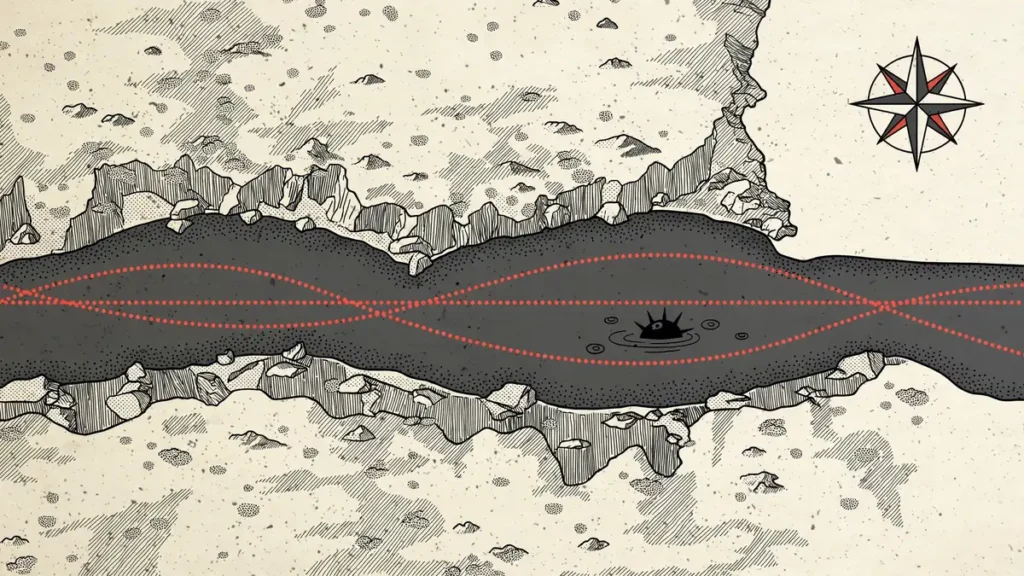
Two separate Iranian statements, carried by the state broadcaster IRIB early on Saturday, described three incidents. The Revolutionary Guards’ navy said two tankers had been trying to cross the southern part of the strait on an unauthorised route, with their radar and automatic identification systems switched off, when they struck a mine and caught fire. One of the two was a supertanker, according to the Guards. In a separate statement, Iran’s conventional navy said a third tanker, sailing east of the strait through a zone Tehran calls prohibited, also with its tracking systems switched off, caught fire and was forced to stop after striking a mine.
“A short while ago, two oil tankers that had switched off their radar and positioning systems and were secretly attempting to transit the Strait of Hormuz through an unauthorised route exploded and caught fire after striking a naval mine.” — Islamic Revolutionary Guard Corps Navy statement, carried by IRIB
Neither statement named the vessels, gave their flags or cargoes, or said whether anyone was hurt. Iranian state media also said two other tankers turned back after receiving warnings from the Guards’ naval traffic control centre. The claims were reported by Channel News Asia and by Free Malaysia Today, both carrying the wire reporting from Tehran.
The day before, the Guards had released footage of a large plume of smoke rising from a vessel it said was carrying liquefied gas and had hit a mine in the south of the strait. That footage, broadcast by Iranian state media on November 13, is part of the same pattern of claims — and it is the only visual evidence Iran has offered. No independent outlet has verified that the vessel in the footage was hit by a mine.
The context matters. Since war erupted with the United States in February, Tehran has insisted that vessels obtain its authorisation to cross the strait, and it has attacked ships it says do not comply. Under regulations issued on October 26, all vessels must obtain permission and follow the coordination of the Revolutionary Guards’ Maritime Traffic Control Centre. Iran’s navy warned in its latest statement, carried by IRIB, that “any offending tanker that travels in the restricted area east of the Strait of Hormuz will be set on fire by hitting naval mines.”
What is confirmed and what is only reported?
Start with what is confirmed. It is confirmed that the two Iranian statements were made and broadcast — the wording is on the record through IRIB. It is confirmed that US Central Command rejected the claims: it called them “false” and “another example of their lies and efforts to intimidate”, and said American forces had conducted mine-clearing operations in the major international shipping lanes. It is confirmed that the US military says it cleared the main routes through the waterway of mines — Central Command chief Admiral Brad Cooper said so on October 30. And it is confirmed that the reports have not been independently verified: Reuters said it could not immediately verify them, and the UK Maritime Trade Operations centre, which monitors shipping in the region, had not confirmed the incidents at the time of publication.
What is only reported is the substance of the claim itself: that three tankers hit mines, that one was a supertanker, and that the vessels had switched off their tracking systems and were on unauthorised routes. All of that comes from a party to the conflict, with no vessel identities to check against. No casualty figures have been given by any side.
There is an important asymmetry in the two positions. Central Command’s denial addresses the strait’s primary transit route, which the US says it has cleared. Iran’s claims concern a southern route and an area east of the strait that Tehran itself has declared unauthorised. The denial therefore does not, on its own, prove that no mine existed anywhere in the waterway — and the claim does not, on its own, prove that one did. Readers should treat both as positions in an information war as much as statements of fact.
The wider record supports caution. An open-source review of UK Maritime Trade Operations reports, published by The Red Zone newsletter on November 11, found that of 16 UKMTO attack reports dated October 23 to November 10, eleven described projectiles, one recorded explosive devices attached to a hull by a small boat, one recorded an explosion at the waterline and three gave no cause — none recorded a mine strike. In the same period, Iranian bodies claimed mine strikes on 19 days. The review judged it very unlikely that mines caused most of the damage UKMTO has recorded. That is one analysts’ assessment, not a verdict, but it is the best independent check available on a claim that has now been repeated for weeks.
By the numbers: the Hormuz shipping crisis
| Metric | Figure | Source | Status |
|---|---|---|---|
| Tankers reported hit by mines, November 14 | 3, including 1 supertanker | IRGC Navy / Iranian Navy via IRIB | REPORTED |
| Seafarers killed in and around Hormuz since February | At least 25 | United Nations | CONFIRMED |
| Vessel security incidents, March 1 – November 11 | 136 (35 in October, 10 in November) | International Maritime Organization | CONFIRMED |
| Vessels attacked in and around Hormuz, October | 37 — a monthly record | Lloyd’s List Intelligence | REPORTED |
| Attacks confirmed so far in November | At least 14 | Lloyd’s List Intelligence | REPORTED |
| Strait traffic vs pre-war levels | Down about 70% (130–140 to ~36 passages a day) | Al Jazeera | REPORTED |
| Strait traffic vs pre-war levels (UKMTO measure) | About 65% below pre-war levels | UKMTO | CONFIRMED |
| Brent crude, Friday close | $95.41 a barrel, down 2.4% on the week | Market data | CONFIRMED |
| IEA fourth-quarter oil surplus forecast | 1.7 million barrels a day above demand | International Energy Agency | CONFIRMED |
Figures marked REPORTED come from a single source or a party to the conflict and have not been independently confirmed; figures marked CONFIRMED come from the UN, the IMO, UKMTO or market data.
Why the mine claims matter even if they are unproven
The claims work as deterrence whether or not the mines are real. Each announcement ties a vessel’s fate to its route choice: use the southern corridor without permission, the message runs, and you will hit a mine. The statements name no ship and blame the owners and crews, which is exactly the point — the audience is every captain and insurer deciding whether to send a tanker through the strait at all. What the tanker war costs shippers and insurers is already visible in the traffic figures: the strait is moving roughly a third of its pre-war volume, and that collapse is real whatever caused the individual fires.
The pattern is now well established. Iran claimed two tankers hit mines on November 1, four on November 4 — a claim BBC Verify found no evidence for — two more on November 7, and two supertankers disabled by mine explosions on November 11. The November 14 claim of three is the latest in that sequence, not a first. Our earlier assessment of the Hormuz tanker campaign set out how the claims escalated through October and early November.
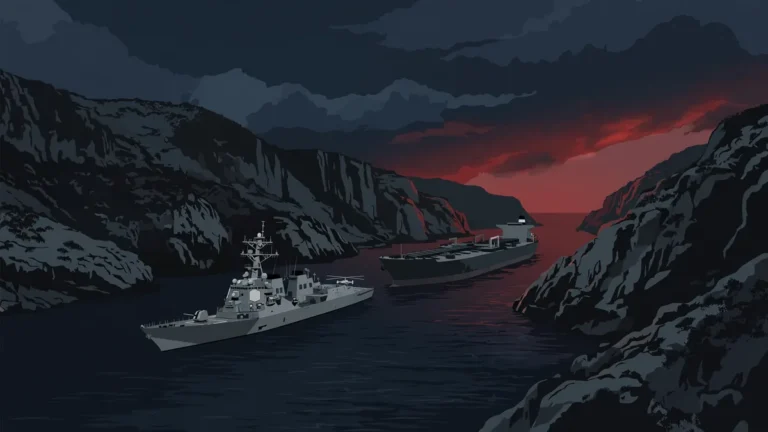
Meanwhile the United States has answered with force protection rather than argument. Washington imposed a naval blockade on Iranian ports from July 14 and provides military support to tankers using the waterway, and Central Command says its forces have cleared the main lanes. The two sides are now contesting the same waterway with incompatible stories: Tehran says the strait is closed to vessels it has not authorised, Washington says it is open and protected. The gap between those stories is where the risk sits — for crews, for insurers, and for oil prices.
How the tanker war reached this point
- February 28, 2026: The US-Israeli war on Iran begins. Tehran starts requiring vessels to obtain its authorisation to cross the Strait of Hormuz and attacks ships it says do not comply.
- July 14, 2026: The United States imposes a maritime blockade on Iranian ports and begins providing military support to tankers using the waterway.
- October 26, 2026: Tehran issues regulations requiring all vessels to obtain permission and follow the coordination of the Revolutionary Guards’ Maritime Traffic Control Centre.
- October 30, 2026: Central Command chief Admiral Brad Cooper says US forces have cleared the strait’s main shipping lanes of mines.
- November 11, 2026: The Revolutionary Guards’ navy claims two supertankers were disabled by mine explosions in the strait.
- November 13, 2026: The Guards release footage of a smoke plume from a vessel said to be carrying liquefied gas that hit a mine. The UN tells the Security Council that at least 25 seafarers have been killed in and around Hormuz since February. The International Energy Agency says the world oil market is returning to surplus. The Guards also claim an attack on a US early-warning radar in Bahrain; Central Command says two drones were shot down.
- November 14, 2026: Iran reports three tankers hit by mines in and around the strait. Central Command dismisses the claims as false. Al Jazeera reports that five tankers were hit around Hormuz in about 24 hours, counting the November 13 liquefied-gas vessel.
- November 15, 2026: Blasts and sirens sound in Bahrain as the Guards say they attacked a US radar site with six drones — see below.
What the Bahrain drone attack adds
The Hormuz story did not stay at sea. In the early hours of Sunday, November 15, blasts and sirens rang out over Bahrain and the authorities urged residents to seek shelter. Explosions were heard at about 04:00 local time (01:00 GMT), with residents reporting a second series at about 06:30 local time (03:30 GMT), according to an AFP journalist in Manama. Bahrain’s Interior Ministry issued a danger warning — its first since September — and the Bahraini defence forces said their air defence systems intercepted the attacks before they could achieve their objectives.
Iran’s Revolutionary Guards said their forces had carried out a drone attack on a US radar system at a base in Bahrain. “The US air defence radar system at the Al-Riffa helicopter base in Bahrain was targeted by six drones belonging to the IRGC Aerospace Force,” the Guards said in a statement posted by the state broadcaster on Telegram. Arab News reports that no damage from the attack has been confirmed, and no US statement on the November 15 attack had been issued at the time of writing.
It is the second such claim in two days. On November 13 the Guards said they had destroyed a US early-warning radar in Bahrain; Central Command said the attack had been attempted but neutralised, with two Iranian drones shot down and no casualties or damage. The November 15 claim follows the same script, and it should be read the same way: an Iranian claim, a Bahraini interception claim, and no confirmed damage.
The Bahrain attack also widens the picture beyond the strait. It came hours after Houthi missiles were aimed at Riyadh overnight, and it sits alongside the Red Sea shipping corridor campaign. The war is being fought across three theatres at once — the strait, the Red Sea and the Gulf states hosting US forces — and the mine claims are only one part of it.
What the Hormuz tanker mines mean for US/UK/EU readers
For most readers in the US, the UK and Europe, the direct effect of the November 14 claims runs through oil prices. Brent crude settled at $95.41 a barrel on Friday, down 2.4% on the week, despite the incidents — the market is, for now, pricing a global surplus over a shipping risk. The International Energy Agency said on November 13 that the world oil market would return to a surplus in the fourth quarter, with supply averaging 105 million barrels a day, about 1.7 million barrels a day above forecast demand, and that 71 million barrels from members’ emergency reserves would be made available by the end of February, including 15 million barrels of diesel. The Straits Times reports the IEA’s assessment in full.
That surplus is the buffer. About a fifth of the world’s oil normally moves through the Strait of Hormuz, according to the US Energy Information Administration, so a confirmed closure would move pump prices within days. But the market’s message on Friday was that the strait is not closed: traffic is down, not stopped, and Gulf exports excluding Oman reached 18.4 million barrels a day in October, about 74% of pre-war levels, according to the IEA. The first real test of the November 14 claims comes at Monday’s open — if Brent jumps, the market has decided the mines are real enough to price; if it does not, the surplus story holds for another week.
There is no direct travel impact for US, UK or EU readers from these incidents, and no advisory changes have been reported. The security effect is indirect but real: the same escalation that produced the mine claims also produced the Bahrain attack on a base hosting US forces, and the UK Maritime Trade Operations centre continues to issue warnings for shipping in the region. Readers with family or business in the Gulf should follow official government travel advice, which is updated separately from the shipping picture.
One caution for anyone watching energy markets: this article is educational and is not financial advice. Oil prices in a war move on claims as much as on confirmed events, and the gap between the two is exactly what this story is about.
What to watch next in the Strait of Hormuz
Five things will decide how this story develops. First, whether Central Command issues a statement on the Bahrain attack, and whether it confirms or denies any damage. Second, whether the UK Maritime Trade Operations centre confirms any of the three tanker incidents — a UKMTO confirmation would be the first independent corroboration of a mine strike. Third, whether any vessel is named, which would let insurers, flag states and journalists check the claim against real shipping records. Fourth, Monday’s oil open, which will show whether the market treats the claims as a real supply risk. And fifth, whether traffic through the strait falls further from its current level of about 36 passages a day — the clearest single indicator of whether crews and owners believe the mines are real.
If the mine claims are confirmed, the story changes fundamentally: the strait would be mined in fact, not only in Iranian statements, and the US mine-clearing claim would be in question. If they are not confirmed, the pattern itself becomes the story — a campaign of claims, repeated for weeks, that has already cut the world’s most important oil waterway to a third of its normal traffic without a single verified mine. Either way, the next verified fact will matter more than the next claim. Our comparison of the Bab el-Mandeb and the Strait of Hormuz explains why these two chokepoints, taken together, carry so much of the world’s oil — and why both are now under pressure at the same time. For the wider context, see our conflict zones hub and Iran’s warning to South Korea’s Cheonghae mission near Hormuz.
Read next: Hormuz Tanker Campaign: Mines, Projectiles, Two-Day Plan · What the Tanker War Costs: Hormuz Shipping, Insurance, Rerouting · Houthi Missiles Target Riyadh: What the Intercepts Mean
Frequently asked questions
Did three tankers really hit mines in the Strait of Hormuz?
Iran says they did, reporting three tankers — including one supertanker — caught fire after striking mines on November 14, 2026. No independent authority has confirmed the incidents: Reuters said it could not verify the reports, the UK Maritime Trade Operations centre had not confirmed them, and no vessel names, flags or cargoes were given. US Central Command called the claims false.
Is the Strait of Hormuz closed?
No. Traffic continues, but at roughly a third of pre-war levels — about 36 passages a day against 130–140 before the war, according to Al Jazeera. The United States says its forces have cleared the main shipping lanes and continue to escort tankers; Iran says vessels must obtain its permission and that unauthorised routes are mined.
How much oil passes through the Strait of Hormuz?
About a fifth of the oil the world consumes normally moves through the strait, according to the US Energy Information Administration, which estimated flows of about 20 million barrels a day of crude and refined products in 2023. It is the only sea route out of the Persian Gulf for the oil of Saudi Arabia, Iraq, Kuwait, the UAE, Qatar, Bahrain and Iran itself.
What happened in Bahrain on November 15?
Blasts and sirens sounded in Bahrain in the early hours of Sunday, November 15, and the authorities urged residents to seek shelter. Iran’s Revolutionary Guards said they had attacked a US air defence radar system at the Al-Riffa helicopter base with six drones. Bahraini defence forces said air defences intercepted the attacks. No damage has been confirmed and no US statement on the attack had been issued at the time of writing.
Why do the tanker claims move oil prices?
Because the Strait of Hormuz carries about a fifth of the world’s oil, any threat to it adds a risk premium to crude. Brent settled at $95.41 a barrel on Friday, November 13, down 2.4% on the week — the market is currently pricing the IEA’s forecast fourth-quarter surplus over the shipping risk. Monday’s open will be the first test of whether the November 14 claims change that judgement.
Sources
- Channel News Asia: Iran reports three incidents of oil tankers hit by mines in Hormuz
- Free Malaysia Today: Iran reports three incidents of oil tankers hit by mines in Hormuz
- Al Jazeera: UN says 25 seafarers killed in, around Hormuz since US-Israel war on Iran
- The Manila Times: Iran: 3 oil tankers hit naval mines in Strait of Hormuz
- The Straits Times: World oil market returns to surplus as Gulf exports recover, IEA says
- Arab News: Blasts, sirens in Bahrain as Iran announces attack on US base


Discussion 0
Share analysis, corrections, or context. Be civil — comments are moderated.