WarBrief Live | November 14, 2026 | Intelligence Report
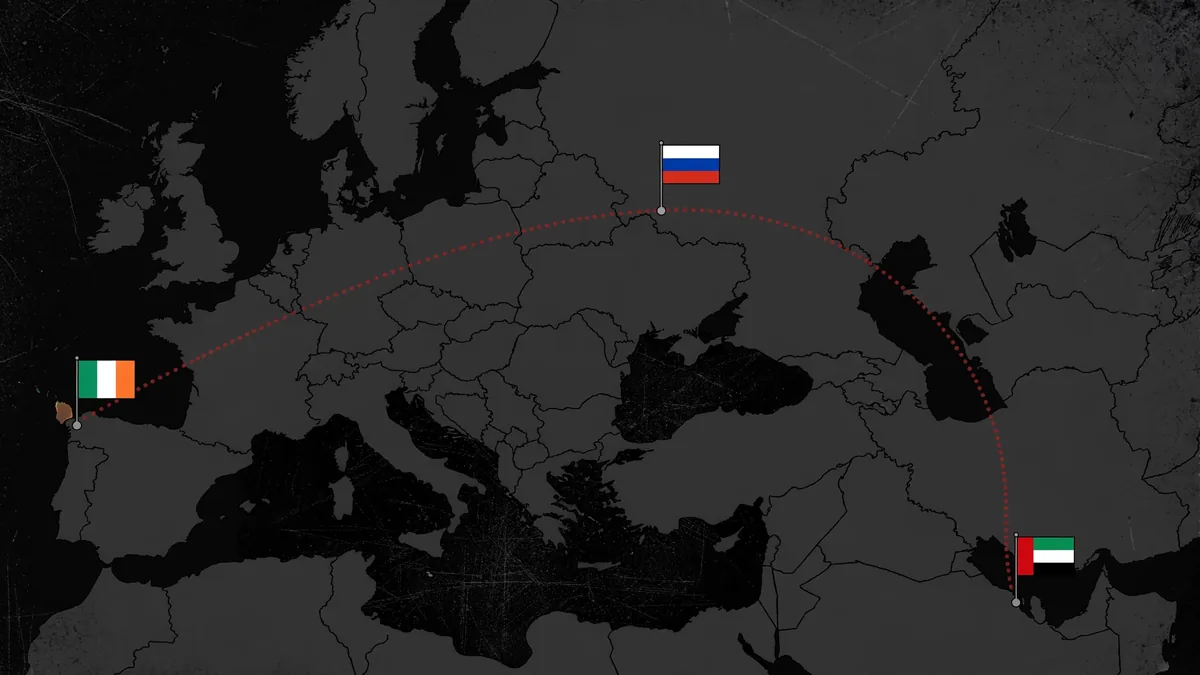
Europe will be represented at the Ukraine peace talks by the EU institutions and the E5 — the UK, France, Germany, Italy and Poland — EU leaders agreed in Dublin on November 13. Whether Moscow lets them in is undecided.
Key Takeaways
- EU leaders in Dublin agreed Europe’s team for the Ukraine talks: the EU institutions plus the E5 — the UK, France, Germany, Italy and Poland.
- The decision follows two days of US-mediated talks in Abu Dhabi on November 10-11, whose only concrete result was a prisoner exchange.
- US envoys Witkoff and Kushner say Vladimir Putin agreed Europe would join the next round. The Kremlin has not confirmed that.
- Bild reported sweeping informal Russian proposals, including Finland leaving NATO. Moscow denied them; Helsinki rejected them.
What did Abu Dhabi actually produce?
Russian and Ukrainian delegations met in Abu Dhabi on November 10-11, 2026, in the first direct talks in nine months. The United States mediated, with special envoy Steve Witkoff and Jared Kushner in the chair; Vladimir Medinsky led the Russian delegation and Rustem Umerov led Ukraine’s. Our account of the Abu Dhabi deal covers it in full.
The one concrete result was agreement on a large-scale prisoner-of-war exchange. Kushner described it as potentially the “biggest humanitarian release of prisoners” of the war, with numbers to be finalised on November 12. Both Medinsky and Umerov confirmed the planned exchange; no final figure had been published by November 12. TASS reported the exchange should take place within two to three weeks.
On ending the war itself, the talks produced nothing public. Territory remains the central sticking point, Kushner acknowledged, and no ceasefire, map or framework was released. The delegations did discuss ceasefire monitoring — the subject of our ceasefire monitoring explainer — but announced no agreement. From Abu Dhabi, the envoys flew to Moscow on November 12 to brief Putin, then on to Dublin to brief Zelenskyy.
Who is on Europe’s new negotiating team — and who chose them?
At the informal European Council meeting in Dublin on November 13, Council President Antonio Costa announced the team: the EU institutions and five countries — the UK, France, Germany, Italy and Poland.
“Europe must speak with one clear voice and united voice in all discussions that shape the future of Ukraine and the security of our continent. And this is ultimately a team effort,” Costa told reporters after the meeting.
The five are the E5 of the Coalition of the Willing, the group of more than 30 countries backing Ukraine and preparing security guarantees. They made a joint defence pledge in Paris in late October — see our E5 Paris defence pledge explainer.
Who sits in the chairs is not yet settled. EU officials said the representatives were likely to be national security advisers, plus European Commission and European Council delegates, with NATO also expected to be represented, Reuters reported. EU foreign policy chief Kaja Kallas laid claim to the envoy role.
Why is Moscow stalling on Europe’s seat at the table?
Two accounts of the Moscow meeting now circulate. Witkoff and Kushner said after meeting Putin on November 12 that he had agreed Europe would join the next round of talks. The Kremlin has not confirmed that.
Kremlin spokesman Dmitry Peskov said on November 13 that Moscow must first understand the Europeans’ intentions and readiness to contribute to peace before deciding. The Russian Foreign Ministry said it was unaware of any such agreement.
The Kremlin did leave the door open: it said on November 13 that Russia would be open to European countries taking part if they genuinely intended to contribute to peace, Reuters reported. Europe’s fear is the mirror image: trilateral talks leaving Europe sidelined while Washington and Moscow decide the war’s fate.
What do the reported Russian proposals reveal?
On November 13, the German newspaper Bild reported that Russian representatives had presented sweeping informal proposals during the Abu Dhabi talks, aimed at a “new European security order” beyond Ukraine.
According to Bild, Russia would keep all occupied Ukrainian territory and take the whole of the Donbas, including Kyiv-held parts; Ukraine would adopt permanent non-aligned status, ruling out NATO membership while leaving EU membership open; Odesa and Mykolaiv would be demilitarised; NATO would be barred from bases in Estonia, Latvia and Lithuania; Finland would leave the alliance; and Moldova would become a federal republic, with referendum rights for Transnistria and Gagauzia if it joined the EU. In return, Russia was said to offer to remove its nuclear weapons from Belarus, not deploy intermediate-range missiles there, and withdraw its troops from Transnistria.
Three caveats matter. Bild stressed this was one of several proposals in unofficial channels; whether Putin endorsed it is unclear. The Kremlin denied it — Peskov said “No, no such conditions have been put forward.” Finland rejected it outright: Defence Minister Antti Häkkänen called the idea “absolutely outrageous” and non-negotiable.
Assessment and outlook
Dublin solved Europe’s internal question — who speaks for us — but not the external one: will Moscow listen? First, whether the Kremlin confirms Europe’s admission before the next round, for which no date has been set. Until it does, the team is a delegation without an invitation.
Second, whether the prisoner exchange agreed in Abu Dhabi actually happens: a swap within the reported two-to-three weeks would show the talks can produce results; a stall would suggest Abu Dhabi was a one-off. Third, the Special European Council on November 26-27, where leaders discuss Ukraine’s funding needs — money is leverage, and a funding decision taken without a seat would underline the gap Dublin was meant to close.
For US, UK and EU readers, the stakes are practical. Any settlement negotiated without Europe would still need European money, guarantees and enforcement to hold — and a deal trading away NATO’s northern flank or Baltic security would reshape the continent’s security. That is why the fight for a seat at the table matters as much as anything said at it. More background is in our Intelligence Reports hub.
Frequently asked questions
Who are the E5 in the Ukraine peace talks?
The United Kingdom, France, Germany, Italy and Poland — the five largest military powers in the Coalition of the Willing, chosen with the EU institutions in Dublin on November 13, 2026.
Has Russia agreed to let Europe join the Ukraine talks?
Not confirmed. US envoys Witkoff and Kushner said Putin agreed after their November 12 Moscow meeting, but the Kremlin says no decision has been made.
What did the Abu Dhabi talks achieve?
The November 10-11 talks produced agreement on a large-scale prisoner-of-war exchange, described by Kushner as potentially the biggest of the war. No ceasefire, territorial settlement or written framework was announced.
Sources
- Al Jazeera: EU agrees on five countries to represent Europe in Ukraine talks
- Reuters: EU settles on five-nation group to speak for Europe at Ukraine talks
- Al Jazeera: Russia-Ukraine talks in Abu Dhabi end with prisoner exchange agreement
- Interfax-Ukraine: Russia demands Donetsk region, Moldova federalization, Finland’s NATO exit
- The National: Abu Dhabi talks yield agreement on large-scale prisoner exchange
- CGTN: EU institutions, E5 to represent Europe in Ukraine peace talks