WarBrief Live | November 11, 2026 | Intelligence Report
| 16 Counter-drone systems listed | 5 Companies selected | 18 months Framework contract length | USD 40B+ Allied counter-drone spending pledged over five years |
On November 5, 2026, NATO opened a counter-drone marketplace: 16 pre-tested systems from five companies that allies can buy without a new tender. It is a catalogue, not an order book — no money moves until an ally places an order.
Key Takeaways
- NATO launched the counter-drone (C-UAS) marketplace on November 5, 2026: 16 systems from five companies, all already deployed with allied forces or in Ukraine.
- Allies can buy, lease or lease-to-own directly from the catalogue with no new tender; NCIA runs quote rounds of about two weeks.
- The framework contracts carry no money. The only common funding is €3.1 million for testing; the USD 40 billion figure is a separate five-year national pledge.
- The headline winner is a 2024 startup. Alta Ares says it won six of the 16 lots — unconfirmed by NATO, which has not published the lot split.
What is NATO’s Drone Edge marketplace?
Drone Edge is the initiative under which allies committed to invest more than USD 40 billion in counter-drone capabilities over five years. It was launched at the NATO Summit Defence Industry Forum in Ankara in July 2026, and the marketplace is its procurement arm. NATO announced the launch on November 5, saying it would give allies access to “suitable solutions to urgent operational requirements” without a further tender. NCIA, which hosts the NATO Counter-UAS Centre of Expertise, runs the 18-month framework contracts, with an option to extend.
The timing is a direct response to the autumn of 2025. On the night of September 9–10, 2025, around 20 Russian drones entered Polish airspace, and NATO fighters shot several of them down — the first time alliance aircraft had fired on aerial targets over allied territory. NATO launched Operation Eastern Sentry days later, and within weeks unidentified drones had disrupted airports in Denmark and Germany. See our analysis of NATO’s eastern-flank warning and the Intelligence Reports hub.
How does the catalogue actually work?
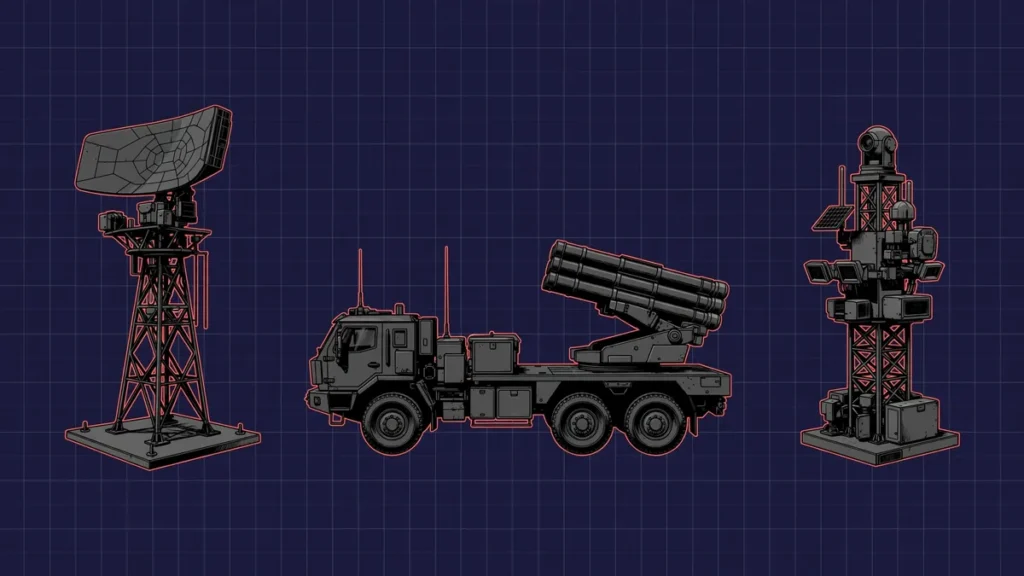
Bids were scored against four reference scenarios: point protection of a single site, area protection of a zone up to 3 kilometres across, border protection of a 20-kilometre segment, and convoy protection for a 300-metre column moving at 50 km/h. The December 19, 2025 tender notice listed 85 prospective bidders, admitted only systems already deployed with allied forces, barred prototypes, and required NATO Restricted clearances.
Money reaches suppliers only through task orders. A nation or NATO command sets a requirement, NCIA asks the awardees in that category for quotes, and they get roughly two weeks to answer. Allies can buy, lease or lease-to-own. The award had been planned for June 30. The five are Alta Ares, Axon Enterprise Inc., Northrop Grumman, OSL UK and Quantum Systems. NATO has not published which solutions each company supplies, and larger names from the bidder list — among them Anduril, Thales, Saab and Fortem — are not in the catalogue.
| Metric | Figure | Status |
|---|---|---|
| Systems in the catalogue | 16 | CONFIRMED — NATO |
| Common testing funds | €3.1 million | CONFIRMED — NATO |
| Allied counter-drone pledge | USD 40 billion+ over five years | CONFIRMED as a pledge; not marketplace funding |
| Alta Ares lots | 6 of 16 | REPORTED — company claim; lot split unpublished |
| Task orders placed | 0 announced | CONFIRMED as of November 9 — DroneXL |
Figures marked CONFIRMED rest on NATO or NCIA publications; the Alta Ares lot count rests on the company’s own statement.
Why a startup founded in 2024 leads the catalogue
The most striking result is that the biggest winner is not a prime contractor. Alta Ares, a Franco-Ukrainian company founded in 2024, says it won six of the 16 lots — more than any other supplier — and that it is the only supplier selected for area defence across all three mobility classes: static, transportable and on-the-move. The company says its systems are trained on battlefield data from Ukraine and the Gulf, with Shahed-type drones and loitering munitions as the target set. It raised €50 million in June 2026.
The selection filter explains the outcome. By barring prototypes and admitting only systems already fielded with allied forces, NCIA made combat deployment the entry ticket — a test a two-year-old company with Ukraine experience can pass and a legacy prime with a laboratory prototype cannot. But the six-lot figure rests on the company’s word: NATO has not published the lot-by-lot split, so the count is reported, not confirmed. Quantum Systems of Germany is a winner too. Germany’s military profile shows why Berlin is a likely early buyer.
What the marketplace means for US, UK and EU readers
For European allies, the practical effect is speed. An eastern-flank state needing counter-drone cover for a base, border or convoy can now order from a pre-vetted list instead of running its own tender. Poland, the Baltic states and Romania are the most likely early buyers, and the framework puts no cap on quantity.
For American readers, there is a wrinkle: the United States is building a parallel route. Army Secretary Dan Driscoll signed a statement of intent at Eurosatory on June 16 with nine allies to open the US Army’s own UAS marketplace to them; the Pentagon’s JIATF 401 marketplace went live for US bases in February. Each of those countries can order from both catalogues, so NCIA’s route must beat direct buying and the Army’s channel on speed. Bulgaria already bought directly: it took delivery of its first two counter-drone systems, bought from Axon, in August.
One distinction matters most: these are military systems for allied armed forces — not civilian airport protection, and not a shield for cities. The September 2025 airport disruptions in Denmark showed how vulnerable civil aviation is to drone incursions; the marketplace does not answer that problem. The USD 40 billion figure sits in national budgets over five years; it is not money NATO has spent.
What to watch next in the Drone Edge rollout
The first test is the first task order: which ally buys, and how fast the two-week quote process runs. If months pass without one, the catalogue will look like a shortlist. The second test is competition between the two marketplaces — NCIA’s and the US Army’s — for the same nine allied customers. The third is the next competition round: NCIA intends to re-compete regularly, and whether the absent primes from the 85-company list enter then will show whether the first round’s startup-heavy result was a one-off or a pattern.
Assessment
The Drone Edge marketplace is a genuine procurement reform. It replaces a multi-year tender cycle with a pre-competed catalogue, and its deployed-systems-only filter is the right test for a rapidly evolving threat. The small launch size is a deliberate filter, though man-portable systems sit under a separate contract.
Two parallel marketplaces could fragment demand. The USD 40 billion headline is a pledge in national budgets, not committed marketplace money. And the catalogue’s most eye-catching number — a 2024 startup winning six of 16 lots — remains a company claim until NATO publishes the split. The marketplace will be judged on the first order, not the announcement.
Frequently asked questions
What is NATO’s Drone Edge marketplace?
A catalogue launched on November 5, 2026, of 16 counter-drone systems from five companies that NATO allies can buy without a new tender, run by the NATO Communications and Information Agency.
Can any NATO ally buy from the marketplace?
Yes. Allies order directly from the NATO catalogue; NCIA runs quote rounds of about two weeks, and allies can buy, lease or lease-to-own.
How much money has NATO committed to the marketplace?
€3.1 million for testing is the only money committed to the marketplace itself so far. The USD 40 billion-plus figure is a separate five-year national spending pledge.
Which companies are in the catalogue?
Alta Ares, Axon Enterprise Inc., Northrop Grumman, OSL UK and Quantum Systems. Alta Ares says it won six of the 16 lots; NATO has not published the lot split.
Has anyone bought anything from the marketplace yet?
No task order had been announced as of November 9, 2026. The first order will be the real test of whether the catalogue works as a buying channel.
Sources
- NATO: NATO accelerates procurement for counter-drone technologies (November 5, 2026)
- DroneXL: NATO Counter-Drone Catalog: 2024 Startup Says It Won 6 of 16 Lots (November 9, 2026)
- Interfax-Ukraine: Franco-Ukrainian Alta Ares wins 6 of 16 NATO counter-drone system lots (November 6, 2026)
- Alta Ares: Alta Ares wins six lots in NATO counter-drone framework contract (November 5, 2026)
- ANews: NATO launches counter-drone marketplace to speed up access to defense technologies (November 7, 2026)