
WarBrief Live | October 13, 2026 | International Security
NATO’s top military commander has publicly spelled out how the alliance would fight — and win — a war on its own territory. U.S. Air Force General Alexus Grynkewich, NATO’s Supreme Allied Commander Europe, told the Warsaw Security Forum on October 12, 2026, that NATO’s “theory of victory” is to block, blunt and break any attack, ensuring it proves “utterly futile” — and to strike far beyond the front lines if the attacker keeps coming. This explainer breaks down what Grynkewich’s theory of victory means, why he chose to say it now, and what it signals to Moscow.
Key Takeaways
- Gen. Alexus Grynkewich, NATO’s Supreme Allied Commander Europe, publicly outlined NATO’s “theory of victory” at the Warsaw Security Forum on October 12, 2026: block, blunt and break any attack against any ally so that it proves “utterly futile.”
- If an attacker presses on, NATO would “break the warfighting system” behind the assault — striking beyond the attacking force at anything that “supports, sustains, and controls” it.
- Grynkewich never named Russia, but Reuters reported his message was clearly directed at Moscow, amid European accusations of a Russian sabotage, drone-incursion and cyberattack campaign.
- The general said he spoke out publicly because sabotage and arson had made alliance citizens nervous — and he moved to reassure allies about Washington’s commitment to NATO.
What is NATO’s “theory of victory”?
In military planning, a “theory of victory” is simply a commander’s answer to the question: how do we win? On October 12, NATO’s top commander gave his answer in public, at unusual length and with unusual bluntness. Speaking at the Warsaw Security Forum, General Grynkewich stressed that NATO is a defensive alliance — but said that if it were attacked, the alliance would fight, stop the attack, and deny the attacker its objectives, whatever those might be.
The core of the doctrine is deterrence by denial: make any assault on any ally so costly and so unsuccessful that launching it becomes pointless. That is what he meant by ensuring an attack proves “utterly futile.” The second half of the doctrine is deterrence by punishment — the explicit warning that pressing an attack would bring retaliation against the entire system behind it, not just the troops at the front.
The phrasing matters because senior NATO commanders rarely describe war plans this concretely in public. Grynkewich said he had decided to talk openly about the alliance’s plans for a specific reason: recent acts of sabotage and arson had made people across the alliance nervous, and he wanted them to hear — directly from the commander who would run the fight — that NATO knows what it would do and how it would do it.
What did Grynkewich mean by “block, blunt and break”?
The three words are the doctrine’s shorthand. Grynkewich did not define each phase line by line in the remarks reported by Reuters, but in standard military usage the sequence is clear enough: block — halt the attack at or near the frontier; blunt — wear it down, strip its momentum and deny it its objectives; break — destroy the enemy force’s ability to keep fighting. The sequence applies to an attack “against any ally” — the point being that geography does not dilute the response.
The sharper edge came in the second half of the remarks. Grynkewich said that if the adversary pressed the attack or committed its reserves, NATO would “break the warfighting system” engaged against it — and that this covers not just the attacking force itself, but “anything and everything that supports, sustains, and controls that force.” Reuters described this as an explicit threat of massive retaliation striking far beyond the forces in the immediate area of attack: the logistics, the command nodes, the supply lines — the machinery that keeps an offensive running.
| Metric | Figure | Source |
|---|---|---|
| Doctrine phases | 3 — block, blunt, break | Reuters (CONFIRMED) |
| Alliance population cited | ~1 billion citizens | Reuters (CONFIRMED) |
| NATO Strategic Concept naming Russia top threat | 2022 | Reuters (CONFIRMED) |
| Remarks delivered | October 12, 2026, Warsaw Security Forum | Reuters (CONFIRMED) |
| Russian sabotage / drone / cyber campaign | Accused by European governments; denied by Moscow | Reuters, Japan Times (REPORTED — attributed claims) |
Figures marked CONFIRMED come from Reuters’ reporting of the speech; the hybrid-campaign row reflects attributed government accusations, not independently verified findings.
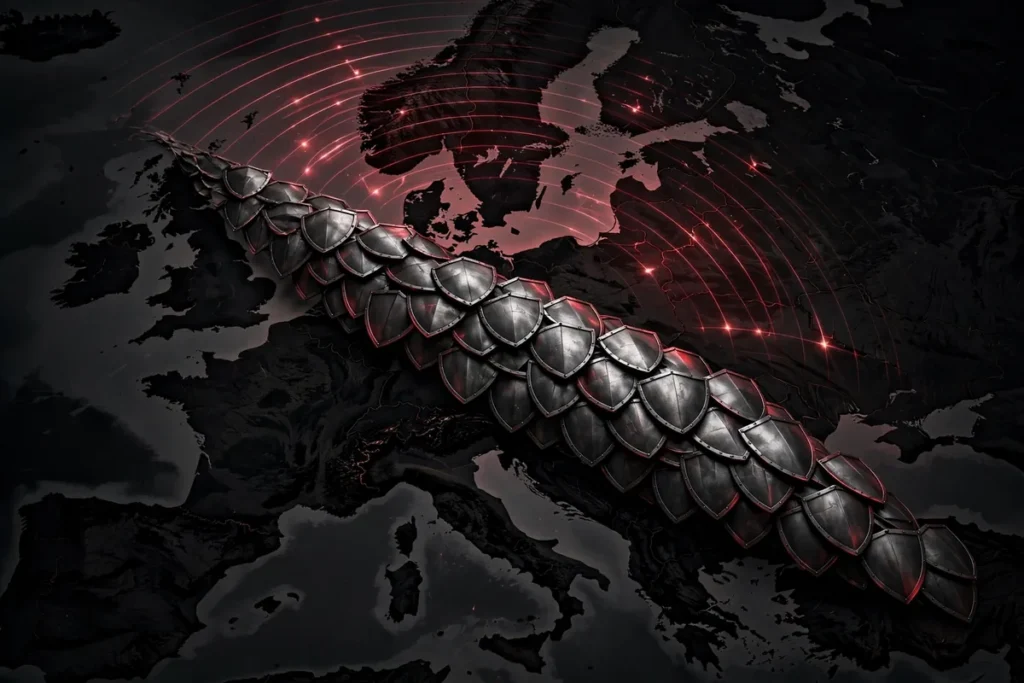
Read carefully, the message has two audiences. To a potential attacker, it says: even your best opening move fails, and escalation only widens what we hit. To the alliance’s own citizens, it says: there is a plan, it is rehearsed, and it does not depend on improvisation. That dual audience — reassurance plus warning — is exactly how deterrence messaging is supposed to work.
Background and timeline
- 2022: NATO’s Strategic Concept identifies Russia as the most significant threat to allied security — the doctrinal baseline Grynkewich’s remarks sit on.
- July 2026: At a NATO summit in Ankara, U.S. President Donald Trump spoke warmly of the alliance. Grynkewich recalled in Warsaw: “I was in the room and I felt the love” — a line aimed at allies doubting Washington’s commitment.
- September 2026: Russia warned it could use nuclear weapons if NATO attempted to cut off its Kaliningrad exclave, sharply raising the rhetorical stakes.
- October 12, 2026: Grynkewich delivers the “theory of victory” remarks at the Warsaw Security Forum, outlining the block-blunt-break doctrine and the warning of strikes beyond the front lines.
- October 13, 2026: The Japan Times reports Russia is escalating its sabotage campaign inside NATO countries; European officials say they do not expect a full-scale invasion but fear a deadly incident “by accident or by intention.”
- October 2026: Vladimir Putin says Russia has no plans to attack any European country and wants peaceful coexistence; Moscow repeatedly denies involvement in sabotage and hybrid operations.
Why is NATO warning Russia now?
The timing is driven by what European governments describe as a mounting Russian pressure campaign below the threshold of open war: sabotage, drone incursions into allied airspace, arson, and cyberattacks. Reuters reported that European capitals accuse Moscow of stepping up all of these — accusations Russia denies. It is this gray-zone campaign, not a massed invasion force, that has dominated European security debates in recent months, and questions are already being asked about whether Russia’s hybrid operations are reaching countries like Moldova.
The Japan Times’ October 13 analysis captures the dilemma: European officials do not expect a major Russian invasion of a NATO country — in that sense, traditional deterrence has worked. But they are, in the paper’s words, struggling to respond to the shadow war, and what they fear most is that one of these deniable attacks causes a significant loss of life. A former NATO intelligence official, David Cattler, told the paper Moscow is using tools that are hard to attribute — “big enough to matter and yet small enough not to trigger” a wider war.
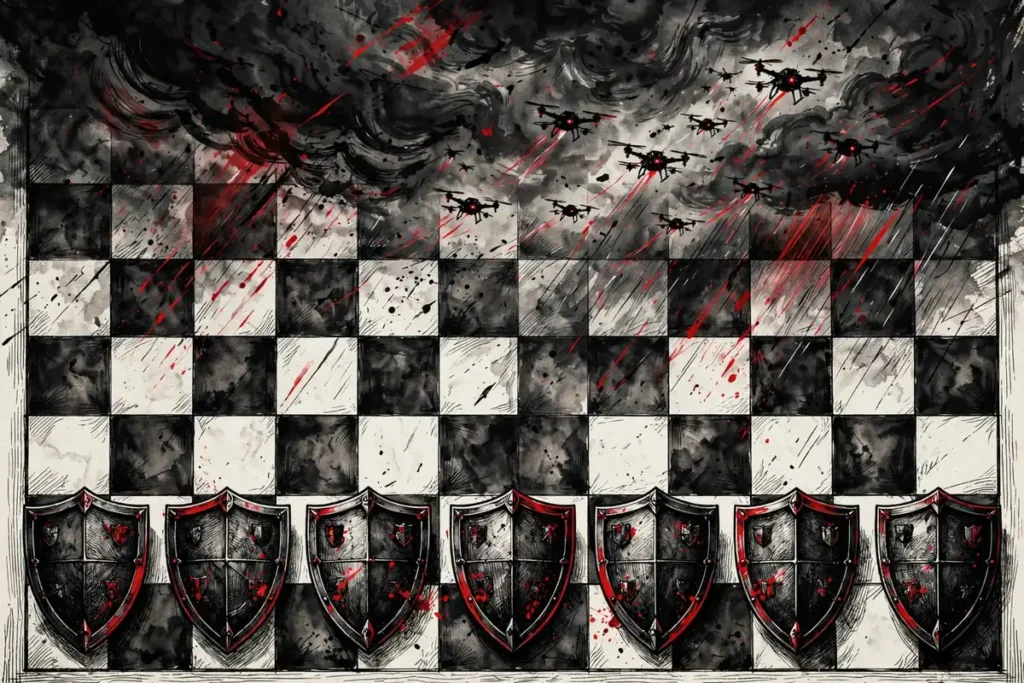
Grynkewich’s remarks land in the middle of two other anxieties. One is allied doubt about Washington: Reuters noted his speech came amid lingering European concerns over Trump’s commitment to NATO’s mutual-defense pact, with Trump having recently announced a deal letting Russia supply diesel to global markets and renewed his criticism of Ukraine’s president — even as frontline allies like Lithuania push for a permanent US military presence on NATO’s eastern flank. The other is nervousness at home: the general said plainly that sabotage and arson had made the alliance’s citizens uneasy, and that he wanted to assure NATO’s “one billion citizens” that the alliance has the situation in hand — while sending a message to anyone contemplating harming a member state.
Different perspectives
The NATO view is that this is textbook deterrence: describe the response so credibly that the attack never happens. Framing the alliance as defensive while detailing a devastating counteroffensive is deliberate — it puts the choice, and the blame for escalation, on the attacker.
Moscow’s view, as reported by Reuters, is denial and dismissal: Russia rejects involvement in the sabotage and hybrid campaign, and Putin said this month that Russia has no plans to attack any European country — even as Moscow has declared European arms factories “potential targets”. From the Kremlin’s perspective, NATO’s rhetoric is the provocation, not the response.
The analysts’ view points to a gap the speech does not close. The “theory of victory” is a doctrine for defeating a conventional attack — but the contest actually underway is the shadow war of deniable sabotage, drone incursions and cyberattacks that sits below the threshold the doctrine addresses. Europe’s struggle, as the Japan Times documented, is not a lack of war plans but a lack of good responses to attacks that are “big enough to matter and yet small enough not to trigger” war.
WarBrief’s read: the most significant thing about the speech may be its explicitness. SACEURs do not usually narrate the retaliation in public. Doing so now — naming the warfighting system, the support, the sustainment, the control — is itself the message, aimed as much at nervous allied publics and a doubting Washington audience as at Moscow.
What this means for US/UK/EU readers
For US readers, the speech is the strongest public reassurance yet from the American general who would command NATO’s fight that Washington’s commitment is intact — delivered against a backdrop of Trump’s diesel arrangement with Moscow and his criticism of Kyiv. It does not settle the burden-sharing debate, but it puts the alliance’s military leadership on the record.
For UK and EU readers, the message is deterrence, not mobilization: nothing in the remarks announces new deployments, sanctions or travel restrictions. The part of the contest most likely to touch daily life remains the gray zone — cyberattacks, sabotage, drone incidents — where resilience of infrastructure matters more than military posturing. Follow our Intel hub for continuing coverage of these threats.
For markets and energy, any genuine escalation between NATO and Russia would ripple through energy prices and shipping — but the speech itself changes no policy and announces no economic measures. Treat it as a signal of resolve, not a market event.
What to watch next
First, Moscow’s response: whether the Kremlin dismisses the remarks, answers with its own warnings, or adjusts the tempo of the gray-zone campaign. Second, whether the drone incursions and sabotage incidents that prompted the speech continue, pause, or escalate in the coming weeks — that will be the real test of whether the warning registered. Third, the politics around the U.S.-Russia diesel arrangement and allied reactions to it, which color how European capitals read Washington’s reliability. And fourth, the rest of the Warsaw Security Forum itself, where Ukraine’s war and Europe’s defense posture dominate the agenda.
Frequently asked questions
What is NATO’s “theory of victory”?
It is the doctrine outlined by NATO’s Supreme Allied Commander Europe, Gen. Alexus Grynkewich, on October 12, 2026: NATO would block, blunt and break any attack against any ally to make it “utterly futile” — and if the attacker pressed on, would destroy the entire “warfighting system” behind the assault, including its support, sustainment and command.
What did Grynkewich mean by “block, blunt and break”?
In standard military usage: block the attack at the frontier, blunt its momentum and deny it its objectives, then break the enemy force’s ability to keep fighting. The sequence applies no matter which ally is attacked.
Did NATO threaten to attack Russia?
No — and Grynkewich never named Russia. He framed everything as a conditional response to an attack on the alliance, stressing NATO is defensive. Reuters reported the message was clearly directed at Moscow, but that reading is the outlet’s analysis of the context, not a quote from the general.
Why did Grynkewich say this now?
By his own account, because sabotage and arson had made alliance citizens nervous. He wanted to reassure NATO’s “one billion citizens” that the alliance has a plan — and to warn potential attackers. The remarks also came amid European doubts about Washington’s commitment to the alliance.
Who is General Alexus Grynkewich?
A U.S. Air Force general serving as NATO’s Supreme Allied Commander Europe (SACEUR) — the alliance’s top military commander, responsible for planning and conducting NATO operations.
Sources
- Reuters: NATO commander Grynkewich warns Russia attack would be ‘utterly futile’
- Reuters: NATO general sets out tough military response to any ‘foolish’ Russian attack
- The Japan Times: As Putin wages shadow war, Europe looks for a way to hit back
- New York Post: NATO warns Russia ‘we will break’ forces, destroy ‘anything and everything’ if you attack

Discussion 0
Share analysis, corrections, or context. Be civil — comments are moderated.