
WarBrief Live | November 6, 2026 | Geopolitics
~800
civilians evacuated from Oleshky during the six-day truce
6 days
the Oleshky ceasefire lasted, October 27 to November 1, 2026
Oct 23
both sides signed written agreements recognising Melania Trump as exclusive intermediary
Nov 10-11
US-brokered Russia-Ukraine talks scheduled in Abu Dhabi
On November 5, 2026, US First Lady Melania Trump hosted Russian and Ukrainian officials at the White House and urged both sides to turn a six-day humanitarian truce in Oleshky into something more lasting. It was, the White House said, the first time a First Lady had personally brought representatives of two nations at war to the White House for diplomacy.
Key Takeaways
- Melania Trump hosted Kirill Dmitriev, Yana Lantratova, David Arakhamia and Dmytro Lubinets at the White House on November 5, 2026, to mark the Oleshky ceasefire she helped broker.
- The six-day truce, signed on October 23 and in effect from October 27 to November 1, allowed aid into Russian-occupied Oleshky and the evacuation of nearly 800 people. It was the longest multi-day truce since Russia’s full-scale invasion began in February 2022.
- Who brokered the truce is disputed: the White House credits Melania Trump, while reporting notes that Pope Leo XIV also pressed both sides to allow aid and evacuations.
- No deal was signed at the White House. The meeting was a humanitarian stock-take, not a peace negotiation, and it leads directly into US-brokered Russia-Ukraine talks in Abu Dhabi on November 10 and 11.
What happened at the White House on November 5?
Melania Trump spoke in the White House Grand Foyer on Thursday, November 5, 2026, with officials from both warring countries in attendance. The event marked the completion of the Oleshky ceasefire, a localised humanitarian truce in the Russian-occupied city in Ukraine’s Kherson region. Al Jazeera reported that the White House described the gathering as believed to be “the first time in American history that a First Lady has personally brought representatives of two nations at war to the White House for diplomacy”.
Four officials attended alongside the First Lady. Russia was represented by Kirill Dmitriev, a special envoy of President Vladimir Putin, and Yana Lantratova, Russia’s human rights commissioner. Ukraine was represented by David Arakhamia, leader of the Servant of the People party in Ukraine’s parliament, and Dmytro Lubinets, Ukraine’s parliamentary human rights commissioner.
Mrs. Trump urged both sides to see the Oleshky truce “as a spark in a world of darkness” and said: “Together, we can create something more enduring than a temporary ceasefire.” She added: “Let Oleshky be the modest spark that grows into a lasting flame of peace.”
The ceremony was symbolic as much as substantive. Ukrainian representatives presented Mrs. Trump with the Order of Princess Olga, first class, an award President Volodymyr Zelenskyy had conferred on her earlier in the week. Dmitriev presented her with a painting by an 11-year-old girl. Mrs. Trump handed the most senior officials present letters she had written to Presidents Putin and Zelenskyy, asking the envoys to deliver them. After the remarks, she invited the delegations to view a pair of historic artifacts she had selected from the White House collection.
President Donald Trump did not take part in the event itself, but he met Dmitriev separately at the White House. The Associated Press reported that the president afterwards told reporters he believed the two sides were “very close to settling” the war — a claim that should be read as optimism, not as a done deal, since no agreement has been announced.
How did the Oleshky ceasefire come about?
Oleshky sits on the Dnipro River in southern Ukraine, in territory captured by Moscow’s forces on the first day of Russia’s full-scale invasion in February 2022. Before the war it was home to about 24,000 people. By the autumn of 2026, only around 2,000 civilians remained, with no electricity, heat or running water, and food and medical supplies had been scarce for months. The city had already been devastated by flooding in June 2023 after the Kakhovka Dam collapsed — an explosion an Associated Press investigation found was likely caused by the Russian military, in which hundreds of residents were killed.
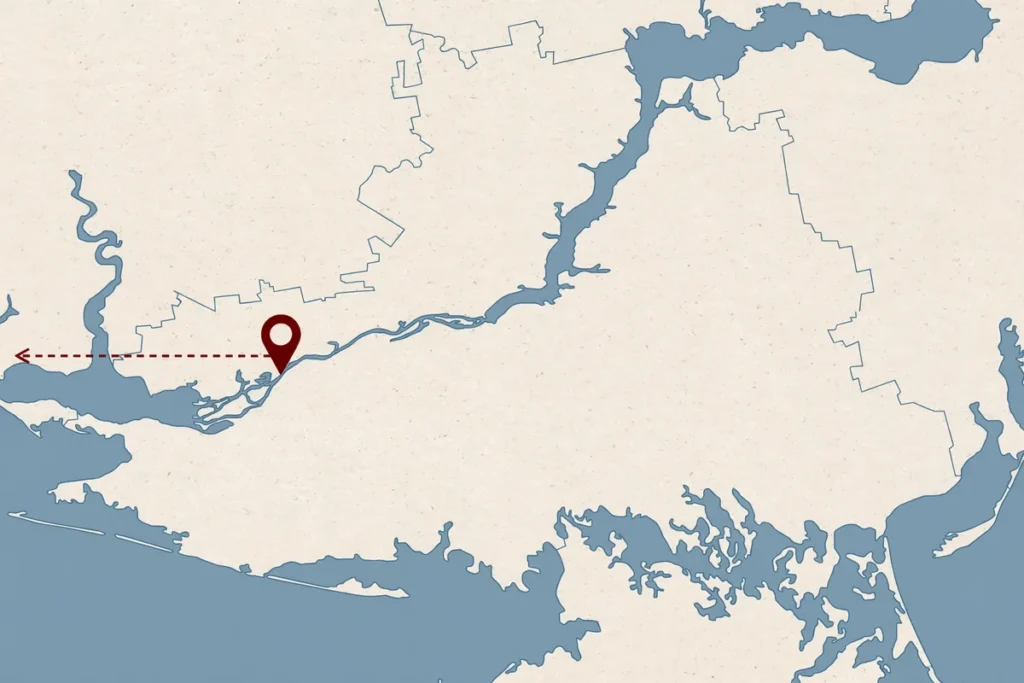
Mrs. Trump said she began working on the crisis after learning about it at an event she held on the sidelines of the United Nations General Assembly session in September 2026, and that she and her top adviser, Marc Beckman, worked directly with Russian and Ukrainian leadership to define the terms of the truce. According to the White House, both countries signed written agreements on October 23, 2026, recognising her as the “exclusive intermediary”. She said she was involved in every stage of the planning, including reviewing de-mining plans and evacuation routes.
The truce ran from October 27 to November 1. During the six days, aid was delivered into the city, roads were demined, and residents were offered the choice of evacuating to territory controlled by Ukraine or Russia, or remaining in the city with replenished supplies. Mrs. Trump said nearly 800 people evacuated. Ukrainian authorities have not published a precise evacuation total and have restricted details about the routes used, to protect those who stayed behind and to safeguard future humanitarian missions.
It was the longest multi-day truce between Russia and Ukraine since the full-scale invasion began, and the first joint relief operation in four years and eight months, according to Al Jazeera. The First Lady’s humanitarian work with both countries predates Oleshky: she has been working since last year to reunite families separated by the war, and the Associated Press reported that she has so far helped nearly three dozen children reunite with their relatives.
- September 2026: Melania Trump learns of the Oleshky humanitarian crisis at a UN General Assembly sidelines event and begins talks with both sides through adviser Marc Beckman.
- October 23, 2026: Russia and Ukraine sign written agreements recognising Mrs. Trump as exclusive intermediary for a localised ceasefire.
- October 27 to November 1, 2026: the six-day Oleshky truce is in effect; aid is delivered and nearly 800 people evacuate.
- November 1, 2026: the truce expires with no extension.
- November 2, 2026: a Russian bombing of an aid distribution point in Komyshuvakha, in the Zaporizhia region, kills at least 40 people, according to President Zelenskyy.
- November 5, 2026: Melania Trump hosts Russian and Ukrainian officials at the White House; President Trump meets Dmitriev separately.
- November 10-11, 2026: US-brokered Russia-Ukraine talks are scheduled in Abu Dhabi, the first trilateral meeting since February.
What do the numbers show — and what is still only reported?
| Metric | Figure | Source | Status |
|---|---|---|---|
| Civilians evacuated from Oleshky | Nearly 800 | Melania Trump, reported by AP | CONFIRMED |
| Civilians remaining in Oleshky | About 2,000 | AP / Al Jazeera | CONFIRMED |
| Truce duration | 6 days (Oct 27 – Nov 1, 2026) | AP / Al Jazeera | CONFIRMED |
| Children reunited with relatives | Nearly 3 dozen | AP | CONFIRMED |
| Pre-war population of Oleshky | About 24,000 | AP | CONFIRMED |
| Killed in the Komyshuvakha aid-point bombing | At least 40 | President Zelenskyy, via Al Jazeera | REPORTED (Ukrainian claim) |
Figures marked CONFIRMED appear in two or more reputable sources. The Komyshuvakha death toll is a Ukrainian claim that has not been independently verified.
Why the Oleshky truce matters beyond one town
The White House meeting matters because it tested something the war has produced almost none of: a working channel between Moscow and Kyiv that both sides actually used. A localised ceasefire is not a peace deal, and nobody at the White House claimed it was. But the mechanics — written agreements, a named intermediary both sides accepted, de-mining plans, agreed evacuation routes, and a truce both sides respected for six days — are a template that could, in principle, be repeated elsewhere on the front line.
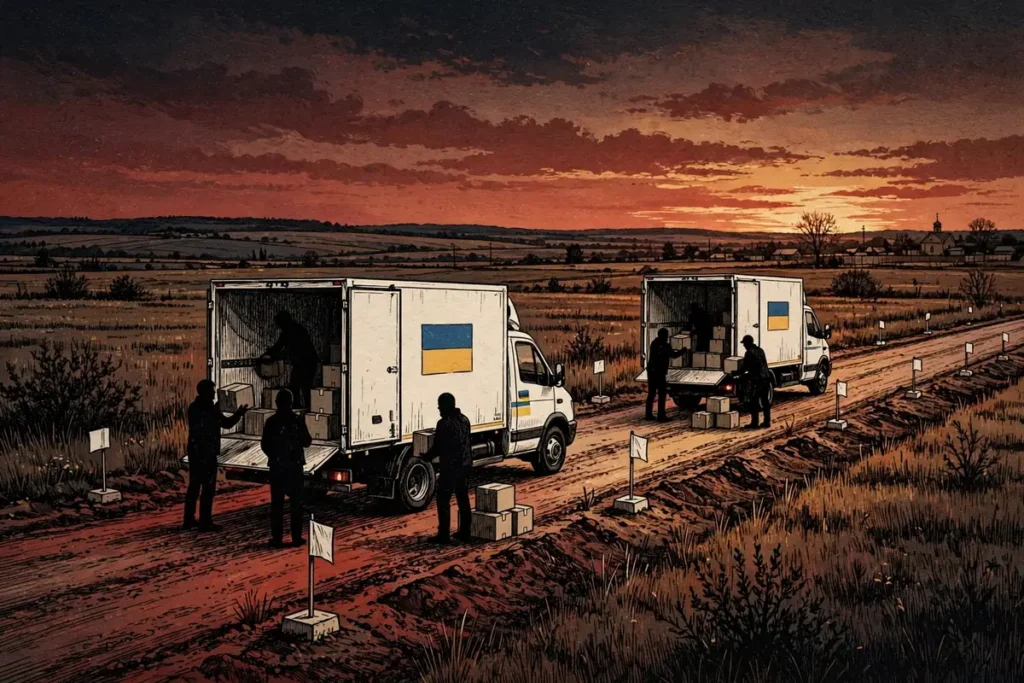
The limits of that template were visible within a day of the truce expiring. With no extension agreed, a Russian bombing of an aid distribution point in Komyshuvakha, in the Zaporizhia region, killed at least 40 people, according to President Zelenskyy — a reminder that a local humanitarian pause does not pause the war around it. Our earlier report on that attack is linked below.
The meeting also carried a political signal in Washington. President Trump has pressed both Russia and Ukraine to end the war since returning to office nearly two years ago, with little to show for it. His wife has now achieved something that has so far eluded him: a ceasefire, however local, that both sides honoured. Dmitriev underlined the point at the event, thanking Mrs. Trump for her “distinguished humanitarian role” and saying Putin had personally given instructions to ensure the truce was implemented and had sent his thanks. Arakhamia told her she had done an “amazing job” and urged her to “keep going and to find new missions and to de-escalate more as much as possible”.
Who really brokered the Oleshky truce?
That question is the one part of the story where the accounts diverge, and it deserves to be stated plainly. The White House says Melania Trump mediated the truce. Al Jazeera noted that Pope Leo XIV also pressed both sides to allow aid and evacuations, and that the two accounts of who brokered it have diverged. Reporting from the time of the October announcement described the ceasefire as an effort Mrs. Trump helped negotiate together with the Pope.
Neither account changes what happened on the ground: the agreements were signed, the truce held for six days, and nearly 800 people got out. But the divergence matters for how the story is told — and for the Abu Dhabi talks, where both Moscow and Kyiv will want to claim ownership of any progress. Readers should treat “she brokered it” as the White House’s account, not as a settled fact, and should be wary of any version of the story that erases the Pope’s role entirely or, conversely, erases hers.
What the White House meeting means for US/UK/EU readers
For readers in the United States, Britain and Europe, the meeting is significant in three concrete ways. First, it is a small but real precedent: a humanitarian channel that worked. If the Abu Dhabi talks on November 10 and 11 build on it — for example, by agreeing further local truces around other besieged towns — the immediate effect would be felt by civilians on the front line, not by energy markets or defence budgets. Second, it changes the politics of the US peace effort. A First Lady succeeding where formal diplomacy has stalled gives the administration a story of progress to take into Abu Dhabi, and gives President Zelenskyy, who hopes the talks will open a path to a meeting with Putin, a reason to engage.
Third, the limits should temper expectations. A six-day local truce expired without extension, and the war resumed the next day with a strike on an aid point. Nothing agreed at the White House addresses the core disputes — territory, security guarantees, sanctions — that have blocked a settlement for more than four years. For European readers, the practical takeaway is narrow: watch Abu Dhabi for whether the Oleshky model is extended, not for a peace deal.
What to watch next in the Abu Dhabi talks
The US-brokered talks in Abu Dhabi on November 10 and 11 are the first trilateral meeting between Russia, Ukraine and the United States since February. The key questions are whether the Oleshky model — a named intermediary, written agreements, agreed routes — is formalised into a standing humanitarian mechanism, and whether either side offers anything on the harder issues of territory and security guarantees.
Watch, too, for who claims the credit. If the White House and the Vatican continue to tell different stories about Oleshky, that friction could complicate the optics of any Abu Dhabi outcome. And watch the front line: if fighting around Kherson and Zaporizhia intensifies in the days before the talks, it will signal that both sides are still positioning rather than preparing to settle. Our full preview of the Abu Dhabi talks is linked below.
Frequently asked questions
What happened at the White House meeting on November 5, 2026?
US First Lady Melania Trump hosted Russian and Ukrainian officials — Kirill Dmitriev, Yana Lantratova, David Arakhamia and Dmytro Lubinets — to mark the six-day Oleshky ceasefire. She urged both sides to build on the truce and seek a more “enduring” peace. No deal was signed.
What was the Oleshky ceasefire?
A six-day localised humanitarian truce, signed on October 23, 2026, and in effect from October 27 to November 1. It covered the Russian-occupied city of Oleshky in Ukraine’s Kherson region, allowed aid deliveries and de-mining, and enabled the evacuation of nearly 800 people. It was the longest multi-day truce since Russia’s full-scale invasion began in February 2022.
Did Melania Trump broker the Oleshky ceasefire?
The White House says she mediated it, and both sides signed written agreements recognising her as the exclusive intermediary. Pope Leo XIV also pressed both sides to allow aid and evacuations, and the two accounts of who brokered the truce have diverged. The truce itself, its dates and the evacuation are confirmed; the question of sole credit is disputed.
What happens next?
US-brokered talks between Russia, Ukraine and the United States are scheduled in Abu Dhabi on November 10 and 11, 2026 — the first trilateral meeting since February. President Zelenskyy hopes the talks will open a path to a meeting with President Putin.
Sources
- Al Jazeera: Melania Trump calls for peace at meeting with Russia, Ukraine officials
- Associated Press (via Military.com): Putin Envoy Joins Melania Trump at White House Event to Discuss Ceasefire She Brokered in Oleshky
- Dawn: Melania Trump hosts Russia-Ukraine meeting, calls for ‘enduring’ truce
- Firstpost: Can Melania Trump succeed where diplomats have struggled? First Lady hosts Russia-Ukraine talks
- Yonhap News Agency: Melania Trump calls for lasting peace after brokering local Russia-Ukraine ceasefire
Read next: Abu Dhabi Ukraine-Russia Talks, November 10-11: What to Expect · Oleshky Ceasefire: What the Localised Ukraine-Russia Truce Covers · Komyshuvakha Aid-Centre Strike: What the Attack Means for Peace Talks · What the Oleshky Ceasefire Expiry Means for Kherson Civilians · Conflict Zones hub
Discussion 0
Share analysis, corrections, or context. Be civil — comments are moderated.