
WarBrief Live | October 31, 2026 | Cybersecurity
By the numbers at a glance: about 750,000 identity numbers with data extracted (preliminary) | about 1,000,000 identity numbers queried | 82 digital services reviewed, 21 still offline on October 30 | criminal investigation opened October 30.
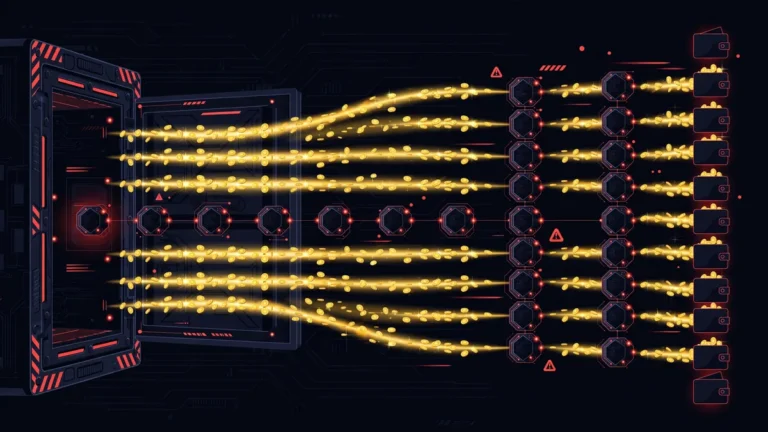
Between October 19 and 23, 2026, attackers extracted personal data linked to about 750,000 Moldovan identity numbers from government digital services, forcing 82 services offline.
That single sentence is the confirmed core of the incident. The detail around it matters just as much: the figure counts identity numbers, not confirmed individual victims; the total is preliminary and may change; and the authorities have not publicly attributed the attack to any person, group or country. This explainer separates what Moldova’s Electronic Governance Agency (AGE) has confirmed from what is still only reported or under investigation, and explains why a breach of a national identity database carries a different kind of risk from an ordinary website hack.
Key Takeaways
- Attackers queried about 1,000,000 national identification numbers (IDNPs) between October 19 and 23, and extracted data linked to about 750,000 of them, according to the AGE’s preliminary findings published October 27.
- The extraction was halted on October 23 at 11:30 a.m., after which 82 digital services were reviewed and more than 30 information systems and administration panels were disconnected as a precaution.
- As of October 30, 61 services had been restored through the EVO government portal and 21 remained offline pending security checks.
- Bank card data was not compromised and investigators found no unauthorised changes to state registries, the AGE has said, but the stolen personal data could be used for convincing fraud attempts.
- Attribution remains open: Prime Minister Vasile Tofan has said investigators are examining possible foreign-state involvement, without naming any country, and a criminal investigation opened on October 30.
What happened in the Moldova cyberattack?
Moldova’s Electronic Governance Agency runs the digital services citizens use for everyday dealings with the state, including benefits, pensions, driving licences and insurance status, accessed through the EVO government portal. The IDNP, the 13-digit personal identification number, is the key that links a person’s records across those services. That concentration is what made this incident so serious: compromise the identifier, and records held in different systems can be tied together.
According to the AGE’s technical update of October 27, as reported by Biometric Update and IPN, the attackers exploited vulnerabilities in government services that could be accessed without authentication. They used identification numbers to retrieve data, then used the information obtained to extract further records. The Information Technology and Cyber Security Service (STISC) reported approximately 11 million unauthorised access attempts during the campaign, according to Radio Moldova. The head of Moldova’s Cybersecurity Agency, Mihai Lupascu, described the attack as “without a doubt” the largest recorded so far in the country and “highly sophisticated”, Biometric Update reported.

What data was exposed in the Moldova identity breach?
The AGE’s preliminary account lists a broad set of fields: names, dates and places of birth, information about first-degree family members, health insurance status and family doctors, social benefits, pensions and disability status, driving licence details, photographs, vehicles owned, and companies owned or managed. Financial fields reported include bank account numbers (IBANs), tax debts and payment histories from MPay, the government’s online payment service.
Two limits on that picture are important. First, the 750,000 figure does not mean that 750,000 complete personal files were taken, nor that 750,000 distinct people are confirmed victims. Prime Minister Tofan said the figure represents cases in which attackers obtained at least one piece of personal information associated with an identifier, Biometric Update reported. The AGE itself calls the figure preliminary, subject to a wider audit, and says the exact scope is still being established. Second, the AGE has said bank card data was not compromised, investigators found no unauthorised changes to state registries, and an IBAN alone does not allow access to a bank account or an unauthorised transfer. Those reassurances narrow the direct financial risk, but they do not remove the fraud risk: personal, family and financial details combined make phishing calls, messages and emails far more convincing, and the authorities have named fraud and manipulation as the principal immediate risk.
By the numbers: what is confirmed and what is reported
| Metric | Figure | Source |
|---|---|---|
| Identity numbers queried, October 19-23 | About 1,000,000 | CONFIRMED – AGE, October 27 update |
| Identity numbers with data extracted | About 750,000 (preliminary) | CONFIRMED as preliminary – AGE, October 27 update |
| Unauthorised access attempts | About 11,000,000 | CONFIRMED – STISC, via Radio Moldova |
| Digital services reviewed | 82 | CONFIRMED – AGE |
| Services restored / still offline (October 30) | 61 restored / 21 offline | CONFIRMED – AGE, via TRM |
| Information systems and panels disconnected | More than 30 | CONFIRMED – AGE |
| Foreign-state involvement | Under investigation, no country named | REPORTED – Prime Minister Tofan, October 28 |
| Use of artificial intelligence by attackers | Being examined | REPORTED – Presidency / Prime Minister, October 28 |
Caveat: all figures are preliminary and may change as the audit and investigations continue; items marked REPORTED are under investigation and are not confirmed attribution.
How the Moldova breach unfolded: October 19 to 30
- October 19-23: Attackers target state information systems, querying about 1,000,000 IDNPs through services accessible without authentication.
- October 23, 11:30 a.m.: The unauthorised extraction is halted. The AGE reviews 82 digital services and disconnects more than 30 information systems and administration panels as a precaution.
- October 25: A further forced-access attempt is blocked.
- October 27: Further extraction attempts fail. The AGE publishes its preliminary findings: data linked to about 750,000 IDNPs extracted.
- October 28: Prime Minister Vasile Tofan announces that AGE director Nicoleta Colomeeț will step down, by mutual agreement, with Artiom Cociu to lead the agency on an interim basis. President Maia Sandu moves to convene the National Security Council, and the authorities say foreign-state involvement and possible use of artificial intelligence are being examined.
- October 29: Parliament’s Committee on National Security, Defence and Public Order agrees to hold hearings into the leak, scheduled for November 4 behind closed doors.
- October 30: The Chisinau Municipal Prosecutor’s Office opens a criminal investigation on reasonable suspicion of privacy violations and disclosure of information. The AGE reports 61 services restored and 21 still offline, and says checks so far have found no new instances of data extraction from its systems.

Why a national ID database breach is different
Most data breaches expose one organisation’s records. A national identity breach exposes the thread that joins many records together. A date of birth cannot be changed like a password, family relationships do not expire, and a tax or pension history tells a scammer enough to sound like an official. That is why the AGE’s warning focuses on fraud rather than direct theft: the stolen data does not, on the authorities’ account, allow someone to withdraw money from a card or transfer property, but it does allow someone to manipulate a victim into handing over money or codes.
The service shutdown shows the other side of the same concentration. Disconnecting 82 services stopped further extraction, but it also interrupted legitimate transactions for citizens who rely on digital government for benefits, licences and payments. Restoring a portal is not the same as finishing an investigation: a service can be safe to operate again while the assessment of exactly which records were retrieved is still under way. That distinction explains why 61 services are back while 21 remain offline, and why the AGE has said preliminary findings will not be made public until verified.
Who is behind the attack, and what is still unproven?
No group has publicly claimed the attack, and no authority has publicly attributed it to a country. What is confirmed is that investigators are examining, among other possibilities, the involvement of foreign state actors, and that the Presidency has said the possible facilitation of the attack by artificial intelligence will be analysed at the National Security Council. Neither point is a finding. Tofan has not named any country, and the AGE has not published technical evidence linking the intrusion to a specific actor.
It also remains unconfirmed publicly whether the extracted data has been published or sold. Readers should treat any claim that names a perpetrator, or that asserts the data is already circulating, as unverified unless it is backed by an official statement or forensic evidence. The same caution applies to the scale: until the AGE’s wider audit is complete, the 750,000 figure should be quoted as preliminary and as a count of identity numbers, not as a confirmed headcount of victims.
Different perspectives: accountability, capacity and caution
The accountability response has been fast by institutional standards: a director’s departure, a criminal investigation, closed-door parliamentary hearings and a National Security Council meeting within a week of the preliminary findings. Supporters of that response will point to the handover on October 30, when Tofan visited the AGE as Colomeeț formally passed leadership to interim chief Artiom Cociu, and to the Prime Minister’s stated priority for the period ahead: securing digital public services rather than focusing solely on promoting their use.
The capacity question runs alongside it. Colomeeț said on leaving that the AGE was managing more than 30 systems and 200 services, operating with 74 staff against 108 approved positions and a recommended team of at least 140, as reported by ID Tech Wire. That account, if accurate, frames the breach as a resourcing failure as well as a technical one, and it is the question the November 4 hearings are best placed to test. The cautionary perspective comes from the AGE itself: by withholding unverified preliminary findings, the agency is trying to prevent inaccurate information from spreading and causing further concern, even at the cost of leaving citizens uncertain about their own exposure for longer.
For context on Moldova’s wider security pressures, see WarBrief’s earlier coverage of Russia hybrid attacks and whether the war is reaching Moldova, and why Moldova wants to make its own weapons. For the broader cyber picture, see how AI could make cyber attacks faster and more dangerous, and the Intelligence Reports hub and Conflict Zones hub.
What the Moldova breach means for US/UK/EU readers
Moldova is a small country, but the design pattern at the centre of this breach is common across Europe and North America: a single identifier that unlocks pensions, health, tax, driving and payment records through one digital front door. The lesson is not that digital government should be abandoned. It is that the security of the whole system is set by its weakest unauthenticated endpoint, and that convenience features – services reachable without logging in, data retrievable by identifier alone – become extraction routes when they are not locked down.
For readers in the US, UK and EU, three practical implications follow. First, national digital identity schemes concentrate risk as well as convenience, so their audit and staffing levels deserve the same scrutiny as their launch dates. Second, breach notifications that quote a count of identifiers should be read carefully: the number of records touched is not the same as the number of people harmed, and preliminary figures move. Third, the fraud wave that follows an identity breach is often slower and more targeted than the breach itself, because convincing scams can be built from real family, pension and tax details months later. Vigilance about unsolicited calls and messages that quote genuine personal details is the lasting defence, in Moldova and elsewhere.
What should Moldovans do now?
The authorities’ advice, in substance, is to treat any unexpected contact that quotes personal details with suspicion, even when the details are real. Do not share login codes or payment credentials in response to a call, message or email, and verify any claim about benefits, taxes or bank accounts through official channels rather than through a link or number supplied in the message itself. Citizens can also check the access history of their own data in the EVO app, which records which institutions consulted it and why – the route by which some citizens first noticed unusual access requests.
The AGE has said it is compiling lists according to the categories of data accessed without authorisation and checking them for overlapping or inconsistent records, as part of identifying affected citizens. Until that work is complete and verified, no individual should assume either that they are unaffected or that their full file was taken. If a suspicious contact leads to a financial loss, it should be reported to the bank and the police promptly, since speed matters more than embarrassment in stopping onward transfers.
What to watch next in Moldova: November 4 hearings and service restoration
Three dates and processes will define the next phase. On November 4, the parliamentary Committee on National Security, Defence and Public Order holds closed-door hearings into the leak, proposed by committee chairman Lilian Carp and announced by Parliament Speaker Igor Grosu. The National Security Council meeting convened by President Sandu will test whether the incident is treated as a criminal case, a national security failure, or both. And the gradual restoration of the remaining 21 services, each returning only after security checks, will show whether the AGE’s remediation holds under continued unauthorised access attempts, which the agency says are still occurring even though no new extraction has been found in its systems.
The criminal investigation will run on a separate track from the political hearings, and its scope – privacy violations and disclosure of information – suggests prosecutors are examining both the intrusion and any subsequent handling of the data. WarBrief will update this explainer as the hearings, the council’s conclusions and the AGE’s verified findings emerge.
Frequently asked questions
What happened in the Moldova cyberattack?
Between October 19 and 23, 2026, attackers exploited vulnerabilities in Moldovan government services accessible without authentication, queried about 1,000,000 national identification numbers and extracted data linked to about 750,000 of them, according to the Electronic Governance Agency’s preliminary findings. The extraction was halted on October 23, and 82 digital services were reviewed, with more than 30 systems disconnected as a precaution.
How many people were affected by the Moldova data breach?
The confirmed figure is about 750,000 identity numbers with data extracted, not a confirmed count of 750,000 individual victims. Prime Minister Vasile Tofan said the figure covers cases where attackers obtained at least one piece of personal information linked to an identifier, and the AGE calls the total preliminary, so the number of distinct people affected is not yet established.
Was bank card data stolen in the Moldova cyberattack?
No, according to the AGE. The agency has said bank card data was not compromised and investigators found no unauthorised changes to state registries. Bank account numbers (IBANs), tax debts and MPay payment histories were among the fields reported exposed, but the AGE stresses that an IBAN alone does not allow access to an account or an unauthorised transfer.
Who carried out the Moldova cyberattack?
No perpetrator has been publicly identified and no group has claimed the attack. Investigators are examining possible foreign-state involvement and possible use of artificial intelligence, but no country has been named and neither possibility has been confirmed as a finding.
Are Moldova’s government services back online?
Partly. As of October 30, 61 of the 82 reviewed services had been restored through the EVO portal and 21 remained offline pending security checks. Restoration is gradual, and the AGE says unauthorised access attempts continue, although no new data extraction has been found in its systems.
Sources
- IPN: Prosecutors launch criminal investigation into cyberattack compromising data of 750,000 Moldovans
- Radio Moldova: Moldova opens criminal probe after major government data breach
- Biometric Update: Moldova data breach exposes records linked to 750,000 national ID numbers
- BytesEU / TRM: Moldova cyberattack leaves 21 public services offline
- SC Media: Moldova investigates massive cyberattack on national identity infrastructure
- Moldova Live: Moldova to hold closed-door hearings into data leak affecting 750,000 citizens
Discussion 0
Share analysis, corrections, or context. Be civil — comments are moderated.