
WarBrief Live | October 17, 2026 | Markets & Economy
Moscow has seized operational control of Russian assets belonging to five European companies, under a decree signed by President Vladimir Putin, in direct retaliation for Europe’s wartime support for Ukraine. The move is the widest single round of corporate asset seizures since the Kremlin’s “temporary management” mechanism was first used in 2023 — and it carries a clear warning for every European firm still doing business in Russia: your factories are now leverage against your government.
What follows separates what is confirmed from what is not. Russian state decrees are published documents, and the basic facts — who was targeted, what was taken, and who now runs the assets — are confirmed by multiple independent outlets. Company responses, the identity of the new managers, and the Kremlin’s claim that the seizures are “reversible” are noted with their sourcing, so readers can judge what to trust.
Key Takeaways
- Putin’s decree, published October 15 and reported October 16, places Russian assets of four EU firms — France’s Tarkett, Germany’s Menshen, Sweden’s Sverige International Holdings and Belgium’s Ontex — plus the Eviosys assets acquired by US group Sonoco, under Russian temporary management.
- The Kremlin called the seizures “reversible” and said the companies’ countries of origin were “one of the factors” in the decision — the clearest signal yet that corporate assets are being held as political hostages over Europe’s support for Ukraine and the frozen Russian assets debate.
- Ontex, the only listed target so far to issue a detailed statement, confirmed a government-appointed administrator has taken operational control of its Russian business; Belgium’s market regulator suspended trading in its shares.
- This continues a widening pattern: Nestlé, Auchan, Metro and others were hit in a similar September move. Western legal analysts treat temporary administration as de facto nationalization, because there is no expiry date.
- For US/UK/EU readers: this is not just a Russia story — it rewrites the risk calculus for any Western business operating in hostile jurisdictions, and it puts the EU’s frozen-assets decision under even more pressure.
Which EU companies lost control of their Russian assets?
According to the Reuters wire report of October 16, the decree targets the Russian operations of four companies from France, Germany, Sweden and Belgium:
- Tarkett (France) — a flooring manufacturer that said it was “losing effective control over its operations in Russia” and was assessing the situation. Tarkett continued operating two factories in Russia out of 34 production sites worldwide.
- Menshen (Germany) — a packaging maker whose Russian unit, Menshen Packaging CIS, was transferred to temporary management.
- Sverige International Holdings (Sweden) — a packaging group; the decree covers 12,565 shares in paper-packaging maker Kappa RU.
- Ontex (Belgium) — a hygiene-products company employing 350 people in Russia with a factory outside Moscow. It confirmed it has been informed of the decree and would “consider appropriate actions to safeguard its assets and the continuity of Ontex Russia’s operations.”
The decree also covers the Russian assets of the former European metal-packaging business Eviosys, acquired by US packaging group Sonoco in December 2024, listed as owned by Sonoco’s Dutch unit. Sonoco noted in its 2025 report that it had finalized its own exit from Russia in 2022, then reacquired assets making up about 0.5% of the company’s total through the Eviosys deal.
Administration of the seized properties was handed to Russian companies described by Reuters as largely unknown. Follow-up reporting on October 17 identified the appointed manager for the Tarkett assets as Centre Capital — a company about which public records are thin and conflicting. That opacity is itself part of the story: the people now running European factories in Russia are, to the outside world, effectively anonymous.
What is temporary management, and how does Putin’s decree work?
Temporary administration is a legal mechanism created by Presidential Decree No. 302 of April 25, 2023, according to the international law firm Noerr. It allows Moscow to impose administration on the assets of persons from states deemed “unfriendly,” triggered by seizures or freezes of Russian property abroad — or by threats to Russian security.
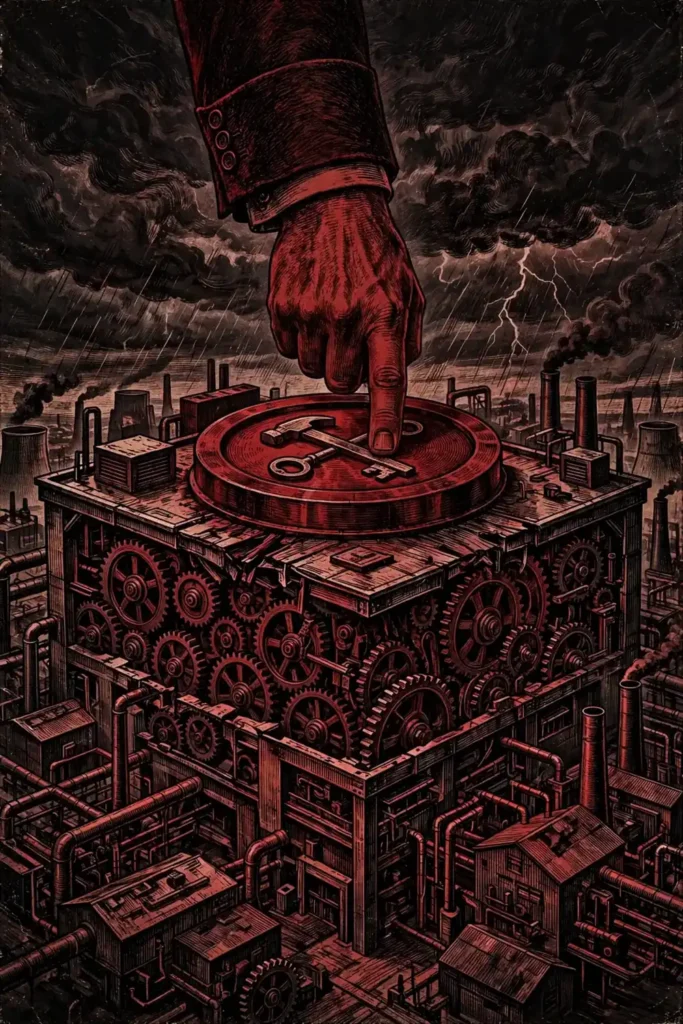
Here precision matters. Temporary administration is not, strictly speaking, expropriation: legal ownership is not formally transferred to the state. Instead, an appointed manager — Rosimushestvo, the federal property agency, or a presidential appointee — exercises nearly all ownership rights except disposal of the assets. The administration ends only when a new presidential decision lifts it. Because there is no expiry date and no transparent off-ramp, the Institute for the Study of War assesses the practice as effectively nationalization, with seized companies held as “corporate hostages” to pressure European policy on frozen Russian assets.
The mechanism was first used in July 2023 against Carlsberg and Danone. Western governments and legal experts have called it unlawful expropriation. Companies may theoretically pursue arbitration under bilateral investment treaties with EU states, but analysts note enforcement against the Kremlin is close to impossible.
By the numbers: what is confirmed about the seizures
| Metric | Figure | Source / status |
|---|---|---|
| European firms named in the October decree | 4 + Eviosys assets | CONFIRMED — Reuters, AP |
| Ontex employees in Russia | 350 | CONFIRMED — Reuters, AP |
| Sonoco assets reacquired via Eviosys deal | ~0.5% of company total | CONFIRMED — Reuters (company 2025 report) |
| Ontex Russia share of group revenue | ~5% (7–8% of adjusted EBITDA) | REPORTED — Brussels Signal, single source |
| Combined annual revenue of seized units | >RUB 50bn (~US$596m) | REPORTED — Ukrainska Pravda, citing The Moscow Times |
| Foreign-affiliated firms under Russian administration | 135 (TASS) / 22 (NSP law firm) | REPORTED — conflicting single sources |
| AEB member companies remaining in Russia | 330, down from 400 | REPORTED — Association of European Businesses, single source |
Caveat: figures marked CONFIRMED appear in at least two independent sources. Figures marked REPORTED rely on a single outlet or outlet chain — treat them as indicative, not verified.
What the Nestlé, Auchan and Metro precedent tells us
The Kremlin itself framed the October decree as the continuation of a trend: a similar move last month placed the Russian assets of food giant Nestlé and retailers Auchan and Metro under temporary administration. Separate reporting on the September wave names additional targets, including FM Logistic and the former Leroy Merlin operation, with assets handed to managers described as linked to Russian security services — though those attributions rest on single-source reporting.
The pattern is escalation by repetition. The July 2023 Carlsberg and Danone seizures were presented as exceptional responses to specific asset freezes. The September and October 2026 waves are broader, faster, and explicitly tied to policy outcomes the Kremlin wants: Europe’s stance on Ukraine, and specifically the fate of frozen Russian assets. EU leaders gathered on October 16 — with President Volodymyr Zelenskiy attending — at a moment when Brussels was debating Ukraine financing drawn from frozen Russian sovereign assets. The seizure decree landed the day before that summit. That timing is not coincidence; it is the message.
For background on how Europe’s sanctions and countersanctions architecture reached this point, see our earlier briefing on the EU’s expanding Russia sanctions regime and the standing sanctions tracker.
What the asset seizures mean for US/UK/EU readers
Educational note: this section explains the implications for ordinary readers. It is not financial advice — investment decisions should be made with a qualified adviser.
For investors and shareholders: the seizure demonstrates that Russian exposure can go to zero overnight by administrative act, not by war or bankruptcy. Ontex’s shareholders learned this the hard way: Belgium’s financial regulator suspended trading in its shares after the interim-administrator confirmation. Any investor holding listed European firms with material Russian operations — in manufacturing, retail, food, or packaging — should reprice that exposure as politically contingent, not merely economic.
For prices and supply chains: the direct effect on European shelves is small — these are factories serving the Russian market, not exports back home. The second-order effect is real: every seizure accelerates the exodus of Western firms from Russia, raising operating costs and compliance spending for multinationals worldwide and keeping geopolitical risk embedded in European energy and input prices.
For the sanctions debate: the seizures tighten the trap on EU policymakers. Moscow’s “reversible” framing is an explicit offer: step back on Ukraine support and the frozen-assets question, and the assets might be returned. The EU declined immediate comment on the October decree — but every future vote on frozen Russian assets will now be cast with European factory workers’ jobs in the balance.
Why does the Kremlin call the seizures “reversible”?
The “reversible” label, confirmed by multiple outlets reporting the Kremlin’s statements, deserves scrutiny. The only legal off-ramp is a new presidential decision — and no seized asset has ever been returned under this mechanism. Carlsberg’s assets were seized in July 2023; three years on, the company has not regained control. “Reversible” is a political claim, not a legal guarantee.
Kremlin spokesman Dmitry Peskov made the purpose explicit: the countries of origin were “one of the factors taken into account,” and those countries were involved in “illegal expropriations of Russian property.” That is hostage logic stated plainly — and it sets a price on the EU’s Ukraine policy measured in seized factories.
Putin himself acknowledged “certain downsides” to the seizures in remarks to Russian businessmen shortly before the decree’s publication, according to the Reuters wire. He did not elaborate. The understatement is notable: the downsides — capital flight, the near-total end of foreign direct investment, the signal to every remaining foreign investor — are the predictable cost of turning property rights into a weapon.
What to watch next in the asset-seizure standoff
Five things will determine whether this stays a shock tactic or becomes the new normal:
- The EU’s response: Brussels has not commented. Any coordinated retaliatory measure — or a decision on Ukraine financing from frozen Russian assets — will shape Moscow’s next move.
- Company exits and lawsuits: Ontex says it will act to safeguard its assets. Watch for arbitration filings under bilateral investment treaties, and for other firms to accelerate managed exits from Russia before they become the next decree.
- The managers: Centre Capital and the September-era managers will now run factories, pay workers, and extract revenue. Watch whether they operate the businesses or strip them — the answer reveals whether this is pressure tactic or plunder.
- The frozen-assets clock: every EU decision on frozen Russian sovereign assets now has a hostage dimension. That is precisely the Kremlin’s intent.
- Contagion: the AEB count of Western firms in Russia has already fallen from 400 to 330. A widening decree program could push that number down sharply — and push remaining firms to write their Russian assets down to zero.
Frequently asked questions
Which EU companies had their assets seized by Russia?
The October 16, 2026 decree names France’s Tarkett (flooring), Germany’s Menshen (packaging), Sweden’s Sverige International Holdings (packaging) and Belgium’s Ontex (hygiene products). It also covers Russian assets of the former European business Eviosys, acquired by US group Sonoco in 2024.
Why did Russia take over these EU companies’ assets?
The Kremlin says the seizures are retaliation for Europe’s wartime support for Ukraine and for what it calls “illegal expropriations of Russian property” — a reference to Western sanctions and the freezing of Russian assets. Spokesman Dmitry Peskov said the companies’ countries of origin were “one of the factors” in the decision.
What is temporary management?
A mechanism created by Presidential Decree No. 302 of April 2023 that lets Moscow appoint an administrator to run the assets of firms from “unfriendly” states. The manager exercises nearly all ownership rights except disposal. There is no expiry date, and it can only be lifted by a new presidential decision.
Are the Russian seizures of foreign assets permanent?
The Kremlin calls them “reversible,” but no seized asset has ever been returned under this mechanism — Carlsberg’s and Danone’s assets, seized in July 2023, remain in Russian control. Western legal analysts treat the practice as de facto nationalization.
How have the affected companies responded?
Tarkett said it was losing effective control and assessing the situation. Ontex confirmed a government-appointed interim administrator had taken operational control and said it would act to safeguard its assets; Belgium’s market regulator suspended trading in Ontex shares. Sonoco noted the assets represented about 0.5% of its total.
Sources
- Reuters: Russia takes control of more European corporate assets ahead of Zelenskiy’s appearance at EU summit
- AP/Arab News: Russia seizes more EU companies’ assets over Ukraine support
- The Straits Times: ‘Let them be scared’ — Moscow sends EU message with widening corporate crackdown
- Noerr: Putin allows seizure of Russian assets of foreign companies (legal explainer)
- Ukrainska Pravda: Russia takes control of assets belonging to Tarkett and four other European companies

Discussion 0
Share analysis, corrections, or context. Be civil — comments are moderated.