
WarBrief Live | October 16, 2026 | International Security
Sept 30, 2026
announced at Quantico by Hegseth
Oct 1, 2027
target date to stand up the command
$53.6B
FY2027 request for Drone Dominance
Millions
one-way attack drones the US plans (Hegseth)
On September 30, 2026, US Secretary of Defense Pete Hegseth stood before several hundred generals and admirals at Marine Corps Base Quantico and announced that the Pentagon would create AUTOWARCOM — the Autonomous Warfare Command — a new four-star functional combatant command built around drones, robots, and autonomous systems. If Congress authorizes it, the command would become the most significant restructuring of the US military’s combatant command system in nearly four decades. This guide explains what AUTOWARCOM is, what the Pentagon has confirmed versus what remains pending, and why it matters now.
Key Takeaways
- AUTOWARCOM is a proposed four-star combatant command consolidating development, procurement, and employment of autonomous and robotic systems across the US joint force — announced by Hegseth on September 30, 2026.
- The transition runs under the codename Project Agincourt, led interim by DIU director Owen West and Navy SEAL senior chief Max Strasiser.
- Target establishment is October 1, 2027 — but that date depends on authorizing legislation in the FY2027 NDAA, which the House passed 216–212 on July 22, 2026, while the Senate version remains stalled.
- Ukraine (2024) and Russia (2025) already created dedicated unmanned-systems branches, giving analysts reason to call AUTOWARCOM potentially the world’s third such organization.
What exactly is AUTOWARCOM?
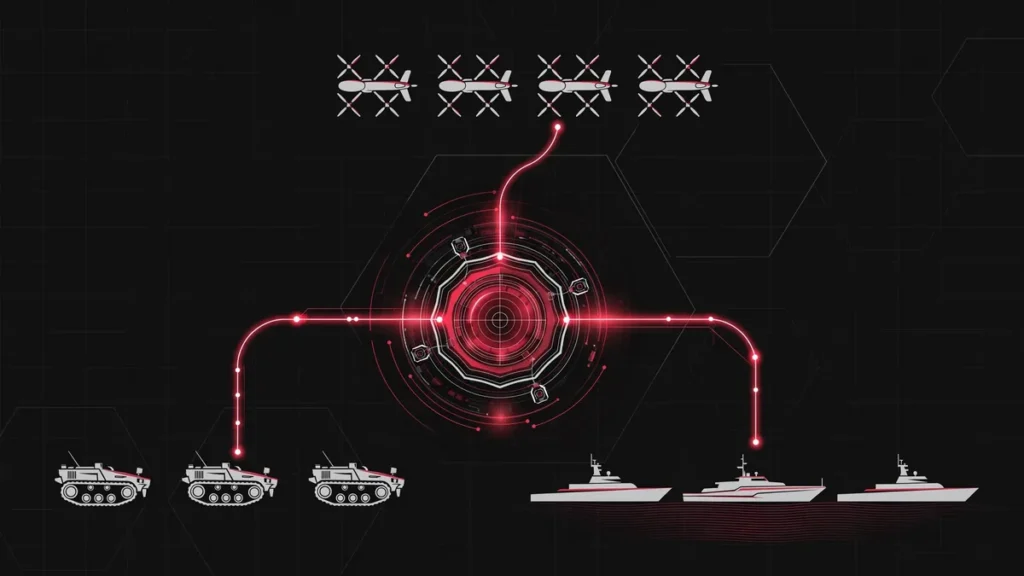
AUTOWARCOM — formally the Autonomous Warfare Command — is a proposed four-star functional combatant command that would consolidate the Pentagon’s fragmented drone and autonomy efforts under a single headquarters. Today, autonomous systems are scattered across the services: the Army buys its drones, the Navy its unmanned vessels, the Air Force its wingman programs, and special operations runs its own. Hegseth’s pitch is that this fragmentation is why the United States, despite inventing much of the underlying technology, has been outpaced in fielding it at scale.
In Hegseth’s own words at Quantico, the new command would have “service-like authorities” — a phrase he has repeated since. That means dedicated manpower, its own budget line, and its own acquisition authority, rather than having to beg the services for scraps of each. Defense One reported the announcement as the centerpiece of Hegseth’s “State of the Force” address. Analysts have compared the model to what Special Operations Command received by statute when it was created in 1987: an organization that could buy, train, and fight on its own terms.
One caveat belongs in the first 200 words: as of mid-October 2026, AUTOWARCOM exists on paper, not in reality. No four-star commander has been named, no dedicated budget line has been created, and the command’s legal existence depends on the NDAA. What investigators — and Congress — have confirmed is the intent and the interim organization; what remains unverified is whether the legislation clears in time for the October 2027 target.
When was AUTOWARCOM announced — and why is it happening now?
Hegseth announced the command on September 30, 2026, in a rare “State of the Force” address to assembled flag officers at Quantico, laying out a broader military vision alongside it. DefenseScoop’s coverage quotes him saying, “We will soon have a four-star commander to raise the AutoWarCom flag [and] prepare the way.”
The timing is no accident. Three forces converged this autumn:
- The Ukraine precedent. Ukraine created the world’s first dedicated Unmanned Systems Forces in June 2024 (Presidential Decree No. 382/2024, June 25, 2024), and Russia stood up its own Unmanned Systems Forces branch in November 2025. Congressional staffers themselves cited the Ukraine-2024 and Russia-2025 moves as influencing the Senate’s version of the FY2027 defense bill, Air & Space Forces reported. The American military is, in effect, copying a lesson its rivals already applied.
- The budget window. At an October 15 defense industry gathering, Hegseth called the nearly-$1.5 trillion defense budget request “absolutely critical” and a “one-time generational investment,” warning that “whoever falls behind in autonomy, robotics and AI will fall ‘even further behind'” (SCMP). The Pentagon is seeking roughly $50 billion in additional autonomy funding, with $53.6 billion earmarked for a “Drone Dominance” initiative in the FY2027 request (IANS).
- The scale argument. “Ultimately we will be dealing with hundreds of thousands of one-way attack systems this year and into the millions in years to come at a pace that this department’s never ever seen before,” Hegseth said, per IANS. The Pentagon’s own framing: cheap, expendable systems at massive scale — the longbowmen of 1415 defeating armored knights, which is precisely the analogy behind the project’s codename.
Who is building it? Project Agincourt and the interim leadership
Until legislation passes, AUTOWARCOM lives under a transitional name: Project Agincourt. The title comes from a September 30 memo, “Project Agincourt: Pathway to the Autonomous Warfare Command.” The name invokes the 1415 Battle of Agincourt, where outnumbered English longbowmen defeated a larger French force — the Pentagon’s shorthand for cheap, precise weapons at scale defeating expensive platforms (dig.watch; Inside Unmanned Systems).
The interim organization is DRPM-UxS (a direct-reporting program office for unmanned systems), established in June 2026, and it is being led by an unusual pair. Owen West, the director of the Defense Innovation Unit, brings the strategic-risk and resourcing side; Max Strasiser, a Navy SEAL senior chief and the first enlisted SEAL to graduate the Navy Test Pilot School, brings operational problem-solving. West described the partnership to the Wall Street Journal as a “CEO, COO” arrangement, adding: “Once we apply sustained budget to changed doctrine, we will outperform the world.”
The pair’s plan of action and milestones is due within 30 days of the September 30 announcement — meaning a detailed roadmap is expected by the end of October 2026. Parallel moves include new military occupational specialty frameworks for what the Pentagon calls “autonomous warfighters.”
By the numbers: what the AUTOWARCOM push involves
The figures below separate what official sources have confirmed from what has been reported but not independently verified. Treat the reported rows as claims, not facts.
| Metric | Figure | Source |
|---|---|---|
| Announcement date | September 30, 2026 | Defense One, DefenseScoop, Military Times (CONFIRMED) |
| Target establishment date | October 1, 2027 | Defense One, Inside Unmanned Systems (CONFIRMED as target) |
| House NDAA FY2027 vote | Passed 216–212, July 22, 2026 | Wikipedia / congressional records (CONFIRMED) |
| Drone Dominance funding in FY2027 request | $53.6 billion | IANS, October 15, 2026 (CONFIRMED) |
| Additional autonomy funding sought | ~$50 billion | SCMP, October 15, 2026 (CONFIRMED) |
| Planned scale of one-way attack drones | Hundreds of thousands, “into the millions” | Hegseth quote via IANS (REPORTED — exact timelines unverified) |
| Drones’ share of Russian casualties in Ukraine | ~70% | Economic Times / Times of India pieces (REPORTED — single-source, not independently verified) |
Caveat: budget figures are requests and targets, not enacted law. The Senate’s NDAA provision would permit — not mandate — creating the command, and the Senate floor vote failed 50–46, short of the 60 needed.
Why did Ukraine and Russia build unmanned commands first?
The AUTOWARCOM story cannot be told without the battlefield that produced it. Ukraine’s June 2024 decision to create the Unmanned Systems Forces made it the first country to give drones their own military branch, on par with the army, navy, and air force (Jamestown). Russia followed in November 2025, announcing its Unmanned Systems Forces as fully formed, with deputy head Sergey Ishtuganov describing the branch’s structure (Kyiv Independent).
This sequence is why analysts — and Wikipedia — describe AUTOWARCOM as potentially the world’s third large unmanned-warfare organization. The US pattern is familiar: watch how others fight, then build the institution to do it at American scale. Readers following our coverage of how AI is changing modern war and the Russia-Ukraine war’s AI laboratory will recognize the pattern — the technology proliferated on the battlefield years before the bureaucracy caught up.
What does “warfighting acquisition” change?
One of the most consequential phrases in the September 30 package is “warfighting acquisition” — Hegseth’s shorthand for buying weapons the way operators need them, not the way the Pentagon has done it for decades. “Warfighting acquisition, not just acquisition that happens at the Pentagon,” he said (DefenseScoop). The model fuses frontline operators with entrepreneurs and commercial manufacturers in rapid adaptation cycles, pushing decisions and funding closer to combatant commands instead of through the services’ multi-year procurement machinery.
It is a direct response to what Hegseth called the central problem of the age: “The pace of war is changing faster than the process to support it.” Or, in his formulation of the industrial logic: “Cheap compute, superintelligence, and advanced commercial manufacturing have enabled the proliferation of low-cost, high-precision strike.”
What AUTOWARCOM means for US, UK, and EU readers
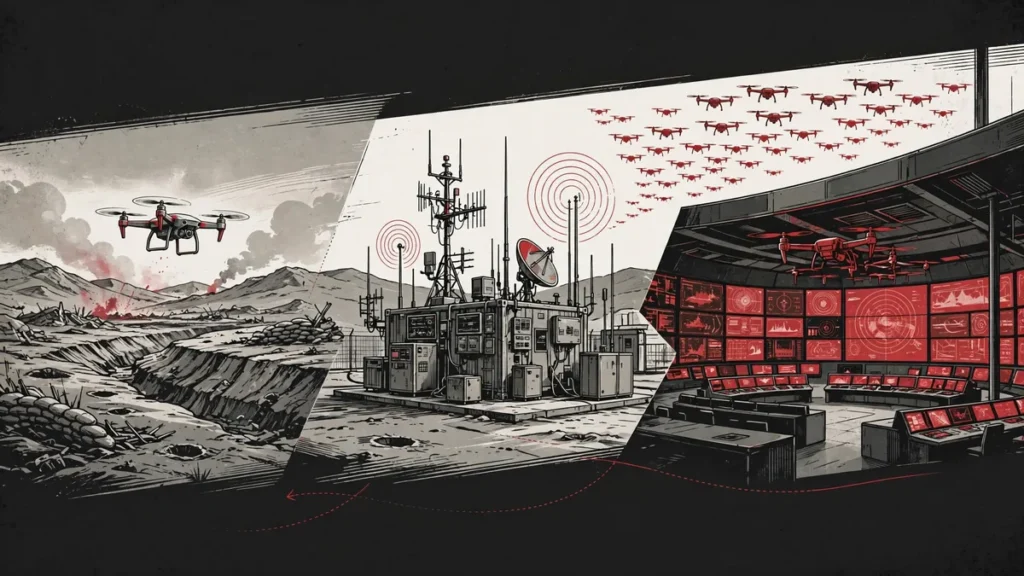
For American readers, the near-term effect is fiscal and industrial: roughly $50 billion in new autonomy spending would flow disproportionately to US drone manufacturers, AI firms, and the commercial startups the Defense Innovation Unit already cultivates — a defense-tech investment wave that also means new career pipelines for engineers and “autonomous warfighter” military specialties. For UK and European readers, the signal is twofold. First, interoperability: a US command organized around autonomy will expect allies to plug into its drone architectures and data standards — NATO’s European members will face pressure to accelerate their own unmanned programs. Second, industry: European drone and robotics firms could see partnership opportunities, but also sharper competition as US production scales toward the “millions” Hegseth envisions.
For everyone, the strategic subtext is deterrence arithmetic. Hegseth’s “high-low mix” doctrine — “Today, we need both quality and quantity,” as he put it (Military Times) — is aimed squarely at a Pacific contingency, where cheap autonomous systems would have to offset an adversary’s mass. Whether Congress funds it at the requested scale will be decided in the NDAA fight now underway.
Different perspectives
Not everyone is cheering. Defense analysts quoted across the coverage raise two cautions: first, that creating a new four-star command adds bureaucracy even as it promises speed — the Pentagon has a long history of reorganizations that changed org charts more than outcomes. Second, the governance question: experts cited by the Korea Times and in several published FAQs warn of a “norms vacuum,” where capability is racing ahead of rules for autonomous targeting and accountability. Hegseth’s camp answers that the current system is the real risk — “The pace of war is changing faster than the process to support it” — and that the intelligence picture demands institutional speed. A related but separate effort, Project Meridian — a 120-day advisory study co-led by Elon Musk, Palmer Luckey, and Newt Gingrich (our earlier coverage) — shows the same White House instinct: bring outsiders in to break the procurement logjam.
What to watch as AUTOWARCOM takes shape
- Late October 2026: the West–Strasiser plan of action and milestones is due within 30 days of the announcement — the first concrete look at force structure and acquisition plans.
- FY2027 NDAA conference: whether the Senate accepts the House’s authorization language, and whether the final bill mandates the command (House) or merely permits it (Senate).
- Commander and budget: the naming of a four-star commander and the first dedicated budget line — the two events that would turn AUTOWARCOM from a plan into an institution.
- Allied responses: whether the UK, France, or EU announce parallel unmanned-warfare commands or procurement surges before the October 1, 2027 target.
Frequently asked questions
What is AUTOWARCOM?
A proposed new four-star US combatant command consolidating the development, procurement, and employment of autonomous drone and robotic technologies across the military. It was announced by Secretary of Defense Pete Hegseth on September 30, 2026, and is currently transitioning under the codename Project Agincourt.
When is AUTOWARCOM expected to be established?
The target date is October 1, 2027, subject to congressional authorization in the FY2027 defense bill. No commander has been named and no dedicated budget line exists yet, so the timeline could slip if the legislation stalls.
Who is involved in Project Meridian?
Project Meridian is a separate 120-day Pentagon advisory study, commissioned by CTO Emil Michael and co-led by Elon Musk, Palmer Luckey, and Newt Gingrich. It is not part of AUTOWARCOM itself, though both reflect the same push to accelerate military adoption of AI and autonomy.
What is Project Agincourt and who leads it?
Project Agincourt is the interim transitional organization building the pathway to AUTOWARCOM, under a September 30 memo titled “Project Agincourt: Pathway to the Autonomous Warfare Command.” It is led by DIU director Owen West and Navy SEAL senior chief Max Strasiser in what West calls a “CEO, COO” partnership.
Sources
- Defense One: Hegseth Plans Autonomous Warfare Command
- DefenseScoop: Hegseth announces autonomous warfare command
- Military Times: Hegseth announces new four-star command for autonomous warfare
- Air & Space Forces Magazine: Hegseth, drones and the autonomous warfare command
- Inside Unmanned Systems: Pentagon announces autonomous warfare command, sets October 2027 target
- Air & Space Forces Magazine: Lawmakers back four-star command for unmanned systems
- Breaking Defense: SASC’s $1.14T defense policy bill creates combatant command for drones
- SCMP: Hegseth calls $1.5T defense budget critical
- IANS: US plans millions of drones for future wars
- Kyiv Independent: Russia establishes its unmanned systems forces
- Jamestown Foundation: Russia’s unmanned systems forces
- Digital Watch: US Department of War, Project Agincourt, AutoWarCom

Discussion 0
Share analysis, corrections, or context. Be civil — comments are moderated.