
WarBrief Live | November 3, 2026 | Cybersecurity
This buyer’s guide to vulnerability assessment tools for defense contractors explains how scanners map to the Risk Assessment, Security Assessment, and System and Information Integrity families of the NIST standard: they discover known weaknesses, produce the reports assessors ask for, and create the recurring evidence trail that self-attestation in SPRS depends on. It compares the leading tools through a defense-contractor lens and shows how to build a scanning cadence that satisfies assessors.
Key Takeaways
- Vulnerability assessment tools (scanners) automatically probe networks, systems, and applications for known weaknesses — for defense contractors, they are primarily evidence engines for NIST 800-171 and CMMC.
- The leading platforms are Tenable, Qualys, Rapid7 InsightVM, and Microsoft Defender Vulnerability Management — each suits different contractor profiles, from small M365 shops to large multi-site primes.
- Scanning maps to the NIST 800-171 families of Risk Assessment, Security Assessment, and System and Information Integrity; assessors look for regular scans, tracked remediation, and rescans that close findings.
- Free options like Nessus Essentials (up to 16 IPs) and OpenVAS can cover small CUI enclaves — but evidence quality and reporting are what assessors actually grade.
What Are Vulnerability Assessment Tools?
Vulnerability assessment tools — usually called vulnerability scanners — probe networks, servers, endpoints, and web applications for known security weaknesses: unpatched software, misconfigurations, weak credentials, and exposed services. They work by comparing what they find against databases of known vulnerabilities, chiefly the CVE (Common Vulnerabilities and Exposures) system maintained by the U.S. government, and by checking system configurations against benchmarks.
The category splits into two tiers. A scanner runs the probe and reports findings — Tenable’s Nessus is the archetype. A vulnerability management platform adds the workflow around it: continuous discovery, risk-based prioritization, remediation ticketing, and compliance reporting. For a defense contractor, that second tier matters more, because assessors under both the DFARS 7012 regime and CMMC do not just ask “did you scan?” — they ask “show me the scan, the remediation tickets, and the rescan that proved the finding closed.” The evidence chain is the product.
Why Do Defense Contractors Need Vulnerability Assessments?
The regulatory answer is direct. NIST SP 800-171 — the 110-requirement baseline that DFARS 252.204-7012 makes mandatory on covered contractor information systems — requires periodic vulnerability scans and the remediation of identified weaknesses in its Risk Assessment, Security Assessment, and System and Information Integrity families. Under CMMC, the same requirement becomes something a C3PAO assessor (or a DIBCAC reviewer) verifies against evidence. With CMMC Phase 1 self-assessments now conditions of award on applicable solicitations, a contractor without a documented scanning program is effectively without an audit trail.
The operational answer is just as direct. The defense industrial base is a preferred target: unpatched contractor systems have served as the entry point in multiple high-profile intrusions, and government breach reporting keeps reminding contractors that they are in the blast radius. The 2026 Pentagon DMDC breach exposed millions of records, and the FBI and CISA continue to flag ransomware campaigns targeting suppliers, including the Gunra ransomware warnings of 2026. For subcontractors, there is a third answer — primes are increasingly treating current scan programs and SPRS scores as supply-chain gates before flowing down work.
” alt=”Vulnerability assessment tools for defense contractors: editorial illustration of a scanning beam sweeping across server racks” width=”1200″ height=”675″ loading=”lazy”>
How Do Scanners Map to CMMC Evidence Requirements?
Mapping a tool to a compliance requirement is where most contractor purchases go wrong. A scanner does not “make you CMMC compliant.” What it does is generate artifacts — scan reports with timestamps, finding inventories with severity ratings, remediation records with owner assignments, and rescan results — that map to specific NIST SP 800-171 requirements in the Risk Assessment family (scan for vulnerabilities and remediate them), the Security Assessment family (monitor controls on an ongoing basis), and the System and Information Integrity family (apply security-relevant updates and monitor system integrity).
Assessors look for three properties in that evidence. Periodicity: scans run on a defined schedule, not once a year before the assessment. Coverage: scans cover the full assessment boundary — the enclave that holds CUI — including endpoints, servers, network devices, and cloud assets in scope. Closure: every critical and high finding has a ticket, an owner, a deadline, and a rescan proving remediation, with anything still open sitting on the POA&M with a milestone date. A tool that produces beautiful dashboards but cannot export timestamped, attributable reports is a liability at assessment time.
Which Vulnerability Assessment Tools for Defense Contractors Lead the Market?
The market is concentrated around four platforms, each with a different fit. The figures below are reported from an August 2026 third-party comparison and vendor disclosures, not from WarBrief testing.
Tenable is the incumbent of the category. Its Nessus scanner is widely deployed across enterprises and government organizations, with a detection database reported at 436,016 plugins covering 149,021 CVE IDs as of August 2026. Nessus Professional is priced at a published $4,790 per year (unlimited IPs, one scanner), making it the cheapest credible entry point for a small contractor; the broader Tenable One platform adds exposure-management workflow. Tenable reports 40,000+ customers and roughly 65% of the Fortune 500. Nessus Essentials is free for up to 16 IPs — enough to cover a small CUI enclave for evaluation or a very small shop.
Qualys sells a cloud-native platform, VMDR (Vulnerability Management, Detection and Response), on the Enterprise TruRisk Platform. Pricing is per-asset and quote-based; the differentiator is continuous discovery and the TruRisk scoring model (a 0–1000 scale), plus native remediation workflow integration and a ServiceNow app for ITSM ticketing. Qualys reports 10,000+ customers, a majority of the Forbes Global 100. For defense contractors, the strong compliance-reporting templates and the dedicated VMDR OT app for operational technology are the relevant draws.
Rapid7 InsightVM, now inside the Exposure Command portfolio, competes on exposure-based prioritization and live dashboards. Pricing is per-asset with published starting tiers — around $1.62 per asset per month at 500 assets (roughly $11,580 per year). Rapid7 reports 11,500+ customers with an average ARR around $72,000. Its sweet spot is the mid-market contractor that wants a managed-feeling dashboard without a large security team.
Microsoft Defender Vulnerability Management is the default choice for contractors already standardized on Microsoft 365 — which is most of the DIB. It is native to the Microsoft stack, requires no separate agent deployment for covered endpoints, and integrates with Defender for Endpoint alerting. There is no standalone free trial comparable to Nessus Essentials, but for a shop already paying for Microsoft licensing, the marginal cost is the argument. The trade-off is narrower coverage of non-Microsoft and OT assets.
Beyond the big four: Wiz and similar CNAPP tools dominate cloud-heavy environments; CrowdStrike Falcon exposure management suits existing CrowdStrike customers; and OpenVAS/Greenbone Community Edition remains the free, open-source option — capable, but with the reporting and support limitations free tools always carry. For contractors, the honest test is always the same: can the tool export timestamped, attributable, rescan-verified evidence an assessor will accept?
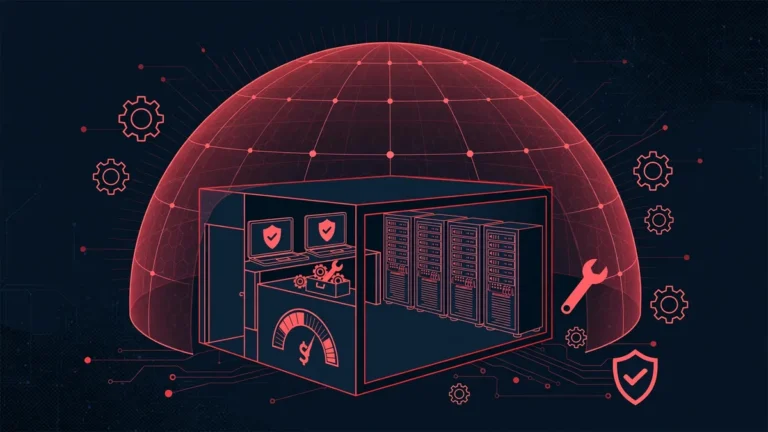
” alt=”Vulnerability assessment tools for defense contractors: editorial illustration of a protective shield over a digital network” width=”1200″ height=”675″ loading=”lazy”>
Vulnerability Scanning vs Penetration Testing: What’s the Difference?
Scanning and penetration testing are complementary, and assessors and auditors expect to see both in mature programs. A vulnerability scan is automated, broad, and frequent: it finds known weaknesses across the whole environment and is typically run weekly or monthly. A penetration test is manual, deep, and infrequent: skilled testers attempt to exploit weaknesses the way an adversary would, chaining findings together, and it is typically performed annually or after major changes.
The regulatory treatment differs. CMMC’s underlying NIST 800-171 requirements mandate scanning as a recurring control; penetration testing is not an explicit requirement of the 110 controls, though it is widely used as strong evidence of the security-assessment and risk-assessment families and is often expected for high-value environments. The practical rule for contractors: scanning is the heartbeat (continuous), penetration testing is the physical exam (periodic, deep). Budget for both; evidence for the first must be continuous.
How Do You Build a Scanning Cadence That Satisfies Assessors?
A defensible cadence has five parts. Scope first: define the assessment boundary — the enclave holding CUI — and scan all of it; scanning the corporate guest network while missing the CUI file share is the classic failure. Authenticate: run credentialed scans wherever possible, because unauthenticated network scans miss most findings and assessors know it. Schedule: weekly or better for the CUI enclave; monthly minimum elsewhere in scope. Ticket and remediate: every critical finding gets an owner and a deadline measured in days, highs in weeks; this is where integration with ITSM tools like ServiceNow pays for itself. Rescan and record: verify remediation with a rescan, archive the before-and-after reports, and carry anything unresolved onto the POA&M with a milestone date.
Two discipline points separate passing programs from failing ones. First, scan reports must be attributable and timestamped — “we scan regularly” without archived reports is not evidence. Second, the cadence must survive personnel turnover: automate the schedule, name a backup operator, and review scan coverage quarterly as the enclave changes. An assessment that finds three months of missing scans will treat the gap as a control failure, not a scheduling oversight.
What Does This Mean for Contractor IT Teams?
For U.S. defense contractors, the takeaway is that scanner selection is 20% of the work and cadence discipline is 80%. A $4,790 Nessus license with a rigorous weekly routine and clean evidence archives beats a six-figure platform whose dashboards nobody reviews. For small businesses, the path is: define the enclave tightly, start with Nessus Essentials or Defender’s native capabilities, build the ticket-and-rescan habit, and graduate to a management platform when the finding volume exceeds what a spreadsheet can track.
For UK and EU suppliers in U.S. defense supply chains, the same scanning duties arrive via the DFARS 7012 flowdown clause in subcontracts — and allied governments are watching the model closely. The broader lesson from cyber operations in the Russia-Ukraine conflict applies directly: unpatched, unscanned systems are how adversaries walk in, and internet-wide scanning means attackers can find exposed infrastructure as easily as defenders can.
What to Watch Next
Three trends will reshape this tooling for contractors. First, exposure-management platforms are absorbing EASM (external attack surface management) — the outside-in view of what the internet sees about you — into the same console as internal scanning. Second, AI-assisted triage is beginning to prioritize findings by exploitability rather than raw severity, which should reduce the alert-fatigue problem that kills remediation programs. Third, the eventual return of C3PAO certification assessments — suspended under the July 2026 Phase 2 pause, not canceled — will raise the bar on evidence quality: third-party assessors sample scan archives more skeptically than self-assessments do. Contractors should build for the assessor, not the audit.
| Metric | Figure | Source |
|---|---|---|
| Tenable detection database | 436,016 plugins / 149,021 CVE IDs (Aug 2026) | Third-party comparison, Aug 2026 (reported) |
| Nessus Professional published price | $4,790/year, unlimited IPs, one scanner | Vendor pricing (reported) |
| Nessus Essentials free tier | Up to 16 IPs | Vendor (reported) |
| Rapid7 InsightVM entry pricing | ~$1.62/asset/month at 500 assets (~$11,580/year) | Vendor pricing (reported) |
| Tenable customer base | 40,000+; ~65% of Fortune 500 | Company FY2025 10-K (reported) |
| Qualys customer base | 10,000+; majority of Forbes Global 100 | Company 2025 annual report (reported) |
| Rapid7 customer base | 11,500+; ~$72K average ARR | Company FY2025 results (reported) |
Caveat: vendor pricing, database sizes, and customer counts are REPORTED from an August 2026 third-party comparison and company filings, not independently verified by WarBrief. Treat prices as directional — enterprise quotes vary by scope and term.
Frequently asked questions
Which vulnerability scanner is best for a small defense contractor?
For a small CUI enclave, Tenable Nessus Professional ($4,790/year published) or Nessus Essentials (free, up to 16 IPs) are the common entry points; shops standardized on Microsoft 365 often start with Defender Vulnerability Management. The deciding factor is evidence quality: timestamped reports, remediation tracking, and rescans.
Does CMMC require vulnerability scanning?
CMMC assessments evaluate the NIST SP 800-171 requirements, which include periodic vulnerability scanning and remediation in the Risk Assessment, Security Assessment, and System and Information Integrity families. In practice, a contractor without a scanning program cannot evidence those requirements.
Is penetration testing required instead of scanning?
No — they are different activities. Scanning is automated, frequent, and broad; penetration testing is manual, periodic, and deep. Scanning is the explicitly required recurring control; penetration testing is widely used as supporting evidence, especially for high-value environments.
Can free scanners satisfy assessors?
They can, if the evidence is rigorous: scheduled, credentialed scans of the full boundary, archived timestamped reports, tracked remediation, and rescans. Free tools’ limitations are usually in reporting automation and support, not in finding vulnerabilities.
How often should a contractor scan?
Weekly or better for the CUI enclave and monthly minimum for the rest of the assessed boundary, with rescans after every remediation. Assessors look for a defined, documented, and actually-followed schedule.
Vulnerability assessment tools are the contractor’s answer to the hardest question an assessor asks: “prove it.” The tools themselves are commoditized — the differentiator is the discipline of scanning, ticketing, remediating, and rescanning on a schedule that never slips. Build the cadence first, buy the platform that fits the cadence, and keep every report.
Related reading
- CMMC Penetration Testing Requirements: 2026 Guide
- ITAR Cybersecurity Requirements: Contractor Guide (2026)
- DFARS 252.204-7012 Checklist: Compliance Explained
Sources
- Tech Insider: Tenable vs Qualys vs Rapid7 — Vulnerability Scanners 2026
- Valtik Studios: Vulnerability Management Buyer Guide 2026
- GBHackers: Top 10 Best Vulnerability Management Software in 2026
- Pivot Point Security: Do You Need a Score in SPRS to Be DFARS 7012 Compliant?
- Agile IT: DFARS Compliance — 7012, 7019, 7020, 7021 Explained

Discussion 0
Share analysis, corrections, or context. Be civil — comments are moderated.