WarBrief Live | October 4, 2026 | Breaking Analysis
On October 2, 2026, the Group of Seven agreed to an emergency release of 100 million barrels of diesel and crude oil from strategic reserves, coordinated through the International Energy Agency, after weeks of pressure from US President Donald Trump that included a threatened ban on American diesel exports. The G7 emergency diesel oil reserve release of October 2026 is the second major strategic-stock intervention this year and is designed to bring down record diesel prices that have been squeezing households, truckers, and farmers across the United States and Europe.
Key Takeaways
- G7 leaders, meeting by emergency videoconference on October 2 under France’s presidency, agreed to release 100 million barrels of diesel and crude oil over four months, starting immediately, under IEA supervision.
- A “substantial” volume of diesel will be frontloaded into the first 20 days to attack the most acute shortage before winter.
- All seven members pledged not to impose energy export restrictions on each other, taking Trump’s threatened US diesel export ban off the table for now.
- The release follows a 400-million-barrel IEA drawdown agreed in March; prices dipped on the announcement but analysts are split on whether stock releases fix a supply problem.
- Diesel hit a record €2.24 per litre in the EU this week; France alone consumes about 600,000 barrels of diesel a day.
What the G7 decided
The emergency videoconference on Friday, October 2, was convened by French President Emmanuel Macron, who holds the G7’s rotating presidency, and included the head of the Paris-based International Energy Agency, Fatih Birol. According to Agence Europe’s account of the leaders’ statement, the G7 agreed to a “coordinated release onto the market, through the International Energy Agency, of 100 million barrels, beginning immediately and spread over 4 months.” A substantial diesel release will be concentrated in the first 20 days.
The joint statement also locked in a political commitment that matters as much as the barrels: member countries agreed to refrain from imposing export restrictions on energy and energy products between G7 nations. “We have agreed that there will be no ban or restrictions on exports between G7 members,” Macron said after the meeting, as reported by Le Monde. A statement from Macron’s office, quoted by Morningstar, put it as a pledge to “take no measures to restrict the exchange of energy and petroleum products between partner countries.”
President Trump claimed the outcome as a win on Truth Social: “Europe has just agreed to release a massive amount of their heavily stocked Diesel Oil. The process will begin immediately.” But he simultaneously downplayed the threat that forced the talks, telling reporters on October 2 that a diesel export ban was “never really on the table,” according to USA Today.
Macron pushed back on the idea that Europe had simply caved. The tone of the discussion was “not one of threats; it was constructive,” he said, in remarks reported by Breitbart and noted across European coverage. The two versions of events — Trump’s leverage narrative versus Macron’s cooperation narrative — remain competing accounts rather than settled fact, and neither side’s framing is independently verifiable from the public record.
Background and timeline
The October 2 deal was the climax of roughly two weeks of escalating pressure:
- March 2026: In the early weeks of the war in the Middle East, IEA member countries pledged 400 million barrels to the market — the largest coordinated release in the agency’s history, according to Le Monde. The United States provided nearly half of those volumes, and the latest 40-million-barrel tranche was unlocked this week. IEA chief Fatih Birol has said members have delivered roughly two-thirds of the pledged volumes so far.
- September 23, 2026: Press reports said Washington was weighing a possible 90-day ban on diesel exports. The administration denied the reports at the time, and US Energy Secretary Chris Wright publicly said he did not support such a move, Agence Europe reported.
- September 30, 2026: Trump told reporters at an Oval Office appearance that he was “thinking about” an export ban, as reported by Brussels Signal. Reuters reported that Washington had asked the European Union to release 120 million barrels of diesel over six months.
- October 1, 2026: US Treasury Secretary Scott Bessent posted on X that “American farmers, truckers, and businesses should not be left carrying the burden of a global diesel shortage,” demanding that Europeans “accelerate delivery on their existing commitments.” The European Commission’s Weekly Oil Bulletin, published the same day, showed average EU diesel at a record €2.24 per litre. December Brent futures jumped 4.4 percent to settle at $102.31, Morningstar reported.
- October 2, 2026 (morning): A European Commission spokesperson warned that a US diesel export ban “would undermine our trust in the United States as a reliable partner,” Le Monde reported. EU member states met the Commission to agree a common line, according to Brussels Signal.
- October 2, 2026 (afternoon): The G7 videoconference produced the 100-million-barrel deal. Markets reacted immediately: Brent briefly dropped below $100 a barrel before closing at $102.25, European gasoil futures fell more than 7 percent, and US ultra-low sulfur diesel futures slid 3.7 percent to $4.47 a gallon, according to Morningstar and the Wall Street Journal. The IEA estimated the market fell by about $5 on the announcement.
Why it matters
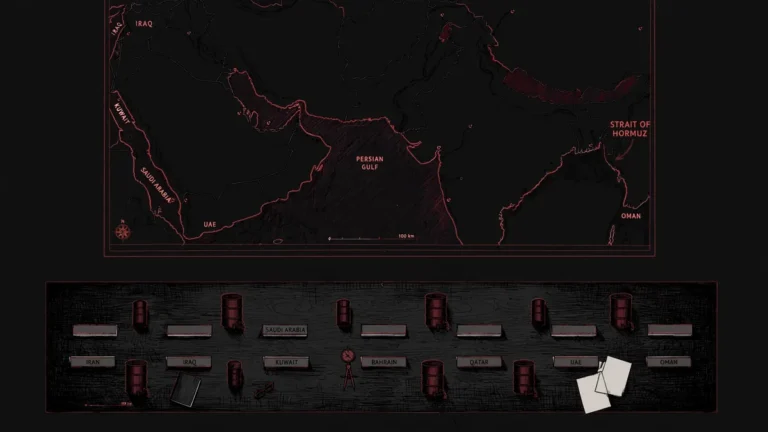
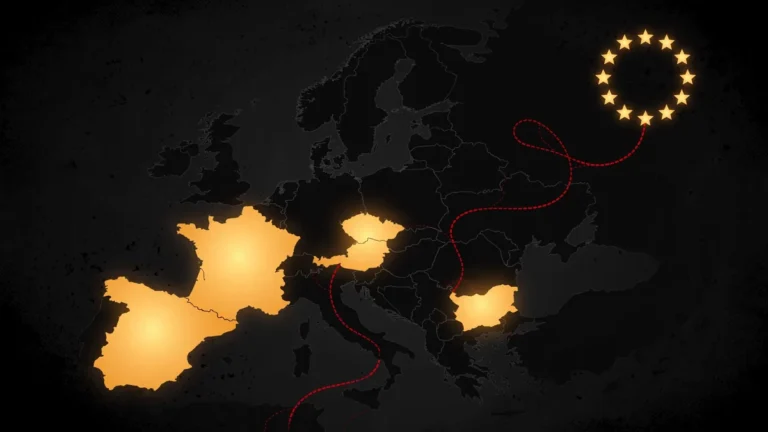
Diesel is the fuel the global economy runs on — trucks, farm equipment, trains, heating, and much of Europe’s passenger-car fleet. Prices have been driven to extremes by a convergence of shocks: the war with Iran and the effective closure of the Strait of Hormuz, Ukrainian drone strikes on Russian refineries that pushed Moscow into a diesel export ban of its own, and depleted global inventories of refined products. Europe’s dependence on American fuel has deepened as a result: US refineries supplied about a third of EU diesel imports this year and close to half in August, according to Brussels Signal, while most of Europe’s emergency diesel stocks sit in Germany and France.
The numbers show the strain. In the EU, diesel averaged a record €2.24 per litre this week against €1.59 before the Iran war began, per the Commission’s Weekly Oil Bulletin. In the United States, the average gallon of diesel costs $6.37, according to the AAA motor club, while the EU average is $9.53 per gallon, per European Commission data cited by USA Today. France alone consumes about 600,000 barrels of diesel a day and imports half of it, NPR reported. In Britain, rising fuel costs helped push inflation to a five-month high in August. WarBrief has been tracking how the Iran war drove fuel bills to records and China’s halt to October fuel exports as the squeeze tightened.
Whether stock releases solve the problem is disputed. “Raiding an oil supply piggybank is no substitute for solving the underlying problem which is insufficient production relative to demand,” energy strategist Clay Seigle told USA Today. Naeem Aslam, chief investment officer at Zaye Capital Markets, told Al Jazeera the release was “very much needed” but cautioned that the announcement merely eases market pressure: the real question is “who is going to release [the energy stocks] and what and where the bans will be lifted.” An energy expert cited by Al Jazeera added that the move “doesn’t deal with the fundamental problem that the global supply remains lower than normal,” with crude and product supplies still “significantly below pre-war levels” seven months into the Middle East war. For more on the military and economic dimensions of the crisis, see WarBrief’s Intelligence Reports hub.
Note: this article is educational and is not financial advice.
Different perspectives
The White House frames the episode as successful leverage. Trump repeatedly floated the export ban as fuel prices climbed ahead of November’s US midterm elections, then declared victory when the G7 moved, saying Europe and the US would make a “major world contribution” to stabilizing the market. From this view, the threat extracted real barrels — 100 million of them — plus a binding no-restrictions pledge, without ever firing the weapon.
European leaders frame it as crisis management among partners. Macron called a possible US diesel export ban “catastrophic” for Europe, in NPR’s account, and EU Trade Commissioner Maroš Šefčovič warned a ban would have “very dramatic consequences for our economic performance,” according to Brussels Signal. From Brussels and Paris, the release is a coordinated response to genuine market volatility — “unprecedented volatility in oil markets,” in the G7 statement’s words — not a concession to coercion. The fact that the same statement commits members against export restrictions is, in this reading, a mutual insurance policy.
Market analysts are the skeptics. Scott Shelton of United ICAP told the Wall Street Journal that “‘Talk is cheap’ comes to mind,” adding: “I am not sure the EU/IEA feels the political pressure to release stocks now and I could see them telling each other that maybe they should be waiting for a ‘real shortage’ of Gasoil before releasing stocks.” The IEA itself has noted the market fell about $5 on the announcement — a welcome dip, but diesel remains structurally tight. Track the sanctions backdrop to the crisis through WarBrief’s Sanctions Tracker.
What to watch next
The first test is delivery. The G7 statement says the release begins immediately, but the “substantial” diesel tranche promised for the first 20 days still needs country-by-country volumes and timing — the details Aslam and Shelton say will determine whether the announcement moves physical markets or just paper ones. Watch IEA updates and French government announcements for the actual drawdown schedule.
The second test is OPEC+, which is meeting on October 4. Any production decision from the producer group will land on top of the G7 release and could amplify or cancel out its price effect. (read our analysis of the OPEC+ October 4 decision.)
The third is winter. Diesel demand rises as heating season begins across the Northern Hemisphere, and the emergency stocks now being released cannot be replenished quickly while the Iran war constrains supply and the Strait of Hormuz remains contested. Macron said the G7 would also coordinate to increase production, bring down tanker-insurance costs, and push more tankers through the strait, according to NPR — watch whether any of that materializes.
The fourth is politics. Trump explored diesel-price strategies for weeks ahead of November’s US midterm elections, USA Today reported, and the White House has signaled it is prepared to escalate the Iran war further after the vote if no peace deal emerges. Meanwhile the Pentagon is sending a third aircraft-carrier strike group and an additional Marine expeditionary unit to the Middle East, adding roughly 9,000 to 10,000 troops to the region by the end of November, the Wall Street Journal reported. Energy diplomacy and military escalation are moving on parallel tracks — and either can overwhelm the other.
Frequently asked questions
Why did the G7 release 100 million barrels of diesel and oil?
Diesel prices hit records on both sides of the Atlantic amid the Iran war, the effective closure of the Strait of Hormuz, Ukrainian strikes on Russian refineries, and depleted global refined-product stocks. The G7’s October 2 statement cited “unprecedented volatility in oil markets.” The release — diesel frontloaded in the first 20 days — is designed to put physical supply into the market quickly and cool prices before winter.
Will the G7’s emergency release lower diesel prices?
Markets dipped immediately: Brent briefly fell below $100, European diesel futures dropped more than 7 percent, and the IEA estimated the market fell about $5 on the announcement. Analysts agree the relief may be temporary, since stock releases do not fix the underlying shortfall in production relative to demand. Whether prices stay down depends on actual delivery volumes and whether supply disruptions ease.
Did Trump ban US diesel exports?
No. The Trump administration floated the idea for weeks — press reports on September 23 described possible 90-day ban plans, and Trump said on September 30 that he was “thinking about” it — as leverage to get Europe to release its own emergency stocks. After the G7 deal, Trump told reporters the ban was “never really on the table,” and the G7 statement commits all members to refrain from energy export restrictions between themselves.
How long will the G7 oil release last?
The coordinated release of 100 million barrels of diesel and crude oil will be spread over four months, beginning immediately. It builds on a 400-million-barrel IEA-coordinated release agreed in March 2026, of which the IEA says members have delivered roughly two-thirds so far.
What is the IEA’s role in the emergency release?
The International Energy Agency, whose members hold most of the world’s strategic petroleum reserves, coordinates and supervises collective stock releases. IEA chief Fatih Birol joined the October 2 videoconference, and the agency is overseeing the timing and accounting of the 100-million-barrel drawdown across G7 members and their partners.
Sources
- Le Monde: Under pressure from Donald Trump, G7 releases 100 million barrels of oil
- NPR: The G7 will release 100 million reserve barrels of diesel fuel over the next 4 months
- Agence Europe: G7 countries agree to release 100 million barrels of diesel and crude oil amid severe international pressures on energy
- USA Today: Will diesel prices go down? Trump says Europe to draw on reserves
- The Wall Street Journal: Crude Oil Cuts Losses as Traders Eye G-7 Fuel Release
- Morningstar: Oil Prices Lower On G-7 Fuel Release Plan