
WarBrief Live | October 11, 2026 | Cybersecurity
A Ukrainian drone campaign has done what no cyberattack has managed in more than four years of war: taken three of Russia’s most important data centres offline in four days. Between October 8 and October 11, 2026, strikes attributed to Kyiv hit Yandex facilities in Sasovo, Kaluga and Vladimir — disrupting more than 80 cloud services, leaving users across Russia and three neighboring countries unable to hail taxis or make payments, and knocking out two of the company’s three AI supercomputers, according to Reuters and company statements. The Yandex data centre strikes open a new front in the war: the physical targeting of digital infrastructure.
Key Takeaways
- Yandex confirmed drone attacks shut down data centres in Sasovo (October 8), Kaluga (October 9) and Vladimir (October 11), 2026 — the third strike in four days.
- The Sasovo facility housed two of Yandex’s three supercomputers used to train its AI models, and Yandex says it cannot confirm whether the damaged equipment can be restored.
- Outages spread far beyond Russia’s borders: taxi, banking, music and cloud services failed for users in Kazakhstan, Belarus and Armenia.
- President Zelensky said Ukraine responds to Russian strikes on Ukrainian data centres “in mirror-like fashion” — both sides are now treating digital infrastructure as a legitimate battleground.
What happened in the Yandex data centre strikes?
The campaign began on October 8, 2026, when a drone attack started a fire at Yandex’s data centre in Sasovo, in the Ryazan region southeast of Moscow. A Yandex spokesperson told AFP and Reuters that “a drone attack caused a fire at the Yandex data centre in Sasovo, affecting part of its infrastructure,” adding that there were no casualties and that the facility had stopped operating entirely. Ryazan’s regional governor, Pavel Malkov, said two Ukrainian drones were shot down over the region overnight and that a business roof caught fire in the Sasovo area.
Reuters reported the Sasovo attack as the first major strike on a Russian data hub since the war began — and the most consequential detail was what sat inside the building. The Sasovo facility housed two of the three supercomputers Yandex uses to develop its AI models, including the YandexGPT family, according to Al Jazeera. Yandex Cloud advised customers to move workloads to other availability zones and warned that service could not be restored “in the near future.” Yandex shares fell more than 3 percent on the Moscow Exchange after the attack.
On October 9, Ukrainian drones struck the company’s major data centre in the Kaluga region southwest of Moscow, knocking out several modules, Yandex confirmed. A day later the company quietly updated its user agreement to list drone and missile attacks as force majeure circumstances — an admission, in contractual language, that this kind of warfare is now part of the operating environment.
The third blow came overnight into Sunday, October 11. Drones hit the Yandex data centre in the Vladimir region east of Moscow. The company’s cloud team announced on Telegram:
“As a result of the drone attack, the infrastructure of Yandex’s data centre in Vladimir was damaged. Operations at the data centre have been completely halted. There were no injuries.”
The blast radius was civilian life itself. Outages rolled across Yandex’s services in dozens of Russian cities and into Kazakhstan, Belarus and Armenia: Yandex Go taxi-hailing froze, banking-adjacent services stuttered, Yandex Music went silent, and Yandex Cloud — the backbone for thousands of businesses — shed more than 80 services including computing, networking, databases and the YandexGPT API, according to monitoring reports cited by RBC-Ukraine. Yandex advised customers to activate disaster-recovery plans and described its remaining capacity as unstable.
Why is Ukraine striking Russia’s data centres?
Kyiv’s stated logic is retaliation. On October 8, President Volodymyr Zelensky said Ukraine was answering Russia’s own strikes on Ukrainian data centres “in mirror-like fashion,” noting that Moscow had been hitting Ukrainian digital infrastructure for some time. Russia has struck several Ukrainian data centres and telecommunications facilities over the past month, including targets in central Kyiv, in an apparent effort to disrupt connectivity and digital commerce, Al Jazeera reported.
Ukraine has not claimed responsibility for the Vladimir attack specifically, but the pattern is unmistakable: three facilities, four days, each tied to a different layer of Yandex’s stack — AI training compute, core cloud, and regional services. The strategic logic runs deeper than revenge. Yandex is heavily involved in Russia’s artificial intelligence development, and its cloud hosts workloads for countless Russian businesses. Degrading that backbone hits the war-adjacent tech economy without striking a single weapons plant.
There is also a precedent-setting calculation. This mirrors a logic Tehran already tested: The Register reported that AWS decided its Bahrain facility could not be recovered after an Iranian drone attack earlier this year — Iran struck because it believed the cloud giant hosted workloads for the US military and its suppliers. The Yandex strikes extend that same doctrine: the cloud itself is now a theatre of war.
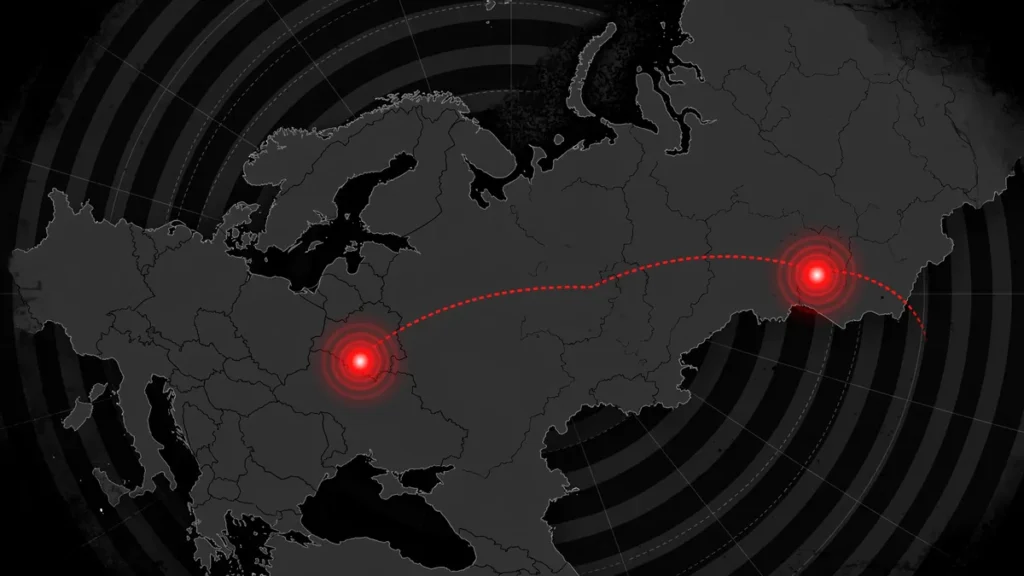
By the numbers: three facilities, four days
| Metric | Figure | Source |
|---|---|---|
| Yandex data centres struck | 3 (Sasovo, Kaluga, Vladimir) | Yandex statements; Reuters — CONFIRMED |
| Timespan of the campaign | 4 days (October 8–11, 2026) | Yandex; Reuters — CONFIRMED |
| AI supercomputers knocked out at Sasovo | 2 of Yandex’s 3 | Reuters; Al Jazeera — CONFIRMED |
| Injuries across all three strikes | 0 reported | Yandex statements — CONFIRMED |
| Vladimir facility capacity | ~50 MW, 2,880 server racks | RBC-Ukraine via OSINT channels — REPORTED |
| Yandex Cloud services disrupted | 80+ across availability zones | RBC-Ukraine via monitoring — REPORTED |
| Countries hit by service outages | Russia, Kazakhstan, Belarus, Armenia | Astra; Yandex — REPORTED |
| Yandex share price reaction | Fell more than 3% (Moscow Exchange) | Turkiye Today — REPORTED |
Caveat: CONFIRMED figures are drawn from Yandex statements and multiple wire services; REPORTED figures come from single outlets or monitoring channels and may change as Yandex assesses the damage.
Is this a cyberattack or a physical attack?
It is important to be precise: these were physical, kinetic drone strikes, not cyberattacks. No evidence has emerged of hacking, malware or network intrusion — the damage came from drones hitting buildings, starting fires and knocking out power and cooling. That distinction matters because the digital consequences look identical to a cyberattack: services down, data inaccessible, recovery uncertain.
The physical nature of the attack is also what makes it strategically novel. Cyberattacks on infrastructure can often be reversed with backups and failover. A burned-out data hall housing irreplaceable AI training hardware cannot. Yandex’s own admission that it may not be possible to restore the Sasovo equipment underscores the asymmetry: attacking servers with drones is, in effect, un-patchable. The campaign also sits alongside — but is distinct from — Ukraine’s parallel drone campaign against Russian energy infrastructure, which has targeted refineries and fuel flows rather than digital services.

Why it matters
The strikes matter for three reasons beyond the outage maps. First, they represent the first sustained campaign against a major power’s data-hub infrastructure — Reuters described Sasovo as the first major attack of its kind on a Russian data hub. Both sides have now publicly treated data centres as fair targets, and that norm, once established, does not stay confined to Russia and Ukraine.
Second, the AI angle. Yandex’s Sasovo facility trained the YandexGPT family of models, a point of national technological pride. Training large AI models requires sustained, uninterrupted compute; losing two of three supercomputers, even temporarily, is a meaningful setback in the AI race. The strike connects the war directly to the global competition over AI compute capacity.
Third, the civilian spillover. Taxi drivers in Moscow, musicians streaming in St Petersburg, businesses running on Yandex Cloud across four countries — none of them combatants, all of them affected. The campaign demonstrates how quickly a strike on “infrastructure” becomes a strike on everyday life, and how thin the line is between military-adjacent targeting and civilian harm.
Different perspectives
From Kyiv’s perspective, the strikes are proportionate retaliation — a mirror of what Russia has been doing to Ukrainian data centres for weeks — and legitimate pressure on the digital backbone of Russia’s tech economy. Ukrainian officials have framed the campaign as one more theatre in a long-range aerial war that has left both countries’ armies largely deadlocked on the front line.
From Moscow’s side, there has been no official Russian government comment on the Vladimir attack at the time of writing. Yandex, as a company, has limited itself to operational updates: confirming shutdowns, advising customers to activate disaster-recovery plans, and reclassifying drone and missile attacks as force majeure. The silence from the Kremlin is itself notable — striking the country’s flagship tech company is an embarrassment that state media has handled carefully.
Western technology analysts, meanwhile, are watching a doctrine take shape. If cloud infrastructure is treated as a legitimate target the way power plants and refineries have been, then every country that concentrates compute in a few large data centres — which is all of them — has a new category of vulnerability. Our intelligence desk and recent coverage of ransomware campaigns against critical infrastructure and the KillSec takedown have tracked how the digital front of this conflict keeps widening — the Yandex strikes add a kinetic dimension to it.
What this means for US/UK/EU readers
First, a practical lesson: redundancy is real. Yandex Cloud customers who had failover plans activated them; those who did not were down. If your business runs on any single cloud provider, the Yandex episode is a vivid argument for multi-zone — ideally multi-provider — disaster-recovery plans and for testing them before you need them.
Second, if you travel or do business in Russia or Central Asia, expect friction: taxi-hailing, banking and business cloud services can degrade without warning while this campaign continues. Have offline alternatives for payments and transport.
Third, the force majeure move matters beyond Russia. Yandex added drone and missile attacks to its contractual force majeure list on October 10. Western businesses should review their own cloud and SaaS contracts to understand what happens — and who bears the cost — if infrastructure is physically destroyed by conflict rather than taken down by a hack.
Finally, watch the AI angle from the market side: any sustained degradation of Russia’s AI training capacity reshuffles the global AI race at the margins, even as Western and Chinese labs ship new model generations every few months. (This is analysis, not financial advice — WarBrief covers markets for education only.)
What to watch next
The immediate question is whether Yandex can restore any of the three facilities. The company has said it cannot confirm whether the Sasovo equipment can be restored at all; Kaluga’s damage is still being assessed; Vladimir’s operations are “completely halted.” Watch Yandex’s service alerts and its next earnings disclosures for the real cost.
The strategic question is whether the campaign widens: more data centres, telecom exchanges, or subsea-cable landing stations — and whether Russia answers with heavier strikes on Ukrainian digital infrastructure, which it has already been hitting for weeks. Our reporting on October’s escalation in Ukraine shows the long-range aerial war is accelerating on both sides. A third question is legal and commercial: whether other cloud providers follow Yandex in adding armed-conflict clauses to their terms — a quiet signal that the industry now prices kinetic war as an operational risk.
Frequently asked questions
Why is Ukraine striking Yandex data centres?
Kyiv says it is responding “in mirror-like fashion” to Russian strikes on Ukrainian data centres and telecom infrastructure. Beyond retaliation, Yandex’s facilities are strategic: they house AI supercomputers and cloud infrastructure that underpin Russia’s tech economy.
What is Yandex, and how big is its cloud operation?
Yandex is Russia’s largest technology company — often called “Russia’s Google” — running the country’s most popular search engine, taxi, food-ordering and music apps, plus Yandex Cloud, which hosts thousands of businesses. Its Sasovo data centre, opened in 2014, was the company’s largest.
Is this a cyberattack or a physical attack?
A physical one. Drones struck buildings, started fires and knocked out operations — there is no evidence of hacking or malware. The digital fallout (outages, inaccessible data) looks like a cyberattack, but the damage is to concrete, steel and servers.
Will the data centres recover?
Unknown. Yandex said it cannot confirm whether the Sasovo equipment can be restored, was still assessing Kaluga’s damage, and reported Vladimir’s operations completely halted. Cloud customers have been advised to use disaster-recovery plans and other availability zones.
Sources
- Reuters: Russia’s Yandex says data centre in Vladimir area shut down after drone attack
- Al Jazeera: Russia’s Yandex says data centre in Vladimir shut down after drone attack
- The Hindu/AP: Kyiv pushes back on Trump’s call as drones hit Russian data hub
- The Register: Ukrainian drone attack takes out Russian datacenter
- RBC-Ukraine: Drones hit Yandex’s third data centre, disrupting 80+ services
- Turkiye Today: Yandex data centre in Ryazan catches fire after drone attack
- Kuwait Times/AFP: Drone hits Yandex data centre in first such attack on Russia



Discussion 0
Share analysis, corrections, or context. Be civil — comments are moderated.