WarBrief Live | October 4, 2026 | Shipping & Logistics
On October 3, 2026, Russia attacked a Liberian-flagged cargo ship in one of Ukraine’s Black Sea ports in the Odesa region, killing one crew member and injuring three, according to the Ukrainian Sea Ports Authority. The strike is the latest blow in an escalating campaign against commercial shipping that has effectively renewed Russia’s blockade of Ukraine’s Black Sea ports since the summer — choking grain and steel exports, sending war-risk insurance costs soaring, and pushing wheat buyers in Asia to pay 20 to 25 percent more for alternative supplies.
Key Takeaways
- A Russian strike on a Liberian-flagged vessel in an Odesa-region port on October 3 killed a motorman and injured three other crew members; 13 more crew were evacuated to safety, the Ukrainian Sea Ports Authority said.
- Russia has effectively renewed its blockade of Ukrainian Black Sea ports since the summer of 2026, attacking civilian vessels carrying grain and steel and dealing a heavy blow to Ukraine’s export economy, Reuters reports.
- London’s marine insurance market widened its Black Sea high-risk zone on September 18, 2026; war-risk premiums are now adding hundreds of thousands of dollars in extra costs for every seven-day voyage.
- Ukraine’s grain exports fell roughly 45 percent year-on-year in September to about 1.3 million tonnes, while importers in Asia are paying sharply higher prices for wheat from Australia and Argentina instead of the Black Sea.
What happened
The Ukrainian Sea Ports Authority said in a statement on the Telegram app on Saturday, October 3, that a Russian attack had hit a Liberian-flagged cargo ship at a Black Sea port in the Odesa region. One person — described by the authority as a motorman — was killed, three crew members were injured, and 13 other crew members were evacuated to safety. The vessel’s name, the specific port, and the nature of its cargo were not disclosed in the initial announcement, and Moscow had not publicly commented on the incident at the time of publication.
The attack fits a pattern that has hardened over the past two months: Russia and Ukraine have stepped up attacks on each other’s commercial shipping, and Reuters reports that dozens of vessels have been attacked in the Black Sea in recent weeks. For shipowners, the calculus has shifted decisively — the question is no longer whether a blockade exists, but how long any owner will keep sending ships into it. Analysts tracking the renewed Black Sea blockade note that civilian-flagged tonnage is now being hit with a frequency not seen since the early months of the full-scale war.
The strike also lands in a week of wider escalation, with Russian forces hammering infrastructure in and around Kyiv — including strikes on bridges across the Dnipro — as Moscow pledges to continue massive strikes on the Ukrainian capital. The shipping campaign is the economic front of that same offensive.
Background and timeline
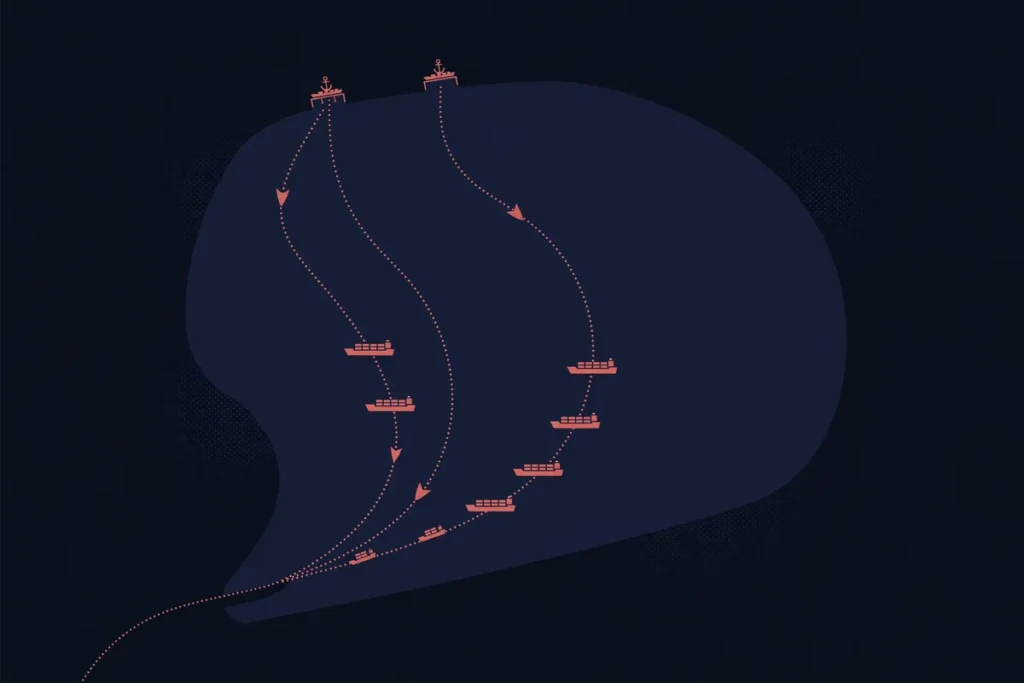
Ukraine’s seaborne trade has been under pressure since Russia withdrew from the UN-backed Black Sea grain deal, but the current phase — a de facto renewed blockade enforced by direct attacks on merchant vessels — dates to the summer of 2026.
- Early August 2026: Russian insurers stopped covering war and terrorism risks for cargo ships in the Sea of Azov and the Black Sea, while Lloyd’s added the Sea of Azov and much of the Black Sea to its list of areas excluded from standard war-risk coverage, Business Insurance reported, citing Meduza and RBC.
- July 2026: The Guinea-Bissau-flagged cargo ship Golden Leo, carrying corn, was hit near Odesa. Reuters reported that nine crew members and a Ukrainian maritime pilot were killed; the damaged vessel sank a week later.
- September 18, 2026: London’s Joint War Committee — the body whose guidance shapes underwriters’ premium decisions — expanded its Black Sea reporting requirements to the entire Black Sea area. “This week, the JWC has expanded the Black Sea reporting requirements to the whole of the Black Sea area. The coastal waters of Russia and Ukraine were already listed,” said Neil Roberts, head of marine and aviation at the Lloyd’s Market Association and secretary of the Joint War Committee.
- September 2026: Ukraine’s grain exports collapsed to about 1.28 million tonnes, down 45.4 percent from 2.35 million tonnes in September 2025, according to the Ministry of Agrarian Policy and Food. Cargo volumes through the ports of Greater Odesa fell by more than half month-on-month, with roughly 83 percent of rail-borne grain exports diverted through Ukraine’s western border crossings.
- October 3, 2026: The Liberian-flagged vessel is struck in the Odesa region — one killed, three injured, 13 evacuated.
Why it matters
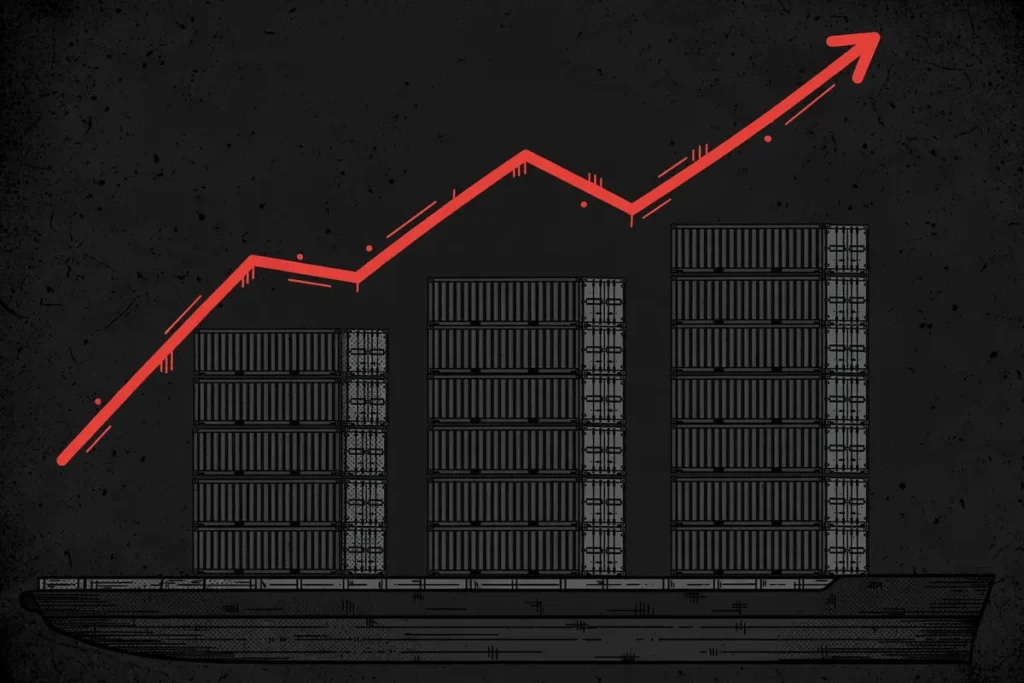
The clearest immediate signal of how serious the shipping crisis has become came not from a battlefield but from London’s insurance market. When the Joint War Committee widens a listed area, underwriters reprice risk — and Reuters reports that war-risk premiums are adding hundreds of thousands of dollars in additional costs for every seven-day voyage as dozens of ships have come under attack. Those premiums do not sit with insurers; they flow straight into freight rates, and from there into the price of bread.
The numbers on the trade side are stark. Senior economist Evghenia Sleptsova of Oxford Economics has warned that Ukraine’s position has deteriorated further since August, with August grain exports totalling just 774,000 tonnes — down 79 percent from the 2023–25 average — and 2026/27 exports on current rates looking closer to 20 million tonnes, roughly half the pre-blockade forecast. The blockade is estimated to be costing Ukraine as much as $70 million per day, according to Economichna Pravda.
For American and European readers, the transmission mechanism runs through global food markets. Ukraine has in recent seasons provided around 6 percent of global wheat exports and 11 percent of corn exports, and the UN World Food Programme has long relied on Ukrainian grain for its cost and location. Reuters reported on September 23 that buyers are already adjusting: Indonesia, the world’s number-two wheat importer, received only about 60,000 tonnes from the Black Sea in September against half a million tonnes a year earlier, and millers are paying 20 to 25 percent more for Australian wheat than the prices at which they previously booked Black Sea cargoes. Black Sea wheat is now quoted around 25 percent higher than before the shipping crisis.
Educational note: this article describes commodity-market developments for information only and does not constitute financial advice.
Different perspectives
Kyiv treats the shipping attacks as deliberate economic warfare. Ukrainian officials argue that by attacking civilian vessels carrying grain and steel, Russia has in effect reimposed a blockade of Ukraine’s Black Sea ports — formerly a key global source of food exports — dealing a heavy blow to an economy in which agriculture accounts for roughly 60 percent of export revenues.
Moscow had not publicly commented on the October 3 Odesa ship strike at the time of publication, and the circumstances of the attack could not be independently verified. Russian officials have generally described the wider strike campaign against Ukraine as retaliation for Ukrainian attacks on Russian territory, though that framing was offered for the parallel strikes on Kyiv rather than for shipping.
Insurers and the shipping industry are responding with pricing, not politics. The Joint War Committee’s September 18 decision to extend reporting requirements across the whole Black Sea signals that underwriters now treat the entire basin as a war-risk zone — a judgment that raises costs for every vessel transiting the region, including Russian, Turkish, Bulgarian, Georgian, and Romanian trade.
Humanitarian agencies warn the ripple effects extend well beyond Europe. Before the war, Ukrainian food exports fed around 400 million people each year, according to the World Food Programme, and the 2022 port closures pushed global food prices to decade highs. A renewed, sustained blockade risks repeating that shock.
What to watch next
Three indicators will show whether the blockade tightens further or stabilizes. First, vessel traffic: ship-tracking data will reveal whether owners keep calling at Odesa and Chornomorsk or divert to the Danube ports and overland routes, already absorbing record volumes at higher cost. Second, insurance: any further Joint War Committee advisories — or more underwriters withdrawing war-risk cover — would signal the market expects more attacks. Third, diplomacy: any move toward protected shipping lanes or an IMO response would mark a significant shift. For readers following the wider intelligence picture, the maritime front is now as important as the land war — and the mechanics of how naval blockades actually work explain why even a partial blockade can strangle a country’s trade.
Frequently asked questions
What happened to the Liberian-flagged ship in Odesa?
On October 3, 2026, a Russian strike hit a Liberian-flagged cargo ship at a Black Sea port in Ukraine’s Odesa region, according to the Ukrainian Sea Ports Authority. One crew member, described as a motorman, was killed, three were injured, and 13 others were evacuated to safety. The vessel’s name, the exact port, and its cargo were not publicly identified, and Moscow had not commented on the incident.
Is the Black Sea grain corridor still operating?
Ukrainian ports are still loading some vessels, but at sharply reduced volumes: grain exports fell about 45 percent year-on-year in September 2026, and cargo through Greater Odesa dropped by more than half month-on-month. Roughly 83 percent of rail-borne grain exports are now diverted through Ukraine’s western border crossings, and Reuters reports that Russia has effectively renewed its blockade of the ports since the summer.
How much have Ukraine’s grain exports fallen?
Ukraine exported about 1.28 million tonnes of grain in September 2026, down 45.4 percent from 2.35 million tonnes in September 2025, per the Ministry of Agrarian Policy and Food. Oxford Economics estimates that on current rates, 2026/27 exports could come in near 20 million tonnes — roughly half the pre-blockade forecast — and Economichna Pravda puts the daily cost of the blockade at up to $70 million.
What is war-risk insurance, and why are Black Sea premiums rising?
War-risk insurance is additional cover shipowners buy when sailing through conflict zones, priced on guidance from the Lloyd’s Joint War Committee. On September 18, 2026, the committee expanded its Black Sea reporting requirements to the entire sea, and Reuters reports premiums are adding hundreds of thousands of dollars per seven-day voyage as dozens of ships have been attacked. Higher premiums feed directly into freight rates and, ultimately, food prices.
Are attacks on civilian merchant ships legal under international law?
Merchant vessels are civilian objects and are generally protected under international humanitarian law; deliberately targeting them can constitute a war crime, though the legal assessment of any specific strike depends on the facts, including the vessel’s use and the circumstances of the attack. In this case the circumstances could not be independently verified, and Moscow had not commented, so the strike should be understood as an alleged attack reported by Ukrainian authorities.
Sources
- Reuters: Russia hits Liberian-flagged ship in Ukraine’s Odesa port, kills one
- Reuters: London’s marine insurers widen Black Sea high risk zone as shipping attacks surge
- Reuters: Wheat buyers brace for higher costs as Russia-Ukraine war drags on
- UkrAgroConsult: Ukraine exported almost 1.5 mln tons of grain in September
- EA WorldView: Ukraine War, Day 1,683 — October 3–4 updates