
WarBrief Live | November 11, 2026 | Country Profile
Updated November 11, 2026
Intelligence profile of Polish armed forces, major modernization programs, and role in NATO eastern flank defense.
Latest update — November 11, 2026
Poland heads into the winter of 2026 as NATO’s biggest defense spender by share of GDP and the alliance’s most heavily armed state on the eastern flank. Warsaw plans a record defense budget, hosts the alliance’s newest missile-defense site, and is now directly in the middle of Ukraine’s request for allied interceptor missiles.
- Record budget: Poland plans to spend PLN 200 billion (about $54 billion) on defense in 2026 — 4.8% of GDP, the highest share in NATO and more than double the 2.2% of GDP it spent in 2022. The plan was announced by the government in August 2025 and confirmed in reporting through September 2026. (Defense News; LIGA.net / The Guardian)
- The Patriot ask: On October 26, Ukrainian Defense Minister Yevhenii Khmara asked the E5 group — Germany, the United Kingdom, France, Poland and Italy — to consider transferring 10% of their Patriot and IRIS-T interceptor stockpiles to Kyiv, with Ukraine offering contracted future deliveries as repayment. Germany’s Defense Minister Boris Pistorius said on November 7 that Berlin cannot hand over more Patriot systems for now, and the Ramstein-format Ukraine Defense Contact Group meets on November 17 in Brussels. President Volodymyr Zelenskyy has said Ukraine receives on average only 12 Patriot missiles a month in 2026. (Interfax-Ukraine; Ukrainska Pravda)
- Chinese vehicles barred: In February 2026, Poland barred Chinese-made vehicles from certain military facilities unless specified recording or connectivity functions were disabled, and personnel were barred from connecting work phones to the vehicles’ infotainment systems. The stated concern was that onboard sensors and cameras could collect sensitive data. (CarExpert; Electric Vehicles)
- Aegis Ashore: The US Aegis Ashore missile-defense site at Redzikowo in northern Poland became mission-ready in July 2024 and was formally opened in November 2024, with NATO taking command. The site holds 24 SM-3 interceptors and is designed against short- to intermediate-range ballistic missiles. (Defense News; Defence Industry Europe)
- Exercise Koalicja: From November 9 to 22, about 2,800 troops from 11 nations are training at Nowa Deba in south-east Poland, led jointly by the United Kingdom and France, rehearsing how a multinational force could be moved, protected and supplied in Ukraine after fighting ends. (WarBrief Live)
Read the full profile below, including the Country Profiles hub, our Germany profile on the same Patriot question, and the Lithuania profile on Baltic air defense.
Country Overview
This profile summarizes the current state of poland for quick orientation — with deeper sections below covering structure, risks, and forward-looking indicators.
- Defense Budget: PLN 200 billion (about $54 billion) planned for 2026 — 4.8% of GDP, the highest share in NATO
- Active Personnel: about 114,000 professional troops; roughly 200,000 including Territorial Defence Force volunteers. Defense Minister Wladyslaw Kosiniak-Kamysz cited about 221,000 personnel in September 2026, which he said made Poland NATO’s third-largest army by headcount after the United States and Turkey.
- Enhanced Forward Presence battlegroup host
- Hosts the US Aegis Ashore missile-defense site at Redzikowo, operational since 2024
Military Organization and Command
Command structures for poland reflect civil-military relations, conscription models, and modernization priorities. Understanding who controls key decisions reduces surprise during crises.
- M1A2 Abrams tanks from United States
- K9 Thunder howitzers from South Korea
Defense Budget and Force Structure
Procurement cycles and offset agreements with foreign suppliers shape long-term capability trajectories and create dependencies analysts should map explicitly.
Defense spending trends linked to poland signal political commitment more reliably than ceremonial announcements. Budget lines for maintenance, ammunition, and personnel often reveal readiness constraints before public doctrine shifts.
- Active Personnel: about 114,000 professional troops (IISS-derived figures); roughly 200,000 including Territorial Defence Force volunteers
- Significant defense spending as % of GDP
Key Capabilities and Equipment
Core warfighting capabilities associated with poland include ISR platforms, long-range fires, air defense, maritime patrol, and cyber/electronic warfare units. Open-source order-of-battle tracking helps validate official claims.
Regional Security Role
Poland plays a defined role in its neighborhood — contributing to maritime security, peacekeeping, counter-terrorism, or deterrence missions depending on geography and alliance obligations.
Neighboring states calibrate engagement based on threat perceptions, economic ties, and historical memory — producing complex alignment patterns that shift with elections and crises.
Alliances and Security Partnerships
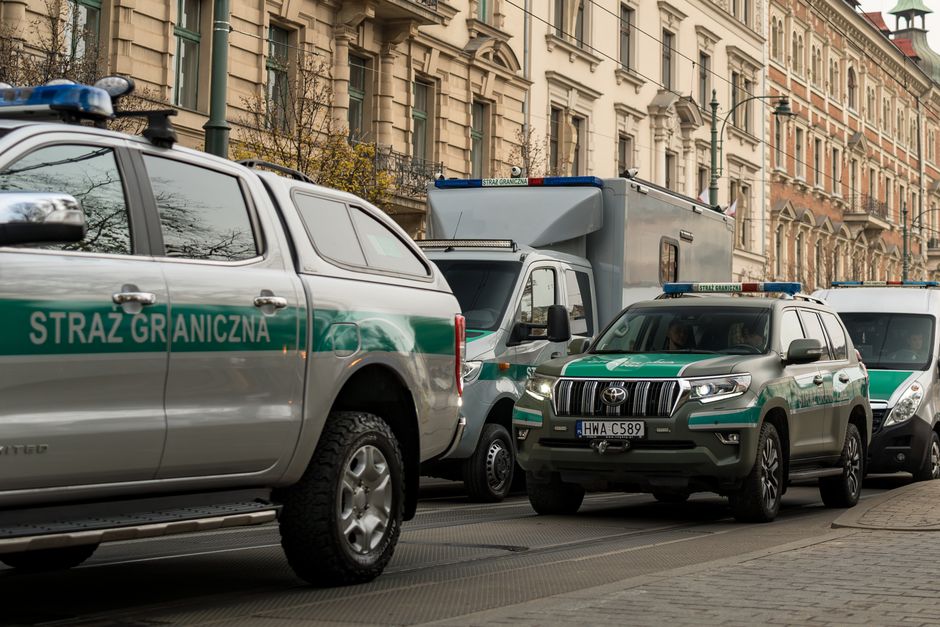
Alliance membership and security partnerships shape poland through shared exercises, intelligence fusion, and interoperable equipment standards. Burden-sharing debates increasingly affect deployment decisions.
Bilateral defense agreements and base access arrangements can matter as much as formal treaty commitments during fast-moving regional incidents.
Threat Environment and Challenges
Primary threat vectors facing poland include transnational terrorism, maritime incursions, cyber espionage, and great-power pressure on trade routes. Domestic instability can compound external risks.
Strategic Outlook
Low-probability, high-impact events — leadership transitions, surprise external intervention, or catastrophic infrastructure strikes — warrant dedicated indicator lists even if base-case forecasts remain moderate.
Frequently Asked Questions
What are this country’s core military strengths?
Documented strengths include professional enlisted corps, niche high-end capabilities, and geographic advantages — balanced against known constraints below.
How does it contribute to regional security?
What are primary capability gaps?
Capability gaps often appear in strategic lift, sustained high-intensity logistics, and joint interoperability under contested communications.
Which alliances shape its defense posture?
Sources
- Defense News: Poland readies for record-breaking defense show as opulent budget lures vendors (September 1, 2026)
- LIGA.net / The Guardian: Poland’s military spending to rise to $53 billion in 2026 (September 27, 2026)
- Interfax-Ukraine: Khmara calls on E5 nations to transfer 10% of their air defense missile stocks to Ukraine (October 27, 2026)
- Ukrainska Pravda: Germany halts Patriot deliveries — Pistorius says capacity exhausted (November 7, 2026)
- CarExpert: Australia won’t follow US, other nations in banning Chinese cars from military sites (October 2026)
- Electric Vehicles: BYD cars banned from US Kadena Air Base in Japan over security risk (October 23, 2026)
- Defense News: NATO activates Poland antimissile site, as Warsaw ups ammo production (November 20, 2024)
- Defence Industry Europe: NATO missile defence base in Poland now mission ready (July 10, 2024)
- CEO Magazine / Polish Ministry of National Defence: Poland has NATO’s third-largest army (September 10, 2026)
- WarBrief Live: Exercise Koalicja — What the Ukraine Force Rehearsal Will Test (November 4, 2026)
Bottom Line
For decision-makers tracking poland, the decisive variable is whether observable indicators translate into sustained policy shifts or remain rhetorical positioning. WarBrief.live recommends cross-checking this country assessment against primary sources and daily operational reporting.

Classification: UNCLASSIFIED // FOR OFFICIAL USE ONLY
WarBrief analysts apply a three-source rule before elevating claims about poland. Video authenticity checks, cross-language monitoring, and commercial satellite revisit analysis reduce false positives under compressed news cycles.
Readers should expect iterative updates as new data arrives. WarBrief.live labels confidence levels explicitly and separates confirmed facts from analytical inference.

Discussion 0
Share analysis, corrections, or context. Be civil — comments are moderated.