WarBrief Live | November 17, 2026 | Intelligence Report
Russia is receiving dozens of North Korean ballistic missiles every month, President Volodymyr Zelenskyy said on November 16, citing Ukrainian military intelligence — and he used the disclosure to demand missile parity from allies a day before they meet in Brussels. The claim reframes a supply line first documented in late 2023 as a sustained pipeline.
Key Takeaways
- President Zelenskyy said on November 16 that Russia receives “dozens” of North Korean ballistic missiles per month, citing a report from Ukraine’s Main Intelligence Directorate (HUR).
- The same HUR assessment says Moscow plans to expand its own ballistic and cruise missile production.
- Ukrainian intelligence puts earlier deliveries at about 150 KN-23 and KN-24 missiles between late 2023 and August 2025, plus 40 more in summer 2026 — and a North Korean missile unit is deploying to Russia’s Voronezh region.
- Zelenskyy is asking allies for “clear parity”: comparable long-range weapons and a renewed debate about striking launch sites inside Russia. The test comes at the Ramstein-format meeting in Brussels on November 17.
What did Zelenskyy say on November 16?
In his nightly address, Zelenskyy said the HUR report showed Russia was receiving “dozens of missiles per month” from North Korea and planning to increase its own missile production. “Russia is unfortunately receiving more ballistic missiles from North Korea. We are talking about dozens of missiles per month,” he said, according to Reuters. “This is extremely dangerous and not only for Ukraine. By using its ballistic missiles in this war, North Korea is making its weapons more effective. This creates additional challenges for the entire region around Korea.”
The missile claim is the part most directly aimed at the November 17 meeting. Zelenskyy named four countries — Germany, France, Britain and Italy — and said: “Germany, France, Britain, Italy — we are talking about the fact that countering Russian global banditry with the support of their ally in Pyongyang must rely on more appropriate supplies for Ukraine.” He added that mirror responses against Russia are “completely justified” and urged allies to revisit destroying ballistic-missile launch sites inside Russia.
How did the North Korea–Russia missile pipeline grow?
The pipeline is not new — its scale is what changed. North Korea began supplying Russia with KN-23 and KN-24 short-range ballistic missiles in late 2023, after Russia’s own Iskander-M stocks came under strain. Ukrainian military intelligence assessed that about 150 had been delivered by August 2025. After a pause, the flow resumed with 40 more missiles in summer 2026. In August 2026, HUR reported that North Korea had begun deploying a specialised ballistic-missile unit — about 90 personnel, six transporter-erector-launchers and up to 120 KN-23 and KN-24 missiles — to Russia’s Voronezh region, to operate alongside Russia’s 112th Missile Brigade. North Korean troops have been present since late 2024 under the mutual-defence treaty Vladimir Putin and Kim Jong Un signed in June 2024.
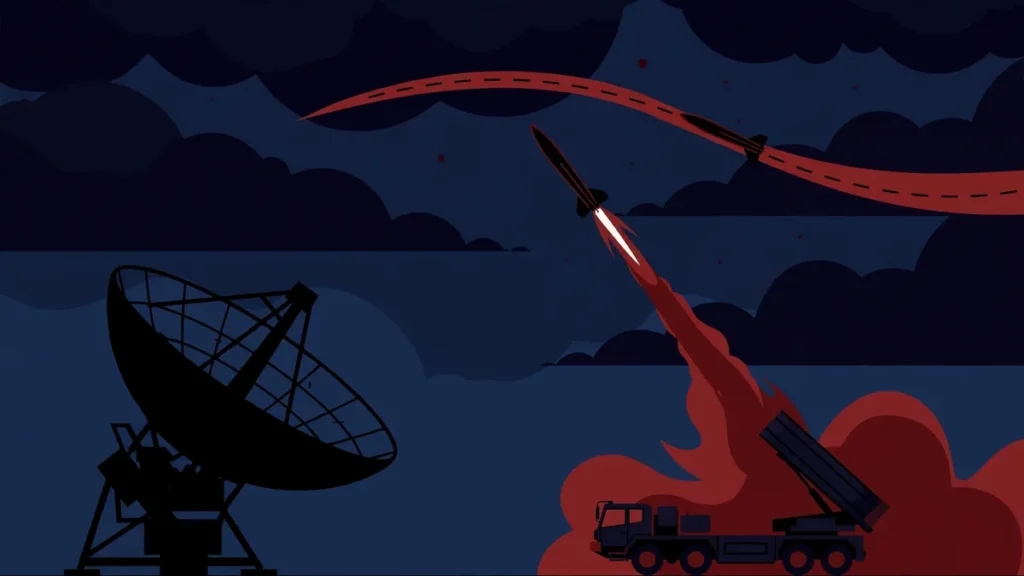
The missiles have also improved in combat. The KN-23 — North Korea’s Hwasong-11, a solid-fuel, road-mobile missile with an estimated range of about 690 kilometres (430 miles) — initially missed by 1,000 to 3,000 metres, according to Ukrainian military sources, but by February 2025 its miss distance had fallen to between 50 and 100 metres, after Russian technicians refined its guidance. That improvement is the second half of Zelenskyy’s warning: North Korea is using the war as a live test range for its own arsenal.
| Metric | Figure | Source |
|---|---|---|
| North Korean ballistic missiles supplied to Russia, late 2023 – August 2025 | About 150 (KN-23 and KN-24) | Ukraine’s Main Intelligence Directorate, via Reuters |
| New batch delivered in summer 2026 | 40 missiles | Ukraine’s Main Intelligence Directorate, via Reuters |
| Planned inventory of the North Korean missile unit in Voronezh | Up to 120 missiles, six launchers, about 90 personnel | Ukraine’s Main Intelligence Directorate, via Reuters |
| Ballistic missiles fired at Ukraine on the night of November 6–7, 2026 | 36 launched; four intercepted | President Zelenskyy, citing preliminary forensics |
| Projected Russian ballistic-missile launches at Ukraine in 2026 | About 840, up 47% on 2025 | CSIS analysis, August 31, 2026 |
| Ukraine’s ballistic-missile interception rate | 24% in 2025, down to 10.2% in 2026 | CSIS analysis, August 31, 2026 |
CSIS figures are projections and estimates, not confirmed counts. Delivery totals are Ukrainian intelligence assessments reported by Reuters; neither Russia nor North Korea has confirmed them.
What does “dozens a month” mean for Ukraine’s air defences?
Ballistic missiles are the hardest targets in Ukraine’s air-defence problem: they fly fast, on flattened trajectories, and only a small number of systems — principally the US-made Patriot and the German IRIS-T — can reliably engage them. CSIS analysts Benjamin Jensen and Tobias Oestreich wrote on August 31 that Russia was on track to launch about 840 ballistic missiles at Ukraine in 2026, 47% more than in 2025. In the same analysis they put Ukraine’s ballistic-missile interception rate at 10.2% in 2026, down from 24% in 2025. The most recent large barrage illustrates the gap: on the night of November 6–7, Russia fired 36 ballistic missiles at Ukraine and Ukrainian defences intercepted four, according to Zelenskyy, which preliminary forensics linked to North Korean KN-23 missiles. See KN-23 Missiles in Russia’s War: What the Kyiv Strike Shows and Russia’s Largest Energy Strike of 2026.
Interceptor supply is the binding constraint. Zelenskyy said in late October that Ukraine had received 24 Patriot interceptors over the preceding 90 days, and that Kyiv had been waiting almost a month for the US defence secretary to sign off on further Patriot and NASAMS missiles. Defence Minister Yevhenii Khmara has asked partners to transfer 10% of their existing interceptor stocks, including Patriot and IRIS-T missiles. Each extra North Korean missile consumes interceptors Ukraine struggles to replace.
What is the parity question — and what happens at Ramstein?
Zelenskyy’s demand is framed as parity, not escalation: because Russia can draw on an ally’s missile production, Ukraine should be able to draw on its allies’ comparable weapons “to respond to the Russian threat on equal terms” — more long-range strike weapons, and permission and capability to hit the launchers themselves. The first test is immediate: on November 17, the United Kingdom and Germany convene the 37th meeting of the Ukraine Defence Contact Group — the Ramstein format — at NATO headquarters in Brussels. Kyiv’s stated priorities are air-defence interceptors, ammunition for combat aviation, additional funding to increase drone production, and joint defence projects. Zelenskyy said on November 15 that the meeting “must deliver results.” For US, UK and EU readers, the stakes are direct: a North Korean missile tested against Ukrainian cities returns to the Korean Peninsula improved. See also Ukraine’s 1,200-Drone Barrage: What Happened and Why It Matters.
Assessment and outlook
The “dozens a month” figure should be read as a Ukrainian intelligence assessment, not a verified count — but the trend it describes is corroborated by the delivery history, the resumed use of North Korean missiles in summer 2026, and the Voronezh deployment. Ramstein’s outcome, the winter barrage tempo and the Coalition of the Willing session later in the week will show whether it holds. The deeper judgement is Zelenskyy’s own: a war in which one side’s arsenal improves through combat use is a war whose balance is decided as much by supply chains as by battlefields.
Frequently asked questions
How many North Korean missiles has Russia received?
Ukrainian military intelligence assesses about 150 KN-23 and KN-24 ballistic missiles were delivered between late 2023 and August 2025, plus a new batch of 40 in summer 2026. President Zelenskyy said on November 16 that Russia now receives dozens per month; neither country has confirmed the figures.
What is the KN-23 missile?
The KN-23 is North Korea’s Hwasong-11, a solid-fuel, road-mobile short-range ballistic missile with an estimated range of about 690 kilometres (430 miles). It has been documented in Russian use since late 2023, and Ukrainian sources say its accuracy improved sharply during 2024.
What does Zelenskyy mean by “missile parity”?
He is asking allies to supply Ukraine with comparable long-range weapons so it can respond to Russian missile strikes “on equal terms” — and to revisit striking ballistic-missile launch sites inside Russia. He named Germany, France, Britain and Italy as countries holding missiles capable of effective strikes.
Sources
- Dawn: Ukraine, US and Europe discuss ways to tempt Russia into talks
- United24 Media: Zelenskyy Calls for Missile Parity as North Korea Sends Russia Dozens of Ballistic Missiles a Month
- The Korea Times (AFP): Zelenskyy says Russia receiving more ballistic missiles from N. Korea
- RBC-Ukraine: Next Ramstein meeting set for November 17 amid Ukraine’s push for more Patriot missiles
- YAC News: North Korea Expands Strike Arsenal as Its Weapons Fuel Russia’s invasion of Ukraine
- Army Recognition: North Korea deploys ballistic missile unit to help Russia exploit Patriot interceptor shortages in Ukraine
Read next: Intelligence Reports — WarBrief Live’s full archive of intelligence assessments.