WarBrief Live | October 23, 2026 | Intel Report
Executive summary: On October 14, 2026, Ukraine’s Minister of Defence Yevhenii Khmara signed a cooperation agreement that gives Kyiv a first-of-its-kind gateway into the NATO Support and Procurement Agency (NSPA): the Security Cooperation Support Partnership (SCSP). Under the deal, Ukraine can buy weapons, ammunition and military equipment through NATO’s centralized procurement system — potentially faster and more cheaply than through bilateral deals — and Ukrainian defense firms gain broad access to compete for NSPA tenders across the alliance. NSPA announced the partnership publicly on October 22. Ukraine is the first country, and the only non-NATO member, to receive a dedicated partnership of this kind. The agreement arrives as direct U.S. military support faces political turbulence in Washington, making diversified, alliance-anchored supply channels strategically significant for Kyiv’s war effort.
What the NSPA Security Cooperation Support Partnership actually does
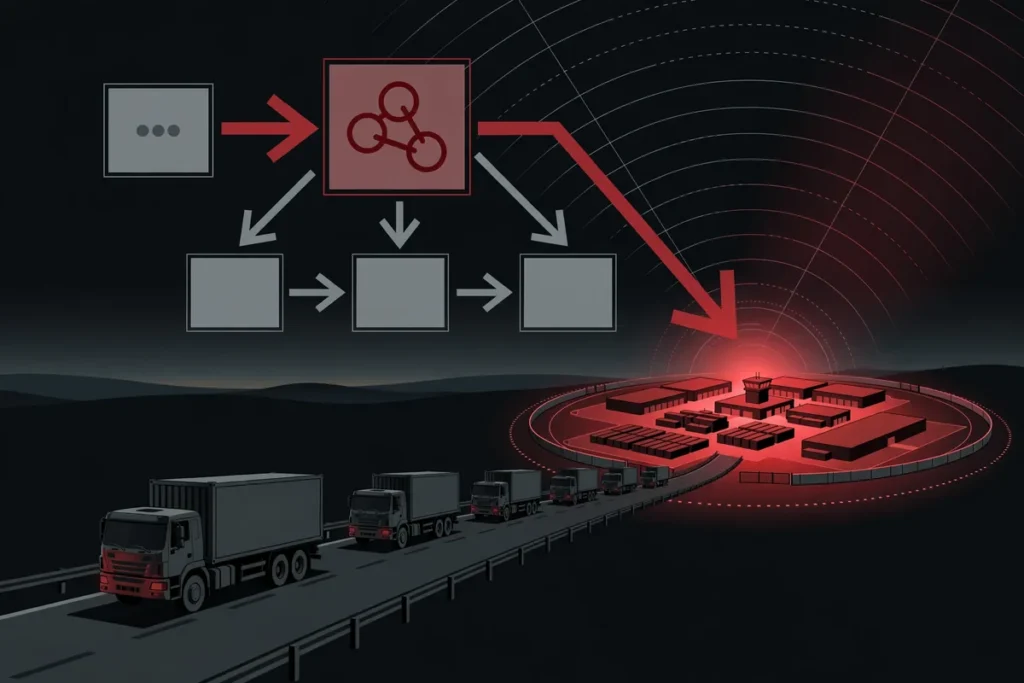
The SCSP is a procurement framework, not a weapons gift package. It creates a single entry point through which Ukraine can route its defense needs into NSPA’s existing machinery: the agency’s roughly 45 procurement partnerships, its vetted supplier base, its maintenance and lifecycle-support contracts, and an emergency-procurement track. Orders can run through existing NSPA contracts or new tenders, and pooling Ukraine’s requirements with those of other member states is designed to push prices down through economies of scale.
The agreement was developed so Ukraine could formally join the partnership, communicate its capability needs, and conduct defense procurement through the agency’s established mechanisms, according to Ukraine’s Ministry of Defence. The Ukrainian government approved the draft on August 13, 2026; Khmara signed it on October 14.
The SCSP itself is not new: it was set up in 2025 to deliver sustainable support to Ukraine through a structured procurement framework, with members Belgium, Luxembourg, Norway, Sweden, the United Kingdom and NATO Headquarters. What is new is Ukraine’s admission — and the bespoke nature of it. Deputy Defence Minister Mstyslav Banik said Ukraine is the first and only country, and a non-NATO member at that, for which a separate partnership was created as a single point of entry to the agency’s operations. NSPA marked the occasion with an industry day in Kyiv on October 14, attended by about 150 Ukrainian companies, offering guidance on how manufacturers can register as suppliers and compete for contracts.
Why this deal matters for Ukraine’s weapons pipeline
For nearly four years of full-scale war, Ukraine’s resupply has run on three tracks: domestic production, bilateral deals with individual allies, and coalition-based capability funds. The NSPA channel adds a fourth — an institutional, rules-based one that is less exposed to the political cycle of any single capital. Purchases can be paid for from Ukraine’s state budget, by international partners, or through joint financing, and NSPA’s director of support to operations, Jacqueline Borsboom, told the Financial Times the framework gives Kyiv “the ability to have a more structured framework to leverage a broad range of capabilities that we offer: procurement expertise, support services and access to established industrial base,” adding that there will be economies of scale.
The timing sharpens the deal’s significance. Reuters reported on October 22 that the announcement comes amid worsening U.S.–Ukraine relations, after U.S. President Donald Trump announced a diesel export deal with Russia this month and Kyiv complained of disruption to some intelligence sharing and its use of the Starshield satellite communications system — a dispute our Intel hub coverage of the new R-4+E-3 Istanbul format also tracks. Ukrainian President Volodymyr Zelensky said a meeting in Oslo on October 20 agreed to resolve those issues, but the episode underlines why Kyiv is hedging: a procurement channel anchored in a 32-member agency is harder to switch off than a bilateral arrangement.
What it means for NATO’s defense industry — and Ukrainian firms
The partnership runs in both directions. Ukrainian industry does not merely receive services through the agency; it gains broad access to NSPA tenders, meaning Ukrainian manufacturers can now bid to supply goods and services to NATO members. The groundwork was laid in April 2026, when the North Atlantic Council approved NSPA issuing solicitations and signing contracts with Ukrainian industry.
For NATO, the logic is industrial as much as political. Ukraine’s defense sector has become a wartime innovation hub — in drones, electronic warfare, artillery production and rapid battlefield adaptation — and Borsboom framed the partnership as a way to “further strengthen Ukraine’s industrial base and bring that expertise into the delivery and sustainment of capabilities.” For European buyers facing thin production lines and long backlogs, Ukrainian suppliers offer wartime-proven capacity. For Kyiv, access to NATO’s vetted-supplier market is a revenue path for its domestic industry and a hedge against donor fatigue.
Readers should keep the scale in perspective. NSPA is a support and procurement agency, not a defense ministry: it aggregates demand and manages contracts; the weapons still have to be funded and delivered, and alliance members retain sovereign decisions over what they sell. The Conflict Zones hub continues to track how supply flows translate into battlefield effects, while the Sanctions hub covers the parallel economic pressure campaign — including this month’s sanctions on Iran’s shadow-fleet network.
Assessment and outlook
This deal is institutional plumbing, and that is precisely why it matters. Ukraine has spent the war building parallel supply tracks precisely because no single channel is guaranteed; the SCSP converts part of that redundancy into a standing institution. The immediate practical effects will be modest — contracts, registrations and tenders move slowly — but the structural effect is durable: Ukraine now sits inside NATO’s procurement architecture, not outside it, a year before any membership question is settled.
Three things to watch. First, which Ukrainian firms clear NSPA’s supplier registration and win their first tenders — that will measure whether the “broad access” pledge converts into real contracts. Second, whether pooled purchasing demonstrably lowers unit prices on ammunition and sustainment contracts, the core promise of the framework. Third, whether the partnership deepens as Washington’s role shifts: if U.S. support contracts, the NSPA channel becomes Kyiv’s institutional backstop; if it rebounds, the partnership still gives Ukraine a second, alliance-anchored supply spine. Either way, the direction of travel is integration.
Sources
- Reuters (via Duke FM): Ukraine to be able to buy military supplies via NATO agency, FT reports
- The New Voice of Ukraine: NATO to let Ukraine buy weapons through its procurement agency
- Defensehere: Ukraine signs agreement to access NATO procurement through NSPA (citing Ukraine’s Ministry of Defence press release)
- UNN: Ukraine will receive weapons through NATO’s new mechanism — the Ministry of Defence explained its features and advantages
- Nordic Defence Sector: Ukraine joins NSPA support partnership
- Euromaidan Press: NATO’s weapons-buying agency opens dedicated door for Ukraine