WarBrief Live | October 23, 2026 | Country Profile
On October 23, 2026, Istanbul hosts the first-ever R-4+E-3 foreign ministers’ meeting, with seven countries gathering to discuss ending the war in Ukraine under the chairmanship of Turkish Foreign Minister Hakan Fidan. The venue is no accident: Türkiye fields NATO’s second-largest military, controls the straits governing the Black Sea, and has spent a decade turning itself into a defense exporter. This profile explains what Türkiye’s military can do, where it stands with its allies, and why it keeps appearing as a mediator.
Key Takeaways
- Türkiye maintains roughly 355,200 active troops and 378,700 reservists — NATO’s second-largest standing military — with compulsory military service.
- Defense and security spending reached $27.34 billion in 2026, up 30%, with the indigenous KAAN fighter and the layered Steel Dome air-defense architecture as flagship programs.
- As gatekeeper of the Turkish Straits under the 1936 Montreux Convention, Ankara practices “regional ownership” of Black Sea security, balancing NATO obligations with strategic autonomy.
- On October 23, 2026, Istanbul hosts the inaugural R-4+E-3 ministerial while Ankara finalizes interim Eurofighter purchases and pushes the KAAN toward serial production.
Overview: the bridge state with real military weight
Türkiye sits where Europe, Asia, and the Middle East meet, and its military posture is built to matter in all three directions. A NATO member since 1952, it anchors the alliance’s southeastern flank and controls the Bosporus and Dardanelles — the only maritime gateway between the Black Sea and the Mediterranean. Per IISS The Military Balance 2026, the Turkish Armed Forces field about 355,200 active personnel and 378,700 trained reservists, backed by a paramilitary pool of roughly 160,000 — the second-largest standing military in NATO after the United States. Military service remains compulsory, which keeps the force large but means a sizable share rotates through on short terms.
Military capabilities
The Land Forces are one of Europe’s heaviest: roughly 2,280 main battle tanks, more than 13,000 armored vehicles, and over 2,100 artillery systems, per inventory trackers citing GlobalFirepower/IISS data. Much of the armor is older Leopard and M60 stock, with the indigenous Altay tank still working through early production.
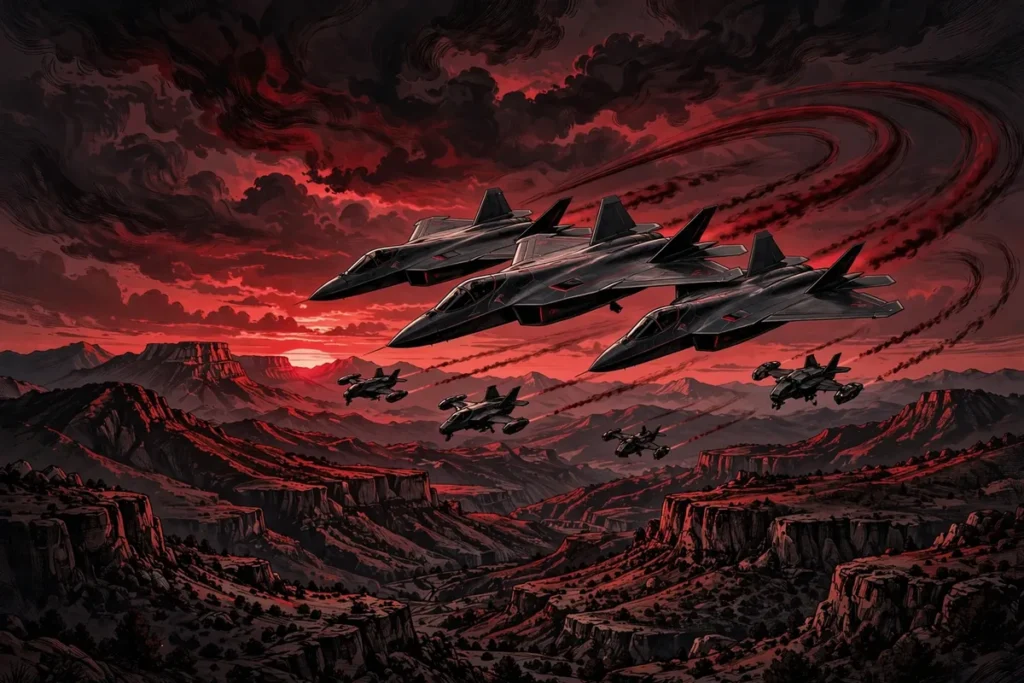
The Air Force is in its biggest generational transition. It flies about 240 F-16C/D fighters, plus a few dozen F-4E Phantoms slated for retirement after 2030 (FlightGlobal/OSW figures via Defense and Tech). Three replacements are moving at different speeds: a £8 billion deal signed with Britain in October 2025 for 20 new-build Eurofighter Typhoons, with deliveries from 2030; up to 24 second-hand Typhoons pursued from Qatar and Oman, with 12 Qatari jets awaiting a sale contract as of an October 22, 2026 Defense Ministry briefing (Reuters); and the indigenous fifth-generation KAAN, with 20 Block 10 aircraft put on contract in May 2026 and first deliveries promised from 2028.
Indigenous programs are Türkiye’s calling card. Baykar’s Bayraktar TB2 and Akıncı combat drones made the country one of the world’s most visible drone exporters, while Aselsan and Roketsan supply the SIPER and Hisar air-defense systems under the layered “Steel Dome” architecture. The Navy centers on Black Sea control: Ankara stood up a mine-countermeasures task group with Bulgaria and Romania and enforces the Montreux regime limiting non-littoral warships.
The money is moving in the same direction. Parliament approved $27.34 billion in defense and security spending for 2026, a 30% increase, with the defense ministry’s own slice at $19.08 billion — equivalent to 2.33% of GDP, and projected to rise to 2.83% in 2027 and 3.2% in 2028 (Defense News). See more country military profiles in our Country Profiles hub.
Alliances and posture
Türkiye’s alliance posture is best summarized as “Turkey first, NATO second” — the phrase analysts use after the naval forces commander declared in 2023 that Ankara would keep NATO itself at arm’s length in the Black Sea in favor of littoral-state cooperation (Carnegie Endowment). The 1936 Montreux Convention is the instrument: in January 2024, Ankara refused passage to two British-donated mine hunters bound for Ukraine, citing the treaty’s ban on belligerent warships using the straits.
That autonomy coexists with deep NATO integration. Türkiye contributes to alliance missions and hosts significant NATO command infrastructure, remaining the alliance’s indispensable southern anchor — Romania’s NATO Black Sea frontline profile shows the other side of that water. Friction points are real: exclusion from the F-35 program in 2019 over the S-400 purchase, stalled F-16 talks with Washington, and buying Russian energy while arming Ukraine with drones. In August, Türkiye signed the Mecca Joint Defence Agreement with Saudi Arabia and Pakistan; on October 21, a defense-cooperation accord with Qatar, Pakistan, and Indonesia (Reuters).
Current developments
- October 23, 2026: Istanbul hosts the inaugural R-4+E-3 foreign ministers’ meeting — the E3 (Britain, France, Germany) plus the R4 grouping of Türkiye, Saudi Arabia, Pakistan, and Egypt — with ending the Russia-Ukraine war, Palestine, Yemen, and Hormuz security on the agenda (TRT World). Our intel report on the R-4+E-3 meeting covers the format in depth.
- October 23, 2026: President Erdoğan told the 9th Istanbul Mediation Conference that diplomacy must remain an option even when parties refuse to talk, citing Russia-Ukraine prisoner exchanges as proof of Türkiye’s mediation record, while criticizing the UN Security Council’s power concentration (Hürriyet Daily News).
- October 22, 2026: The Defense Ministry said at its weekly briefing that Türkiye is waiting for Qatar to send a sale contract and draft training program for 12 used Eurofighter Typhoons — the stopgap plan until the KAAN enters service (Reuters).
Frequently asked questions
Does Türkiye have NATO’s second-largest army?
Yes, by active personnel. Per IISS The Military Balance 2026, Türkiye fields about 355,200 active troops and 378,700 reservists, second only to the United States within the alliance.
What is the Montreux Convention, and why does Türkiye enforce it?
The 1936 treaty regulates warship passage through the Bosporus and Dardanelles, limiting non-Black Sea navies’ presence. Türkiye treats it as non-negotiable and blocked UK-donated mine hunters bound for Ukraine in January 2024 under its belligerent-warship clause.
What is the KAAN fighter jet?
Türkiye’s indigenous fifth-generation stealth fighter, built by Turkish Aerospace Industries. Twenty Block 10 aircraft were contracted in May 2026, with first deliveries expected from 2028; prototypes fly with American F110 engines until the domestic TF35000 engine is ready.
Why is Istanbul hosting Ukraine peace talks?
Türkiye has working relations with both Moscow and Kyiv — it brokered the 2022 Black Sea Grain Initiative and has facilitated prisoner exchanges throughout the war, positioning Istanbul as neutral ground, most recently for the October 23, 2026 R-4+E-3 ministerial.
Sources
- Defense News: Turkey begins 2026 with defense-spending numbers trending up
- Reuters via Jerusalem Post: Turkey to buy Eurofighter Typhoon jets from Qatar, waiting for sale contract (October 22, 2026)
- Carnegie Endowment: Managing Montreux — Turkey and the Russia-Ukraine War in the Black Sea
- Atlantic Council: A sea of opportunities — Turkey and the West in the Black Sea
- TRT World: Top European, Middle Eastern diplomats to gather in Istanbul for 9th mediation conference
- Hürriyet Daily News: Erdoğan pledges mediation, criticizes UN system (October 23, 2026)
- Defense and Tech: What fighter jets does Turkey have?
- Defence Türkiye: KAAN Fighter Programme — status, orders and engine timeline