WarBrief Live | October 20, 2026 | Country Profile
Kazakhstan’s military capabilities make it the undisputed heavyweight of Central Asia. The ninth-largest country in the world by area fields a 110,000-strong active force, spends more per capita on defense than any regional neighbor, and pairs a Russian-built hardware legacy with a fast-growing drone program. The reason Kazakhstan is suddenly in the headlines is not its arsenal: on October 19, 2026, the foreign ministers of the United States and the five Central Asian states met in Samarkand under the C5+1 format, with energy, critical minerals, and the Trans-Caspian trade corridor on the agenda.
Overview
The Armed Forces of the Republic of Kazakhstan were founded on May 7, 1992, after the Soviet Union’s collapse. Commander-in-chief President Kassym-Jomart Tokayev oversees five service branches: the Ground Forces, Air Defense Forces, Naval Forces, Air Assault Forces, and Special Operations Forces. Kazakhstan renounced the Soviet nuclear arsenal it inherited and is a non-nuclear weapon state. Its land border with Russia, roughly 7,600 kilometers, is one of the longest continuous land borders in the world — a fact that shapes nearly every defense decision Astana makes. For more entries in this series, see our country profiles hub.
Military capabilities
Global Firepower’s 2026 review ranks Kazakhstan 58th out of 145 countries, with a power index score of 1.0433. The review estimates the defense budget at $5.836 billion, while Kazakhstan’s approved 2026 budget puts it at roughly $5.6 billion, about 3 percent of GDP. At roughly $284 to $288 per person per year, Kazakhstan is the highest per-capita military spender in Central Asia. Active personnel number about 110,000 with roughly 135,000 reservists; Global Firepower counts about 300,000 total including paramilitary forces.
On equipment, Global Firepower estimates credit Kazakhstan with 168 aircraft (37 fighter jets, 13 attack aircraft, 72 helicopters), 353 tanks, 17,460 ground vehicles, and 287 multiple-launch rocket systems. These are independent estimates, not official disclosures, but they outline a force built for territorial defense across enormous distances. The newest capability is unmanned: Kazakhstan’s Air Assault Forces have stood up an in-house FPV drone production line, with roughly 100 airframes built in its opening weeks after operational experience in the Desant-2025 exercises.
Alliances and posture
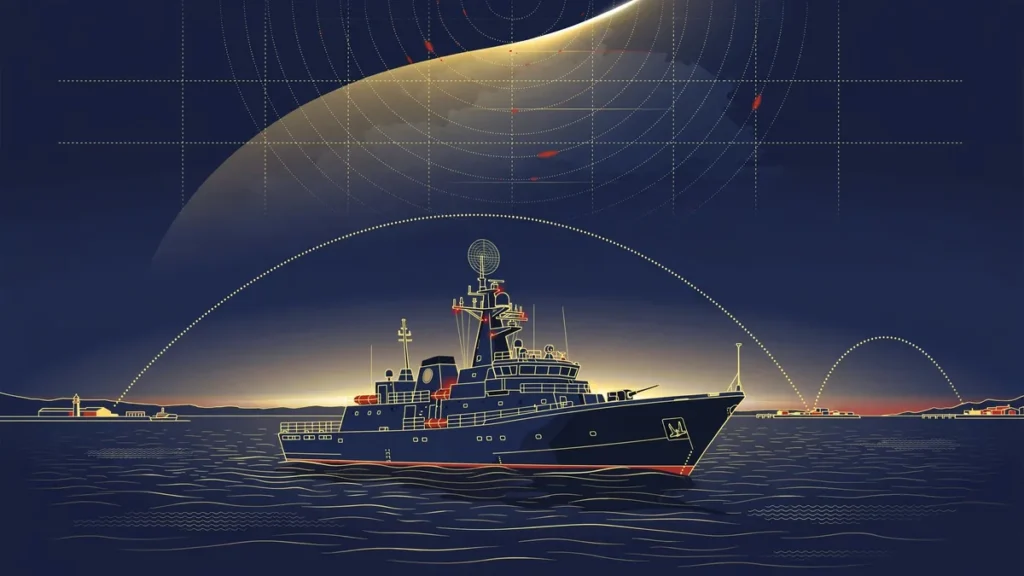
Kazakhstan practices a multi-vector foreign policy: it cultivates Russia, China, and the West simultaneously and commits fully to none. It remains a member of the Russian-led Collective Security Treaty Organization (CSTO) and the Eurasian Economic Union, complies with Western sanctions to avoid secondary penalties, and has publicly distanced itself from Russia’s war aims — Astana sent no troops to Ukraine. Procurement is diversifying toward China and a broad supplier base that includes Turkey, South Korea, France, Germany, Israel, and the United States.
Energy geography reinforces the posture. Much of Kazakhstan’s crude reaches world markets through the Caspian Pipeline Consortium across Russian territory to Novorossiysk, which is why the October 19 joint statement’s pledge to expand the Trans-Caspian Trade Route carries strategic weight. Even civil nuclear energy is balanced between powers: Astana selected Russia’s Rosatom to lead the consortium for its first nuclear plant and China’s CNNC for the second. Kazakhstan is also an OPEC+ member; see our preview of the OPEC+ November 2026 meeting for what is at stake for producers.
Current developments
The October 19 C5+1 ministerial returned the format to Samarkand, where it began in 2015. U.S. Secretary of State Marco Rubio was accompanied by more than 200 American business representatives, and the six ministers committed to expanding the Trans-Caspian Trade Route, simplifying customs, and cooperating on energy, mineral resources, counterterrorism, and cybersecurity. Rubio said Washington and the region had secured more than $25 billion in commercial arrangements since the November 2025 C5+1 summit and floated ambitions of more than $100 billion in additional trade and investment. Critical minerals are the prize: Central Asia holds significant deposits of tungsten, uranium, rare earths, and copper, and the question now is which projects are bankable and how much processing stays in the region.
On the military track, Kazakh forces took part in the CSTO’s Interaction-2026, Search-2026, and Echelon-2026 exercises in Russia from September 24 to October 3, with equipment transiting Kazakhstan by rail, according to Kazakhstan’s Defense Ministry. The CSTO’s Rubezh-2026 exercise was held on Kazakh soil in September, and Kazakhstan concluded KAZIND-2026 with India at Oskemen from September 28 to October 11, focused on counter-terrorism and drone and counter-drone operations. Watch whether the Samarkand commitments become signed mineral and transit deals — and whether Astana’s drone industrialization loosens its reliance on Russian hardware.
Frequently asked questions
How strong is Kazakhstan’s military compared to its Central Asian neighbors?
It is the region’s top defense spender per capita, at roughly $284 to $288 per person per year, and Global Firepower ranks it 58th of 145 countries. Its 110,000 active personnel and growing drone program give it the most capable conventional force in Central Asia, though equipment figures are independent estimates rather than official disclosures.
Does Kazakhstan have nuclear weapons?
No. Kazakhstan inherited part of the Soviet nuclear arsenal in 1991 and renounced it, becoming a non-nuclear weapon state and a prominent non-proliferation advocate.
What was agreed at the October 19, 2026 C5+1 meeting in Samarkand?
The six foreign ministers pledged to expand the Trans-Caspian Trade Route, improve transport links and customs, increase intra-regional trade, and cooperate on energy, mineral resources, counterterrorism, and cybersecurity, with more than 200 U.S. business representatives attending.
Sources
- Harava: U.S. and Central Asian Ministers Agree to Deepen Ties at Samarkand Meeting
- The Astana Times: Kazakhstan Ranks 58th in Global Firepower Index
- Kursiv Media: Kazakhstan’s Military at a Glance
- OilPrice.com: U.S. Targets Central Asia’s Energy and Critical Minerals in Major Trade Push
- Frontiers in Political Science: China-Russia Structured Rivalry in Central Asia
- Caliber.Az: CSTO Drills to Take Place in Russia as Military Equipment Moves Through Kazakhstan
- Defense & Tech: Kazakhstan’s Air Assault Forces Launch In-House FPV Drone Production
- Lokmat Times: Indian, Kazakh Forces Undertake Joint Training Exercise
- Wikipedia: Armed Forces of the Republic of Kazakhstan